REVIEW · BERLIN
In Search of Jewish Berlin Walking Tour
Book on Viator →Operated by Insight Cities · Bookable on Viator
Some streets in Berlin feel heavier than others. This small-group Jewish Berlin walk is led by a Jewish history scholar, with focused stops in the Scheunenviertel area and a clear thread through Jewish life, persecution, and memory. I especially like that you’re not just looking at monuments; you’re getting context that helps you understand why these places matter, and why the stories are told in this exact order.
One watch-out: a few stops are emotionally intense, so keep some extra breathing room for yourself. Also, this is a 3-hour walk and food and drinks aren’t included, so plan to eat before or bring water.
In This Review
- Key points to know before you go
- A small-group walk through Jewish Berlin’s core sites
- Your guide: Jewish studies scholars who can handle the hard parts
- Start at the New Synagogue (Centrum Judaicum) and understand 19th-century aims
- Auguststraße 11–13: a Jewish Girls’ School in New Objectivity style
- Hackesche Hoefe and the Scheunenviertel neighborhood story
- Block der Frauen: solidarity shown by non-Jewish wives and relatives
- The Holocaust Memorial: 2,711 slabs and a forced pause
- Timing, pace, and what to bring for a 3-hour walk
- Price and value: what $156.53 buys you
- Who should book this Jewish Berlin walking tour
- Should you book this tour?
- FAQ
- How long is the Jewish Berlin walking tour?
- What does the tour cost?
- Is it offered in English?
- How big is the group?
- Where does the tour start?
- Are admission tickets included for the main stops?
- Are food and drinks included?
- Is the tour near public transportation?
- FAQ
- Is confirmation provided after booking?
- Is free cancellation available?
- Can most people participate?
- What ticket method do they use?
- Do I need to buy entry tickets myself?
Key points to know before you go
- Max 10 people means more time for your questions and follow-ups
- Jewish history scholar guidance keeps the facts grounded and the tone careful
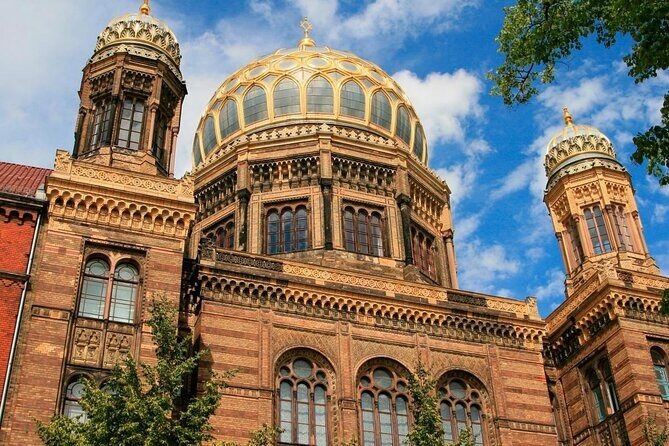
- New Synagogue at Centrum Judaicum adds a 19th-century story, not just a memorial one
- Auguststraße (Jewish Girls’ School building) shows how Jewish life shaped public institutions
- Block der Frauen highlights resistance and solidarity from non-Jewish families
- Holocaust Memorial labyrinth is short, but it’s designed to be slow and sobering
A small-group walk through Jewish Berlin’s core sites

This tour is built for people who want more than a quick photo run. With a group capped at 10, the guide can slow down when a question pops up, and you won’t feel like you’re being herded from one stop to the next. The format works especially well in Berlin, where the city is full of layered meanings and you can easily miss the point if you’re reading too fast.
You’ll also get a strong sense of place. The walk concentrates on the Scheunenviertel area, often called the Barn Quarter, so you see how Jewish institutions, neighborhoods, and community life clustered and changed over time. Even when the stops are brief, they connect to a bigger story: Jewish life, assimilation and community building, Nazi targeting, and the long work of remembrance.
The schedule is tight on purpose. Each stop is around 20 minutes, with one around 30 minutes, which means you cover major sites without turning it into a day-long tour you’ll dread later. Your upside is focus. Your downside is that you won’t have time to wander deeply afterward at every single place—so if you love one stop, plan extra time on your own.
You can also read our reviews of more walking tours in Berlin



Your guide: Jewish studies scholars who can handle the hard parts
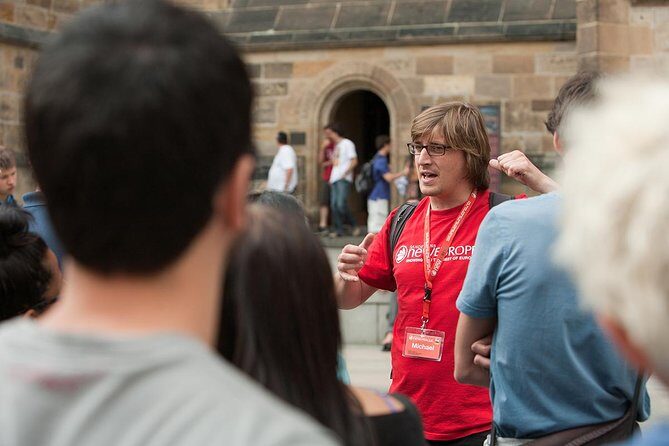
What makes this experience work is the guide. Insight Cities runs it with Jewish studies scholars—professors, grad students, or journalists—so you get more than surface explanations. The tone matters on a subject like this, and the guides on this tour have been praised for handling sensitive material with empathy and clear communication.
The names mentioned in past tours include Ioana N., Forrest, Lee, Heather, and Isabel Daniel, and each shows a different strength: tailoring the walk to your questions, explaining in an easy-to-follow way, and bringing personal academic dedication. In particular, Isabel Daniel is described as completing a PhD on the topic, and Heather is described as being very open to discussion and Q&A. That combination—expertise plus a willingness to talk—means you can ask practical questions like what you’re actually looking at, or how a specific neighborhood changed across decades.
One more practical plus: since the guide is a scholar, you get a sense of timeframe and cause-and-effect, not just a list of landmarks. That helps a lot in Berlin, because the city’s physical layout can look calm today while the past was violent and chaotic.
Start at the New Synagogue (Centrum Judaicum) and understand 19th-century aims
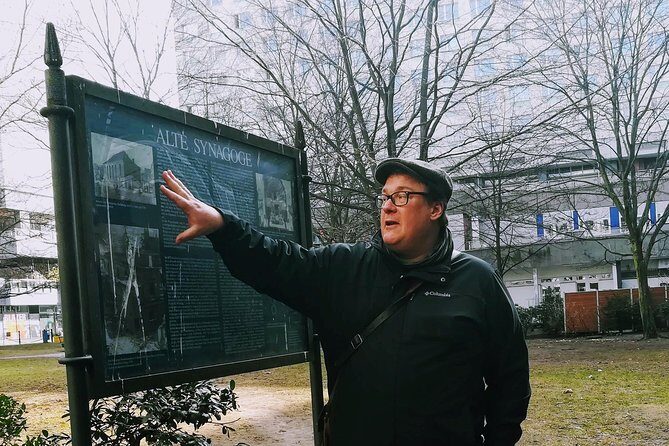
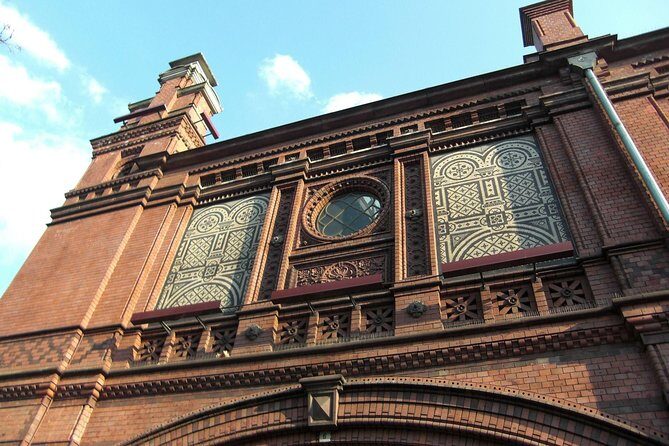
Your first stop is the Stiftung Neue Synagoge Berlin, now tied to Centrum Judaicum. The building’s grand architecture isn’t just decoration. It reflects a 19th-century moment when many European Jews pursued civic belonging and cultural visibility, and the synagogue became a public symbol of that aspiration.
Today, the site also signals something else: Jewish community life continuing and being revived in Berlin. That mix of past meaning and present use makes this stop one of the tour’s most moving points. You’re not only looking at an old structure; you’re seeing how a community can keep re-forming after rupture.
Why this stop is valuable for you: it gives context before you hit the darker layers. If you start at the Holocaust Memorial first, it can feel like history is only tragedy. Starting here makes the story more human. It shows the goals people had, the institutions they built, and why later persecution was such a brutal break.
A small consideration: this stop includes time for looking at the exterior and understanding the site’s significance, but it’s still a walking tour schedule. If you want to study details like architectural elements up close, arrive with enough energy to slow down when the guide points things out.
Auguststraße 11–13: a Jewish Girls’ School in New Objectivity style
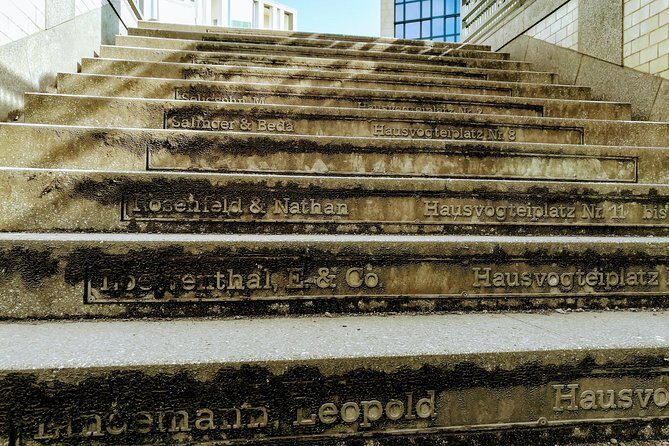
Next you head to Auguststraße, where the setting shifts from major community symbols to an education-centered slice of Jewish life. The guide points out the Jewish Girls’ School, active around 1927–1928, housed at Auguststraße 11–13.
The building’s style matters here. It’s described as a historical monument built by architect Alexander Beer, characterized by New Objectivity style. That label may sound abstract, but it’s useful because it tells you the school wasn’t tucked away. It was part of the city’s modern look, tied to the era’s ideas about clarity, function, and form.
You’ll also get a practical bonus: today the building houses an exhibit hall and a coffee shop. Even if you only have a short stop, it’s a reminder that historic Jewish institutions in Berlin didn’t just vanish. Some structures were repurposed, and they can still carry meaning for visitors today.
One possible drawback: short stops mean you may not get enough time to fully enjoy the exhibit or sit down with a coffee. If that coffee shop vibe appeals to you, plan to return on another day, when you can linger without the group timing.
Hackesche Hoefe and the Scheunenviertel neighborhood story
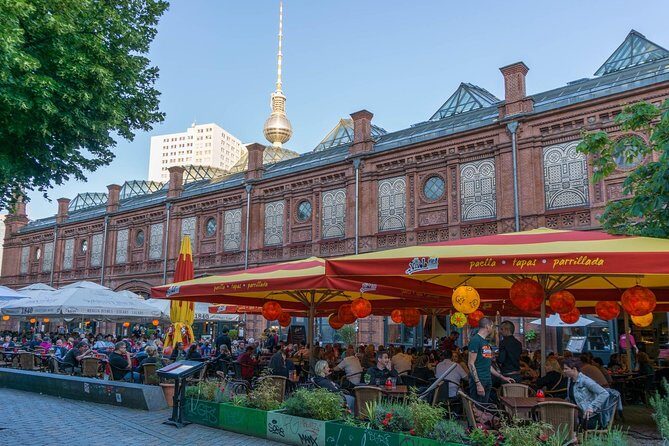
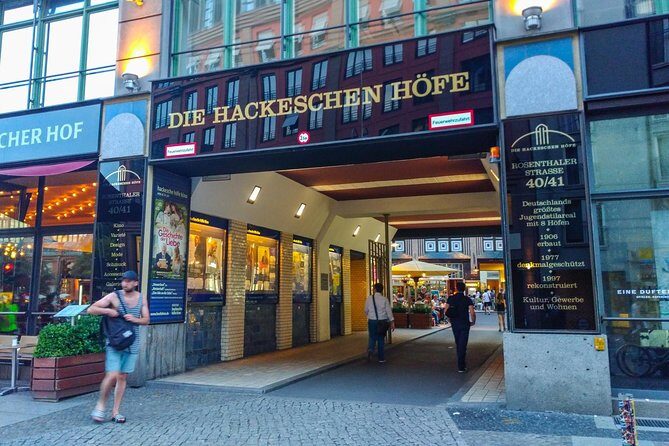
The walk then brings you into Die Hackeschen Hoefe and the wider stories around Hackescher Markt, Spandauer Vorstadt, and Scheunenviertel, sometimes called the Barn Quarter. This is where the tour starts to feel like geography, not just history.
Scheunenviertel is important because it represents how Jewish life took shape in specific Berlin streets and courtyards. You’ll notice architecture and urban design that help explain how communities built everyday life: where institutions clustered, how community space formed, and how neighborhood identity developed over time.
This stop is also a good mental transition. By now you’ve seen a major synagogue and a school building—big civic and institutional touchpoints. Hackesche Hoefe helps you connect those to a lived-in neighborhood scale: the streets, courtyards, and the “how people actually lived” side of history.
A consideration: neighborhood walking can be more emotionally neutral than memorial sites, which can tempt you to speed through the explanations. Don’t. This portion is short, and the guide’s narration is doing the heavy lifting to connect the built environment to the human story behind it.




Block der Frauen: solidarity shown by non-Jewish wives and relatives
One of the most powerful stops is the Block der Frauen memorial. The memorial focuses on a group people often don’t hear about: protest demonstrations sustained by non-Jewish wives and relatives of Jewish men who were arrested by the Nazis and targeted for deportation.
That detail changes how you see the era. It’s easy to reduce Nazi persecution to a simple binary of oppressor and victim. This stop forces a wider view: people tried to resist, and some non-Jewish families risked being part of the story rather than staying invisible.
This is valuable for you because it offers a different kind of learning. Instead of only asking what was done to Jewish communities, you also learn what others did in response—how solidarity surfaced, and how courage could exist even in a system engineered to crush it.
Practical advice: this is a “stand and read” kind of stop. Give yourself time to absorb what the memorial is actually saying, not just to take in the big headline. With only around 20 minutes, you’ll want to be intentional.
The Holocaust Memorial: 2,711 slabs and a forced pause
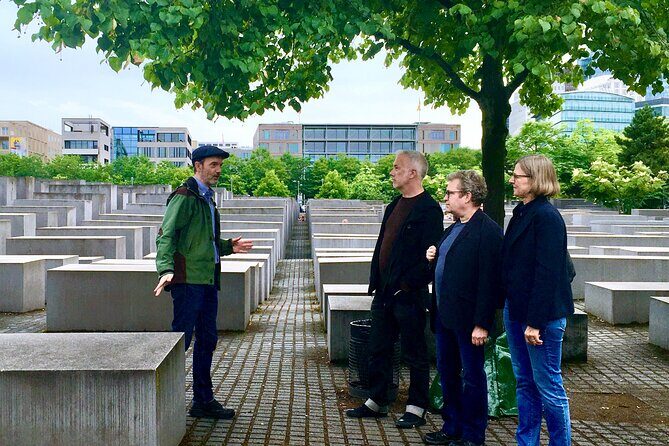
Then comes the Holocaust Memorial, formally the Memorial to the Murdered Jews of Europe. It was designed by Peter Eisenman, and your time here is structured around walking through what’s often described as a labyrinth of 2,711 concrete slabs.
Even if you’ve seen pictures, the experience can feel different in person. The layout is designed to disrupt easy movement, creating small moments of disorientation and slowing you down. The point isn’t comfort. It’s acknowledgment—Germany facing the Holocaust through a specific physical language.
Why this stop matters in the tour arc: it doesn’t land as an isolated shock. You’ve already learned about Jewish community institutions, neighborhood identity, and the kind of life that got targeted. So when you’re standing among the slabs, you understand what was destroyed and what had been present before the violence escalated.
A key consideration for you: this section is mentally heavy. If you tend to get overwhelmed in quiet memorial spaces, take a minute before you enter. There’s no shame in stepping out briefly if you need it.
Timing, pace, and what to bring for a 3-hour walk
The tour runs for about 3 hours. The stop times are relatively short, so the pacing is steady. That’s usually a good thing: you cover major sites without losing the thread, and you’re not stuck at one location longer than you can handle.
Because food and drinks aren’t included, I strongly suggest you plan a snack or water beforehand. Berlin mornings and afternoons can surprise you, and this kind of tour asks for focus more than it asks for stamina.
Comfort also matters. Wear shoes you can walk in for the duration, and bring your usual “city basics” (phone charged, layer for weather). The tour is in English and is near public transportation, so you can usually combine it with the rest of your day without too much hassle.
One more practical detail: you receive a mobile ticket, and confirmation is provided at booking. If you’re the type who likes to keep things organized, this helps you avoid last-minute stress.
Price and value: what $156.53 buys you
The price is $156.53 per person for roughly 3 hours. That’s not cheap, but it’s also not purely a “walk and point” fee.
Here’s why it can be good value:
- You’re paying for a Jewish history scholar guide, not just a general city guide.
- The group is kept small (up to 10), so your questions don’t get pushed aside.
- Multiple key sites on the route list free admission tickets for the tour stop times, including the New Synagogue and major memorial areas.
What pushes the cost into the “worth it” category for me is the storytelling structure. You’re not only looking at history; you’re learning how Jewish life in Berlin developed, how it was targeted, and how memory is represented today.
The trade-off is the usual one: no food or drinks are included. If you budget for a quick meal or a drink after, the cost makes more sense as an all-in cultural experience rather than a half-day add-on.
Who should book this Jewish Berlin walking tour
This tour fits best if:
- you want an overview of Jewish Berlin through major sites in and around the Barn Quarter area
- you prefer dialogue and context, not just signage and photos
- you want a guide who can handle difficult topics with care and explain them clearly in English
It may not be ideal if:
- you need a very light, casual outing today, because a couple of stops are designed to be sobering
- you plan to treat this like a museum day, because the schedule prioritizes breadth over deep independent exploring
If you’re already interested in Berlin’s architecture, this helps too. The New Objectivity school building and the synagogue architecture aren’t random stops; they connect style, public life, and identity.
Should you book this tour?
Yes, if you want structure and meaning. The combination of a small group, a Jewish history scholar, and carefully chosen stops makes this a strong way to get your bearings in Jewish Berlin without flattening the story into a few headlines.
Before you book, do one simple check: ask yourself whether you’re ready for an emotionally serious portion at the Holocaust Memorial and a reflective stop at Block der Frauen. If you are, this tour can give you a much fuller understanding of what Berlin was and what it remembers now.
If you want the most value, plan to add time on another day for whatever stop hits you hardest—especially anything near the synagogue area or the school building setting on Auguststraße.
FAQ
How long is the Jewish Berlin walking tour?
It runs about 3 hours.
What does the tour cost?
The price is $156.53 per person.
Is it offered in English?
Yes, the tour is offered in English.
How big is the group?
The maximum group size is 10 travelers.
Where does the tour start?
The meeting point is Rosenthaler Str. 40/41, 10178 Berlin, Germany.
Are admission tickets included for the main stops?
The stops listed include admission ticket free (including the New Synagogue and other major memorial locations).
Are food and drinks included?
No. Food and drinks are not included.
Is the tour near public transportation?
Yes, it is near public transportation.
FAQ
Is confirmation provided after booking?
Yes, you receive confirmation at the time of booking.
Is free cancellation available?
Free cancellation is available up to 24 hours in advance for a full refund.
Can most people participate?
The information says most travelers can participate.
What ticket method do they use?
You’ll have a mobile ticket.
Do I need to buy entry tickets myself?
For the listed stops, admission is shown as free for the tour stop times.