REVIEW · NUREMBERG
Das ehemalige Reichsparteitagsgelände – Geländebegehung
Book on Viator →Operated by Geschichte Für Alle e.V. · Bookable on Viator
The Reich Party Rally Grounds make propaganda feel painfully physical. On this guided Geländebegehung, you’ll connect the dots between Zeppelinfeld, the Kongresshalle, and the long straight march way of the site. I love how the tour turns big, intimidating architecture into something you can understand fast, and I also love the clear explanations that make the cause-and-effect of the design feel obvious. One drawback: this is a heavy topic, and the scale can feel emotionally intense even if the pacing is brisk.
You’ll walk outside through major remnants of Nazi architecture, with stops that show how buildings and open-air spaces were engineered to stage mass events. The experience also helps you follow the ongoing discussion about how places like this should be used today, not just how they were used back then. I’d call it a practical way to learn, not a museum-style lecture where you get lost in dates.
You’ll want to go in with a little patience for uncomfortable details. The tour is in German, so if you’re relying on translation, consider that carefully. Still, if you want to see the key spaces in a focused 2-hour walk, this hits the sweet spot.
In This Review
- Key highlights you should know
- Reichsparteitagsgelände: why the architecture matters
- Zeppelinfeld: the stage for mass rallies
- Kongresshalle: the monumental hall meant to impress
- Große Straße: a 60-meter-wide march axis
- How the guide keeps the story understandable in German
- Value, timing, and what $16.13 buys you
- Who should book this walk, and who might hesitate
- Should you book the Reichsparteitagsgelände Geländebegehung?
Key highlights you should know
- Zeppelinfeld’s role in mass rallies: a field built for parades, political days, and coordinated spectacle
- Kongresshalle’s Coliseum-like design: massive, unfinished, and meant to impress tens of thousands
- Große Straße as a designed march axis: 60 meters wide, planned for 2 km, with about 1.5 km completed
- A tight 2-hour flow: three major stops that explain both function and effect
- Small group size: up to 30 travelers, so questions are actually welcome
- Clear German interpretation: guided storytelling that keeps the architecture readable
Reichsparteitagsgelände: why the architecture matters
This isn’t a tour where you just glance at ruins and move on. You’re looking at built space designed to shape crowds, attention, and emotion. At the Reich Party Rally Grounds in Nuremberg, the remaining structures help you see how the Nazi leadership turned architecture into a kind of outdoor stage—where the size of the buildings wasn’t an afterthought, but part of the message.
I like that the tour’s framing helps you connect the “front stage” (ritual, parade routes, ceremonial gatherings) with the “back side” of the system. It keeps the logic of the propaganda show understandable while also pointing toward the brutal reality behind it. You don’t need to be a specialist to follow the big picture.
There’s also a second layer that matters for today: the tour doesn’t stop at the past. You’ll get a sense that this site is now part of an ongoing debate about use and responsibility—how a society handles places tied to crimes, and how that handling affects learning and memory. That makes the experience feel grounded, not just historical.
You can also read our reviews of more tours and experiences in Nuremberg.
Zeppelinfeld: the stage for mass rallies
Start at the Zeppelinfeld, the most central piece of the Reich Party Rally Grounds for major events in the Nazi era. It’s named after Graf Zeppelin, who made a famous landing there with a Zeppelin airship back in 1909. That earlier, more “innocent” story sits in the background, and then the site’s later use shows how quickly meaning can be flipped by power.
On this stop, you’ll learn why the field became the main venue for huge public ceremonies and demonstrations. The tour explains that it hosted events tied to the regime’s youth and political structures, with parade-style displays and even staged battlefield theater that supported the idea of strength and unity. You can almost see how the open space was meant to work: there’s room for motion, synchronized crowds, and dramatic lines of sight.
Practical note: because this is an open-air field, weather matters. If it’s dry, it feels easier to focus on what you’re learning. If it’s raining, you’ll still get the main story, but you’ll spend more time watching your footing than your mental model of the layout.
Kongresshalle: the monumental hall meant to impress
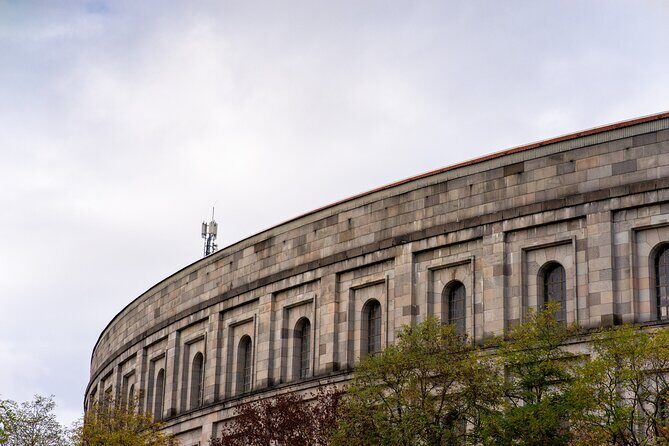
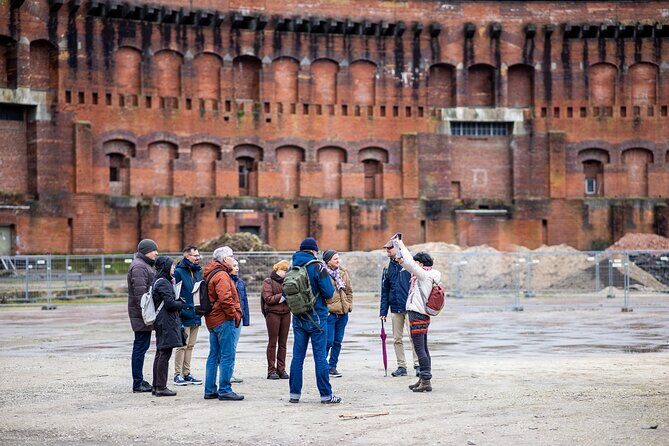
Next comes the Kongresshalle, the planned centerpiece where Nazi leadership aimed to hold party congresses during the rally period. Even in its unfinished state today, the scale is startling. The tour walks you through why the building still reads as huge, even without its full completion.
One of the most useful parts of this stop is how the tour links form to purpose. The Kongresshalle recalls ancient architecture, especially the Roman Coliseum. That comparison isn’t just aesthetic trivia. It helps you understand the strategy: the regime borrowed the visual language of antiquity to imply permanence, legitimacy, and destiny.
You’ll also hear the intended capacity: the hall was designed to hold about 50,000 people. That detail is more than a number. It explains why size and monumentality were so central to the propaganda effect. The whole idea was to overwhelm individuals with scale, to turn people into a tiny part of a larger system.
Drawback to keep in mind: because the building is so big and not fully finished, your first impression might be “Is this even the full story?” The guide’s job is to fill that gap, but if you prefer perfectly preserved sites only, you may find yourself working a bit harder in your imagination while the tour explains the intended grand finale.
Große Straße: a 60-meter-wide march axis
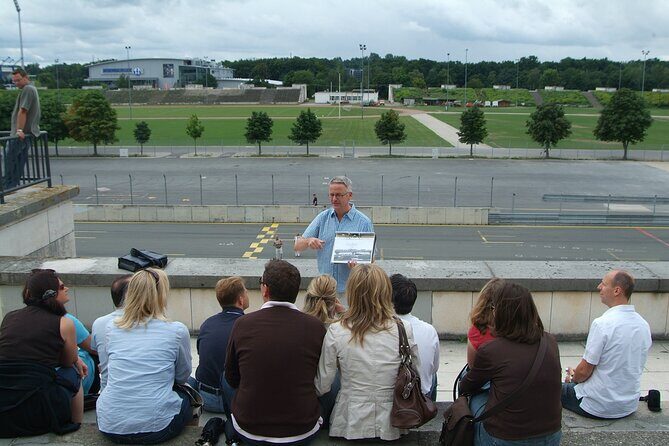
The third stop is the Große Straße, the planned central route for Wehrmacht-era parades and troop movements. Construction started in 1935, and the design was bold: 60 meters wide, intended to stretch 2 kilometers. Only about 1.5 kilometers were completed, but what you get is still enough to understand the concept.
What I like here is how the tour uses the road to explain the larger site logic. The Grote Straße functions like a north–south axis around which major buildings and rally spaces were arranged. In other words, it’s not just a road you pass along—it’s a structure for organizing sightlines and movement. That layout helps you see how the regime tried to control the experience of arriving, gathering, and processing through the space.
This stop also makes the entire grounds feel more connected. After Zeppelinfeld and the Kongresshalle, the Große Straße gives you the “movement layer” that explains why the architecture felt like one coordinated machine. Once you understand the axis, the rest of the site makes more sense as a designed program rather than separate monuments.
If you’re short on time, this is also the stop that can feel the easiest to scan quickly on your own—but you’ll miss the explanation of why the axis and width were so important. That’s where the guide earns their fee.
How the guide keeps the story understandable in German
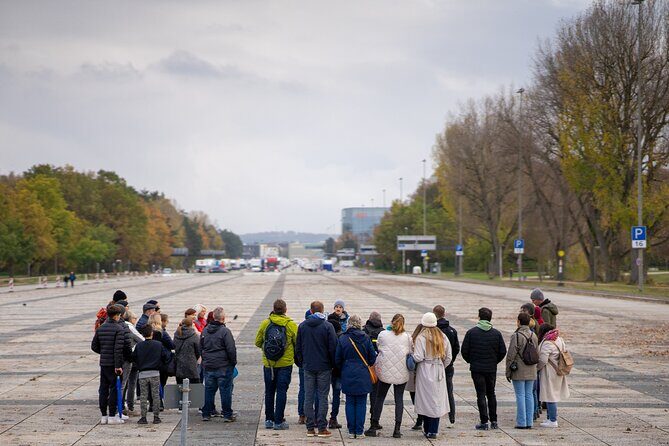
The tour is conducted in German, which is a big factor in whether you’ll enjoy it fully. If you read German fairly well or you’re comfortable following guided explanations, you’ll likely get a lot out of it fast. If not, you can still benefit from the architecture and the clear logic of the tour, but you’ll need to manage expectations about how much nuance you can catch.
I also appreciate the tour’s pacing. With about 2 hours total time and three major stops, you get a focused route rather than a long slog. That structure matters because the content is intense. Short stops make it easier to process what you’re seeing and to keep the cause-and-effect thread intact.
The quality of interpretation is a standout. In particular, one guide is specifically praised as Herr Clemens for being extremely clear and visually engaging, answering questions and keeping the explanations lively. Another guide is described as sharing a lot of knowledge with enthusiasm and being responsive to questions too. That combination matters: you want facts, but you also want a guide who can translate big ideas into what you’re physically standing next to.
Tip: come ready with a few questions in mind. Ask about how the design controlled crowds, or how the propaganda show worked as a system. When a guide is good at answering, those questions turn the walk from sightseeing into real understanding.

Value, timing, and what $16.13 buys you
At about $16.13 per person, this is strong value if you want the key spaces in one compact session. The tour is roughly 2 hours long, which means you’re not paying for a half-day or spending your budget on transit-only time.
Another value signal: the stops themselves are marked as admission ticket free in the tour information. That doesn’t mean you won’t need any local time or planning, but it does suggest you’re mainly paying for interpretation and guided direction—not extra entrance fees at every turn.
You’ll also get a mobile ticket, which is convenient if you don’t want paper. Plus, the tour has a maximum of 30 travelers, so you’re not stuck in a huge moving crowd where questions get lost.
As for timing, it’s an experience you can’t always book last minute. It’s often reserved about 12 days in advance on average, so if you’re traveling in busy seasons or on weekends, plan earlier rather than later. Near public transportation also helps. In practice, it means you can fit this into a day exploring Nuremberg without turning it into a logistics puzzle.
Who should book this walk, and who might hesitate
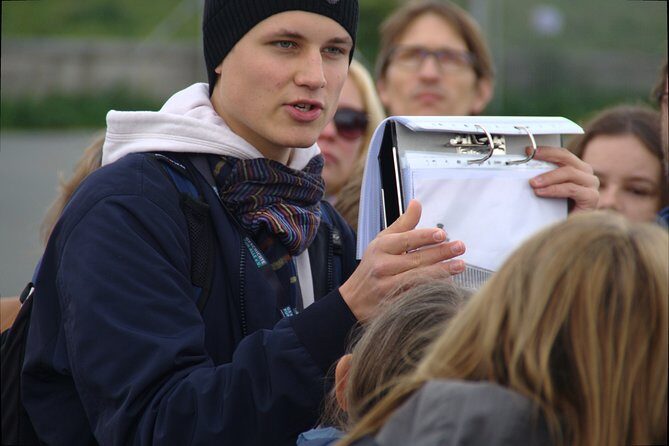
I think this tour is ideal if you want a guided, coherent look at the major remnants of Nazi-era architecture in Nuremberg—especially if you care about how the design created propaganda effect. It also suits you if you prefer a straightforward route: three core stops, clear explanations, and time to absorb what you’re seeing without rushing for hours.
You might hesitate if you want a purely reflective museum setting, or if you’re looking for light, carefree sightseeing. This is a site tied to genocide and dictatorship, and even when the tour stays informational, the topic isn’t gentle. Also consider that it’s a German-language tour. If you don’t speak German, you could still enjoy the layout, but your understanding may be limited.
On the positive side, I found the most compelling reason to book is simple: the grounds are hard to interpret on your own. The architecture is huge, the site is spread out, and without a guide you can end up staring at size without understanding purpose. This tour gives you the purpose.
Should you book the Reichsparteitagsgelände Geländebegehung?
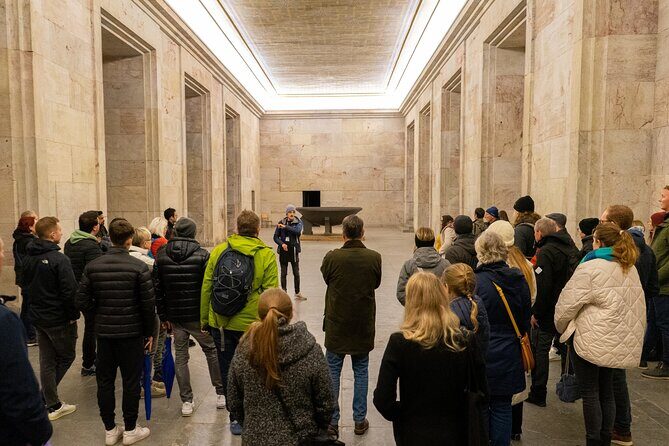
If you want to understand the place—not just photograph it—this is worth booking. The combination of major stops (Zeppelinfeld, Kongresshalle, Große Straße), a tight 2-hour format, and strong guide quality makes it a high-return experience for the money. At $16.13, you’re paying for clarity, not just access.
Book it if you’re comfortable with serious subject matter and you can follow a German tour. If you speak only basic German, consider whether you’ll be satisfied with a general grasp; the architectural details will be visible, but the nuance may slip by without language support.
If your goal is to connect the physical design of mass spectacle to the darker system behind it, then this guided walk is one of the most practical ways to do it in Nuremberg.