REVIEW · BAMBERG
Culinary-historical walk through Bamberg
Book on Viator →Operated by Geschichte Für Alle e.V. · Bookable on Viator
Beer and centuries of food stories. That is the fun.
This culinary-historical walk traces Bamberg’s almost 1,000-year brewing tradition while also reminding you the city once had a serious wine culture. I like that it’s built around real taste moments, not just talk, and I especially like the way the route ties food to place: Regnitz views, old brewery history, and the cellar-side sayings of Bamberg.
One thing to consider: it’s German-speaking, so if you need lots of English support, this may feel limiting.
You also get a smooth, compact format—about 2 hours with a maximum group size of 30—so you’re moving from stop to stop instead of sitting through long explanations. Still, it’s a walking tour with multiple outdoor segments, so plan for weather.
In This Review
- Key highlights to look forward to
- A beer-forward city walk that still talks food
- Meeting at Alter Schlachthof am Kranen: logistics that keep it easy
- Stop 1: Am Kranen and the medieval habit of eating meat
- Stop 2: Grüner Markt scent games and market history
- Stop 3: The Michelsberg viewpoint and Bamberg’s wine past
- Stop 4: Untere Brucke and the Regnitz stories behind Little Venice
- Stop 5: Schlenkerla Rauchbierbrauerei and smoked beer history
- Stop 6: Pfahlplätzchen, cellars, and the sayings you can taste
- Stop 7: Eckerts Wirtshaus finale with an included beer choice
- Price and value: what $28.92 buys you
- Who this culinary walk is best for
- The strongest part: a guide who pairs facts with taste
- Should you book this culinary-historical walk through Bamberg?
- FAQ
- How long is the culinary-historical walk through Bamberg?
- What is the price per person?
- What time does the tour start?
- Where does the tour start and end?
- What language is the tour?
- Do I need to print a ticket?
- Is the last stop beer included?
- How big is the group?
- Can I get a refund if I cancel?
Key highlights to look forward to
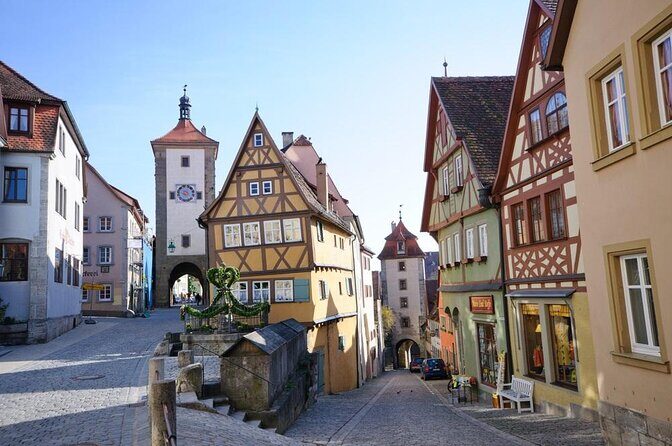
- Bamberg’s beer as a third river story: beyond the two branches of the Regnitz, the tour frames beer as the powerful “stream.”
- Stop-by-stop tastings: meat-focused medieval habits, market scent samples, and wine-and-view storytelling.
- Two Hörnla styles: you’ll get to try both during the walk, not just hear the name.
- Schlenkerla Rauchbierbrauerei: the smoked-beer brewery stop anchors the brewing history in a very specific flavor tradition.
- Little Venice from Untere Brucke: old fishermen’s houses and Regnitz life give the views context.
- Eckerts Wirtshaus beer finale (included): you get to choose your beer to close out the tour.
A beer-forward city walk that still talks food
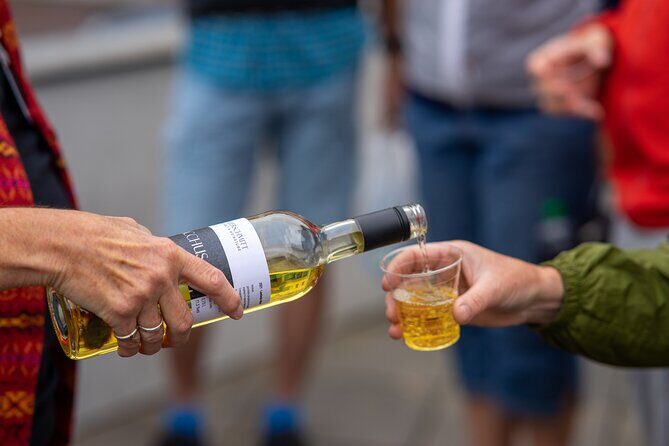
Bamberg is famous for beer, but this tour makes sure you understand why. The city’s story isn’t a single straight line from old brewery to modern beer hall. Instead, it’s a mix of waterways, weekly market culture, storage cellars, and changing tastes across centuries.
I like how the experience uses one big idea—beer as a major force in the city—while still giving you plenty of smaller, concrete food details along the way. You’ll connect brewing with daily life, not just treat it like a museum topic.
You can also read our reviews of more walking tours in Bamberg
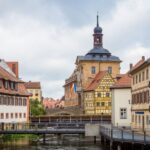
Meeting at Alter Schlachthof am Kranen: logistics that keep it easy
The walk starts at Alter SchlachthofAm Kranen 1, 96047 Bamberg and runs until Eckerts Wirtshaus on Ob. Mühlbrücke 9. It begins at 4:00 pm and is listed at about 2 hours.
Here’s why this matters for your planning:
- A 4 pm start often works nicely with a morning of sightseeing and an early evening dinner plan after.
- The tour is kept to a maximum of 30 people, so it’s large enough to feel lively, but not so huge that you disappear into the crowd.
- You’ll use a mobile ticket, which keeps you from hunting for paper.
If you rely on transit, it’s also noted as near public transportation, which is handy because Bamberg’s prettiest spots can involve short walks between areas.
Stop 1: Am Kranen and the medieval habit of eating meat
At Am Kranen, the guide sets the tone with how people ate in the Middle Ages. The first taste points straight at a key point: meat consumption played a major role.
This is one of the best early moments on the route because it prevents a common mistake. When you hear Bamberg brewing, it’s easy to think the story is mostly beer-first. Here, you quickly learn the city’s food habits shaped what people drank and cooked with. That first stop is a fast lesson in everyday medieval reality.
Practical note: plan to show up hungry. Even though each stop is short, the tour is designed around sampling.
Stop 2: Grüner Markt scent games and market history
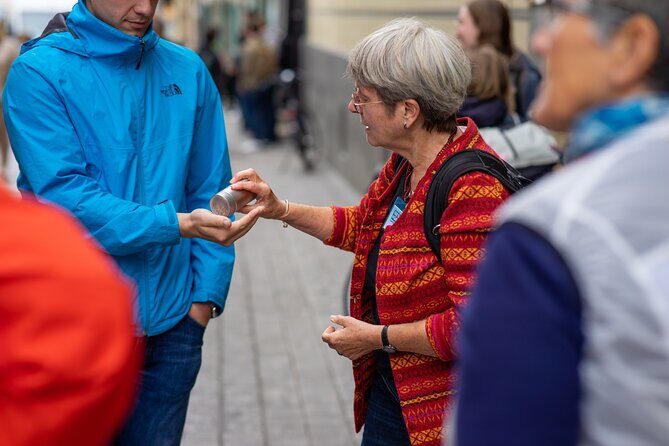
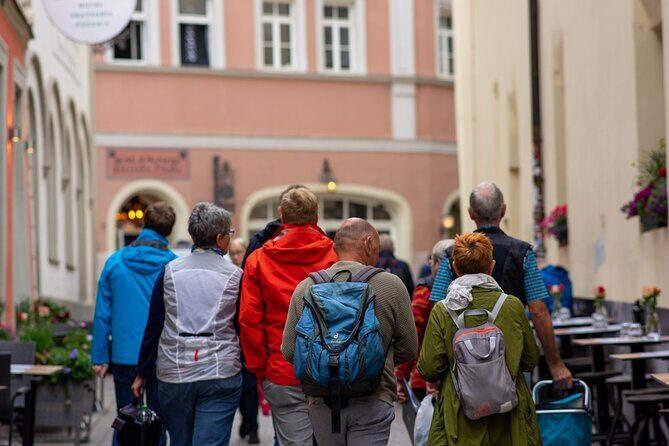
Next comes the Grüner Markt, Bamberg’s weekly market area. Instead of only talking, the tour uses guessing games and scent samples to pull you into how markets worked long ago.
What you get from a market-focused stop is perspective. Markets weren’t only about shopping; they were where the city’s food culture stayed current. By the time you reach this point, the walk has already linked brewing to daily life. Now you see where ingredients and food culture met people.
A small consideration: scent-based activities are fun, but if you’re sensitive to strong smells, give yourself a little breathing room and take the moment at your own pace.
Stop 3: The Michelsberg viewpoint and Bamberg’s wine past
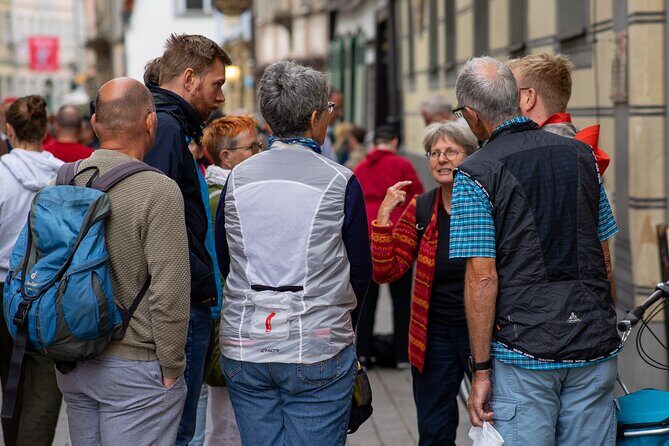
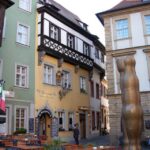
Bamberg may be known for beer today, but the tour intentionally flips the script at Igor Mitoraj Centurione I. The story goes like this: in the Middle Ages, Bamberg was a wine town, and you get to test that yourself.
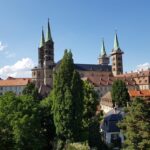
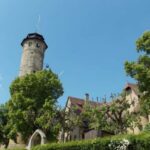
You also connect the wine angle with a visual anchor—the monastery on Michelsberg—so it’s not a random history fact. You’re building a mental map of how place and production overlap.
This stop is clever for one main reason: it keeps the tour from becoming a single-flavor story. You come out with a fuller timeline of what the region valued, and how brewing culture eventually became dominant in Bamberg’s identity.
You can also read our reviews of more historical tours in Bamberg


Stop 4: Untere Brucke and the Regnitz stories behind Little Venice
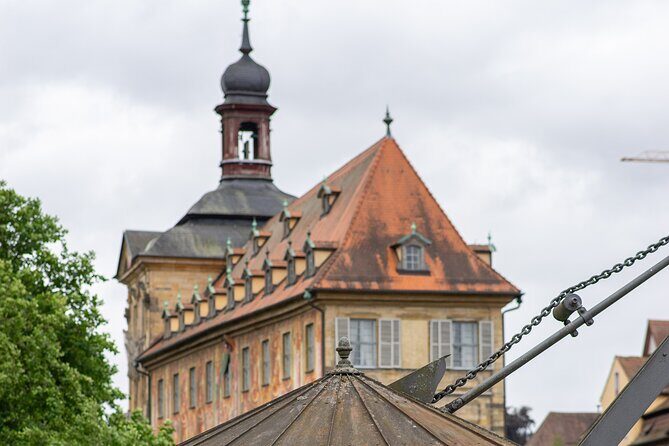
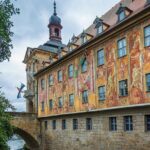
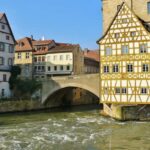
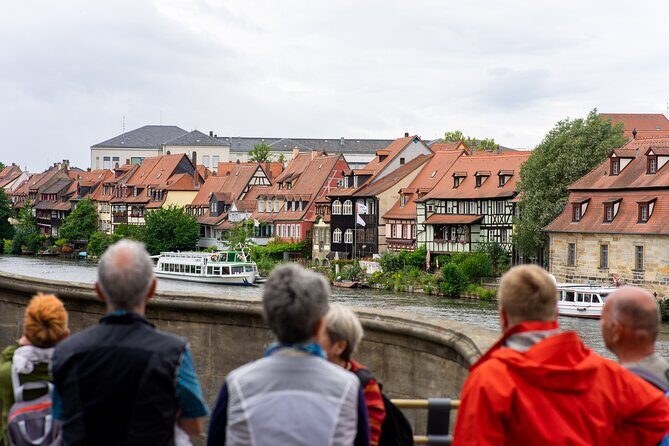
At Untere Brucke, you find the visual payoff that makes Bamberg feel so cinematic. The tour connects the nickname Little Venice to this area—especially with the backdrop of former fishermen’s houses from the 17th century.
More important than the postcard view: you also get stories about the Regnitz, the lifeline of the city. This is where the “culinary” part stays grounded. Waterways determined transport, storage, and how brewing scaled up. Even if you only remember one thing from this stop, remember this: Bamberg’s food and drink culture didn’t happen in isolation. It rode the river.
If you want the best experience, arrive with comfortable shoes and a bit of patience for turning heads and taking in views while you’re walking.
Stop 5: Schlenkerla Rauchbierbrauerei and smoked beer history
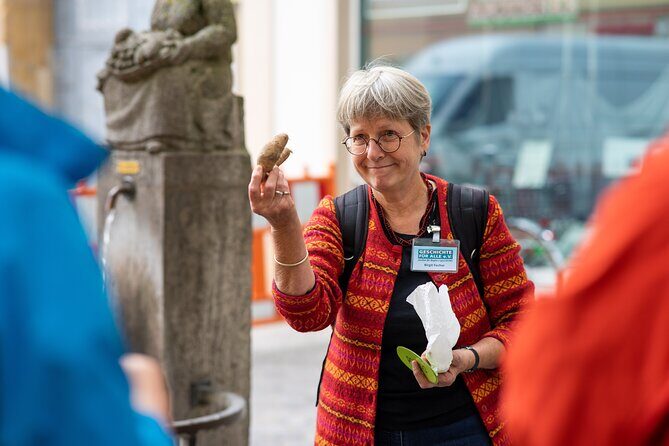
Then comes the stop many beer lovers care about: Schlenkerla, Rauchbierbrauerei. With a view of the historic smoked beer brewery, you learn about Bamberg’s brewing art—and specifically the kind of flavor that’s hard to forget once you’ve had it.
This is the moment where you stop hearing about beer as an abstract tradition and start understanding beer as something with technique. Smoked beer isn’t only a taste; it’s a whole brewing identity, and the tour treats it as such.
One drawback to keep in mind: if you don’t like smoky flavors, this stop may not be your favorite. The tour is still informative, but your personal enjoyment will depend on your beer taste preferences.
Stop 6: Pfahlplätzchen, cellars, and the sayings you can taste
At Pfahlplätzchen, the tour leans into the cultural habit of storage and cellar life—guided by the saying go to the cellar.
After the Schlenkerla experience, this stop works like a reset. It shifts your attention from brewery character to how beer fits into daily rhythms. Cellars matter because they shape how long beer can wait, how flavors settle, and how a brewing tradition can stay consistent.
And because you’re already sampling along the way, the saying isn’t just a fun line. It becomes something you can understand through taste and context.
Stop 7: Eckerts Wirtshaus finale with an included beer choice
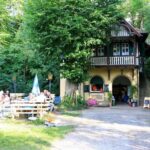
The tour ends at Eckerts Wirtshaus (Ob. Mühlbrücke 9). This last segment is where you get a real payoff: it’s listed as included, and you can choose a beer of your choice.
The reason I like this finale is that it turns information into a simple decision. You’ve learned the city’s brewing story step by step; now you get to drink what fits your mood. It’s also a classic Bamberg inn setting, which means you’re experiencing the city the way locals would—over a proper beer rather than a quick roadside sample.
If you’re the type who enjoys tasting at the end after you’ve built context, this stop is a great closer.
Price and value: what $28.92 buys you
At $28.92 per person, this is priced for a compact, value-focused experience. You’re not only walking around older streets—you’re getting a structured route with multiple stops, including taste moments and at least one included beer at the end.
To judge value, I look at three things:
- How many different themes you cover: medieval eating habits, market life, wine history, river stories, smoked beer, and cellar culture.
- How much of it is sensory: scent samples, tastings, and a brewery-facing moment.
- How the ending pays off: choosing your beer at Eckerts Wirtshaus, instead of leaving right after the last story.
For a 2-hour tour, this price feels fair—especially if you’re already interested in beer and regional food culture. If you’re only curious about one narrow topic (like beer only), you might feel the tour covers too much. But if you like connections—food, water, markets, and brewing—this is a solid deal.
Who this culinary walk is best for
This is a great fit if you:
- love Bamberg beer culture and want the story behind what you’re tasting
- enjoy walking tours that mix history with food moments
- like practical explanations tied to actual places—river bridges, brewery fronts, market areas, and inn settings
It’s also a good choice if you prefer smaller-group vibes. With a maximum of 30, it tends to feel guided without feeling like you’re stuck in a herd.
Who might want to think twice:
- If you need an English-heavy format, remember the tour is German-speaking.
- If you strongly dislike smoky beer, the Schlenkerla stop could put a kink in your enjoyment.
The strongest part: a guide who pairs facts with taste
One of the most praised aspects of this walk is the quality of the guiding—information that’s easy to follow and delivered alongside food. The tour aims to make you a participant in the story through tastings and hands-on moments like scent sampling and guessing games.
That’s a rare combo: a guide who can teach history without turning it into a lecture. Instead, you’re learning in the same sequence that you’re tasting. That makes it easier to remember what you liked, and why.
Should you book this culinary-historical walk through Bamberg?
If you want an evening activity that feels local and grounded in real food and drink, I’d book it. The route is tight, the themes are connected, and the ending at Eckerts Wirtshaus with an included beer choice gives you a satisfying final moment.
Book it especially if you like Bamberg for more than just scenery. This tour helps you understand why beer became central there—and how wine, markets, and waterways fit into the same story.
Skip it if German is a problem for you or if beer culture doesn’t interest you beyond one flavor style. Otherwise, it’s a smart way to spend a couple hours and walk away with both tastes and context.
FAQ
How long is the culinary-historical walk through Bamberg?
It’s listed at about 2 hours.
What is the price per person?
The price is $28.92 per person.
What time does the tour start?
It starts at 4:00 pm.
Where does the tour start and end?
It starts at Alter SchlachthofAm Kranen 1, 96047 Bamberg, Germany and ends at Eckerts Wirtshaus, Ob. Mühlbrücke 9, 96049 Bamberg, Germany.
What language is the tour?
The tour is German-speaking.
Do I need to print a ticket?
No. It uses a mobile ticket.
Is the last stop beer included?
Yes. At Eckerts Wirtshaus, a beer is included and you can choose your beer.
How big is the group?
The tour has a maximum of 30 travelers.
Can I get a refund if I cancel?
Yes. You can cancel up to 24 hours in advance for a full refund.