REVIEW · BAMBERG
Bamberg: Where Hollywood dreams and movies are born
Book on GetYourGuide →Operated by Geschichte Für Alle e.V. · Bookable on GetYourGuide
Bamberg looks like it was built for movies. This 2-hour guided walk connects the city’s tight streets and big landmarks to real screen moments, and I love the way you get film photos at the exact locations. You’ll also appreciate the old-town walking route that keeps the story moving from bridge to cathedral square.
One thing to consider: the experience can run with larger groups than ideal, so if you’re sensitive to noise, it’s worth arriving a touch early and positioning yourself where you can hear the guide clearly.
In This Review
- Key things you’ll notice on this cinematic Bamberg walk
- Bamberg, where filmmakers borrowed a whole city
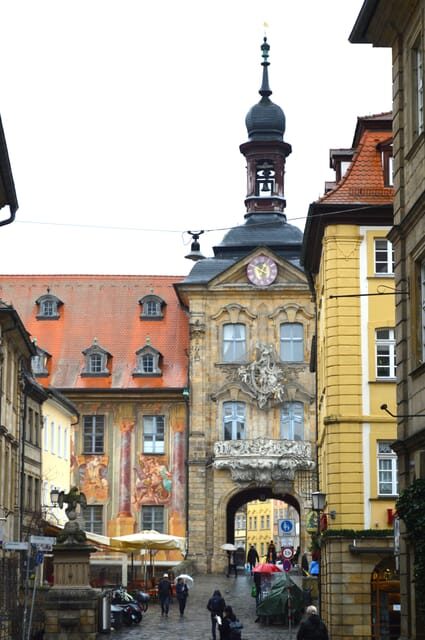
- Starting at Obere Brücke and Altes Rathaus: fast orientation for the walk
- Watching The Flying Classroom come to life at Aufseesianum
- The Sams alleyways: old town as comedy, not just scenery
- The Three Musketeers and the up-to-400 filmmakers surprise
- Samshaus, Pfahlplätzchen, and the Bamberg Residence: changing scenes with every step
- A quick practical tip
- Schlenkerla: a film stop that tastes like Bamberg
- Domplatz, Old Court, and Bamberg Cathedral: the big finish where photos happen
- Nuremberg witch-hunt context and the medieval prison Lochgefängnisse
- Price and logistics: is $15 worth it for two hours?
- Should you book this cinematic Bamberg walk?
- FAQ
- FAQ
- How long is the tour?
- Where does the tour start and where does it end?
- What language is the live tour guide?
- Is the tour wheelchair accessible?
- Can I cancel for a refund?
- Can I book a group of 10 or more people?
Key things you’ll notice on this cinematic Bamberg walk
- Film stills where scenes were shot so the past and the movie screen line up
- Major productions covered including The Flying Classroom, The Sams, The Three Musketeers, and The Empress
- A route built around recognizable Bamberg stops from Obere Brücke to Domplatz
- A Paris transformation moment tied to The Three Musketeers and up to 400 filmmakers
- Dark-but-interesting history included with Nuremberg witch-hunt context
- Lochgefängnisse as a standout stop bringing medieval justice into focus
Bamberg, where filmmakers borrowed a whole city
Bamberg has a look that directors love: steep roofs, medieval stone lanes, and a riverfront setting that’s easy to frame. What makes this tour fun is that it doesn’t treat the city like a postcard. It treats Bamberg like a working set—street corners, facades, and landmark squares that repeatedly turned up on camera.
I like the mix of film entertainment and real place storytelling. You start with movie magic, then you’re shown how the same spots could become something else—like 17th-century Paris—without changing where you’re standing. And yes, the show has jokes and lively moments, but it also slows down when it gets to heavier material like witch-hunt history and the medieval prison Lochgefängnisse.
You can also read our reviews of more tours and experiences in Bamberg.
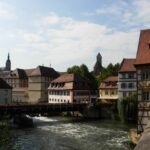
Starting at Obere Brücke and Altes Rathaus: fast orientation for the walk
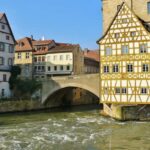
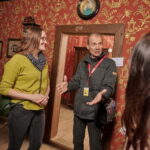
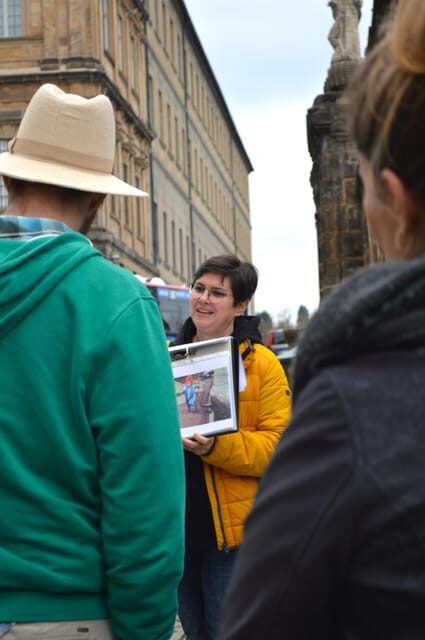
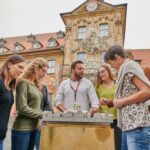
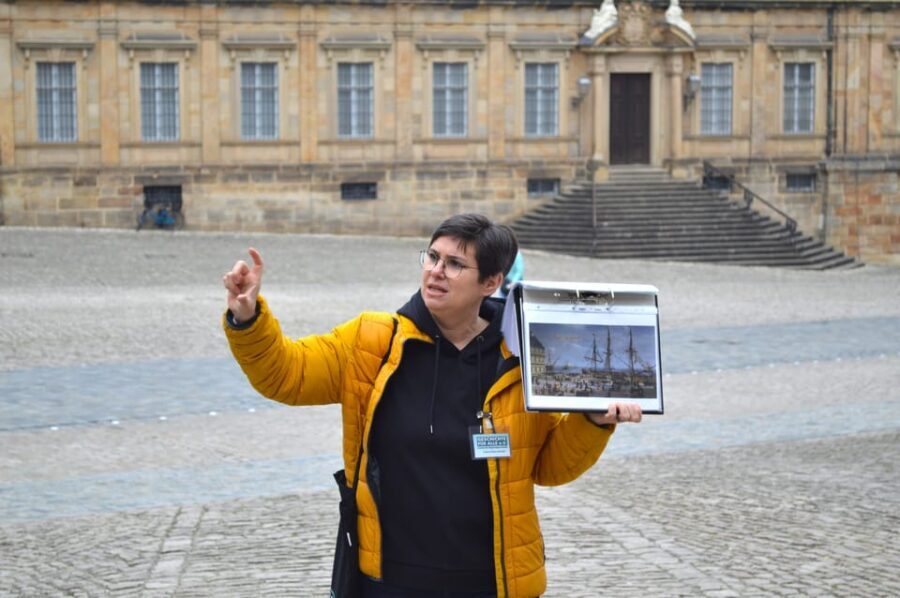
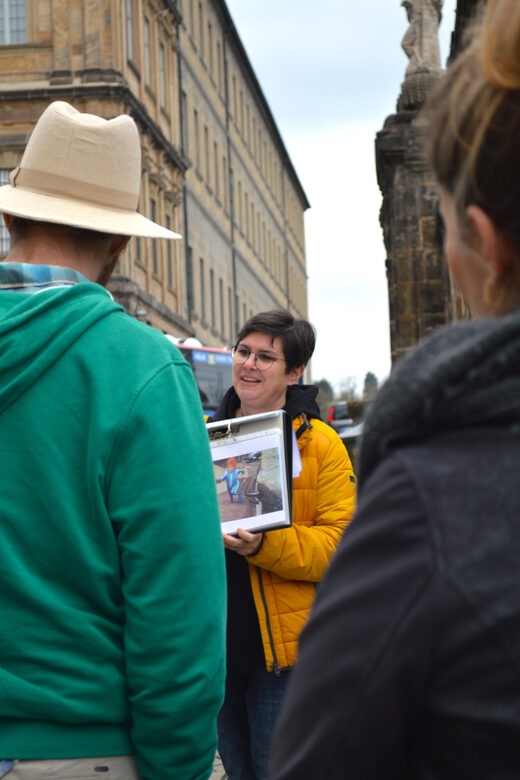
The tour starts at Obere Brücke 2, at the entrance of Altes Rathaus (and your guide is easy to spot—picture folder in hand, name tag for Geschichte Für Alle e.V.). I like this start because it gives you instant orientation. From a bridge, you can mentally map the river area and understand why Bamberg’s old streets feel like a maze made for wandering.
Within the first stretch, the pace stays simple: you’re mostly on foot, with short guided segments and a few minutes between stops. That rhythm matters. It keeps you from zoning out, and it also gives you time to notice details you’d normally miss when you’re just sightseeing on your own.
Watching The Flying Classroom come to life at Aufseesianum
One of the most specific movie connections is The Flying Classroom from 1973, linked to the Aufseesianum. This is the kind of stop that turns a building you might otherwise glide past into something you can picture instantly on screen.
Here’s why that matters for your experience: once you’ve seen how a real location functioned as a filmed setting, you’ll start recognizing camera logic in the city. You’ll notice sightlines, entrances, and how streets naturally “stage” groups of people. It’s the same trick filmmakers use—your brain just stops thinking of it as entertainment and starts thinking of it as design.
The Sams alleyways: old town as comedy, not just scenery
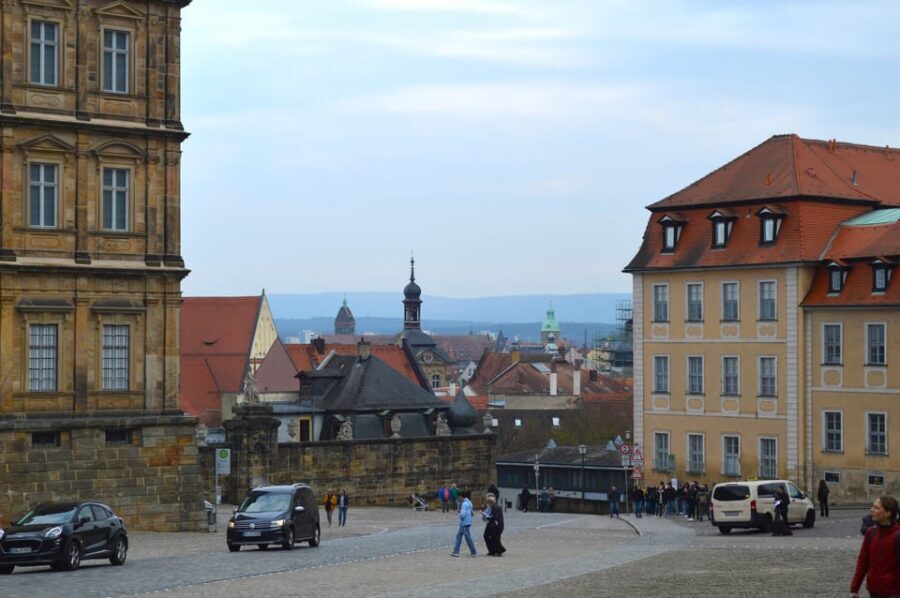
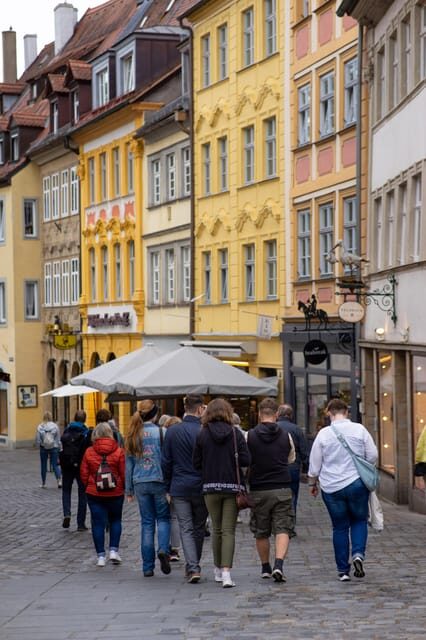
Next comes the playful side, with the story of the Sams filmed in Bamberg. The route takes you from the Old Town’s winding lanes toward the Samshaus, and you’ll follow the trail of the cheeky character through streets that feel built for mischief.
Two actor names are part of the fun here: Ottfried Fischer and Günter Strack. The tour uses these connections to anchor the movie scenes to real walking paths. Even if you don’t know the films word-for-word, you’ll catch the charm fast because the guide points at the spot and then explains what changed when cameras showed up.
If you’re traveling with kids, this portion is a strong bet. One guide (Emma) is specifically mentioned for answering children’s questions in a friendly, patient way—exactly what you want when you’re trying to keep little attention spans from wandering.
The Three Musketeers and the up-to-400 filmmakers surprise
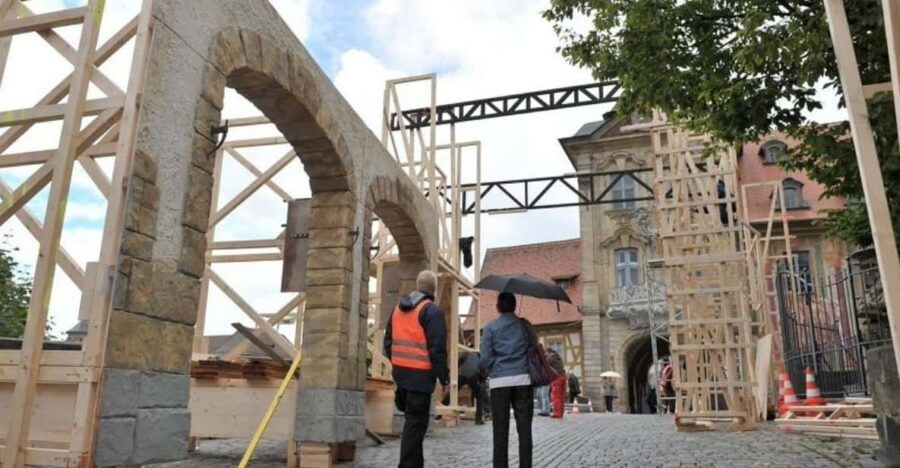
This is the “wait, really?” chapter. With The Three Musketeers (2011), Bamberg was transformed into 17th-century Paris and the production reportedly brought up to 400 filmmakers to town. That scale is wild for a compact cathedral city, and it explains why Bamberg photographs so well for film.
What I like about how this story is taught is the practical angle. You’re not just hearing that Bamberg was used—you’re connecting movie transformation to the actual spaces you’re walking past. The city’s medieval structure becomes the reason you can sell another era without rebuilding everything from scratch.
If you’re a film fan, this is where the tour earns its “cinematic walk” title. You’ll start seeing the old city as a set of problem-solvers for filmmakers: narrow streets for action scenes, larger squares for crowd scenes, and landmark buildings for instant time-period signals.

Samshaus, Pfahlplätzchen, and the Bamberg Residence: changing scenes with every step
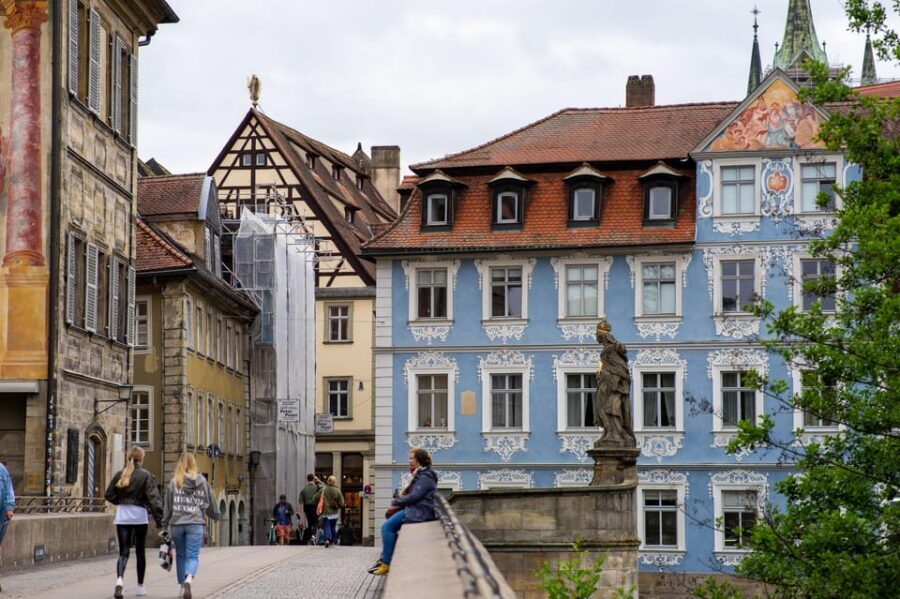
After you’ve followed the movie route through alleyways, the walk widens just enough to keep your legs happy. You’ll pass Pfahlplätzchen and continue to the Bamberg Residence, with stops built around how different eras “read” on camera.
This is a good part of the experience to slow down and do your own looking. Even with a guide talking, you can still check angles, doorways, and the way stonework and layout affect how scenes are framed. If you’ve ever thought Bamberg seems theatrical, this stop confirms why.
A quick practical tip
Bring a water bottle. The tour runs about two hours, and even at a calm walking pace you’ll feel it once you’re out of the river-bridge area and deeper into the old streets.
Schlenkerla: a film stop that tastes like Bamberg
At Schlenkerla, you’ll get a pause that feels different from the museum-style stops. This is one of those places where Bamberg’s everyday culture is right there next to the cinematic stories.
Even if you don’t plan to make this a full food-and-drink break, you’ll still enjoy the contrast. The guide’s film connections keep the city playful, while the atmosphere here feels like the real Bamberg—lived-in, not staged. If you want a souvenir, a snack, or just a place to re-center your energy before the final landmarks, this is where it works.
Domplatz, Old Court, and Bamberg Cathedral: the big finish where photos happen
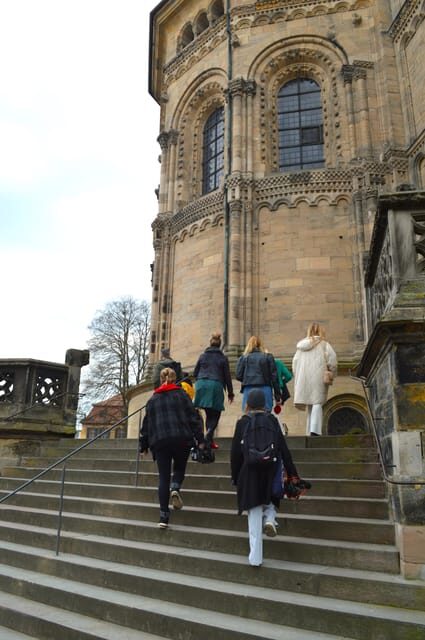
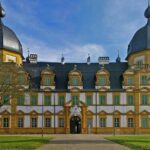
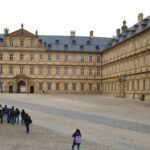
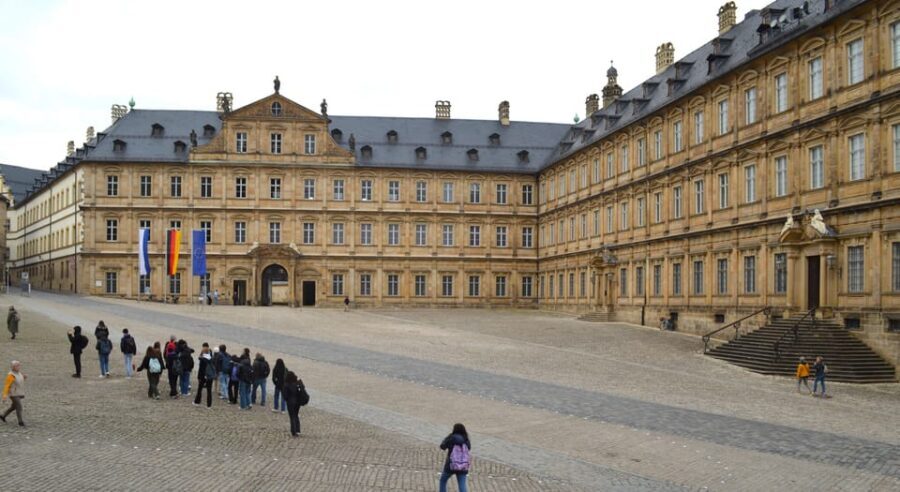
As you head toward the end, the walk concentrates on Domplatz, the Old Court Bamberg, and Bamberg Cathedral. This is where Bamberg’s scale shows up: you’re walking from tight lanes into squares that feel made for gathering, filming, and—yes—standing for a good view.
I like that the tour doesn’t treat the cathedral area as a simple “point and go.” The guide uses it as another stage in the movie timeline, connecting the camera-friendly spaces to the productions you’ve already learned about. By the time you reach the cathedral square, the tour feels like a complete arc: small streets for character moments, bigger squares for spectacle, and landmark buildings for instant recognition.
Nuremberg witch-hunt context and the medieval prison Lochgefängnisse
This walk isn’t only about entertainment. You also get history of witch hunts in Nuremberg, and you’ll learn about the medieval prison called Lochgefängnisse. If you’re expecting a light movie tour only, consider this your curveball—in a good way.
Why it works: placing witch-hunt history and a prison in the same tour frame as film locations creates perspective. You’re reminded that medieval streets weren’t designed for film fun; they were designed for real life—sometimes harsh, sometimes frightening. The guide’s job is to keep it understandable, and the contrast makes the lessons stick.
If your group prefers “serious stops” (or if you like history that feels concrete), this part is often what people remember later. The name Lochgefängnisse alone hints at why: it’s not an abstract topic. It’s a location tied to how punishment worked in the medieval mind.
Price and logistics: is $15 worth it for two hours?
At $15 per person for a 2-hour guided walk, this is good value if you care about film locations and want a guided framework. You’re not paying for transportation, and the cost covers a live guide who uses photos of film scenes tied to specific spots—that’s the core “product” here.
Two practical notes help you judge fit:
- Language is German. If you don’t speak much German, you might still enjoy the visuals, but the story will be harder to follow.
- Group size can be an issue. One review mentions the group being bigger than expected, which made it tough to hear the guide. If you want the best sound and attention, choose a start time that feels less crowded and try not to get stuck at the back.
Also, plan for payment and documentation. If you book through GetYourGuide, no invoice is issued—your booking confirmation is the proof of payment.
If you’re traveling with a group of 10 or more, the tour provider invites you to contact them by email at [email protected] for group participation.
Should you book this cinematic Bamberg walk?
Book it if you love film locations and want more than random sightseeing. This tour is built for you if you want to recognize specific productions like The Flying Classroom, The Sams, and The Three Musketeers, and you enjoy seeing how a real city can transform into another era on screen.
Skip it if you want a quiet, self-paced tour with lots of free time. The format is guided and on foot, with a clear route and multiple stops. And because group size can sometimes run larger than ideal, it’s not always the best choice for travelers who need very clear audio at all times.
FAQ
FAQ
How long is the tour?
The tour lasts about 2 hours.
Where does the tour start and where does it end?
It starts at Obere Brücke 2, at the entrance of Altes Rathaus, and it finishes at Domplatz.
What language is the live tour guide?
The tour guide provides the tour in German.
Is the tour wheelchair accessible?
Yes, the tour is listed as wheelchair accessible.
Can I cancel for a refund?
You can cancel up to 24 hours in advance for a full refund.
Can I book a group of 10 or more people?
Yes. For groups of 10 or more, you’re asked to contact [email protected] to arrange participation.