REVIEW · BERLIN
Cold War Berlin – Private Live Virtual Experience
Book on Viator →Operated by Vexperio · Bookable on Viator
Berlin’s Cold War story plays on your screen tonight. This live Zoom experience brings you in real time with a local guide as you track major sites from the Nazi era through the Berlin Wall, with Q&A built into the flow.
I love two things most: first, the chance to ask questions as you go, so the history doesn’t feel like a lecture. Second, it’s strong value for the price, especially since it’s private to your group. One possible drawback: two of the highlighted stops are marked as admission ticket not included (Martin-Gropius-Bau and the Trabi Museum), so plan for possible extra costs if you want to do anything further on-site.
In This Review
- Key things to know
- Why This Cold War Berlin Zoom Tour Actually Works
- Price and What You’re Really Paying For at $23
- The 1-Hour Flow: Perfect for a Sunday Night on the Couch
- Martin-Gropius-Bau: Art, Architecture, and Wartime Scars
- Topography of Terror: Former SS and Gestapo Headquarters
- Trabi Museum: Why the Trabant Car Became a Cold War Symbol
- Checkpoint Charlie and the Black Box Exhibition: Where Tension Had a Location
- Getting the Most Out of Live Q&A (Without Feeling Put on the Spot)
- Local Guide Power: Why a Professional Explains Better Than a Video
- Weather, Timing, and the Real-Life Limits of Virtual Plans
- Who Should Book This Cold War Berlin Virtual Tour?
- Should You Book? My Practical Decision Guide
- FAQ
- How long is the Cold War Berlin private live virtual experience?
- What location is this tour about?
- How do I join the tour?
- Is this a private tour?
- What sites are included in the tour?
- Are admissions included for all stops?
- Is the tour guided?
- What if the weather is poor?
- Can I cancel for a full refund?
Key things to know
- Real-time Zoom with live Q&A so you can ask questions as the tour moves
- Four major Cold War stops packed into about an hour
- A mix of memorials and everyday-life artifacts, from the Berlin Wall to the Trabi
- Some locations are free, while others list admission not included
- Private group format means no crowd noise and fewer awkward moments
Why This Cold War Berlin Zoom Tour Actually Works
A lot of virtual tours are basically a slideshow with a voice. This one is different because it’s live, in real time, on Zoom—so the guide can respond to your questions while you’re watching the sights together.
And since the tour is centered on Berlin’s Cold War story, you’re not just learning dates. You’re connecting places: the transition from Nazi power to what followed, the physical reality of division, and the cultural artifacts people lived with day to day. Places like the Topography of Terror and Checkpoint Charlie make that story easy to picture, even from home.
I also like the pacing. It’s short—about an hour—so it fits cleanly into a Sunday evening without turning into a half-day homework project. For $23, that’s the sweet spot: enough structure to feel like a tour, not so long that you zone out.
You can also read our reviews of more private tours in Berlin


Price and What You’re Really Paying For at $23
Let’s talk value in plain terms. Twenty-three dollars is not a fortune for a live, guided experience in a city that’s otherwise expensive (hotels, transit, paid attractions add up fast). Here, you’re paying for three things:
- A professional local guide you can interact with
- A live route through well-known Cold War sites
- A structured way to learn without doing the planning legwork yourself
Do keep your eyes open about admissions. The experience notes that Martin-Gropius-Bau and the Trabi Museum have admission ticket not included. Meanwhile, Topography of Terror and the Black Box exhibition are marked free. So your out-of-pocket cost could be low—or it could rise a bit depending on what you choose to do around the tour on your own.
The 1-Hour Flow: Perfect for a Sunday Night on the Couch
This tour is built to feel like a guided walk, but with the comfort of staying put. You join via Zoom, connect with your group, and the guide takes you from stop to stop in sequence. The whole thing is about an hour, so it stays focused.
A practical tip: treat it like you’re visiting. Have a device ready with Zoom working, and keep notes if you tend to forget details later (Berlin has so many layers that the timeline can blur unless you capture a few anchor points). Since it’s live, you’re not stuck waiting for a recorded explanation. You can ask questions right when something sparks curiosity.
Another nice part of the format is the private setup. Because only your group participates, you’re less likely to get lost in a sea of voices, and it’s generally easier to ask a follow-up question without feeling like you’re interrupting a stranger’s trip.
Martin-Gropius-Bau: Art, Architecture, and Wartime Scars
The tour begins at Martin-Gropius-Bau (often referred to as Gropius Bau). It’s framed as one of Berlin’s premier art galleries, and the standout point for this experience is its visible wartime past. The building is described as still carrying bullet scars from World War II.
That detail matters because it sets the tone. You’re not starting with a neutral museum stop. You’re starting where physical evidence of violence still shows in the structure. In a Cold War context, that’s useful. It reminds you that what comes later—Nazi defeat, occupation, division, propaganda—was built on ruins and real damage, not just political speeches.
One caution: admission for this stop is marked as not included. Since this is a virtual experience, you won’t automatically be paying like a normal onsite visitor—but it still signals that if you decide to visit in person later, you should budget for entry.
Topography of Terror: Former SS and Gestapo Headquarters

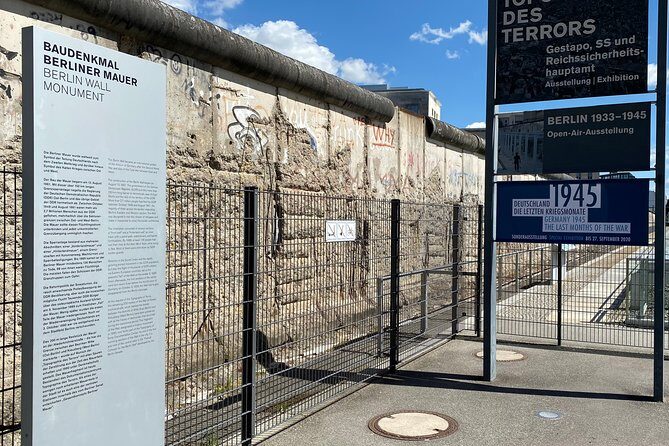
Next comes the Topography of Terror, described as the former SS and Gestapo headquarters. That’s heavy ground. Even if you’re watching from home, you’ll feel the weight of why this place matters.
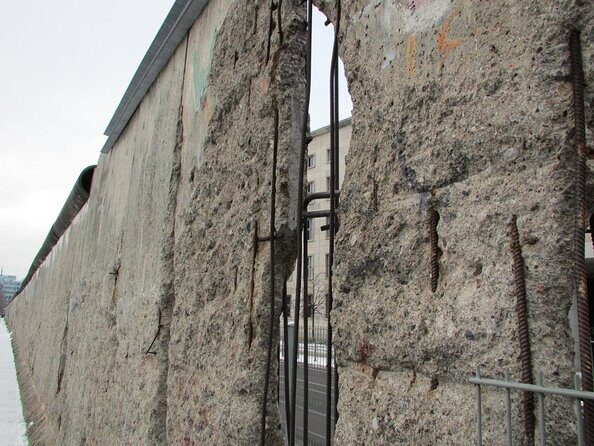
This stop also includes time to walk along one of the most brutal symbols of the Cold War: the Berlin Wall. The way it’s described makes it clear the tour isn’t treating the Wall like a photo backdrop. It frames the Wall as a real marker of control, fear, and separation—something that shaped how people moved through Berlin.
This is also one of the more straightforward stops from a cost perspective. It’s marked as free (admission ticket free), and the tour allocates about 15 minutes here. That combination—substance plus no additional ticket requirement—makes it a strong anchor for the whole evening.
If you’re doing this tour as a first taste of Berlin’s 20th-century history, this is the stop that likely gives you the clearest sense of how propaganda and repression operated in space, not just on paper.





Trabi Museum: Why the Trabant Car Became a Cold War Symbol
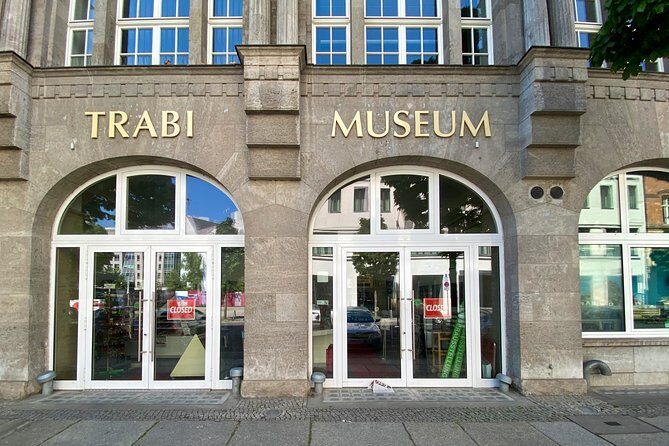
After the darker memorial ground, the tour shifts to something you can actually smile at: the Trabi Museum and its fleet of Trabants. The Trabant is often described as East Germany’s mass-manufactured cardboard car, and that phrasing is doing a lot of work.
It points to a key Cold War idea: politics weren’t only about borders and speeches. They showed up in everyday objects—what people could buy, what they could drive, and what tradeoffs they lived with. The Trabant became an emblem of a system that emphasized availability over quality, production over choice.
This stop is allocated about 5 minutes, so think of it as a quick but memorable interlude. It keeps the tour from being all grim weight. Even if the car itself doesn’t look like your idea of a museum piece, it helps you understand what life under East German conditions could feel like.
One more practical note: this stop is marked as admission ticket not included. So if you’re the type who wants to follow up later with a physical visit, budget ahead.
Checkpoint Charlie and the Black Box Exhibition: Where Tension Had a Location
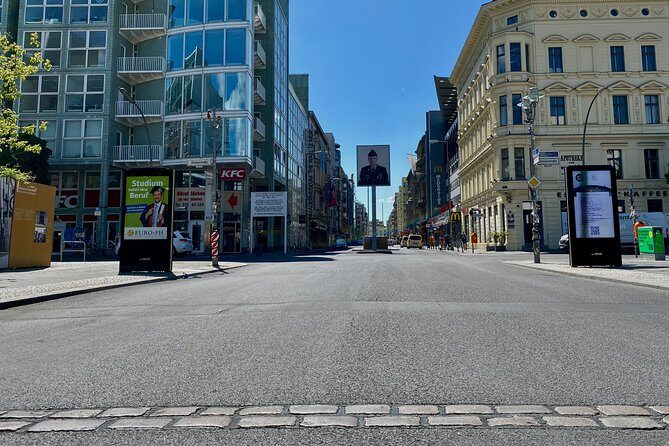
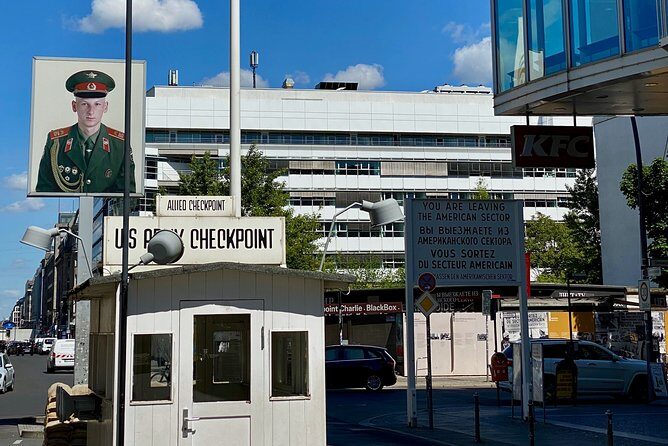
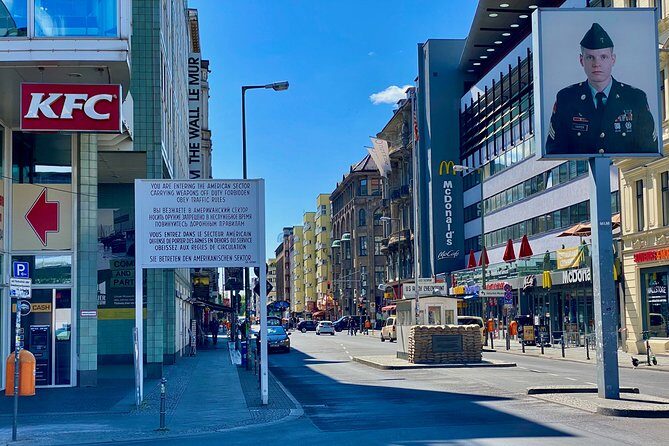
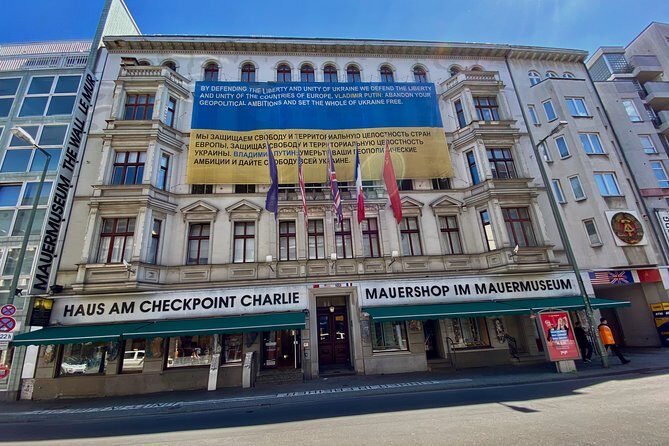
Then you hit Checkpoint Charlie—one of the most famous crossing points over the Berlin Wall. The tour frames it as a place where, in 1961, a tank standoff put the world on the nuclear knife-edge. That’s the kind of detail that grabs attention because it turns geopolitics into something you can picture as real time pressure.
Checkpoint Charlie also gives you a useful contrast after Topography of Terror. Earlier, you’re walking through the machinery of Nazi rule and the spaces tied to repression. Here, you’re looking at the theater of the Cold War—where power showed up as show of force, and where the risk was not abstract.
The ending portion includes the Black Box exhibition, noted as excellent and marked as free. It’s scheduled for about 15 minutes on this virtual route.
So you end with two benefits: (1) a globally recognized site that makes the story easy to anchor, and (2) a free museum component that rounds out the emotional arc of the tour with a structured exhibit experience.
Getting the Most Out of Live Q&A (Without Feeling Put on the Spot)
The best part of this experience is the interactivity. Since it’s live, you can ask questions and get answers while the guide is still talking about the place you’re looking at. That helps you connect facts to what you’re seeing instead of collecting disconnected trivia.
Here’s how to make those questions count. Pick one:
- Ask what detail matters most about a site—like what it represented during the Cold War
- Ask for a quick timeline link (for example, how this stop fits after the previous one)
- Ask what to look for if you ever visit in person later
If your session is guided by someone like Sam or Taylor (both names show up in the experience feedback), the common theme is that the guidance feels engaging and easy to follow. That matters because Q&A only works if the guide can explain clearly and keep momentum.
Also, don’t worry about sounding basic. With history tours, your best question is often: what should I remember from this stop?
Local Guide Power: Why a Professional Explains Better Than a Video
A short virtual tour lives or dies on the guide. Even with great visuals, you need context and careful explanations to keep the story straight—especially in Berlin, where different eras overlap in one city.
This experience includes a professional, local guide, and that’s one of the main reasons it justifies the price. You’re not only learning the what. You’re learning the why behind locations: why a building was used, why a symbol like the Wall mattered, and why objects like the Trabant became cultural proof of a system.
It’s also helpful for choosing your next real-world steps. When you finish, you’re not left with a blur of place names. You come away with a clearer sense of what you want to see if you ever plan an actual Berlin trip.
Weather, Timing, and the Real-Life Limits of Virtual Plans
The experience is marked as requiring good weather. That’s worth taking seriously, even though you’re at home. It suggests the provider may schedule the visual sourcing or coordination with outdoor viewing in mind.
If weather isn’t good, you can be offered another date or a full refund. So if you’re booking for a particular day, it’s smart to treat it like a flexible plan, not a fixed appointment.
In terms of timing, it’s about an hour long. That makes it easy to fit in, but it also means the guide has to keep moving. If you have a specific question, try to ask early rather than saving it for the last minutes.
Who Should Book This Cold War Berlin Virtual Tour?
This is a great fit if you want a guided, question-friendly history session without long travel days. You’ll likely enjoy it if:
- You want a first taste of Cold War Berlin sites, with a logical order
- You prefer learning with a human guide over reading alone
- You’re traveling with kids or household members who might not want museums for hours
- You want a low-risk way to get your bearings before a future in-person trip
It’s also a smart choice when you’d rather stay home but still want something structured and engaging. One of the big wins here is that it feels like an activity, not just watching a screen.
Should You Book? My Practical Decision Guide
Book it if you want:
- A live guided Cold War route through major Berlin landmarks
- Time to ask questions in real time
- A short, focused experience for about $23
Skip it (or treat it as a “maybe”) if:
- You’re expecting every stop to be fully included without any possible extra ticket involvement, because Martin-Gropius-Bau and the Trabi Museum list admission ticket not included
- You hate live Zoom sessions and prefer passive content, since this experience is built around interaction
If you’re on the fence, use this simple test: if you’d pay around $23 for an hour of a guided history lesson from a local in Berlin, with the option to ask questions, then you’re in the right place.
FAQ
How long is the Cold War Berlin private live virtual experience?
It’s approximately 1 hour.
What location is this tour about?
It’s a Berlin, Germany experience.
How do I join the tour?
You’ll need video calling software Zoom downloaded onto your device to participate.
Is this a private tour?
Yes. It’s private, and only your group will participate.
What sites are included in the tour?
The tour covers Martin-Gropius-Bau, Topography of Terror, the Trabi Museum, and Checkpoint Charlie, with the Black Box exhibition included at the end.
Are admissions included for all stops?
No. Martin-Gropius-Bau and the Trabi Museum list admission ticket not included. Topography of Terror and the Black Box exhibition are marked as admission ticket free.
Is the tour guided?
Yes. It includes a professional local guide.
What if the weather is poor?
This experience requires good weather. If it’s canceled due to poor weather, you’ll be offered a different date or a full refund.
Can I cancel for a full refund?
Yes. You can cancel up to 24 hours in advance for a full refund. If you cancel less than 24 hours before the start time, the amount you paid will not be refunded.