REVIEW · BERLIN
Berlin’s Jewish Quarter – Private Live Virtual Experience
Book on Viator →Operated by Vexperio · Bookable on Viator
Berlin’s Jewish Quarter, delivered in real time. This private live virtual experience lets a local guide take you street-by-street via Zoom, using historical photos and videos and leaving room for your questions during the hour.
I like the real-time interaction built into the format. You’re not watching a prerecorded video—you can ask questions as you move from one place to the next, including the New Synagogue area and the Art Nouveau courtyards at Hackeschen Höfe. I also appreciate the route’s mix of landmark and lesser-noticed stops, including Otto Weidt’s story of protecting Jewish workers.
The main consideration is simple: you need Zoom on your device and decent audio, and because the tour runs through the streets, it requires good weather. If conditions are bad, the plan can shift.
In This Review
- Key Things That Make This Berlin Jewish Quarter Virtual Tour Worth It
- What You’re Actually Doing: A Live Berlin Walk on Zoom
- How Zoom, Audio, and Live Questions Shape Your Experience
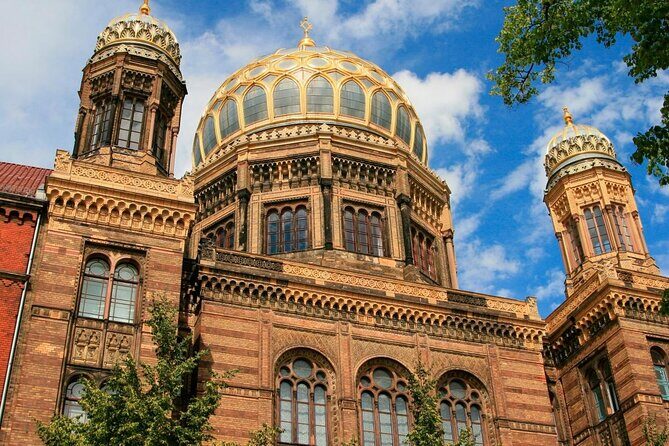
- Stop 1: Stiftung Neue Synagoge Berlin and Centrum Judaicum Under the Golden Domes
- Stop 2: Haus Schwarzenberg, Sophienstraße, and the Moses Mendelssohn Connection
- Stop 3: Otto Weidt and the Museum Blindenwerkstatt Story of Protection
- Stop 4: Die Hackeschen Höfe Courtyard Finale and Why the Ending Works
- Price and Value: Is $23 a Fair Deal for This Virtual Format?
- Who This Private Berlin Jewish Quarter Virtual Tour Suits Best
- Should You Book This $23 Live Virtual Jewish Quarter Tour?
- FAQ
- How long is the Berlin Jewish Quarter live virtual tour?
- Is this tour private or shared with other groups?
- What do I need to join the tour?
- Are admission tickets included for every stop?
- Does the tour run in any weather?
- What is the price?
- What is the cancellation policy?
Key Things That Make This Berlin Jewish Quarter Virtual Tour Worth It
- A private, Zoom-based route through Berlin’s former Jewish Quarter, with time for questions
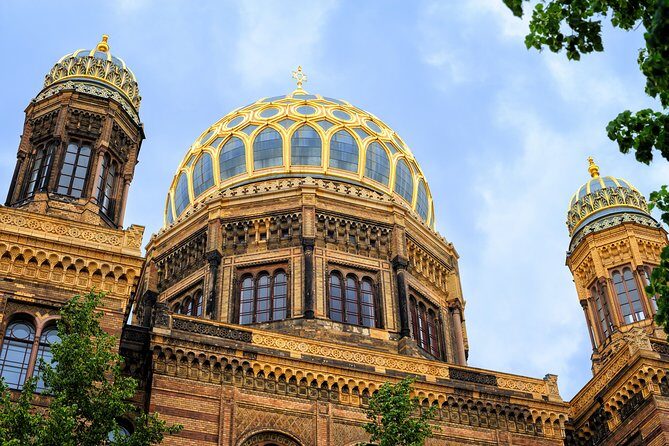
- Stiftung Neue Synagoge Berlin as the starting point, beneath the golden-domed presence of the New Synagogue (ticket not included)
- Haus Schwarzenberg tied to Sophienstraße and Berlin’s oldest Jewish Cemetery area, including Moses Mendelssohn’s resting place (admission included)
- Museum Blindenwerkstatt Otto Weidt and the wartime story of Otto Weidt shielding Jewish workers from deportation (ticket not included)
- Die Hackeschen Höfe to close the tour in a free Art Nouveau courtyard complex
- One-hour timing plus a $23 price, with mobile ticketing and group discounts for larger bookings
What You’re Actually Doing: A Live Berlin Walk on Zoom
This is a private, live tour of Berlin’s former Jewish Quarter, filmed from the streets while you connect from home. Your local guide meets you via Zoom and keeps things interactive, with pauses for your questions rather than a one-way lecture.
What makes it interesting is the way the route is built: it starts with a major synagogue site, then moves through quieter historic ground and into places tied to 20th-century courage, and finally ends in courtyards you can easily picture even if you’ve never been to Hackesche Höfe before. The guide also uses relevant historical photos and videos, which helps you connect what you’re seeing to what happened there.
You should come in with the right mindset. This is not the same as wandering Berlin yourself. You won’t smell the street food or feel the wind on your face. But you will get a guided, structured walk that’s easy to join, easy to follow, and designed around the most meaningful stops rather than endless scrolling through points on a map.
You can also read our reviews of more private tours in Berlin


How Zoom, Audio, and Live Questions Shape Your Experience
You’ll need to download Zoom onto a laptop, tablet, or phone. You’ll also want speakers or headphones so you can clearly hear your guide and any people in your group.
Because it’s live, you can ask questions in real time. That matters, especially for a neighborhood where context changes how you read what’s in front of you. A single question about a name you see on a sign, or why a particular story matters, can turn the tour from “interesting sites” into something you actually carry with you after the call ends.
This format also has a practical advantage: you can participate from anywhere. Berlin isn’t just “one more destination” here. It’s the chance to learn from a local guide while staying in your own time zone and space.
One more practical note: the tour requires good weather. That doesn’t mean you’re going to be outside in a jacket. It means the guide will be working from the street environment, and poor conditions can affect the filming/walking part—so treat it like a normal outdoor experience, even if you’re on your couch.
Stop 1: Stiftung Neue Synagoge Berlin and Centrum Judaicum Under the Golden Domes
The tour begins at Stiftung Neue Synagoge Berlin – Centrum Judaicum, under the ornate presence of the New Synagogue. The guide frames it as the former largest Jewish place of worship in Germany, which gives you a strong starting point for understanding why this area mattered.
Expect the focus to be on how the site looks and what it represents. The tour runs about 15 minutes here, so it won’t feel like a full museum day. Instead, it’s a guided primer: what you’re seeing, why it’s significant, and how it connects to the Jewish Quarter’s story.
Ticket note: admission for this stop is not included, so you may want to budget extra if you plan to go deeper during or after the tour. If you’re trying to keep costs tight, you can still enjoy the guided orientation even without a paid entry at this specific stop.
The big value of starting here is that it gives you a “north star.” Later stops—cemetery connections, wartime protection stories, and courtyard architecture—make more sense when you already understand the symbolic weight of the synagogue beginning.
Stop 2: Haus Schwarzenberg, Sophienstraße, and the Moses Mendelssohn Connection
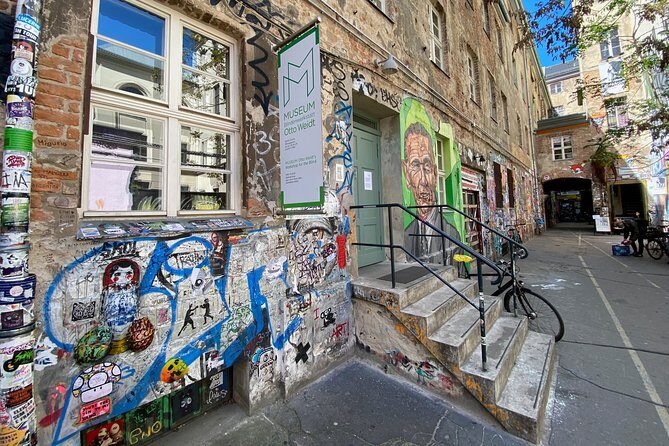
From the synagogue area, you head toward Haus Schwarzenberg, using Berlin’s oldest Jewish Cemetery area as a route context. The guide specifically points out Moses Mendelssohn’s resting place and connects you through Sophienstraße before arriving at Haus Schwarzenberg.
This is about 10 minutes in the plan. It’s shorter than the opening stop, but that’s part of the pacing. You get a quick historical bridge—then you land in a place that, in this guide’s framing, functions as a hub for contemporary counterculture and graffiti in the city center.
Admission note: for this stop, ticket costs are included. That’s a quiet win for value, because not every stop in the itinerary handles tickets the same way. If you like tours where the price stays predictable, Haus Schwarzenberg is one of the places that helps.
What I like about this stop is the contrast. You’re seeing how a historic Jewish area intersects with modern street culture and public expression. You learn to read the neighborhood as living space, not just a set of old buildings with plaques.
The potential drawback is also tied to that short time window: with only about 10 minutes, you won’t get a slow, study-at-your-own-pace visit. Treat this stop like a guided arrival and orientation point. If you want more depth, you’ll likely want a follow-up visit in person later.
Stop 3: Otto Weidt and the Museum Blindenwerkstatt Story of Protection
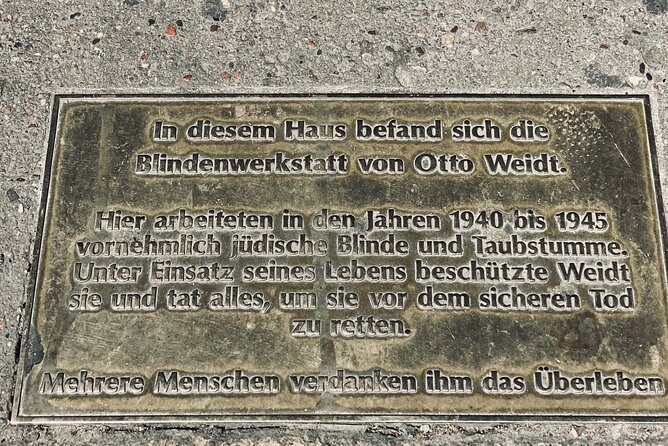
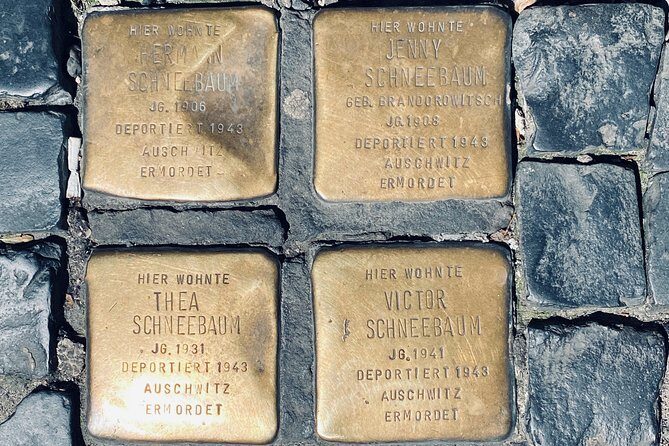
Next up is Museum Blindenwerkstatt Otto Weidt. This stop centers on a powerful story: Otto Weidt, a brushmaker, put his life on the line to shelter Jewish workers from deportation carried out by the SS and Gestapo.
This is a 10-minute stop, and it’s not designed to be a full independent museum session. Instead, it gives you the key narrative and helps you understand why the museum exists and what it chooses to remember.
Admission note: ticket costs here are not included. That means you may pay extra if you want to spend time with exhibits beyond what the guide covers on the call. Even so, if you’re using the virtual tour to build background, this stop is one of the most meaningful parts of the route because it puts human action at the center of the story.
One important reason this stop is valuable: it turns abstract events into a specific person and specific choices. When you learn this way—through a guided explanation and supporting historical visuals—it’s easier to hold the lesson in your head after the tour ends.
As a heads-up, the emotional weight of the topic might land harder for some people than architecture or street corners. If you prefer lighter pacing, you may want to plan a break after this stop and avoid stacking it back-to-back with other heavy-history activities the same day.





Stop 4: Die Hackeschen Höfe Courtyard Finale and Why the Ending Works
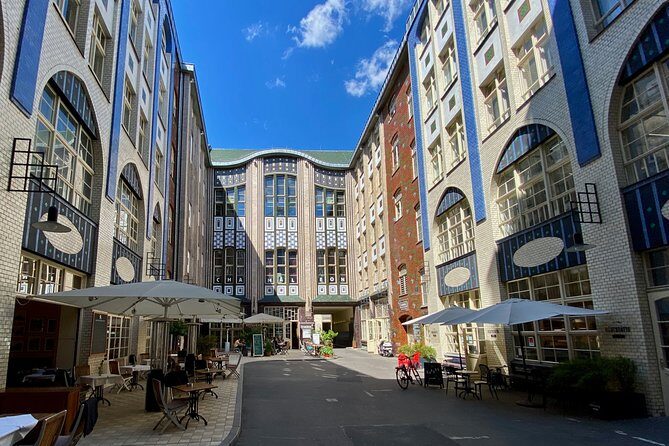
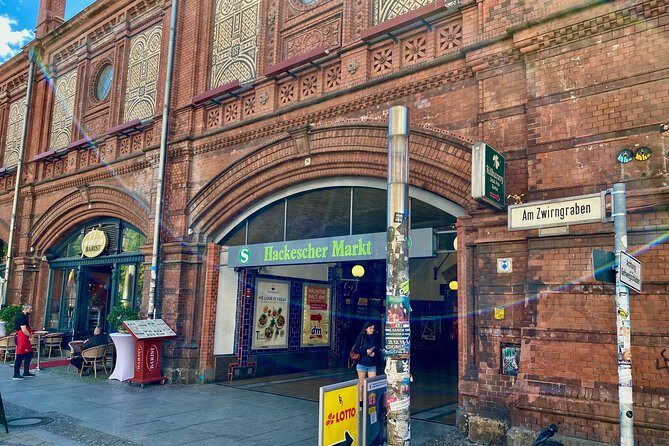
The tour wraps up at Die Hackeschen Höfe, exploring the hidden courtyard complex inside the Art Nouveau-style building group. This final stop runs about 10 minutes, and admission here is free.
Why is this a good ending? Because after heavier themes, you get space to see something calmer and architectural. Courtyards are naturally easy to picture, and the idea of hidden passageways fits the tour’s broader promise: Berlin’s lesser-noticed spaces can hold real meaning, not just the famous front gates.
The free nature of this stop also makes it feel practical. If you’re thinking about overall value, this gives you one part of the itinerary where you’re not paying extra on top of the $23 tour price.
There’s also a simple visual payoff. Even on a screen, you can “read” the courtyard vibe—something enclosed, something meant for passing time rather than rushing through. If the tour helps you build a mental map of where these spaces are, you’ll feel more confident planning an in-person walk next time you’re in Berlin.
Price and Value: Is $23 a Fair Deal for This Virtual Format?
At $23 for about one hour, this experience is priced like a budget-friendly introduction to a focused neighborhood. The best way to judge value isn’t just the sticker price—it’s how the tour handles admissions across stops and how much guidance you get for the time.
Here’s how the cost picture looks based on what’s included and excluded:
- Tickets are included for Haus Schwarzenberg.
- Tickets are not included for the New Synagogue area and Museum Blindenwerkstatt Otto Weidt.
- Hackeschen Höfe is free.
So you may pay extra if you decide to enter the non-included sites during or after your virtual visit. But even without paid entries, the guided route is doing real work: it connects sites to people and events, and it gives you a structured story so you’re not left googling everything afterward.
If you’re traveling or studying on a tight schedule, the private Zoom format can also be a value advantage. You’re paying for direction and context, not for transportation time. And if you’re part of a group, the tour notes group discounts, which can make the per-person cost drop further when you book with others.
Who This Private Berlin Jewish Quarter Virtual Tour Suits Best
This tour fits especially well if you:
- want a guided overview of the former Jewish Quarter without committing to a full day in museums
- prefer asking questions in real time rather than watching a static video
- are limited by time, mobility, or current travel conditions
- like tours that mix architecture, street-level place-reading, and human stories
It’s also a smart choice if you’re planning a future Berlin trip. You’ll leave with names you can recognize in person: Stiftung Neue Synagoge Berlin – Centrum Judaicum, Haus Schwarzenberg, Otto Weidt’s museum, and Die Hackeschen Höfe. That’s not just trivia. It helps you plan a more meaningful walk once you’re in the city.
If you only want a casual, light sightseeing hour, the Otto Weidt segment may feel intense. Still, the tour gives you the choice of how you handle that emotional weight—pause, step away, or continue at your own pace after the call.
Should You Book This $23 Live Virtual Jewish Quarter Tour?
I’d book it if you want a structured, interactive way to learn Berlin’s former Jewish Quarter from a local guide, with clear stops and a pacing that makes sense for an hour-long experience. The balance between major sites, cemetery-linked context, a wartime protection story, and a free courtyard finale is a strong mix.
Skip it only if you know you won’t be able to use Zoom reliably, or if you need a tour where every stop has admission included. With ticket rules varying by location, your total experience cost may rise if you want to enter the non-included sites.
If you’re open to using the tour as a guided starting point—and then following up selectively on your own—it’s a practical way to make Berlin feel close, even when you can’t physically be there.
FAQ
How long is the Berlin Jewish Quarter live virtual tour?
It lasts about 1 hour.
Is this tour private or shared with other groups?
It’s private. Only your group participates.
What do I need to join the tour?
You’ll need Zoom downloaded on your laptop, tablet, or cellphone, plus speakers or headphones.
Are admission tickets included for every stop?
No. Ticket admission is not included for Stiftung Neue Synagoge Berlin – Centrum Judaicum and Museum Blindenwerkstatt Otto Weidt. Admission is included for Haus Schwarzenberg, and Hackeschen Höfe is free.
Does the tour run in any weather?
The tour requires good weather. If it’s canceled due to poor weather, you’ll be offered a different date or a full refund.
What is the price?
The price is $23.
What is the cancellation policy?
You can cancel for a full refund if you cancel up to 24 hours in advance. If you cancel less than 24 hours before the start time, the amount paid is not refunded.