REVIEW · BERLIN
Berlin: Sightseeing Tour in Classic Volkswagen T1 Samba Bus
Book on GetYourGuide →Operated by T1 Berlin · Bookable on GetYourGuide
One bus, 800 years, and 21 windows of Berlin. I love cruising in the restored 1965 VW T1 Samba and getting live commentary as the sights slide past. I also like the photo booklet that helps you match what you see now with how key places looked in the past.
This is a small-group ride, limited to 7 participants, which keeps the vibe relaxed and makes it easier to ask questions while you’re rolling through neighborhoods. And yes, the bus is genuinely built for sightseeing: you get views through the 21 windows, plus heating when necessary.
There are a couple of real-world considerations. The tour isn’t suitable for people with epilepsy or a cold, and there’s also a weight limit of 275 lbs (125 kg). If you’re in either of those groups, skip this and look for another way to see Berlin.
In This Review
- Key highlights worth knowing before you go
- Why the 1965 VW T1 Samba makes Berlin click fast
- Two hours of pass-by stops: the pacing, the trade-offs, and the payoff
- Berlin Cathedral to the museum streets: Lustgarten and the big-name museum cluster
- Government district icons: Unter den Linden, Brandenburg Gate, Reichstag
- East Berlin reminders and the Wall area: Memorial moments and Checkpoint Charlie
- Western highlights and shopping landmark energy: Kurfürstendamm to KaDeWe
- Ending with TV Tower views, Marienkirche, and the Neptune Fountain moment
- Price, comfort, and small-group value at $51 for 2 hours
- Who should book this VW T1 Samba tour, and who should skip it
- Should you book it? My quick decision guide
- FAQ
- How long is the Berlin VW T1 Samba sightseeing tour?
- Where does the tour start?
- What vehicle do you ride in?
- How big is the group?
- Is the tour wheelchair accessible?
- What languages is the live guide available in?
- Is it suitable for everyone?
Key highlights worth knowing before you go
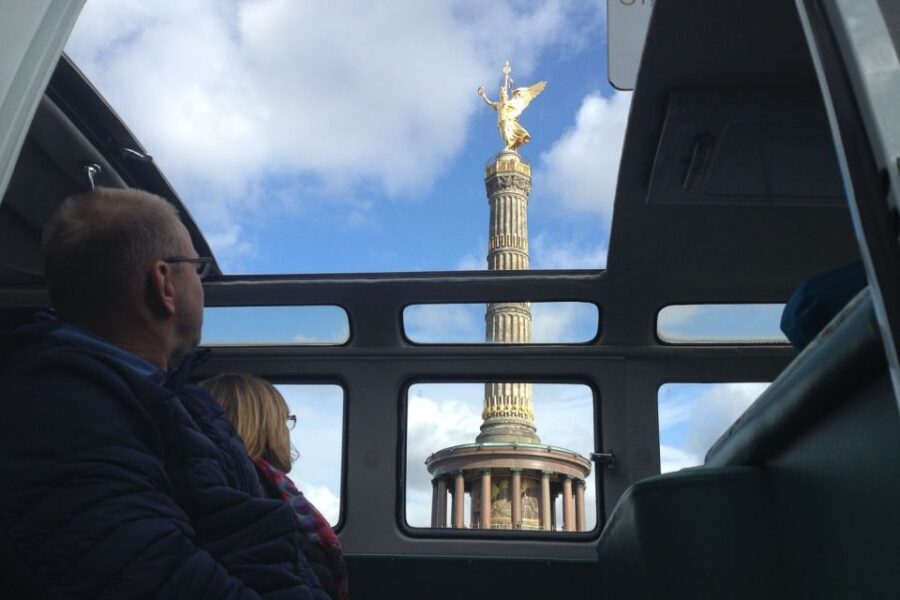
- A 1965 VW T1 Samba Bus that feels like a moving landmark, not just transportation
- Live driver/guide commentary in English or German as you pass the sights
- 21 windows for steady viewing without constant “who’s blocking the view” moments
- An analog photo booklet that helps you place buildings as they appear
- Small group size (max 7) for a more personal, question-friendly ride
- A route that mixes big-name icons with side-road detours and lesser-known notes
Why the 1965 VW T1 Samba makes Berlin click fast
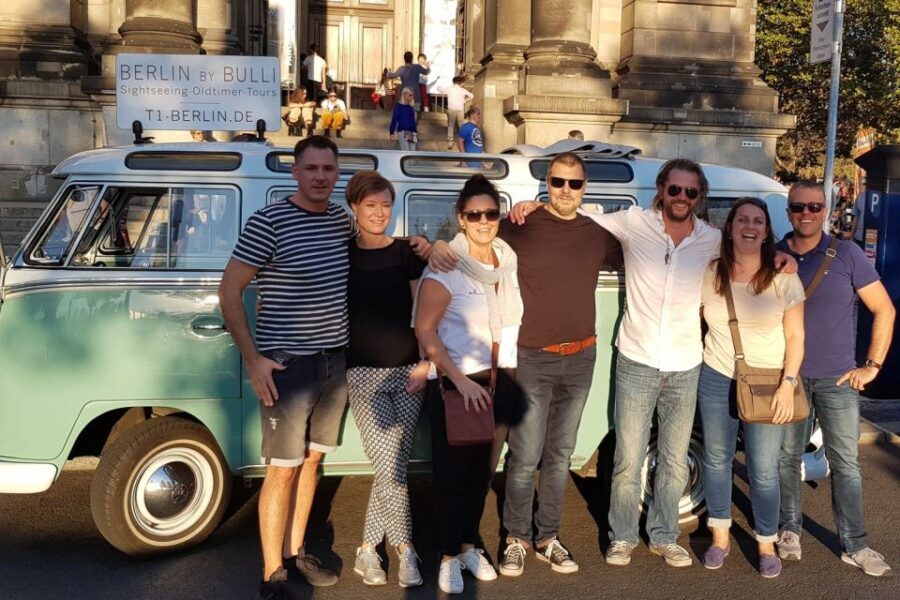
Berlin can feel huge on a first visit. Streets bend, borders shifted, and the city keeps re-inventing itself block by block. This tour helps you get your bearings fast because you’re not jumping between stops on foot or hunting transit lines. You’re just seated, comfortable enough for a 2-hour loop, and watching the city form a timeline in front of you.
The best part is the bus itself. The restored 1965 VW T1 Samba is charming in the way a good classic car is charming: it makes people smile at the curb and it turns a “sightseeing job” into an event. Inside, the layout is built for spotting landmarks from multiple angles, helped by the 21 windows that feed you constant views as your guide narrates what’s coming up next.
You’ll also notice the guide’s rhythm. It’s not just “there’s a monument.” The commentary connects buildings and streets to eras, so when you see something familiar later, it lands differently. Some guides (including names like Rajko and Michael, praised for their organization and friendly style) are cited for making the info easy to follow, with a calm confidence that keeps the tour moving.
The photo booklet is the quiet MVP. It’s described as an analog iPad-style aid, tailored to where you’re going. That matters because Berlin changes depending on which side you’re on, and what once stood where can be hard to picture without a reference.
You can also read our reviews of more tours and experiences in Berlin.


Two hours of pass-by stops: the pacing, the trade-offs, and the payoff

This tour is built around “see it from the road.” Many stops are listed as pass-bys, which means you’ll get strong exterior views, not long time inside museums or buildings. For me, that’s not a flaw. In Berlin, the fastest way to understand structure is to watch how districts and landmarks relate to each other across the streets.
At the same time, you should calibrate your expectations. If you want deep, inside-the-ticket-line time, this isn’t that. The value here is the drive-and-story format: a tight route that covers roughly 50 sights and stretches across nearly 800 years, all in a compact 2-hour window.
The route also favors small side roads, not just the obvious straightaways. That’s why you’ll feel more like you’re learning the city’s logic instead of doing a checklist. And because the group is limited to 7, the guide can keep the pace lively without trying to manage a crowd.
Weather matters, of course. The tour includes heating when necessary, which is a big deal if you’re doing this in winter or shoulder season. It won’t turn cold weather into summer, but it does help you stay focused on the sights rather than your numb hands.
Berlin Cathedral to the museum streets: Lustgarten and the big-name museum cluster
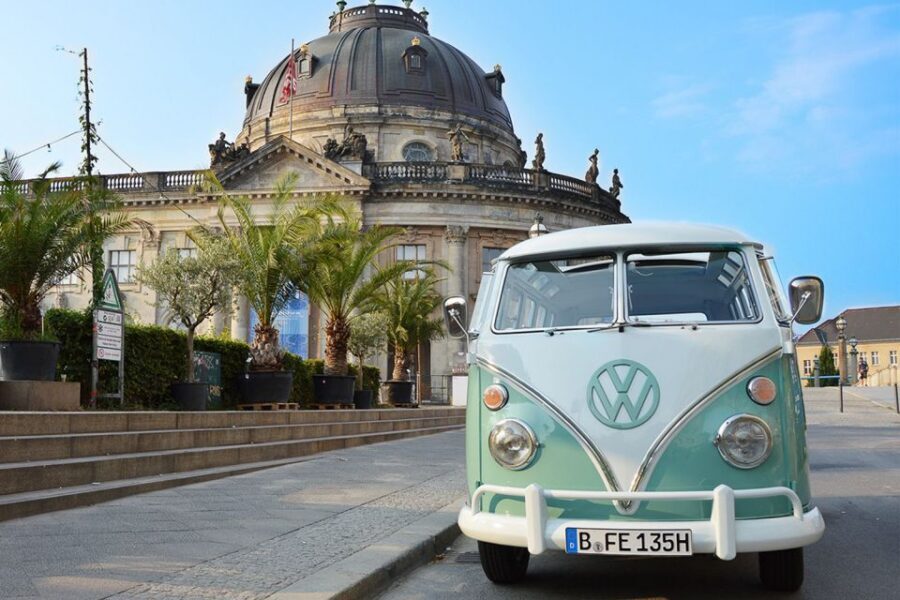
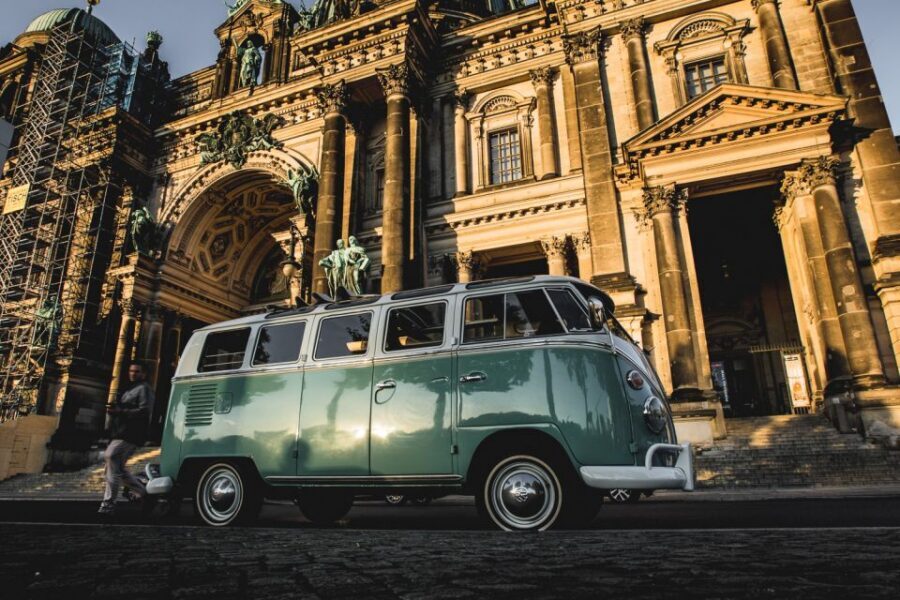
Your ride starts at Berlin Cathedral, which is a smart opening point. It gives you an immediate “center of gravity” for the city, and from there you slide into the historic core. You’ll pass Lustgarten and then move along the streets that lead toward the museum area.
This section is one of the easiest to grasp because the landmark names are close together. You’ll pass the Old Museum, the Alte Nationalgalerie, the Neues Museum, and the museum cluster that includes the Pergamon Museum and Bode Museum. Even if you don’t stop for entry, this is where the city’s artistic and scholarly identity becomes visible in the layout alone.
Why this works for your trip planning: if you later decide you want one museum in particular, you’ll have a mental map of how they sit next to each other. That saves time and keeps you from spending your best visit hours crossing town with guesswork.
One caution: because it’s pass-by viewing, you’ll want to be ready with your best “camera angle.” Traffic, bus positioning, and where you sit inside the vehicle can change how crisp details look through the windows. If photos matter to you, pick a seat that faces forward for the stretch and helps you catch unobstructed views.
Government district icons: Unter den Linden, Brandenburg Gate, Reichstag
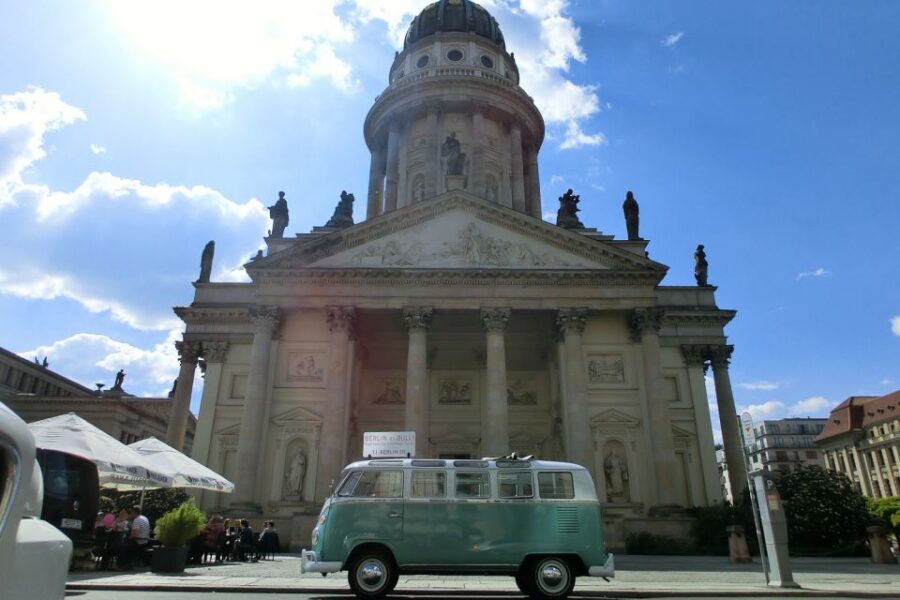
As the tour continues, it shifts from cultural landmarks to power and state symbolism. You’ll go past Unter den Linden and Pariser Platz, then head into the zone where Berlin’s most recognized icons show up fast.
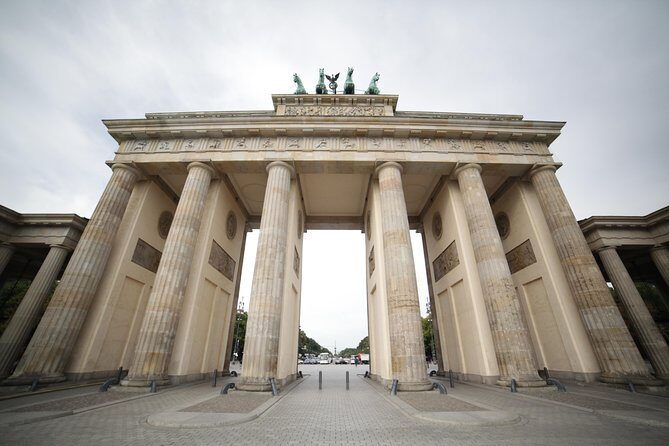
This is where you’ll pass the Brandenburg Gate and then move on to the Reichstag and the wider government district area, including views around the Federal Chancellery and government buildings. You’ll also pass Moltke Bridge, Kongresshalle, and Bellevue Palace.
The guide’s job here is important: Berlin’s political story is layered, and the city didn’t develop in a straight line. The live commentary helps you connect what you’re seeing to the bigger “why this matters” story, instead of treating each building like a separate postcard.
A practical tip: don’t try to memorize everything in one sitting. With Berlin, your goal on this tour is to build context. If you come back later for one specific site, you’ll understand why that site sits where it does and why it’s part of the bigger scene.
And yes, the TV Tower is coming later too, so don’t get tunnel vision. The tour uses landmarks like signposts: first they help you understand the map, then they help you interpret later visits.
East Berlin reminders and the Wall area: Memorial moments and Checkpoint Charlie
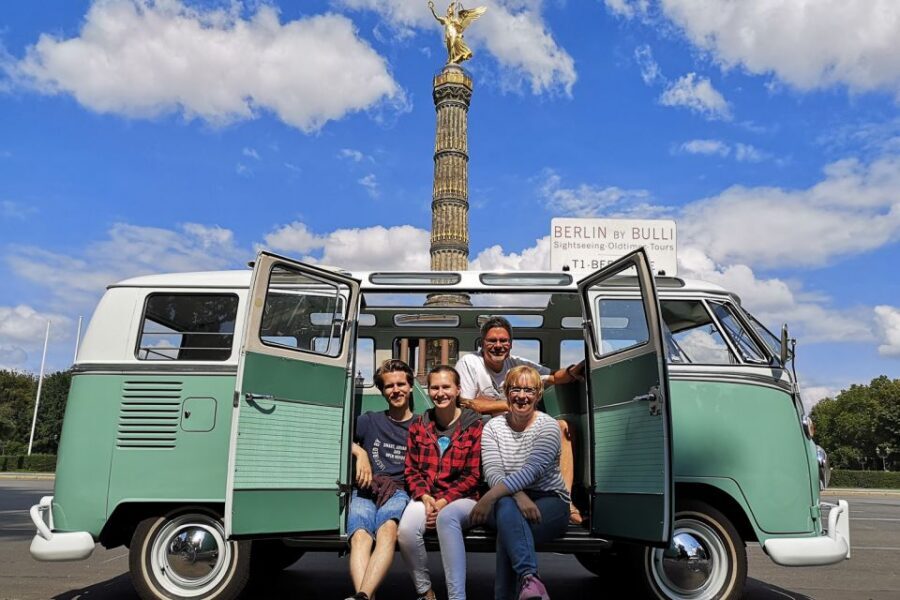
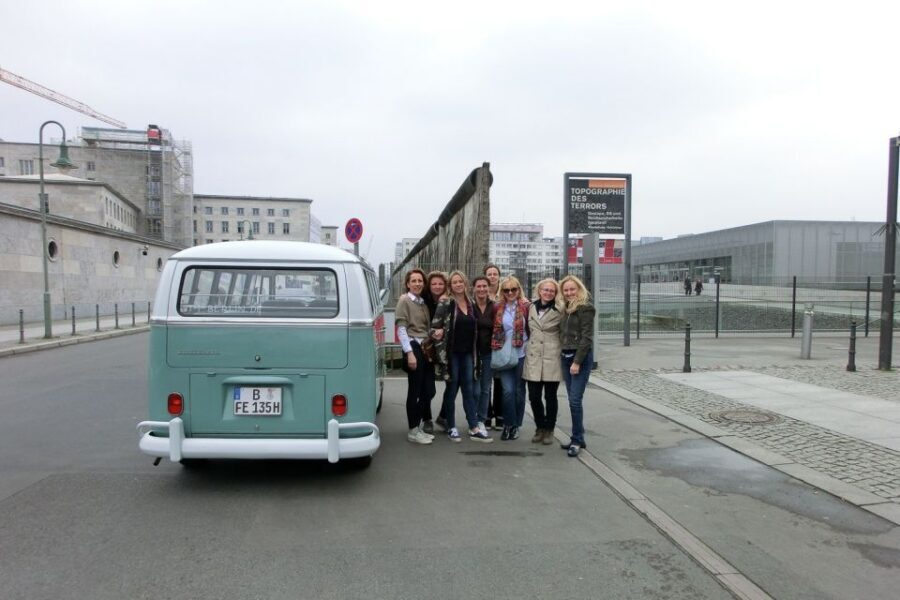
Then the route moves into darker, more reflective territory. You’ll pass the Berlin Wall, and the tour includes stops around Holocaust Memorial, Führer Bunker, and the Reich Chancellery area as part of the broader route.
After that, you’ll roll past Friedrichstraße, Checkpoint Charlie, and on toward Gendarmenmarkt and Berlin City Palace. This segment is emotionally heavier because several of the named places are tied to twentieth-century events. The live guide commentary is what makes the order feel coherent instead of random.
One reason this drive-by approach can still feel meaningful: you’re not stuck in a queue for hours. You’re learning the city’s route through memory, and you’re seeing how these places sit next to everyday streets. That contrast helps your brain connect the historical record to present-day Berlin.
The trade-off is that you won’t have the time to linger. If you’re the type who needs time to stand in silence, plan for extra time on another day for the spots that hit you hardest. This tour gives you the “placement” and “context,” then points you to where you’ll want to go deeper.



Western highlights and shopping landmark energy: Kurfürstendamm to KaDeWe
Berlin doesn’t only have one face. Later in the loop, you’ll pass toward West Berlin highlights, including Zoologischer Garten, Theater des Westens, and Savignyplatz. Then the tour heads toward Kurfürstendamm and the Kaiser Wilhelm Memorial Church area.
From there it’s onward to KaDeWe and the Embassy district, then the route touches Berliner Philharmonie and the Kulturforum area before heading toward Potsdamer Platz.
This portion is where the city’s modern West-side rhythm becomes visible. Even without entry, you can sense how architecture, institutions, and big public spaces differ from the earlier government and museum stretches. And if you’re planning where to eat or browse, these are the areas where you’ll already know what you’re looking for when you walk around later.
One practical note: places like KaDeWe are famous enough that you’ll want to take in the look, but the tour’s strength isn’t shopping time. You’re there for the city map plus the story, not to spend your 2 hours browsing.
Ending with TV Tower views, Marienkirche, and the Neptune Fountain moment
As you loop back, you’ll pass Anhalter Bahnhof, the Holocaust Memorial area again in the overall routing flow, and then it turns toward skyline views and famous city corners.
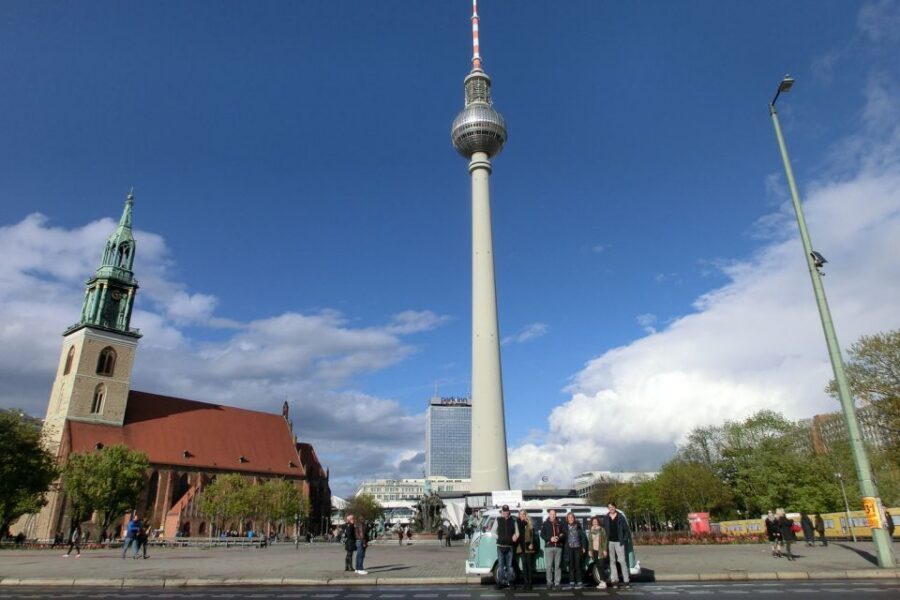
In the later part of the drive you’ll pass the TV Tower, plus Neptune Fountain (Neptunbrunnen) and St. Mary’s Church (Marienkirche). These are strong visual anchors. They help you tie together the different parts of the city you saw earlier into one mental picture.
And because the photo booklet matches the locations you’re seeing, this ending feels less like “random last stops.” It feels like a finish line where your earlier observations snap into place.
Price, comfort, and small-group value at $51 for 2 hours
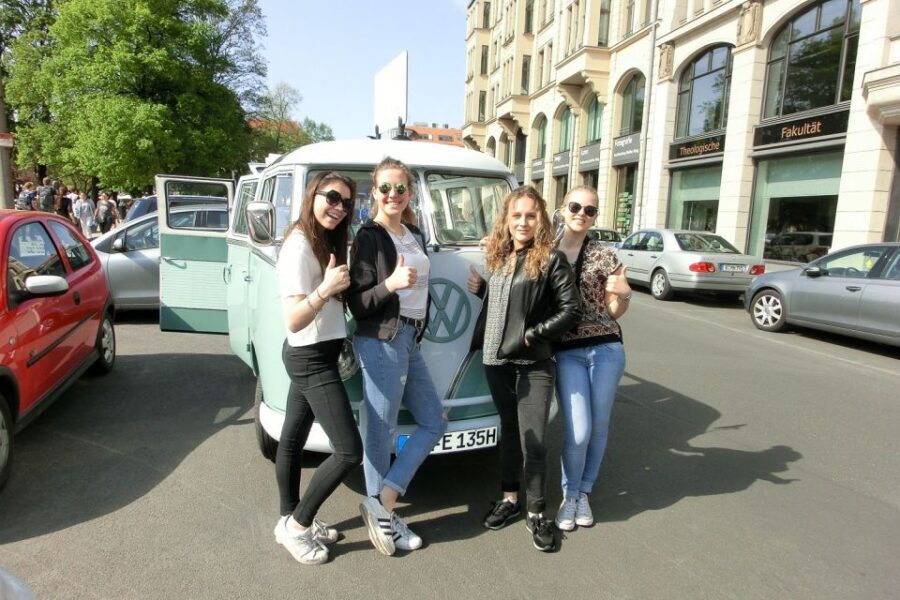
At $51 per person for 2 hours, you’re paying for a guided drive through a dense set of sights (about 50) with live commentary, plus the photo booklet and transport in the vintage bus. A quick way to think about it: you’re spending about $25.50 per hour, and the hour includes narration, transit, and a tailored visual aid.
Is it expensive? It’s not cheap, but it also isn’t just “sit on a bus.” This is a classic vehicle experience with a tight guide-led route and a format that’s easier for your brain than bouncing between stops. You also benefit from a small group limited to 7, which many people find makes the whole thing feel more personal and less like a production line.
Comfort is part of the value equation too. The bus is described as surprisingly comfortable and well kept, including heating when necessary. Reviews also point to a very high satisfaction level for the transport experience, which matters because an uncomfortable ride can ruin the entire point of a short tour.
If you want a fun, efficient way to understand Berlin’s layout before committing to longer museum or neighborhood plans, this is good value.
Who should book this VW T1 Samba tour, and who should skip it
This tour is a smart fit if you:
- Want a fast first-pass map of Berlin with a guide explaining the connections
- Like classic vehicles and want your transport to be part of the experience
- Prefer a small group over crowded buses
- Are doing winter or cool weather and want a heated vintage bus
You might skip it if:
- You have epilepsy or are dealing with a cold, since it’s not suitable for those situations
- You’re over 275 lbs (125 kg)
- You want long indoor time at museums or monuments, because this is mostly a pass-by viewing style
Should you book it? My quick decision guide
If your goal is to understand Berlin’s “how it fits together” story in a short time, book this. The combination of the 1965 VW T1 Samba, live driver/guide commentary, 21-window viewing, and a matching photo booklet makes the tour feel like more than a sightseeing loop.
If you already know Berlin well and you’re hunting for deep museum time, you might find better value elsewhere. But for most first-timers, and for anyone who wants a guided orientation that still feels fun, this is one of the more memorable ways to see the city fast.
FAQ
How long is the Berlin VW T1 Samba sightseeing tour?
The tour duration is 2 hours.
Where does the tour start?
The meeting point is Berlin Cathedral.
What vehicle do you ride in?
You ride in a classic 1965 Volkswagen T1 Samba bus.
How big is the group?
The tour is a small group limited to 7 participants.
Is the tour wheelchair accessible?
Yes, it is wheelchair accessible, but non-folding wheelchairs are not allowed.
What languages is the live guide available in?
The live tour guide offers English and German.
Is it suitable for everyone?
It is not suitable for people with epilepsy or a cold, and there is a weight limit of 275 lbs (125 kg). Intoxication is also not allowed.