REVIEW · BERLIN
Berlin Protest History Tour: Rebels, Resistance, and Revolution
Book on Viator →Operated by Beyond and Beneath Tours · Bookable on Viator
Berlin turns its politics into scenery. This 2-hour protest history walk strings together uprisings and resistance moments across the city, from stone timelines to memorials and a clock that still gathers people in East Berlin. You’ll get a clear sense of how ideas travel from speeches to streets to monuments, and how Berlin keeps rewriting itself in public.
Two things I really like: the route uses real landmarks you can actually stand in front of (not just vague neighborhoods), and it anchors big themes like the Communist Manifesto, the 1943 Rosenstraße protest, and 1989’s Peaceful Revolution in concrete details. One possible drawback: the tour is weather-dependent (it requires good weather), so plan for cold or damp conditions on a long outdoor walk.
In This Review
- Key highlights you’ll remember
- Why This Protest History Walk Works So Well
- Getting Oriented at the Start: Rotes Rathaus and a Timeline in Stone
- Nikolaiviertel and Gasthaus Mutter Hoppe: East Berlin’s Self-Portrait
- Marx-Engels-Forum to Humboldt Forum: From Ideology to Democracy
- Rosenstraße: The 1943 Protest Against the Final Solution
- St. Mary’s Church and the TV Tower: Faith, Civil Rights, and Communist Power
- Brunnen der Völkerfreundschaft: 1989’s Peaceful Revolution in a Single Moment
- Weltzeituhr Finish: A Rotating Clock That Feels Like a Meeting Place
- Who This Tour Is Best For (and Who Might Skip It)
- Value and Price: Why $30.04 Can Make Sense
- Guide Style and On-the-Ground Detail
- Should You Book This Berlin Protest History Tour?
- FAQ
- How long is the Berlin Protest History Tour?
- What language is the tour offered in?
- How much does the tour cost?
- Where do I meet the guide?
- Where does the tour end?
- Do I need a paper ticket?
- What’s the group size limit?
- Is there an admission fee for the stops?
- What happens if the weather is bad?
- Can I cancel for free?
Key highlights you’ll remember
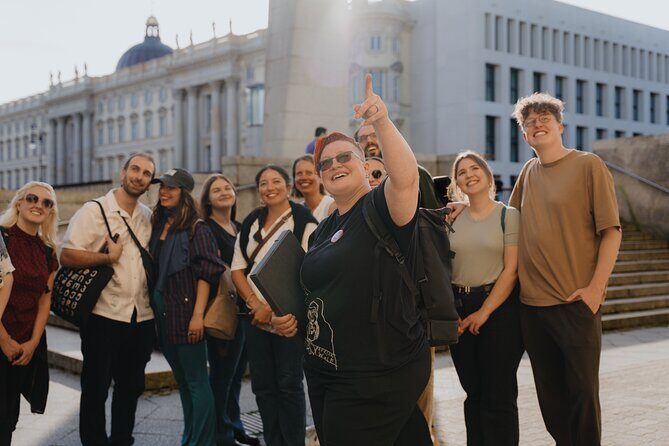
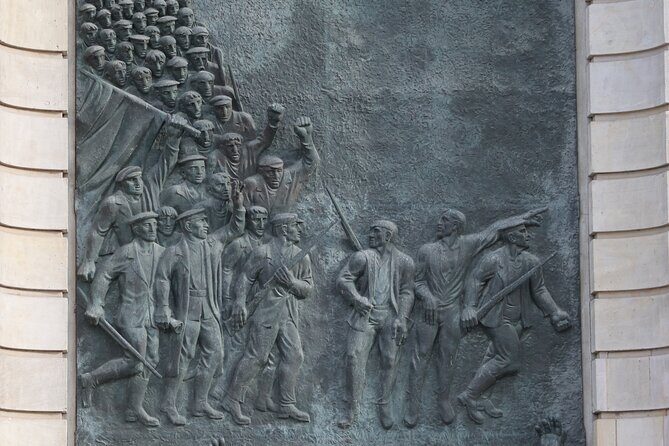
- Terracotta timeline storytelling circling the Rotes Rathaus, with early Berlin uprisings shown in stone
- East Berlin contradictions you can spot in plain sight, including a timeline that leaves out the Berlin Wall
- Rosenstraße and the 1943 protest, framed as a rare act of civil disobedience against the Final Solution
- 1848’s March Revolution at Humboldt Forum, showing how protest helped seed German democracy
- 1989’s youth “T-shirt protest” linked to the Peaceful Revolution at Brunnen der Völkerfreundschaft
- A practical, photo-friendly finish at the Weltzeituhr, Berlin’s rotating world clock in Alexanderplatz
Why This Protest History Walk Works So Well
If you’ve ever felt Berlin’s history is everywhere but also hard to sort, this tour helps. It moves through places where politics left physical clues—monuments, reconstructed buildings, memorial stones, and symbolic architecture—so the story doesn’t stay trapped in a book.
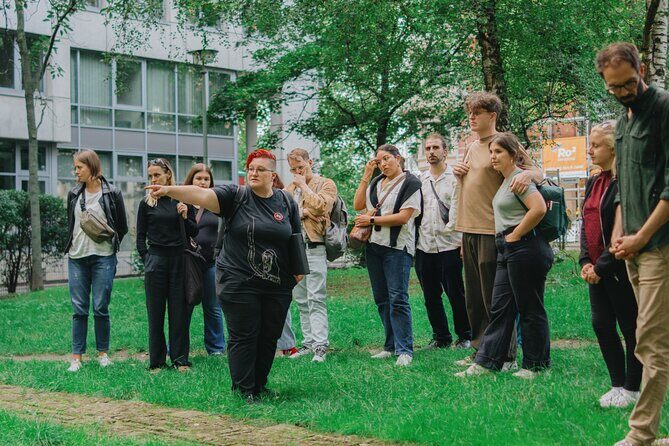
I also like that the pace is built for understanding, not speed. At about two hours and a small group size (up to 15 people), you can actually hear the guide and look around without sprinting from stop to stop. And because it’s offered in English with an expert guide, you’re not stuck guessing what you’re seeing.
Finally, it’s “big history,” but told through small, specific details. That’s often where Berlin’s political story becomes human: the debate around public statues, the logic of memorial placement, and the way buildings frame protests.
You can also read our reviews of more historical tours in Berlin


Getting Oriented at the Start: Rotes Rathaus and a Timeline in Stone
Most tours start with a landmark. This one starts with a teaching tool hidden in plain sight.
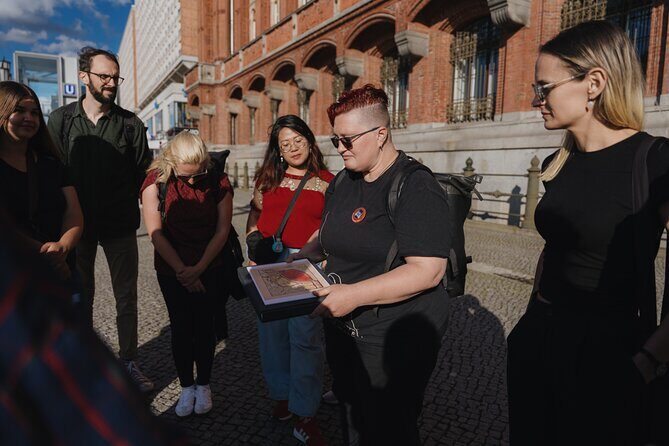
You begin at the Sculpture Aufbauhelferin – Fritz Cremer near the Rotes Rathaus. Right at the start, the tour focuses on the terracotta timeline wrapped around the town hall. It’s a Berlin-friendly kind of history lesson: instead of scanning a museum wall, you follow a ring of story in the architecture itself.
What I like about this opening is the way it sets expectations. The guide points you toward how Berlin remembers its past—especially early uprisings—by turning history into a visible public narrative. The setting also helps you understand how protest in Berlin wasn’t one single event. It’s a repeating cycle, with people pushing back, being crushed, regrouping, and trying again.
Practical tip: this is a good time to take out your phone and orient yourself. You’ll walk through several ideological eras, and getting your bearings early makes the rest of the route easier to follow.
Nikolaiviertel and Gasthaus Mutter Hoppe: East Berlin’s Self-Portrait
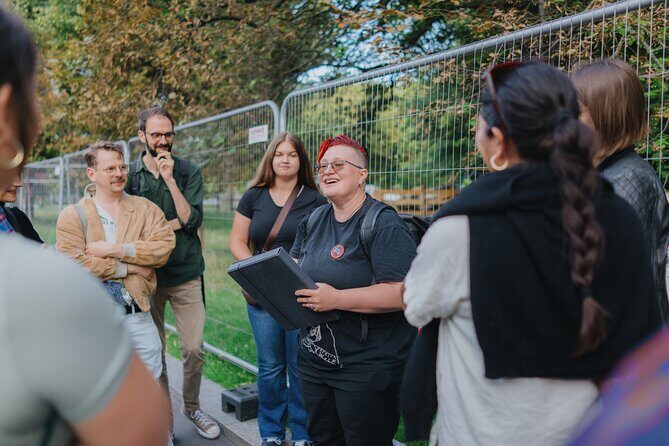
From there, the walk shifts into East Berlin symbolism—where the story can be both loud and quietly biased.
At Nikolaiviertel, you’ll spot an example of socialist-themed building style created for Berlin’s 750th anniversary. The stop also references the last remnants tied to the Palace of the Republic, described as the seat of the East German parliament and an important entertainment venue in the socialist half of the city. In other words, this wasn’t just politics in an office. It was politics in a crowd-pleasing space.
Then comes Gasthaus Mutter Hoppe, framed as the East German answer to the Rotes Rathaus timeline. Here’s the detail that makes this stop click: the guide notes that the timeline shows major moments in socialist country history but is missing the Berlin Wall. Whether you interpret that as oversight, messaging, or propaganda, it’s a powerful reminder that monuments can be selective.
This section is also where you start learning how to “read” Berlin. You learn to ask: What’s highlighted? What’s reduced? What’s simply not shown?
Marx-Engels-Forum to Humboldt Forum: From Ideology to Democracy
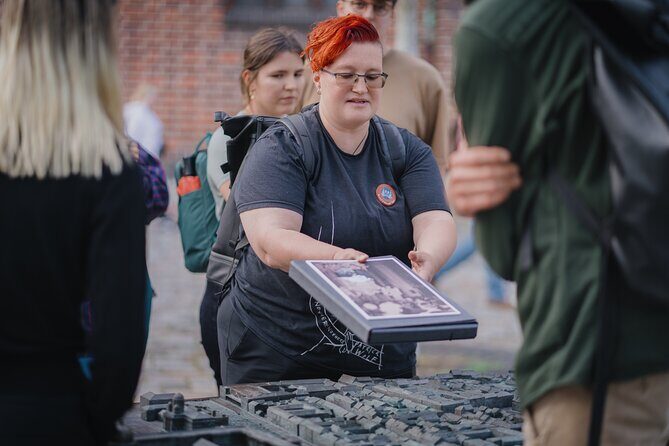
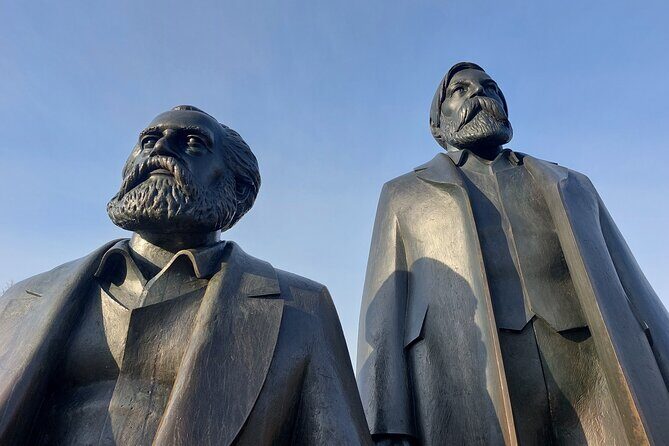
Next, you meet the people behind a phrase you’ve probably heard in one form or another. At the Marx-Engels-Forum, the guide introduces Karl Marx and Friedrich Engels as figures whose public image has sparked debate over time. It’s a useful stop because it doesn’t treat ideology like an abstract concept. It frames the authors as characters that cities and governments try to claim.
A statue may look permanent, but the discussion around it can change. That’s the point. Berlin’s protest story includes argument over ideas and symbols, not just street demonstrations.
Then you reach the Humboldt Forum, where the tour connects reconstruction to resistance. You’ll see the reconstructed Berlin Palace and hear how the original palace witnessed several protests and revolutions, including the March Revolution of 1848—linked here to seeds of democracy in Germany.
This is a stop that gives you a wider time frame. You’re not only learning about 20th-century regimes. You’re seeing how protest pressure grows over decades, and how places used by power can later become stages for dissent.
If you like understanding causation—how one protest era leads to the next—this is where you’ll feel it most.
Rosenstraße: The 1943 Protest Against the Final Solution
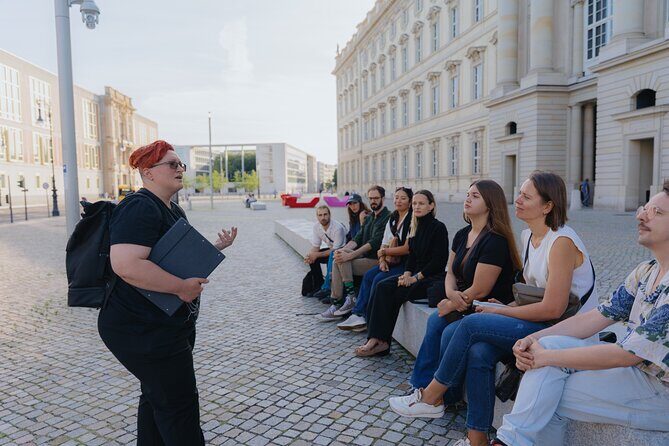
If there’s one emotional anchor in the route, it’s Rosenstraße.
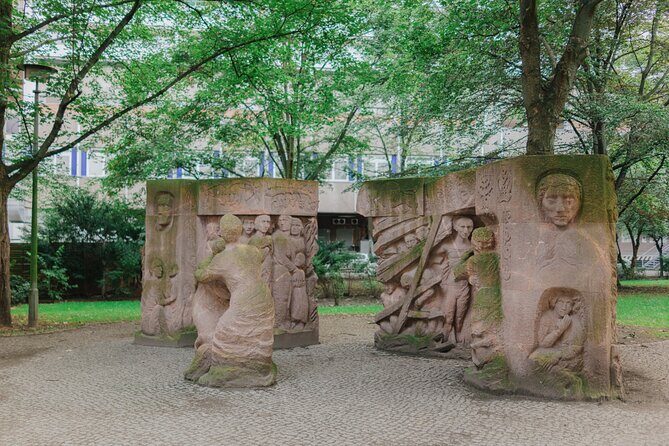
Here, you’ll see the Rosenstrasse monument tied to women who staged a courageous act of civil disobedience in the cold winter of 1943. The tour frames it as the only protest by Germans against the Final Solution. It’s also connected to Jewish life under Nazi rule, and you’ll hear about the foundations of Berlin’s oldest synagogue.
This is not the kind of stop that works as trivia. The guide’s job here is to keep the context clear, so you understand what the protest represented and why it mattered inside a terror-driven system.
Practical consideration: the topic is heavy. If you prefer lighter sightseeing on tours, you might want a moment of pause here—find a spot, breathe, and then keep going when you’re ready.
And one smart thing you can do: treat the monument as a prompt, not just a photo stop. Look around the area and think about how public spaces can become instruments of fear or resistance.

St. Mary’s Church and the TV Tower: Faith, Civil Rights, and Communist Power
The walk then expands your lens again, linking protest across different causes and decades.
At St. Mary’s Church, the tour points out that Martin Luther King delivered a sermon to a huge crowd in 1964. It’s a surprising pairing with the earlier Nazi-era resistance stop, which is exactly why it works. The guide uses the church to show protest and moral leadership are not limited to one ideology or one country.
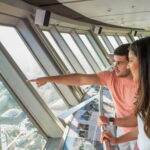
After that, you catch sight of Berlin’s Television Tower, presented as a landmark and a symbol of communist power. This is brief in the route, but it matters. The tower is one of those structures you see and recognize instantly, and the tour helps explain why that kind of visibility is political.
This section is a good reminder that “power” doesn’t always look like a uniform and a fist. Sometimes it looks like architecture and broadcast reach—stuff meant to be seen from far away.
Brunnen der Völkerfreundschaft: 1989’s Peaceful Revolution in a Single Moment
Now you’re in the era most people visit Berlin for: the story that led to the fall of the Berlin Wall.
At Brunnen der Völkerfreundschaft, the tour traces the Peaceful Revolution of 1989, explaining the chain of events that led to the Wall’s collapse. The standout detail here is the story of young East German oppositionists who staged a T-shirt protest at the fountain in autumn 1989.
What I like about finishing the 20th-century story this way is the contrast. Earlier stops show resistance facing brutal systems. Here, you see resistance shaped by youth, symbolism, and momentum—small acts that fed into something unstoppable.
If you’ve only heard 1989 as a date, this stop helps you understand it as a movement. It’s not just a switch flipping. It’s people taking risks, finding one another, and pushing back through visible, public acts.
Weltzeituhr Finish: A Rotating Clock That Feels Like a Meeting Place
The final stop is the Weltzeituhr—the world time clock at Alexanderplatz.
You’ll stand at this popular meeting spot in East Berlin where the rotating clock shows time in 148 cities around the world. Ending here is smart because it ties Berlin’s divided past to a global present. Even after the Wall fell, Berlin kept turning itself outward, and this clock is a literal symbol of time measured in many places.
Also, it’s a practical ending. Alexanderplatz has transit options, so you’re not stuck far from trains or trams when your two hours are done.
Who This Tour Is Best For (and Who Might Skip It)
This tour is a great match if you:
- want protest history tied directly to places you can look at in real time
- like clear narratives with specific details, not vague area descriptions
- are okay with emotional moments, especially around Rosenstraße
- want an English tour with expert guidance and a small group
You might choose something else if you’re mainly chasing light entertainment or you dislike structured walking tours. The route has a clear theme and it stays on that theme, including heavy subjects.
Group size also matters. With a maximum of 15, it’s easier to hear the guide and ask quick questions, but it still moves at a steady walk pace.
Value and Price: Why $30.04 Can Make Sense
At $30.04 per person for about two hours, this is priced like a focused city experience rather than a full-day tour. The value comes from two things the tour does well: it keeps the stops close enough to form a story, and it uses a guide who can connect symbolism, architecture, and political events.
The tour also comes with a mobile ticket, which makes it simpler on your phone. And since the stops are marked admission ticket free, you’re not likely to get hit with surprise entrance fees mid-walk.
In short: you’re paying for interpretation and route design, not for museums.
Guide Style and On-the-Ground Detail
Beyond and Beneath Tours runs this experience, and their approach shows up in how the story is delivered. The guides are named in reviews, including Martina and Simone, and that matters because it signals consistency of interpretation and research.
The best part is how the tour stays tied to what you can see. Instead of tossing facts at you, the guide points at features like the terracotta timeline, the absence of the Berlin Wall in one timeline, the debate around socialist statues, and the way memorials are placed. You end up with mental bookmarks that you can reuse later in your own Berlin exploring.
Should You Book This Berlin Protest History Tour?
Book it if you want a tight, English-friendly way to understand how Berlin’s protests shaped its buildings, monuments, and public memory. The route connects eras without losing you, and the stops are specific enough that you’ll remember the places, not just the dates.
Skip it if your ideal tour is mostly about viewpoints, shopping streets, or casual sightseeing. This one is designed for people who want meaning in the details—even when that meaning is uncomfortable.
If you’re unsure, I’d say this is an especially good choice for first-timers who want the political backbone of Berlin before they wander off to other districts on their own.
FAQ
How long is the Berlin Protest History Tour?
It runs for about 2 hours.
What language is the tour offered in?
The tour is offered in English.
How much does the tour cost?
The price is $30.04 per person.
Where do I meet the guide?
You meet at the Sculpture Aufbauhelferin – Fritz Cremer near Rotes Rathaus, Jüdenstraße, 10178 Berlin.
Where does the tour end?
The tour ends at the World Time Clock by Weltzeituhr in Alexanderplatz (Alexanderpl. 1, 10178 Berlin).
Do I need a paper ticket?
No. You receive a mobile ticket.
What’s the group size limit?
The tour has a maximum of 15 people.
Is there an admission fee for the stops?
The listed stops include admission ticket free entries.
What happens if the weather is bad?
The tour requires good weather. If it’s canceled due to poor weather, you’ll be offered a different date or a full refund.
Can I cancel for free?
Yes. You can cancel for free up to 24 hours in advance for a full refund.