REVIEW · BERLIN
Berlin: guided canoe | kayaktour
Book on GetYourGuide →Operated by Backstagetourism · Bookable on GetYourGuide
Paddle Berlin’s Spree with GDR stories. This guided canoe tour turns the river into a living timeline, and I love how fast you get comfortable with a simple paddling warm-up plus how specific the sights feel, like the Stasi prison site in Rummelsburg and the Spreepark remnants across the water. One thing to consider: the start at Funkhaus Berlin by the river can be tricky to spot, so give yourself extra time and don’t rely on walking straight in from the tram stop.
You’ll spend 2 hours in a small-group rhythm of paddle, pause for photos, and listen to the guide’s stories about how this stretch of the Spree changed after East and West Berlin collided. You finish with the chance to relax at an East German–style milk bar, which is a nice contrast to all the concrete history on the banks.
In This Review
- Key highlights you’ll remember
- Why this Spree canoe tour feels different from standard sightseeing
- Getting to the canoe station at Funkhaus Berlin (and not losing time)
- The 2-hour rhythm: lifejacket on, quick lesson, then you’re off
- Stop by stop: what you’ll see on the Spree
- The Funkhaus area and the Stralau opening view
- Learning Stralau: from fishing life to a changed waterfront
- The underwater tunnel story you’ll hear while floating by
- Rummelsburg bay: the Stasi prison site and why it sticks
- Across the river: Spreepark remnants and the Ferris wheel
- Passing the Klingenberg power station
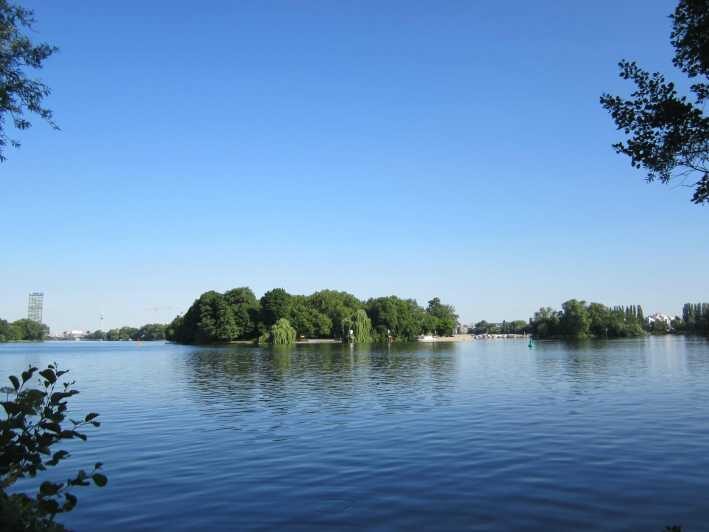
- Treptower Park and the nature reserve island near Rummelsburg
- The finish at the milk bar: an East German mood check
- Price, time, and value: is $34 a good deal?
- Who should book this canoe tour
- Should you book it?
- FAQ
- How long is the canoe tour?
- Is this tour suitable for beginners?
- Where does the tour start?
- What’s the easiest way to reach the meeting point from Ostkreuz?
- Do I get lifejackets and help with paddling?
- What sights will I see during the tour?
- Are there photo stops?
- What languages is the guide available in?
- Is it suitable for non-swimmers or people with mobility impairments?
Key highlights you’ll remember
- Beginner-friendly paddling crash course before you push off
- Stralau peninsula history: from fishing area to a very different kind of waterfront
- Rummelsburg bay Stasi prison story tied directly to the river route
- Spreepark leftovers across the water, including the Ferris wheel remains
- Treptower Park and the near Rummelsburg nature reserve island
- Milk bar stop where drinks are served in original East German atmosphere
Why this Spree canoe tour feels different from standard sightseeing
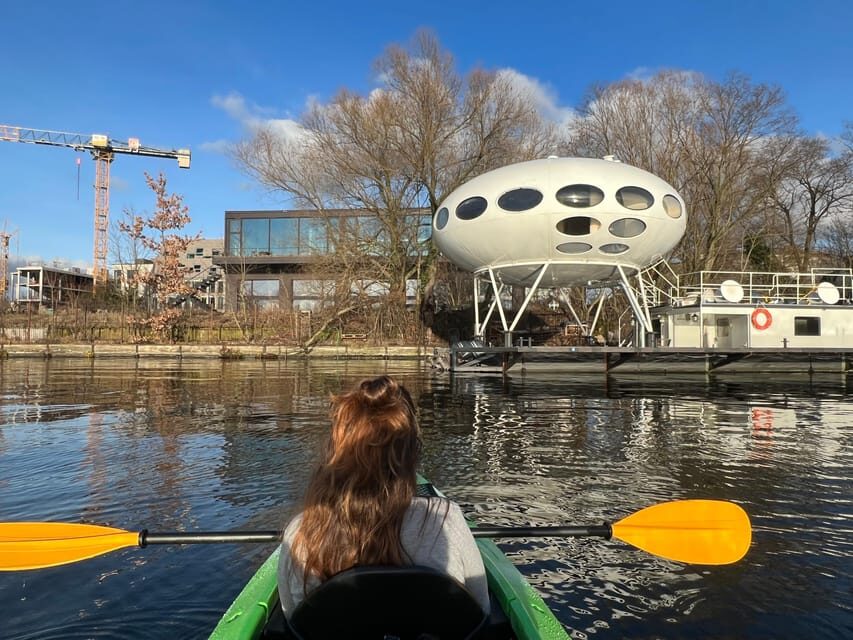
Berlin has plenty of tours that stand you on a sidewalk with a view card in your head. This one changes the angle. You’re moving on the Spree, so the “before and after” story of the city is easier to grasp. The river widens a few kilometers southeast of the center, and that open, slower water makes it feel like the past and present are happening side-by-side along the banks.
What makes it work is the combo: you get real time in the canoe, and the guide uses that motion to point out former GDR remnants, the Stralau waterfront evolution, and the industrial landmarks you’d usually miss at walking speed.
You can also read our reviews of more guided tours in Berlin


Getting to the canoe station at Funkhaus Berlin (and not losing time)
Your starting point is the Backstagetourism canoe station at Funkhaus Berlin on Nalepastraße. If you’re coming from Ostkreuz, take tram line M21 toward Köpenicker Chaussee/Blockdammweg. Then walk along to the boatstation.
Two practical tips that matter here:
- The tram runs only every 20 minutes, so plan around timing rather than assuming frequent departures.
- The exact boatstation can be hard to find at first glance. One of the biggest “watch-outs” is simply getting there on time—especially if you’re relying on casual directions.
If you can, arrive a little early and take a minute to locate the boat area along the river before your group assembles.
The 2-hour rhythm: lifejacket on, quick lesson, then you’re off
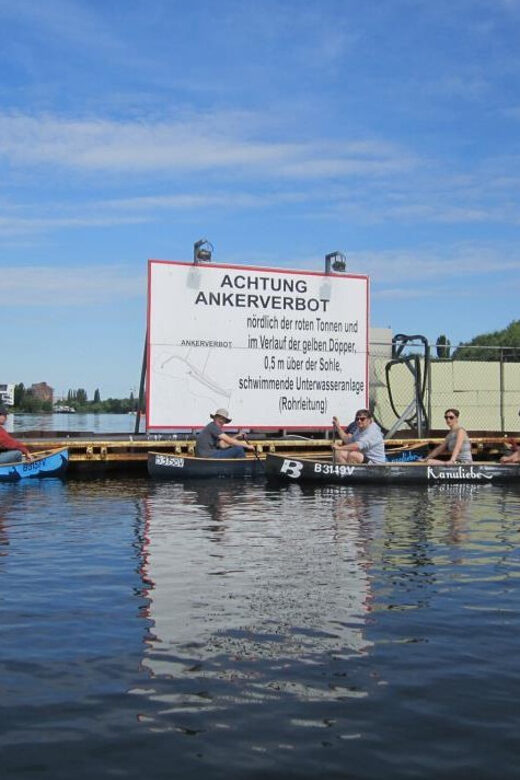
You start with safety gear and a short instruction session. You’ll put on your lifejacket, and the guide runs a brief paddling course so you know how to move before you’re out there. Then the canoes are lowered into the water and the tour starts in earnest.
This format keeps the stress low. If you’ve never paddled a canoe, you’re not thrown into chaos. You’ll paddle closely together, and the guide’s instructions help you stay synchronized. That teamwork piece is also part of the charm—Berlin’s river scenes come from ordinary effort, not from a glassy viewpoint.
Also helpful: you get a waterproof box for valuables, so you can keep your phone and small essentials with you without constant worry. You’ll still want to dress for a wet possibility, but at least the basics are covered.
Stop by stop: what you’ll see on the Spree
The Funkhaus area and the Stralau opening view
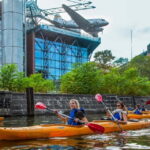
The tour begins at Funkhaus Berlin and quickly shifts you into the wider stretch of the Spree. This is where the scenery starts to loosen up: bays open up, the water looks less like a canal, and you begin to see small islands and the shape of the riverbanks more clearly.
You’ll paddle around the tip of the Stralau peninsula, where the guide points out the contrast between older river life and the newer urban edge. Along this stretch, remnants of the former GDR are still visible, which is a big part of the tour’s appeal. You’re not just looking at buildings—you’re looking at how the river corridor was used.
You’ll also get a chance for a photo stop as you travel along this section, which is useful because some of the best views aren’t straight-forward to recreate from memory later.
A few more Berlin tours and experiences worth a look
Learning Stralau: from fishing life to a changed waterfront
The guide tells the story of how the Stralau peninsula developed—starting as a fishing area and gradually becoming something else. Standing still on land, it’s hard to feel that change. From the water, it’s clearer. You can see where the waterfront would have supported small-scale work, and then you notice the ways the banks and surrounding built environment have evolved.
This is one of the tour’s strengths: it connects a place to human work. You’re not just being handed dates. You’re being guided to notice how a riverfront behaves when its purpose shifts.
The underwater tunnel story you’ll hear while floating by
One of the more intriguing explanations you’ll catch is the story of an underwater tunnel that connects Stralau with Treptower Park. You don’t need to know every engineering detail to get the point. The fact of the connection matters because it shows how Berlin tried to manage movement and separation along the river.
And since you’re literally traveling between those two sides during the same outing, the explanation feels grounded. It’s not a lecture. It’s an in-context story delivered while you’re close to the locations.
Rummelsburg bay: the Stasi prison site and why it sticks
When you reach the Rummelsburg bay area, the tour sharpens. You’ll discover the story of the Stasi remand prison that was once located there. Hearing this from the river makes the location feel immediate. It also helps you understand why this part of Berlin has such heavy emotional weight: the city’s political machinery was built into everyday geography.
You’ll also see the small village church in the bay area, which is a good reminder that ordinary life existed in the same frame as repression. The guide’s explanations help you hold those two realities at once.
This is the stop I’d prioritize if you’re the type of visitor who wants the “how could this happen here” perspective, not just the photo spot.
Across the river: Spreepark remnants and the Ferris wheel
On the opposite side of the river, you’ll spot remains of the Spreepark theme park, including the Ferris wheel. It’s one of those Berlin sights that feels like a memory you can still touch. You see the structure’s outline and then you hear the story behind it—how it operated and what happened after unification.
The guide includes the account of Norbert Witte, the fairground operator who ran the park after unification. Having a specific person attached to the story helps it feel less like generic nostalgia and more like lived decision-making.
If you like urban change stories, this part delivers. It shows how entertainment spaces can become relics—and how quickly meaning can shift.
Passing the Klingenberg power station
You’ll also paddle past the Klingenberg power station, described as nearly 100 years old. Seeing a working-industrial landmark from the water adds a different kind of scale. From land, it can look like background infrastructure. From the canoe, it becomes part of the river landscape—another actor shaping what life along the Spree looks like.
This stop works especially well if you like Berlin’s hard edges: industry, not just architecture.
Treptower Park and the nature reserve island near Rummelsburg
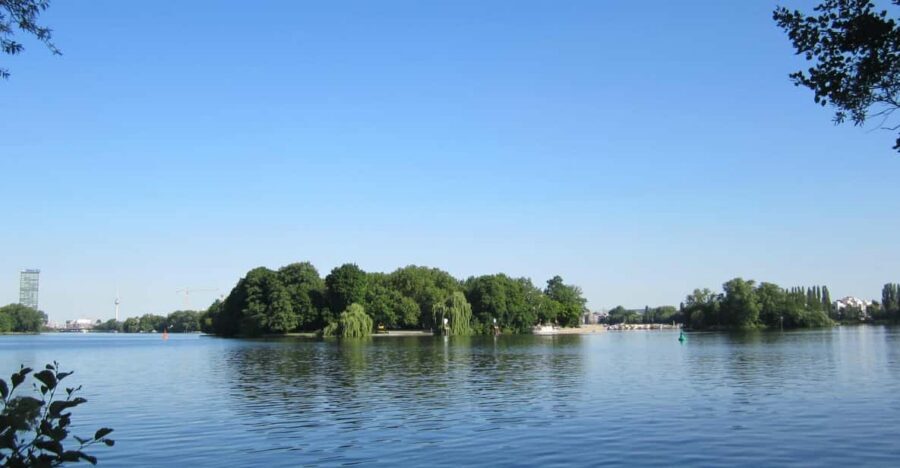
As you continue, you’ll spend time around Treptower Park and get a view of the natural reserve island close to Rummelsburg. Treptower Park itself is known for big open-space energy, and on this tour you also get the sense of how the river feeds the park’s atmosphere.
You’ll hear about the largest beer garden in Berlin in this area as well, which is a fun detail to file away for your next day out. It’s also the kind of practical “hangout culture” reference that makes the tour feel like Berlin, not just Berlin history.
If you’re hoping for a break from heavy topics like the Stasi story, this is where the river scenery helps you reset. The water widens, and the natural bits soften the edges.
The finish at the milk bar: an East German mood check
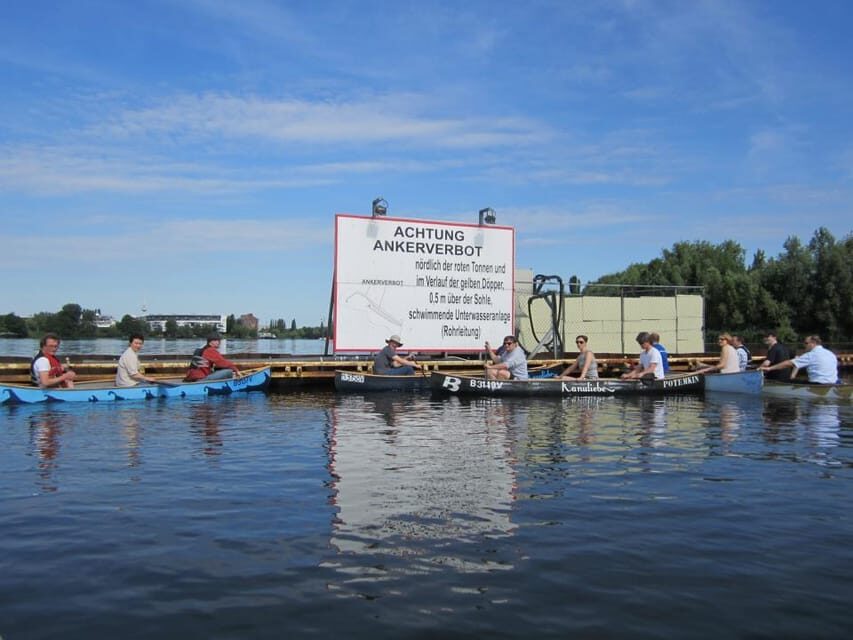
After the paddle, you end back at the starting canoe station. But the tour also offers a small bonus: you can relax at the milk bar, where drinks are served in the original East German atmosphere.
It’s a clever final note. You’ve heard about the GDR and seen its remnants along the Spree. Then you’re invited into a place that keeps an East German feel, not as a museum label but as an everyday stop for a drink. Even if you don’t stay long, it’s a satisfying “landing.”
If you’re traveling with a group, the operator notes that they can organize tours of large recording studio buildings and other radio-station spaces—so you might be able to extend the day beyond the river.
Price, time, and value: is $34 a good deal?
At about $34 per person for roughly 2 hours, this isn’t the cheapest activity in Berlin. But the value comes from two things you rarely get in one package: guided storytelling tied to real locations, plus hands-on paddling for beginners.
A walking history tour can be great. Yet it can’t give you that sensation of moving through the city’s changed geography. Here, you’re paying for:
- A guide who explains what you’re seeing while you’re seeing it
- Equipment and a short paddling lesson
- Water access and time on the Spree, not just land views
If you like experiences that combine movement and context, the price makes sense. If you’re mainly interested in museums and don’t care about being on the water, you might feel it’s more than you need.
Who should book this canoe tour
This is a strong fit if you:
- Are a beginner and want guided help before you paddle
- Want Berlin history that’s tied to geography (not just plaques)
- Like the idea of seeing former GDR remnants along the Spree
- Enjoy practical activities that are still story-driven
It’s not for everyone. The tour notes it’s not suitable for non-swimmers and not suitable for people with mobility impairments. If either of those affects you, it’s better to choose a different kind of tour.
Should you book it?
I’d book this if you want a hands-on way to understand Berlin’s divided past along the river. The mix of beginner canoeing, the Stasi prison story at Rummelsburg, Spreepark remains and the Ferris wheel, and the Treptower Park nature-and-beer-garden feel gives you more than one mood in a single outing.
The main reason not to book is simple: if you’re worried about finding the meeting point, plan carefully. Get there early, follow the directions to Funkhaus Berlin on Nalepastraße, and don’t wait until the last minute. Once you do that, you’re set up for an experience that feels both easy to join and genuinely Berlin.
FAQ
How long is the canoe tour?
The tour lasts about 2 hours. Starting times vary, so check availability for the schedule.
Is this tour suitable for beginners?
Yes. It’s designed to be well suited for beginners, with a short paddling crash course before you get on the water.
Where does the tour start?
The meeting point is Backstagetourism’s canoe station at Funkhaus Berlin on Nalepastraße.
What’s the easiest way to reach the meeting point from Ostkreuz?
Take tram line M21 from Ostkreuz to Köpenicker Chaussee/Blockdammweg, then walk along the river until you reach the boatstation.
Do I get lifejackets and help with paddling?
Yes. You’ll receive a lifejacket, and the guide gives a short paddling course before canoes are lowered into the water.
What sights will I see during the tour?
You’ll see Treptower Park, the natural reserve island near Rummelsburg, the Stralau peninsula history, the Stasi prison in Rummelsburg, remnants of Spreepark and its Ferris wheel, and you’ll also paddle past the Klingenberg power station.
Are there photo stops?
There’s at least one photo stop as part of the Spree River section.
What languages is the guide available in?
The live guide is available in German and English.
Is it suitable for non-swimmers or people with mobility impairments?
No. The tour is not suitable for non-swimmers and not suitable for people with mobility impairments.