REVIEW · BERLIN
Berlin: English Bus Tour to Sachsenhausen Concentration Camp
Book on GetYourGuide →Operated by Insider Tour Berlin · Bookable on GetYourGuide
Berlin to Sachsenhausen feels like stepping into the administrative machinery of evil. I like that this tour pairs a coach lecture with a licensed guide on the ground, so you’re not just looking at buildings—you’re understanding how the camp worked. I also like the walk-through focus on the places tied to mass murder and cruelty, from crematoria and the gas chamber to the execution area and punishment spaces.
One thing to consider: the guided time at the memorial is limited to about 2 hours, so if you want to read every exhibit panel and take it in slowly, you may feel a bit rushed.
In This Review
- Key Things I’d Highlight Before You Go
- From Friedrichstraße to Sachsenhausen: the Coach Lecture Sets the Tone
- The Memorial Grounds in 2 Hours: What You’ll Actually See
- Tower A and the Camp Entrance: Where Propaganda Meets Reality
- Gas Chamber, Crematoria, and the Execution Area: The Places That Functioned
- Barracks Where Prisoners Were Brutally Treated: Conditions and Routine
- Infirmary Barracks and Wartime Experimentation: How Medical Control Was Weaponized
- Back to Berlin: How Guides Connect Memory to Today
- Price and Value: Why Around $55 Works Here
- Who This Tour Fits Best (and Who Should Rethink)
- Practical Tips So You Don’t Waste Time
- Should You Book the Berlin-English Bus Tour to Sachsenhausen?
- FAQ
- How long is the Berlin to Sachsenhausen tour?
- Where do I meet the guide in Berlin?
- What does the tour include?
- Is hotel pickup and drop-off included?
- What language is the tour offered in?
- What should I bring?
- Are there any restrictions on what I can bring?
- Is the tour wheelchair accessible?
- How much time do I spend at Sachsenhausen with the guide?
- Can I cancel and get a refund?
Key Things I’d Highlight Before You Go
- Coach ride history first: You get a structured background lesson before you face the camp.
- Oranienburg context along the way: The drive through Oranienburg helps explain how forced labor tied into the system.
- High-focus sites on the tour path: You’ll see Tower A, crematoria, gas chamber areas, isolation and punishment cells, infirmaries, and more.
- Infirmary barracks and experimentation: The tour specifically addresses medical experimentation during the war.
- Time to reflect at key moments: Multiple guides are praised for creating pauses and keeping the tone respectful.
- Flexible guidance approach: On at least one holiday date, guides adjusted when areas were closed and kept the schedule thoughtful.
From Friedrichstraße to Sachsenhausen: the Coach Lecture Sets the Tone
This is a bus day trip with a simple rhythm: you meet at central Berlin, drive north, then spend the core time at Sachsenhausen Memorial with a guide. The meeting point is outside Friedrichstraße train station, on the square by the Tränenpalast (Palace of Tears), at Reichstagufer 17. Guides wear a blue lanyard and a yellow name tag and carry yellow umbrellas—so it’s easy to spot the right group fast.
The coach ride matters more than it sounds. Guides (names that have shown up in bookings include Paul, Jamie G, Klaus, Hannah, Georgia, Emma, Scott, and Nikolai/Nikolas) use the bus time to lay out the story behind the camp system: how Nazi rule built concentration and death camps, how the war shaped repression, and how the machinery of control expanded. One review even praised the way the guide covered the war story from start to end while keeping it clear, not chaotic.
You’ll also hear about what local populations knew at the time and how that affected daily life beyond barbed wire. That context is useful because Sachsenhausen isn’t only about a single moment. It’s about an organized system—administrative ruthlessness, routine cruelty, and planned expansion. When you arrive already oriented, the on-site tour feels less like a random collection of relics and more like a guided walk through a documented process.
If you get carsick or hate long rides, the practical upside is that this tour uses a private air-conditioned coach. Several reviews call it comfortable and smooth. On one trip, a guest mentioned the microphone cutting out briefly, which can happen anywhere; it didn’t derail the overall experience and likely varies by day.
You can also read our reviews of more tours and experiences in Berlin.


The Memorial Grounds in 2 Hours: What You’ll Actually See
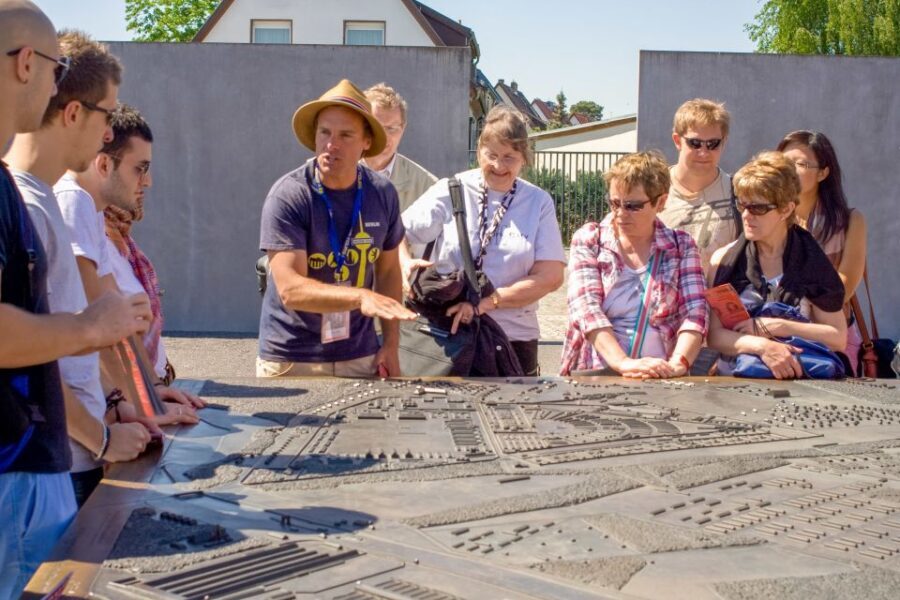
The guided portion at the memorial is about 2 hours. That’s enough to understand the key parts, but it also explains why the pace can feel intense. Reviews repeatedly note that the camp is large, and even with a guided path, you’re moving through major points rather than lingering at every room.
Here’s the core thing to know: Sachsenhausen is not a tidy “one building” stop. It’s a site with structures that map to functions—work, punishment, confinement, medical control, and execution. Your guide’s job is to connect those functions to what happened there, and that’s why the tour isn’t just sightseeing.
On the route, you’ll step into the stark barracks and hear about harsh conditions and daily routine for prisoners. You’ll also learn how the camp was designed from the ground up as a first concentration camp with a strategic plan for maximum control and expansion. This design focus matters: it explains why Sachsenhausen is often discussed as an example of how the Nazis engineered a system, not just a site where atrocities happened.
You’ll also be shown the commandant’s house, which helps you grasp how leadership was physically and operationally positioned within the camp. Many guides use this moment to talk about the orchestrators and the efficiency of brutality—again, not as abstract history, but as how the structure enabled the abuse.
A helpful detail included with the tour is a printed map of the former concentration camp. It’s not a substitute for the guide, but it does help you keep track of what you’ve already seen and what you’re still walking toward.
Tower A and the Camp Entrance: Where Propaganda Meets Reality
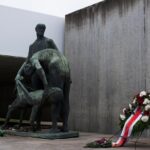
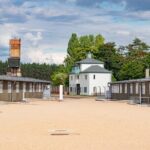
One of the most striking elements you’ll encounter is Tower A and the entrance area where the phrase Arbeit Macht Frei is still present. Seeing that slogan in context is unsettling in a specific way: it’s not displayed as a museum label—it’s tied to the physical reality of arrival and processing.
Expect your guide to explain why that wording mattered and how it fit into the camp’s system of control and psychological manipulation. This is also where you’ll feel the difference between reading about Nazi camps and walking through them. Even when you know the basics, the site forces you to confront how normal movement and routine were used to trap people.
After this entrance area, the tour keeps moving through the camp layout. You’re guided through areas connected to confinement and punishment, including isolation cells and punishment cells. If you’re the type who likes to ask questions, this is often a good moment to do it—guides are frequently praised for being willing and clear.
Gas Chamber, Crematoria, and the Execution Area: The Places That Functioned
This tour focuses on several locations tied directly to mass murder and executions. You’ll see areas connected to the gas chamber and crematoria, and you’ll also learn about the execution trench. The tour also covers infirmaries, which is important because it shows how the camp harmed people in more than one way—not only through killings, but through disease, neglect, and targeted medical abuse.
A key number mentioned for this site is that 35,000 people were murdered and/or died of disease. Hearing that in context is heavy, but it helps you interpret why the tour spends time on the camp’s operational features. This isn’t a story of isolated violence; it’s a story of systematic harm.
As you walk through these areas, pay attention to how your guide explains the camp’s mechanisms. The best guides don’t overwhelm you with every detail at once. They point, explain function, and then move you to the next site so your understanding builds in order: confinement, control, punishment, killing, then the medical spaces where victims were processed and harmed further.
One practical note: this is emotionally difficult ground. You’ll want comfortable walking shoes because you’ll be on your feet and moving between areas. If you bring a camera, use it intentionally—some people focus on the memorial features rather than trying to photograph everything.
Barracks Where Prisoners Were Brutally Treated: Conditions and Routine
A lot of Sachsenhausen’s power comes from the way the barracks and camp structures communicate routine. The tour includes time walking through the interior of the camp and seeing the barracks where prisoners were brutally treated.
You’ll learn about daily routines and harsh conditions—how the camp’s organization shaped what prisoners experienced hour by hour. Guides also connect this cruelty to the wider network of camps and to the broader Nazi system, including how the camp’s administrative ruthlessness worked in practice.
This is also where the drive-by stops can add meaning. The tour includes a drive through Oranienburg so you can see where inmates would have worked. That transportation segment isn’t just “getting there.” It helps you understand that the camp system extended beyond barbed wire into labor and surrounding spaces.
If your goal is to make history real rather than abstract, this combination—on-site barracks plus surrounding-labor context—does the job.



Infirmary Barracks and Wartime Experimentation: How Medical Control Was Weaponized
One of the tour’s strongest components is the focus on the infirmary barracks and experimentation during the war. You’ll see the infirmary areas and learn how experimentation took place, not as a side topic, but as part of how the camp managed suffering and power.
This section can feel particularly disturbing because it connects violence to the concept of medicine. That contrast is likely why the tour gets repeated praise for handling the subject with sensitivity. Several reviews highlight guides who balanced clarity with empathy, creating space for reflection instead of turning tragedy into a checklist.
If you’re visiting for educational depth—especially if you’ve done other Holocaust-era sites—this infirmary focus adds a distinct angle. It shows that brutality wasn’t only physical punishment. It was also inflicted through pseudo-scientific and exploitative medical practices.
Back to Berlin: How Guides Connect Memory to Today
After the guided memorial visit, you ride back to Berlin. The route returns to the same central pickup point area. Several reviews mention that guides used the return trip for personal stories that are deeply moving, and for explaining how Germany acknowledges and teaches this difficult past.
That part can matter a lot if you’re leaving the memorial numb. Hearing how remembrance is handled today helps you place what you saw into the bigger question of responsibility: how societies carry forward memory, education, and warning.
It also gives your brain time to settle. The experience is intense and sober, and the coach ride back can feel like the place where you start processing rather than only absorbing.
Price and Value: Why Around $55 Works Here
The listed price is about $55 per person for a 4-hour day trip. For that money, you get:
- a professional licensed guide
- air-conditioned transportation by private vehicle
- Sachsenhausen Memorial entry
- a €3 donation per person to the Sachsenhausen Memorial
- a map of the camp
That’s not only about paying for transport. A guided walk through Sachsenhausen requires interpretation. Without a good guide, it’s easy to see structures but miss the operational story—how places were used, why design mattered, and what each area meant for victims.
Value also comes from pacing choices. You get a coach lecture to set context, a focused on-site route, and time to reflect with the guide’s support. One review even suggested spending a bit more than cheaper options because the expertise made the difference. You’re paying for someone to keep the tone respectful and the history clear, especially given how overwhelming the subject can be.
Who This Tour Fits Best (and Who Should Rethink)
This tour suits you if:
- you want a structured introduction to Sachsenhausen without dealing with train schedules
- you like guides who explain the camp’s mechanics clearly and with empathy
- you’re prepared for a hard subject handled respectfully
It may be less suitable if:
- you need slow, independent reading time at exhibits (the guided portion is only about 2 hours)
- you want wheelchair-friendly access (the tour is stated as not wheelchair accessible and not recommended for limited mobility)
Also, no alcohol and drugs are allowed. It’s a respectful memorial environment, and that rule helps keep the day serious.
Practical Tips So You Don’t Waste Time
Bring:
- comfortable walking shoes
- a camera (if you want it)
- a light snack and drink (the tour recommends having one)
Wear weather-appropriate clothing. The tour includes outdoor walking, and Berlin-area weather can switch quickly. And because this is a memorial, keep your focus on the guide’s route and timing rather than trying to sprint to every corner on your own.
Finally: plan for big emotions. I’d treat this as a whole-day mental commitment, even though the trip is only 4 hours. The site makes you think about systems, choices, and human suffering—and your brain will take time to unwind afterward.
Should You Book the Berlin-English Bus Tour to Sachsenhausen?
Book this tour if you want the most practical way to reach Sachsenhausen from central Berlin and you care about having a guide connect the dots—between the camp’s design, daily routine, sites of killing and punishment, and the infirmary areas tied to experimentation. The repeated praise for guides who balance clarity with compassion is a strong signal that you’ll be in good hands on a difficult day.
Skip or reconsider if your top priority is slow, independent museum-style reading. With only about 2 hours on site, the experience works best when you let the guide’s path steer you. Also, if mobility is an issue, this one isn’t set up for wheelchair access.
If you want a respectful, well-paced education day trip that starts with context and ends with remembrance today, this is a solid choice.
FAQ
How long is the Berlin to Sachsenhausen tour?
The tour duration is about 4 hours total, including the coach ride time to and from Sachsenhausen.
Where do I meet the guide in Berlin?
Meet outside Friedrichstraße train station on the square between the Tränenpalast (Palace of Tears) and the station area (Reichstagufer 17, 10117 Berlin).
What does the tour include?
It includes a professional licensed English guide, transportation by private air-conditioned vehicle, the Sachsenhausen Memorial entry, a €3 donation per person to the memorial, and a map of the former concentration camp.
Is hotel pickup and drop-off included?
No. Hotel pickup and drop-off are not included.
What language is the tour offered in?
The live guide provides the tour in English.
What should I bring?
Wear comfortable shoes and bring your camera if you want one. It’s also recommended to bring a light snack and a drink.
Are there any restrictions on what I can bring?
Alcohol and drugs are not allowed.
Is the tour wheelchair accessible?
No. The tour is not wheelchair accessible and is not recommended for people with mobility impairments or walking difficulties.
How much time do I spend at Sachsenhausen with the guide?
You’ll have about 2 hours for the guided tour at Sachsenhausen Memorial.
Can I cancel and get a refund?
Yes. Free cancellation is available up to 24 hours in advance for a full refund.