REVIEW · BERLIN
Berlin: Alternative & Street Art Tour
Book on GetYourGuide →Operated by Alternative Berlin Tours · Bookable on GetYourGuide
Berlin’s walls talk back. This 3-hour tour uses street art and graffiti as your map, with stories behind the paint in neighborhoods like Mitte, Kreuzberg, and Friedrichshain. You’ll see how politics, music, squatting culture, and DIY creativity all fed into what Berlin looks like on the street.
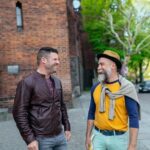
I especially love two things: the guide-led storytelling from punk to techno, and the stop-by-stop photo chances built into real places (think Haus Schwarzenberg and YAAM Beach). Guides like Damien and Antonio Castello are the kind who keep the pace friendly and explain things clearly, so you don’t just see murals—you understand why people care.
One drawback to consider: you’re walking outdoors rain and shine for about three hours. Bring comfortable shoes and plan for the weather, since this is a culture-and-corners kind of route, not a sit-down tour.
In This Review
- Key highlights you’ll feel fast
- Street art as a way to read Berlin
- Meeting at the TV Tower and how the 3-hour rhythm works
- Haus Schwarzenberg: where street art meets alternative culture
- Kreuzberg and Friedrichshain back streets: the corners that sell the story
- YAAM Beach: reggae, music, and community art on sand
- Kunstlerhaus Bethanien: squatting, activism, and contemporary art
- The Treehouse on the Wall: resilience you can photograph
- SO36: punk and the music backbone of alternative Berlin
- Price and value: why $23 can actually make sense
- Who this tour is best for (and when it’s not your match)
- Should you book this Alternative & Street Art Tour?
Key highlights you’ll feel fast
- Real alternative landmarks: Haus Schwarzenberg, Kunstlerhaus Bethanien, Treehouse on the Wall, and the SO36 music scene
- Photo-focused stops: murals, graffiti walls, and places with a strong visual identity for your camera
- Punk-to-techno context: the guide connects art to subcultures, not just aesthetics
- Berlin’s “why here?” story: you’ll learn what makes Berlin a magnet for artists and activists
- Beach culture in the city: YAAM Beach mixes music, reggae energy, and community art scenes
Street art as a way to read Berlin
Berlin can feel like it has two faces: the postcard classics and the everyday rebellion. This tour leans hard into the second face, where creativity is a lifestyle and walls are public message boards. Instead of treating graffiti as random decoration, you get the backstory—why it shows up, who it’s for, and how it fits Berlin’s long-running habit of challenging rules.
What makes it work for you is the structure. You move through districts—Mitte first, then Kreuzberg, and on into Friedrichshain—so you’re not stuck in one bubble of imagery. The route also aims at variety: you’ll hit everything from mural-heavy corners to unusual community spaces like YAAM Beach and the Treehouse on the Wall.
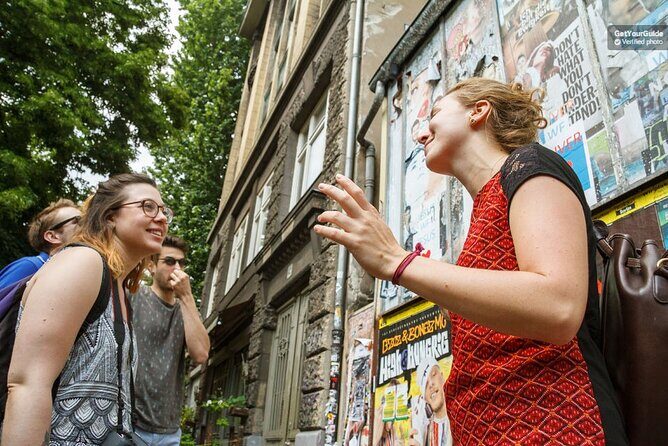
The guide factor matters, too. The most praised tours are the ones where the guide explains with a relaxed, welcoming style. That’s exactly what guides like Damien are known for in this kind of format: calm explanations, clear connections between culture and street art, and enough pacing that you can actually look, not just walk.
A few more Berlin tours and experiences worth a look
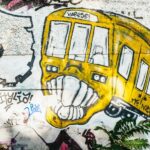

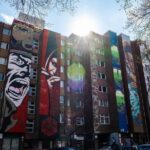
Meeting at the TV Tower and how the 3-hour rhythm works
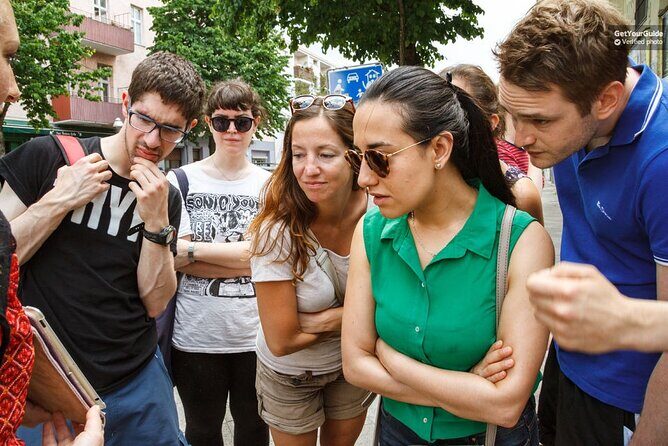
You meet right underneath the TV tower, in front of Vapiano. It’s a handy location because it’s easy to orient yourself—big landmark, lots of foot traffic, and you’re already in the Mitte orbit.
From there, the “alternative Berlin” concept kicks in fast. Expect a walking tour that keeps shifting between big-message walls and smaller, off-the-main-road details. You won’t just be shown famous stops; you’ll also be guided through back streets that help you understand how Berlin’s subcultures live in everyday space.
Because it’s three hours, you should pack for a focused sprint:
- comfortable shoes (you’ll want them)
- water if it’s warm
- a light rain layer if it’s not
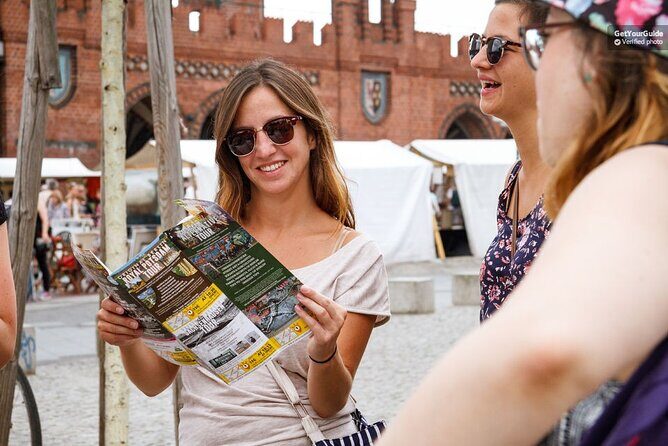
- your camera ready, because the tour is built with amazing foto opportunities in mind
Also note what’s not included: there’s no pickup/drop-off, no food and drinks, and no transportation ticket. If you plan to snack, you’ll want to do it on your own time. The upside is that your money goes into the guide and the walking route rather than extra transfers.
Haus Schwarzenberg: where street art meets alternative culture
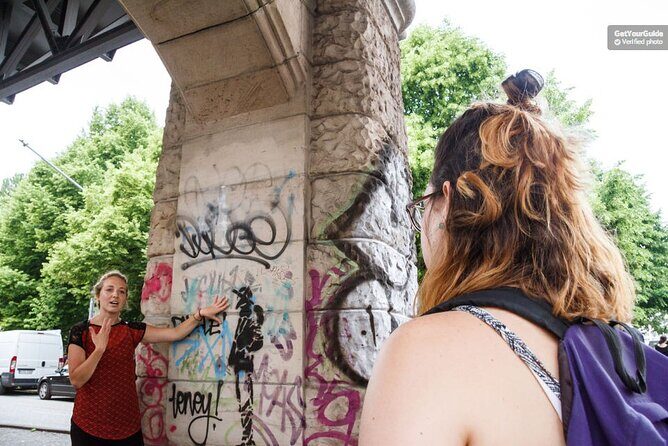
Haus Schwarzenberg is one of those places that instantly teaches you a lesson: Berlin street art isn’t just about individual artists; it’s also about the ecosystem that forms around them. Here, the visuals are bold, and the atmosphere is the point. You’re meant to see how street art and graffiti become part of the neighborhood identity.
I like stops like this for one reason: they help you shift from “I see art” to “I see culture.” The guide typically frames it with the broader alternative story—how punk energy, DIY creativity, and political frustration turned into visible expression. When you learn why people create and why they tag, even the simplest wall becomes more meaningful.
For photography, Haus Schwarzenberg is the kind of stop where you can take wide shots and still find close-up details. You’ll likely spend enough time there to get options: a clean-on-wall picture, a textured close crop, and a wider shot that includes the building character.
Kreuzberg and Friedrichshain back streets: the corners that sell the story
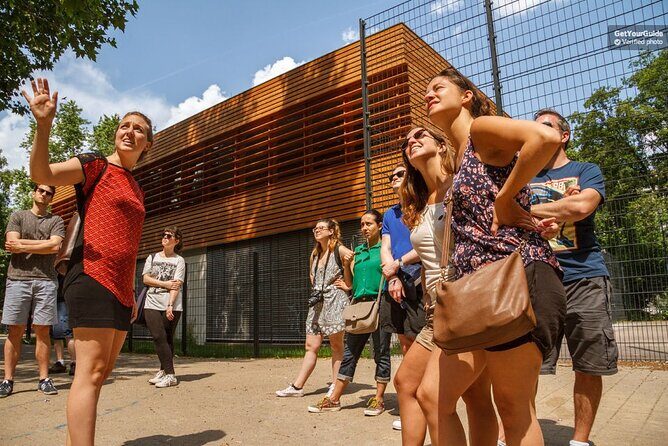
Between the bigger named landmarks, the tour shines in the in-between parts: side streets, murals tucked onto building edges, and those small visual cues that tell you what kind of neighborhood you’re in. The guide moves you through Mitte, Kreuzberg, and Friedrichshain for a reason: each area carries a different flavor of creative resistance.
Kreuzberg is often where you feel the mix—multicultural energy, music culture, and a history of activism. Friedrichshain tends to pull you toward the louder, more youth-forward scenes. Mitte gives context at the start, so you can connect how the city’s center relates to the “outside the rules” areas.
If you like street art tours, you’ll appreciate that the emphasis isn’t only on the biggest artworks. You’re nudged to notice patterns: the places where graffiti clusters, the styles that repeat, and the locations that make sense for community visibility. That’s where your understanding grows.
Practical tip: slow down during transitions. The best photo moments often happen when you stop and look up. A three-hour tour has a lot of ground to cover, so it helps if you’re ready to switch from walking mode to observing mode quickly.
YAAM Beach: reggae, music, and community art on sand
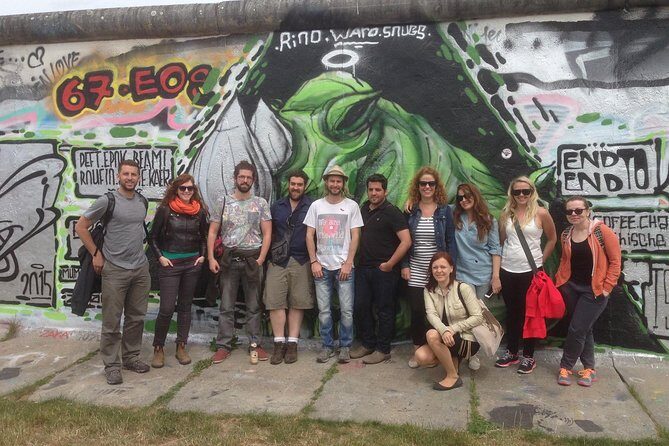
YAAM Beach is a wild contrast—in a good way. Instead of another warehouse wall or a street corridor, you’re stepping into a beach-style hangout that blends reggae energy, music, graffiti scenes, and community life.
What I like about this stop is that it proves Berlin’s street culture isn’t limited to paint. It’s about gathering. It’s about making space for people who don’t fit the mainstream script. When the guide connects this place to the same alternative fabric as the mural sites, it clicks: Berlin doesn’t just produce art; it creates settings where art and community overlap.
For photos, YAAM Beach is a treat because the setting gives you more than “a wall with color.” You can frame people-and-place shots, get graffiti elements into the composition, and capture the contrast of beach vibe inside a city. Bring your camera patience—this is the type of location where you’ll keep finding new angles as you walk around.


Kunstlerhaus Bethanien: squatting, activism, and contemporary art
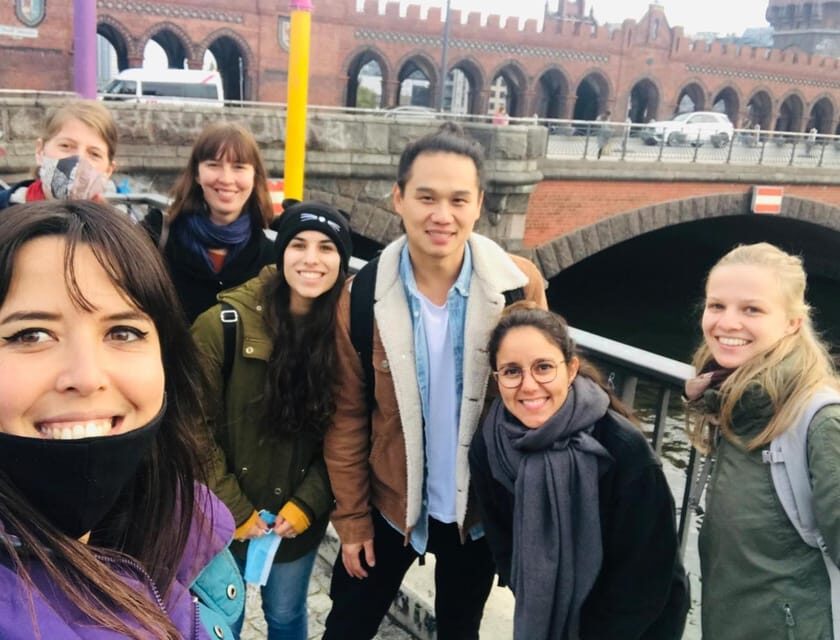
Kunstlerhaus Bethanien is where Berlin’s alternative story gets more grounded. You’re looking at a hub for contemporary art, but the emphasis is also on the local history tied to activism and alternative housing. The guide connects it to the origins of Berlin’s squatting scene, which is key to understanding why certain creative spaces exist at all.
This stop matters for you if you want more than aesthetics. It helps explain how artistic expression and political action share the same roots in Berlin. When the tour frames Bethanien in terms of defiance and self-organization, street art makes sense as part of a larger pattern: people take spaces, make them usable, and then fill them with culture.
There’s also a “today” angle. A contemporary art hub isn’t just a past artifact; it’s a living platform. Even if you’re not an art specialist, you’ll probably leave Bethanien with a better grasp of why Berlin’s scene evolved the way it did—and why it keeps reinventing itself.
The Treehouse on the Wall: resilience you can photograph
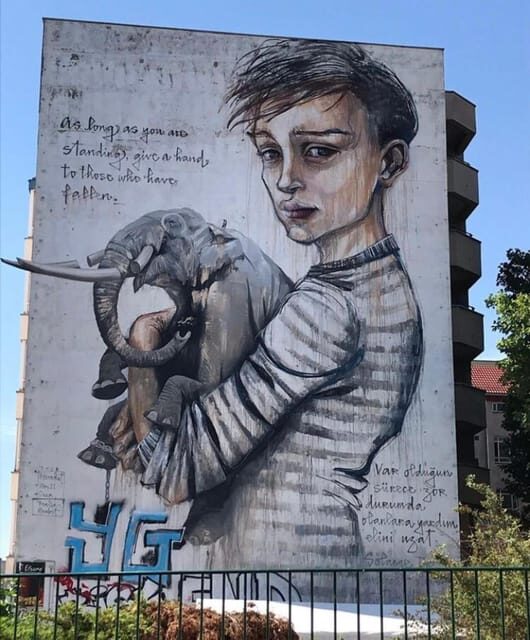
The Treehouse on the Wall is one of those symbols that hits quickly. It represents ingenuity and defiance, made visible in physical form. That matters because Berlin street art often performs a similar function: it’s not only decorative, it’s communicative.
At this stop, you’ll feel the tour’s core theme—creativity under pressure. The guide uses it to show how resourcefulness becomes architecture, and how culture can grow out of constraints. In other words, the city’s stories aren’t locked in museums; they’re built into spaces you can walk past and photograph.
Photo-wise, this is a “get your shot, then look again” location. The structure invites angles. You’ll likely want a few distances: one close frame, one wider view showing the setting, and maybe a photo that includes surrounding elements so the context doesn’t vanish.
SO36: punk and the music backbone of alternative Berlin
The tour also points you toward the music side of the scene, especially with SO36. This is presented as a legendary club that echoes Berlin’s punk, eclectic, and alternative music heritage.
Why this matters: graffiti and street art aren’t separate from nightlife culture. They’re often part of the same social network—people who organize parties, form communities, and push against cultural mainstreaming. When you connect a wall to a club, you understand that Berlin’s alternative identity runs through sound as well as sight.
SO36 is also useful for you if you want to continue the experience after the tour. Even if you’re not planning to go out that night, you’ll leave with a clearer map of what kind of venues helped shape Berlin’s creative image.
Price and value: why $23 can actually make sense
At around $23 per person for a three-hour walking tour, the price is usually fair for one main reason: you’re paying for a guide who’s tied into the local subculture story, not just someone reading generic facts.
The guide-led value shows up in the best-reviewed tours. People highlight how enthusiastic guides are and how calm explanations help you connect the dots. That’s not a small thing. For street art, context is everything. A wall without context becomes just color; with context, it becomes a timeline of attitudes, struggles, and creative responses.
Here’s what you do need to budget for:
- food and drinks (not included)
- your own transport ticket if you’re moving beyond the walk
- any tips you choose to give
Still, for $23, you get a lot of walking time, multiple landmark stops, and the kind of storytelling that makes the city’s alternative scene feel less mysterious.
If you’re comparing options, the question to ask isn’t only price. It’s whether the tour helps you understand why Berlin looks the way it does. This one is designed to do that.
Who this tour is best for (and when it’s not your match)
This tour is a great fit if you:
- love street art and want the backstory, not just photos
- enjoy punk-to-techno themes and subculture context
- like walking through real neighborhoods, not only major monuments
- want a route that mixes big names with community spaces like YAAM Beach
It may not be the best match if you’re mainly after traditional “must-see” sights and strict museum-style history. This experience leans toward the street-level creative narrative, so expect a cultural lens rather than a classic sightseeing checklist.
It’s also suitable for all ages, and the tour is wheelchair accessible. That said, you should still be ready for a rain-and-shine outdoor format and a steady walking pace.
Should you book this Alternative & Street Art Tour?
If your ideal Berlin day includes street art, graffiti, and subculture stories, then yes, I’d book it. The combination of named stops like Haus Schwarzenberg, Kunstlerhaus Bethanien, the Treehouse on the Wall, and SO36 gives you structure, while the district walk through Mitte, Kreuzberg, and Friedrichshain keeps it feeling like a living city, not a theme park.
The safest bet is to choose this tour when you care about interpretation. When the guide is the right fit—like the enthusiasm people associate with Damien and the standout experience people connect with Antonio Castello—you don’t just collect images. You come away understanding why Berlin’s alternative scene keeps reappearing, and why it still draws artists from everywhere.