REVIEW · BERLIN
An Introduction to Berlin Walking Tour
Book on GetYourGuide →Operated by insightcities.com · Bookable on GetYourGuide
Berlin changes fast when you walk with a historian. This route ties Prussia’s rise to the Nazi and Cold War eras, using real landmarks and the places where ideology literally shaped streets. I especially like how it keeps two big threads running at once: the Berlin Wall line and the meaning behind the Reichstag today.
You also get an expert guide profile: professors, doctoral students, historians, journalists, art critics, and published authors, and one past departure featured Dr. Martin Sauter, praised for a tour that felt personal. One drawback to consider is that Berlin’s story here gets heavy. If you want a light, only-photo sightseeing walk, the themes will hit harder than you might expect.
In This Review
- Key Points You’ll Actually Care About
- From Cafe Einstein to Potsdamer Platz: Where Modern Berlin Starts to Make Sense
- Tracing the Berlin Wall Through Tiergarten Park: Walking a Broken Line
- Holocaust Memorial to Reichstag: The 1933 Fire, Reunification, and a Glass Dome
- Brandenburg Gate and Unter den Linden: Napoleon, Nationalism, and Prussia’s “Poet King”
- Bebelplatz Book Burning and Museum Island: When Culture Becomes a Target
- Hackescher Markt to Alexanderplatz: Pre-War Courtyards, Then a Communist Showplace
- Checkpoint Charlie: Ending at the Border Where 1989 Became Real
- Price and Value for a 3-Hour Historian Walk
- Should You Book This Berlin Walking Tour?
- FAQ
- FAQ
- How long is the Berlin walking tour?
- Where does the tour start?
- What is the tour price?
- Is the tour guide available in English?
- Do I need to buy public transport tickets?
- What kind of guides lead this tour?
- Is there free cancellation?
Key Points You’ll Actually Care About
- You follow the Berlin Wall path starting around Potsdamer Platz and moving toward Tiergarten
- The Reichstag dome gets explained, including the 1933 fire pretext and the post-1990 symbolism
- Napoleon to Frederick the Great to Hitler: the tour links leaders and ideas, not just buildings
- Holocaust Memorial and Bebelplatz book burning are treated as historical turning points, not quick stops
- Expect 1–2 short metro rides, because some distances are too far for nonstop walking
- Ends at Checkpoint Charlie, where the Cold War’s end has a very physical feel
From Cafe Einstein to Potsdamer Platz: Where Modern Berlin Starts to Make Sense
Meet at Cafe Einstein on Unter den Linden 42, then your walk takes you into one of Berlin’s most meaningful “before and after” zones: Potsdamer Platz. This is where the city’s modern business energy concentrates today. But the story you’re given starts with a harder image: the wasteland that used to sit where East Berlin’s “Death Strip” ran.
What I like about this opening is the way it trains your eye. You’re not just looking at a busy square. You’re being asked to notice how a city can be redesigned for control—then later rebuilt for life. That’s a theme you’ll keep running into the whole time.
If you’re the type who hates vague tours, this one helps. It gives you anchors you can remember: a start point where Berlin’s division is visible in the urban layout, and a route that keeps moving so the big 20th-century story doesn’t flatten into one lecture in the middle of the street.
You can also read our reviews of more walking tours in Berlin


Tracing the Berlin Wall Through Tiergarten Park: Walking a Broken Line
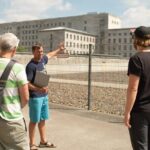
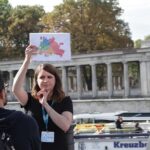
After Potsdamer Platz, you move along the path where the Berlin Wall once stood, working your way toward Tiergarten Park. Tiergarten is famous as a central green space, but on this tour it isn’t just scenery. It becomes a living map of what used to be there—and what the city chose to do with that space afterward.
This stretch matters because the Wall isn’t only a monument. It’s a physical boundary that changed how people lived, crossed, and even imagined the future. When your guide points out the Wall’s former route, you start understanding why Berlin feels different from other European capitals. The city doesn’t just remember history with plaques. It remembers by shaping movement.
The practical side: you’ll want comfortable walking shoes, and you’ll likely pause often for context. Berlin is flat-ish, but this walk still asks you to pay attention. If you’re short on time, it’s worth noting that the tour’s story is built to compress centuries into three hours—so you’ll move faster than on a slow museum day.
Holocaust Memorial to Reichstag: The 1933 Fire, Reunification, and a Glass Dome
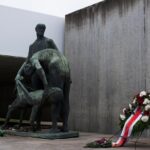
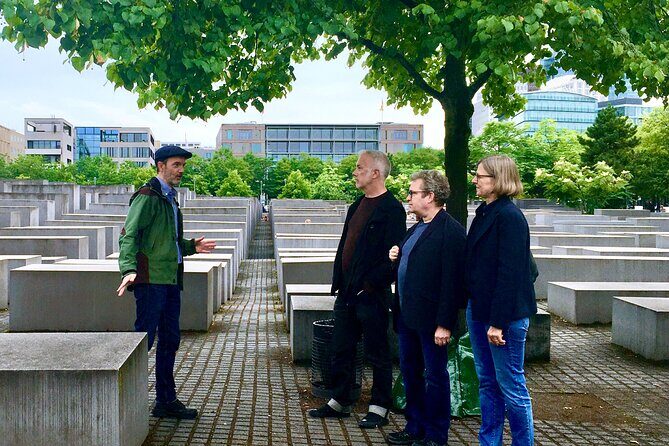
The dramatic turning points arrive in the middle. You take in the Holocaust Memorial, then head toward the Reichstag. These are two very different kinds of spaces—one designed for contemplation and remembrance, the other a working seat of government—but on this tour they’re connected by how states justify power.
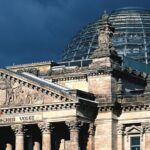
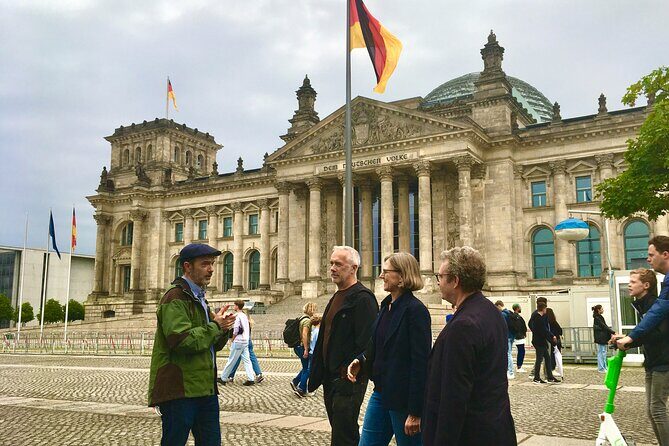
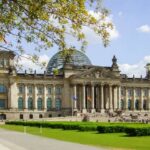
At the Reichstag, your guide helps you understand why the 1933 Reichstag fire mattered. The Nazis used it as a pretext to suspend civil liberties and arrest political opponents. That’s not trivia here. It’s the hinge between Germany’s political life and the catastrophic years that followed.
Then the tour turns to a modern symbol: the glass dome added in 1992 by architect Norman Foster. You’ll talk about what the dome represents—reunification, transparency, and a stated commitment to democracy. The dome isn’t just an architectural feature. It’s a message the building sends from the inside out, and Berlin can’t pretend it’s separate from what happened before.
A quick caution: these stops are emotionally serious. If you’re traveling with kids, it’s smart to know the tour takes its time explaining the context. You’ll decide based on your group’s maturity and tolerance for dark subject matter.
Brandenburg Gate and Unter den Linden: Napoleon, Nationalism, and Prussia’s “Poet King”
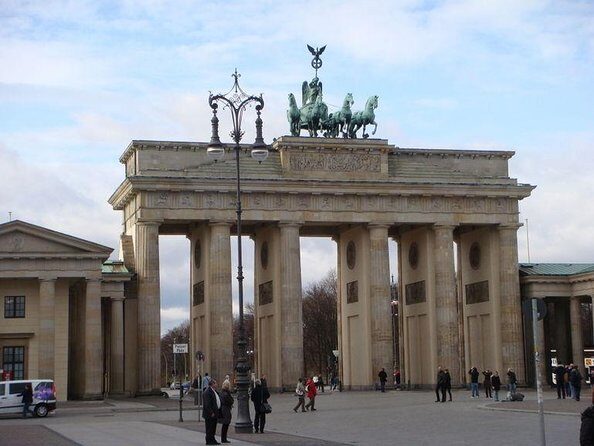
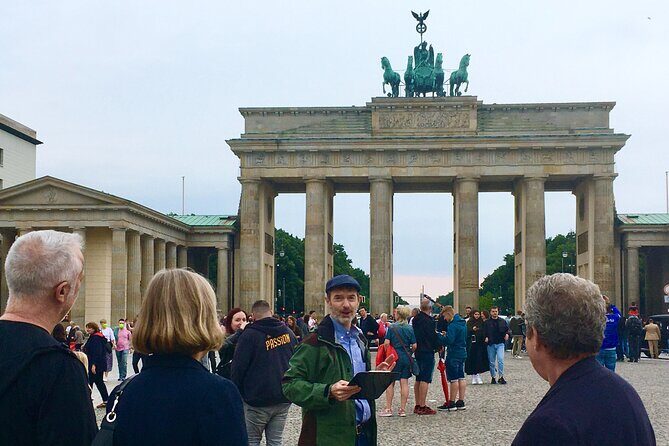
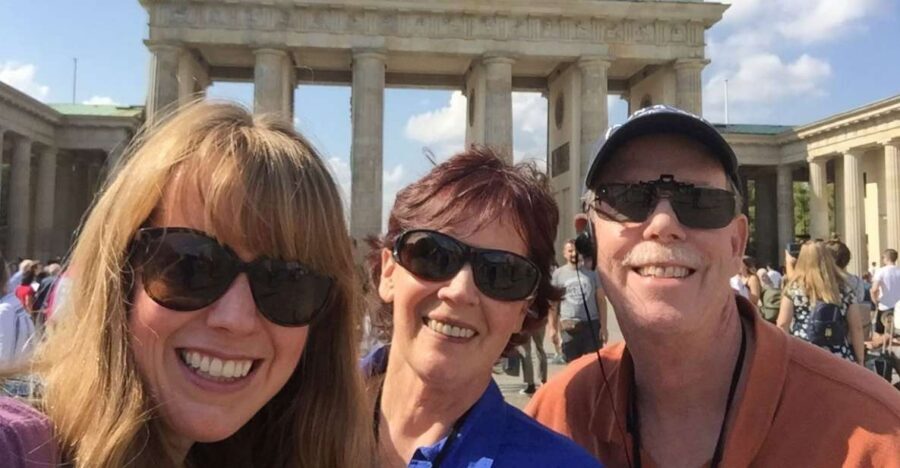
From the Reichstag area, the tour reaches back further than the 20th century. You follow the footsteps of Napoleon through the Brandenburg Gate, and you also get a lesson in cause-and-effect. The guide ties the French Revolution to German nationalism—showing how political ideas travel, mutate, and return with new local energy.
Then you walk Unter den Linden, Berlin’s royal boulevard lined with palaces, museums, and theaters. This is where the tour helps you “read” the city as a planned statement. You pause at the equestrian statue of Frederick the Great, and the story shifts again. Frederick isn’t treated only as a conqueror. You’ll hear about his nickname as the Poet King and his role in shaping the militaristic and cultural orientations that influenced the future German Empire.
This Prussian layer is one of the tour’s strengths. It doesn’t treat Nazi Germany as a sudden evil that appeared out of nowhere. Instead, it shows how earlier forces—especially those tied to power, discipline, and national identity—set conditions that later ideologies could exploit.
Bebelplatz Book Burning and Museum Island: When Culture Becomes a Target
Next up is Bebelplatz, the site of the 1933 Nazi book burning. Even if you’ve heard the story before, this stop has a different weight when you’re standing in the public square where it happened. The tour links it directly to Adolf Hitler’s rise to power and the terrible consequences that followed.
What I find useful is that the tour doesn’t only show destruction. It points out what was being attacked: thought, literature, and plural voices. That helps you understand why these sites feel so charged even today. Berlin isn’t just remembering history. It’s reminding people what happens when a state decides disagreement is the enemy.
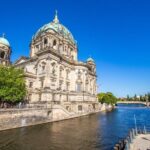
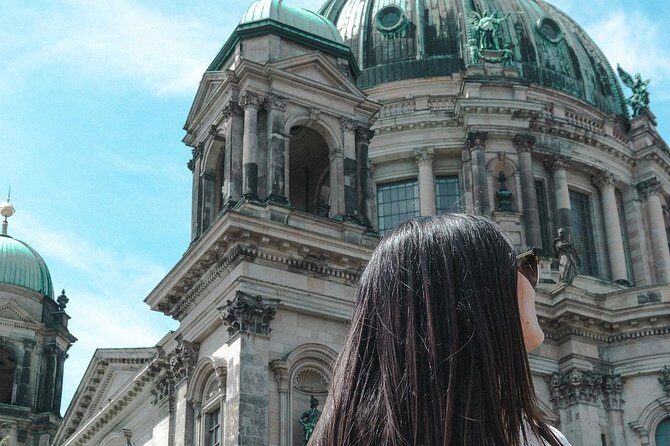
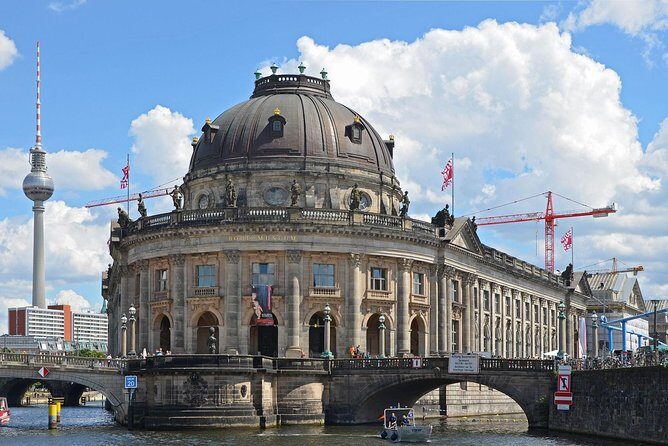
After that, you cross Museum Island, described as Berlin’s answer to the Louvre. The guide uses this to talk about the city’s 19th-century development into a cultural center. So the emotional arc becomes clear: culture first becomes a point of pride and identity, then gets targeted, then returns in a new form after the worst period of European history.
If you like your tours with meaning rather than a checklist of photos, this section is exactly that.

Hackescher Markt to Alexanderplatz: Pre-War Courtyards, Then a Communist Showplace
From the official monuments and institutions, the route shifts into neighborhood texture. Hackescher Markt is introduced as a charming pocket of pre-war Berlin, and you get time to ramble through a network of courtyards. This is where the tour breathes a bit. It’s not only about state power. It’s also about daily city life and how it looked before division hardened Berlin into separate worlds.
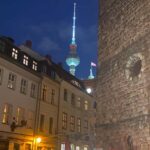
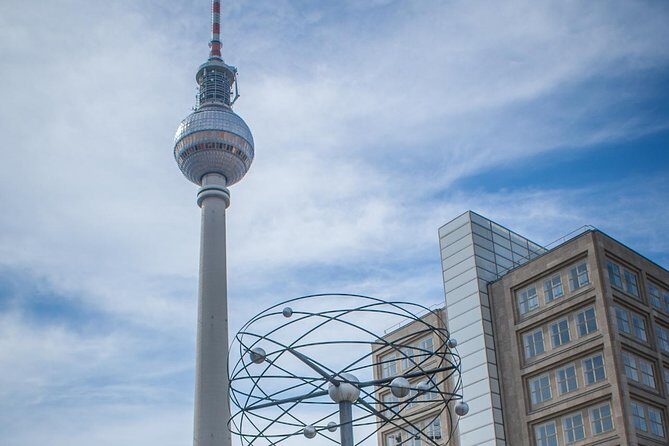
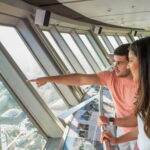
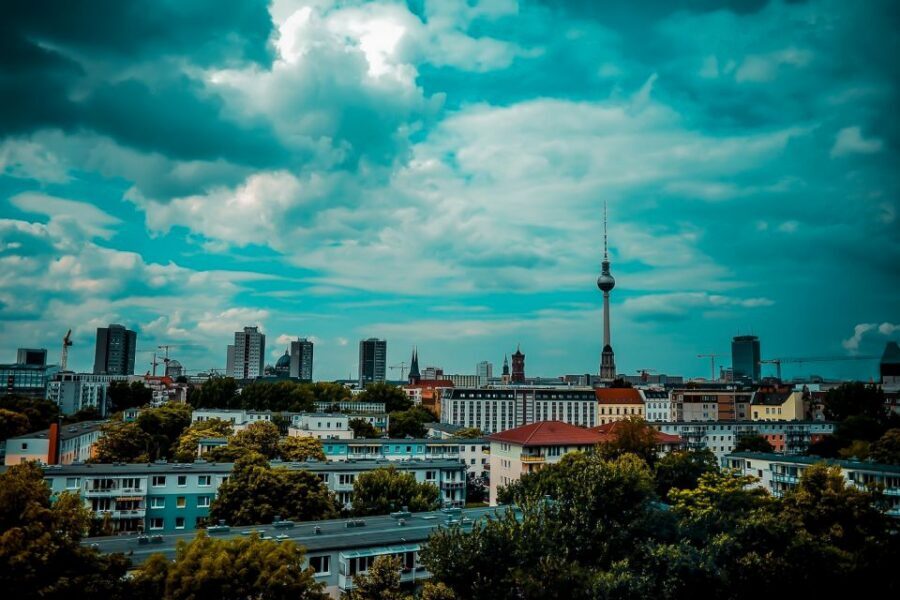
Then you move to Alexanderplatz, and the contrast is immediate. Once a historic square, East Germans rebuilt it in the 1960s as a communist bloc showplace. You’ll see the futuristic government buildings and apartment blocks, plus the iconic TV Tower that still dominates the skyline.
This is a smart shift because Alexanderplatz teaches you to recognize how ideology gets built into everyday space. The square isn’t only architecture. It’s a performance of modernity, planned like a public stage. Berlin can feel like two cities in one day, and this part of the tour makes that very clear without needing a diagram.
If you’re someone who loves street-level contrasts, plan to slow down mentally here. The story changes pace, and that’s where your brain usually clicks.
Checkpoint Charlie: Ending at the Border Where 1989 Became Real
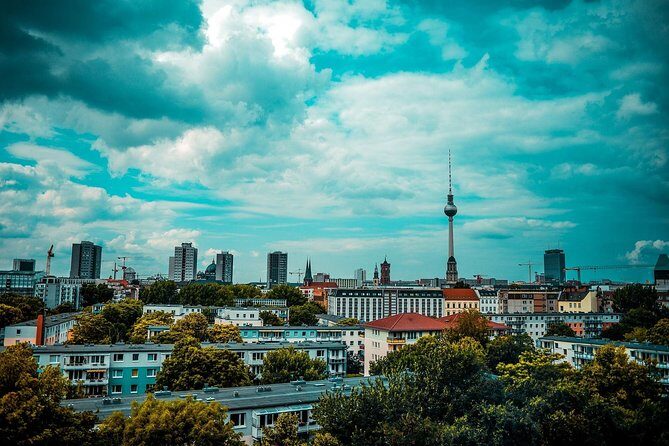
The tour finishes at Checkpoint Charlie, one of the most famous crossings from West Berlin to East. The guide places it into the key turning point of 1989, when thousands of East Germans poured across the border and the Cold War effectively unraveled on the ground.
Ending here works well. The earlier stops teach you how power shapes city form. Checkpoint Charlie completes the story with a human moment: a border that used to symbolize control becomes a door people rush through.
And the tour doesn’t pretend Berlin’s story ended in 1989. You also get discussion of how East/West divisions continue to impact Berlin even as the city evolves in new directions. That’s important. Berlin is a living place, not a museum. The guide helps you hold both ideas: memory and change.
Price and Value for a 3-Hour Historian Walk
The price is $135 per person for a 3-hour walking tour with a historian. That’s not bargain-basement sightseeing, but it’s also not trying to sell you a generic route.
Here’s where the value actually comes from:
- You’re paying for a guide with serious training—professors and doctoral students are explicitly part of the guide profile, not just “someone who likes history.”
- The tour uses landmarks as evidence, then explains the ideological and political connections between eras. That kind of interpretation is hard to replicate solo.
- The group format is private or small groups available, which usually means you can ask questions when something feels unclear or too heavy to process quickly.
You should also budget for transit tickets. Distances between some key sites are too far to walk nonstop, so you’ll use public transport one or twice. If you don’t have a Berlin metro pass, your guide helps you purchase tickets in the first metro station. The provided fares include a one-way AB ticket at 2.8 EUR (senior 1.70 EUR) and a day ticket at 7 EUR (senior 4.70 EUR). In practice, you’re deciding whether you’ll likely take one or two rides or want the option to hop around more that day.
If you want to do Berlin “by yourself,” you can. But a guide is what turns a skyline of famous names into a coherent story you can actually remember.
Should You Book This Berlin Walking Tour?
Book it if you want Berlin to make sense through cause and effect, not just through famous photos. This tour is a strong fit if you like big-picture history tied to specific places—Prussia, the Nazi era, the Cold War, and the modern message Berlin sends through rebuilt architecture.
Consider skipping or swapping to a lighter option if you’re easily overwhelmed by Holocaust-related sites and the political mechanics of Nazi power. This is a serious walk.
You’ll get the most from it if you show up ready to listen. Bring curiosity, not just a camera. And if you’re traveling during a quieter season, the experience can feel more individualized—one past departure ran with very small groups, which can make it easier to ask questions and take in each stop without rushing.
FAQ
FAQ
How long is the Berlin walking tour?
It lasts 3 hours.
Where does the tour start?
The meeting point is Cafe Einstein, Unter den Linden 42, 10117 Berlin, Germany.
What is the tour price?
The price is $135 per person.
Is the tour guide available in English?
Yes, the tour is offered with a live guide in English.
Do I need to buy public transport tickets?
You will need public transport one or twice because some distances are too far to walk. If you do not have a Berlin metro pass, your guide will help you buy tickets in the first metro station.
What kind of guides lead this tour?
Your guides are professors, doctoral students, historians, journalists, art critics, and published authors.
Is there free cancellation?
Yes, you can cancel up to 24 hours in advance for a full refund.