REVIEW · BERLIN
An Introduction to Berlin Walking Tour
Book on Viator →Operated by Insight Cities · Bookable on Viator
Berlin’s past walks right beside you. This 3-hour, max-8 historian-led walk connects the city’s last 300 years to what you see today, from the glass dome at the Reichstag to the long shadow of the Berlin Wall. I also love the small-group format because you’re not just marching past famous landmarks; you’re getting context while you’re standing in front of it.
The big trade-off is that the pace is tight and you’ll use public transport a few times to cover key spots without wasting the whole day in transit. That’s fine if you’re ready for a little ticket-tapping, but it’s something to plan for.
In This Review
- Key things to know before you go
- A Berlin Walking Tour Built Around Power and Memory
- Meeting at Unter den Linden: Where the Story Starts
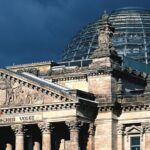
- Reichstag Building: Democracy Wrapped in Glass
- Brandenburg Gate: From Prussian Planning to Cold War Shockwaves
- Museum Island: Big Museums, Prussian Ambition, and the Spreeinsel Setting
- Potsdamer Platz: What Rebuilds Look Like After a Wall
- Unter den Linden: Berlin’s Grand Axis, Not Just a Street Name
- Tiergarten: A Brake Pad in the Middle of the Story
- The Holocaust Memorial: Facts, Form, and the Need to Pause
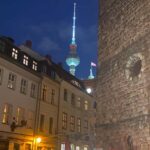
- Hackescher Markt: Art Nouveau Courtyards and Pre-War Atmosphere
- Price and What $156.53 Buys You (And What It Doesn’t)
- The Real Secret: Small Group Pacing and Guide Style
- Who Should Book This Tour
- Should You Book This Berlin Walking Tour?
- FAQ
- How long is the Berlin walking tour?
- What is the tour price?
- How many people are in the group?
- Is the tour offered in English?
- Where do we meet the tour?
- Is the tour ticket mobile?
- Is food included?
- Do I need to pay for admission at the stops?
- Will I need public transportation during the tour?
- What if I need to cancel?
Key things to know before you go
- A historian guide (max 8 people) means more back-and-forth and clearer answers while you’re looking at the buildings
- Prussian militarism to 20th-century Berlin is the theme, not just sightseeing
- Norman Foster’s Reichstag dome gets explained in plain language with political meaning
- Berlin Wall history in central Berlin shows up again and again, even at spots that look modern now
- Holocaust Memorial facts and atmosphere are handled carefully, with time to pause
A Berlin Walking Tour Built Around Power and Memory
This tour works because it treats Berlin like a living story. Yes, you’ll hit the postcard sites, but the point is how Prussian rulers shaped the state, how that culture influenced the 20th century, and how Berlin later remade itself. You’re not just collecting photos of the Brandenburg Gate or the Reichstag; you’re learning why these places mattered.
It also stays focused. With a 3-hour run and a small group, you move at a “you’ll feel it, but you won’t get lost” speed. The guide is a historian by training, often with a background that can include professors, doctoral students, journalists, and hosts who actually like talking through what happened.
One more thing I appreciate: the stop list is balanced between big government landmarks and places tied to collective memory. That mix helps you connect eras instead of treating Berlin’s past like separate chapters.
You can also read our reviews of more walking tours in Berlin



Meeting at Unter den Linden: Where the Story Starts
You meet at Unter den Linden 42 (10117 Berlin). That’s a smart starting point because the boulevard itself is basically a visual lesson in how Berlin organized space and authority over time. You’ll be near public transportation, so it’s easier to arrive without stress.
The tour runs about 3 hours (approx.) and is offered in English. It also uses a mobile ticket, which makes the start smooth if you’re used to city tours and transit apps.
Because you’ll walk some sections and take public transport for others, the best mindset is to keep your schedule loose and expect short “hops” between stops. The guide handles the flow, but you’ll still want to have your day pass (or equivalent) ready.
Reichstag Building: Democracy Wrapped in Glass
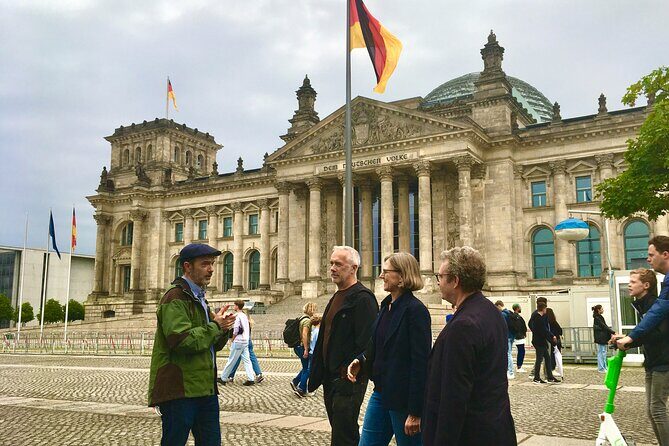
The first stop is the Reichstag Building, home to Germany’s Bundestag, the federal assembly. Standing outside, you can already feel the building’s role as a political centerpiece, not just a historic shell.
The star detail for most visitors is the glass dome added in the 1990s by Norman Foster. The guide explains why it became an iconic image of modern Germany and how it signals commitment to democratic government. It’s one of those architectural moves that makes a point without needing a speech.
The Reichstag stop is listed as admission ticket free for this tour. That matters because it lets you focus on orientation and meaning rather than timing your visit around ticket lines. Still, keep an eye on what the guide plans for viewing—this is a walking tour rhythm, not a full museum-style deep visit.
Practical tip: take a minute to look for the details your guide points out—Foster’s dome is easier to understand when you know what to notice.
Brandenburg Gate: From Prussian Planning to Cold War Shockwaves
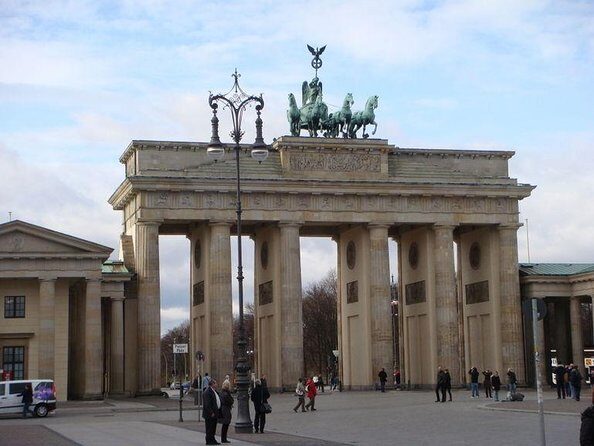
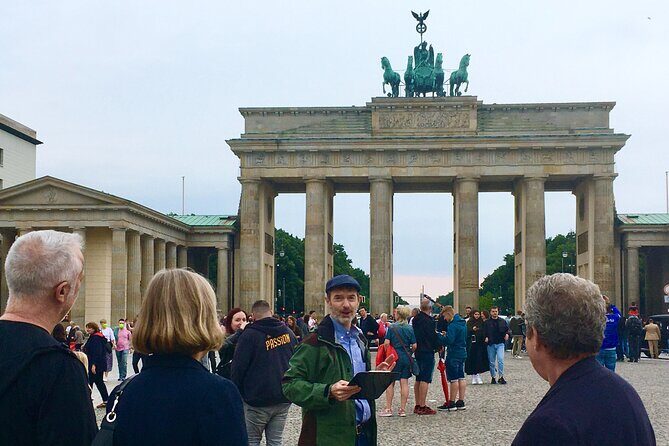
Next up is the Brandenburg Gate, a neoclassical monument ordered by Prussian King Frederick William II. Even before the guide explains the layers, the gate reads like a statement: this was meant to impress and frame power.
From there, the story stretches across major turning points—Napoleon’s entrance into Berlin and, later, Ronald Reagan’s Cold War speech. You’ll also hear how this gate became a symbolic stage where political messages were amplified for the world to see.
The stop is also admission ticket free, so you can spend your time on understanding and photos rather than ticket logistics. One drawback here is that the gate is popular, so you should expect people around you. The payoff is that you’re learning the “why” behind what so many visitors already recognize.
If you like context: this is one of the stops where the guide can make the building feel like a timeline instead of a landmark.
Museum Island: Big Museums, Prussian Ambition, and the Spreeinsel Setting
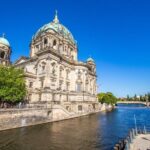
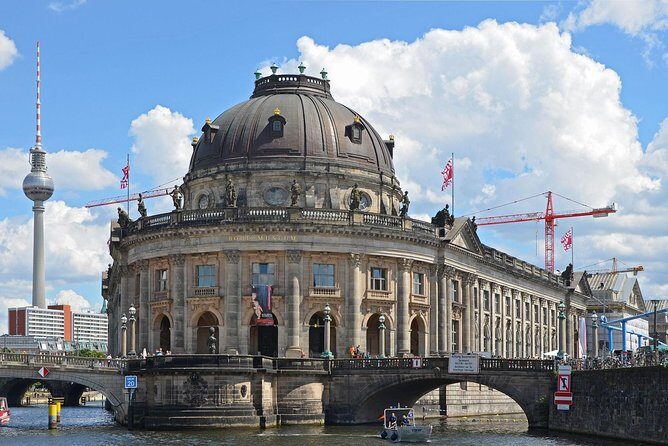
Then you reach Museum Island on Spreeinsel (Spree Island), a cluster of major museums shaped under Prussian rulers. The tour gives you the essentials of a whole cultural plan in one go—how rulers invested in institutions as part of building national identity.
The lineup includes the Pergamon, the Neues Museum, and the Alte Nationalgalerie. Even if you don’t step inside, this stop helps you see why the area became such a cultural magnet: the setting and the concentration of museums make the island feel purpose-built.
Museum Island is listed as admission ticket free for the tour stop. That’s your clue that this moment is about bearings and storytelling—getting the map in your head—so you can decide later if you want to return for museum entry on your own time.
A smart move on your own time: if any of those museum names grabbed you, plan a follow-up day with timed tickets. This walk gives you direction, not a full museum day.



Potsdamer Platz: What Rebuilds Look Like After a Wall
Now for the shift: Potsdamer Platz. The guide frames it as a historic square that was reborn after the fall of the Berlin Wall. Today, it’s a hub for entertainment, restaurants, and shops.
This stop is valuable because it shows you Berlin’s ability to reshape itself quickly. The area can look like “modern city life,” but the guide helps you interpret it as a transformation site—one that carries the memory of rupture.
It’s also listed as admission ticket free, which fits the walking-tour style. You’ll take in the urban layout and hear the explanation, then move on before the square swallows your time.
Consideration: if you’re looking for quiet, reflective corners, this is the opposite. It’s central and lively, so it’s best when you treat it as a lesson in redevelopment rather than a long sit-down stop.
Unter den Linden: Berlin’s Grand Axis, Not Just a Street Name
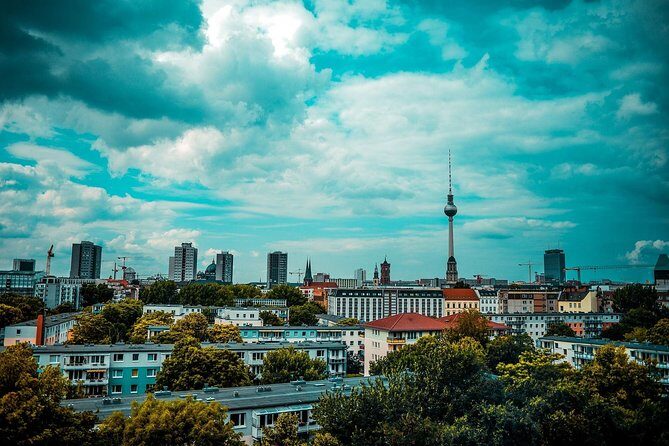
Then you walk—or at least orient—around Unter den Linden, the grand boulevard running from the City Palace to the Brandenburg Gate. The boulevard is named after the linden trees lining it, and the guide places it in a useful comparison: it was Berlin’s answer to Paris’s Champs-Élysées.
This section is where the tour becomes more “walk with meaning.” A boulevard like this isn’t just transportation; it’s how a city expresses hierarchy, space, and ceremony. The guide’s job is to help you read what you’re walking through.
It’s listed as admission ticket free and timed around 30 minutes, so you get enough time for explanation and photos without feeling like you’re stuck in one place. If you’re the type who likes architecture and urban planning, you’ll likely enjoy this stretch most because you can connect the layout directly to political history.
Tiergarten: A Brake Pad in the Middle of the Story
After the political landmarks and the symbolic architecture, you pause at Tiergarten, Berlin’s most famous inner-city park. The guide points out the graceful gardens and grand statuary, which gives you a change of pace without breaking the narrative.
This stop is brief—about 10 minutes—but it matters. Berlin’s major sites can feel heavy back-to-back. Tiergarten gives your brain a reset so the next stop lands with more force.
It’s also admission ticket free, so you’re not paying for a timed entry. You’re paying with attention, and that’s what the guide is asking you to do.
The Holocaust Memorial: Facts, Form, and the Need to Pause
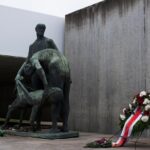
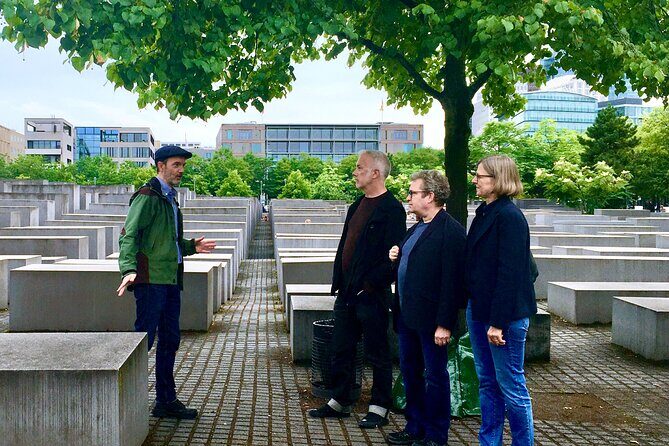
The most serious stop is the Memorial to the Murdered Jews of Europe, designed by Peter Eisenman and opened in 2005. You’ll learn the core design detail: 2711 concrete slabs of different heights that create a somber labyrinth and a space for reflection.
This is not a quick “snap the photo and go” moment. Even though it’s listed at 10 minutes, the nature of the place forces a slower pace. The guide’s explanation helps you understand the design logic without turning it into a lecture.
It’s also listed as admission ticket free, so you don’t need to think about costs here—just about how you want to experience it. If you need a moment of quiet, take it. The best Berlin tours don’t rush this kind of site.
Practical note: wear comfortable shoes. The ground can feel like it’s pulling you forward even when you’re trying to stand still.
Hackescher Markt: Art Nouveau Courtyards and Pre-War Atmosphere
To end, you visit Hackescher Markt Square, a lively area with preserved Art Nouveau courtyards from pre-war Berlin. This stop gives you a different taste of the city: not state power or memorial design, but the everyday street-level texture of historic Berlin.
The courtyards are the real hook. The guide uses this area to show how Berlin’s past survives in architecture that’s still used. It’s one of the best moments to shift from “history explained” to “history visible in daily life.”
It’s also admission ticket free and timed around 15 minutes, which is enough to orient yourself and get that sense of place before heading onward on your own.
Price and What $156.53 Buys You (And What It Doesn’t)
At about $156.53 per person for roughly 3 hours, you’re paying for three things:
- a historian-led route that connects the dots across centuries
- access to a small-group guide (maximum 8 travelers)
- the time saved by having a plan through central Berlin landmarks
What’s not included is food and drinks, hotel pickup/drop-off, and any transportation between stops. You’ll also use public transport a few times. If you don’t already have a Berlin transit pass, the tour suggests getting a day metro pass.
Here are the figures the tour provides:
- one-way AB ticket: 2.8 EUR (senior discount 1.70 EUR)
- day ticket: 7 EUR (senior discount 4.70 EUR)
This is where the value question gets real. If you’re already planning to ride transit during your day, this tour becomes easier to justify. You’re not paying extra for entries at each listed stop, since the tour marks each stop as admission ticket free. You’re basically paying for a guided narrative through the places that shaped modern Berlin.
If you hate crowds and hate public transport, you might feel the cost more sharply. But if you enjoy thinking while you walk, it’s a reasonable price for the amount of ground covered and the guidance you get.
The Real Secret: Small Group Pacing and Guide Style
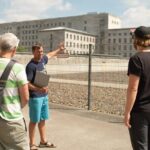
The tour is capped at 8 travelers, which changes the feel fast. You get more attention, and you can ask follow-up questions while you’re standing near the exact building or monument that sparked the topic.
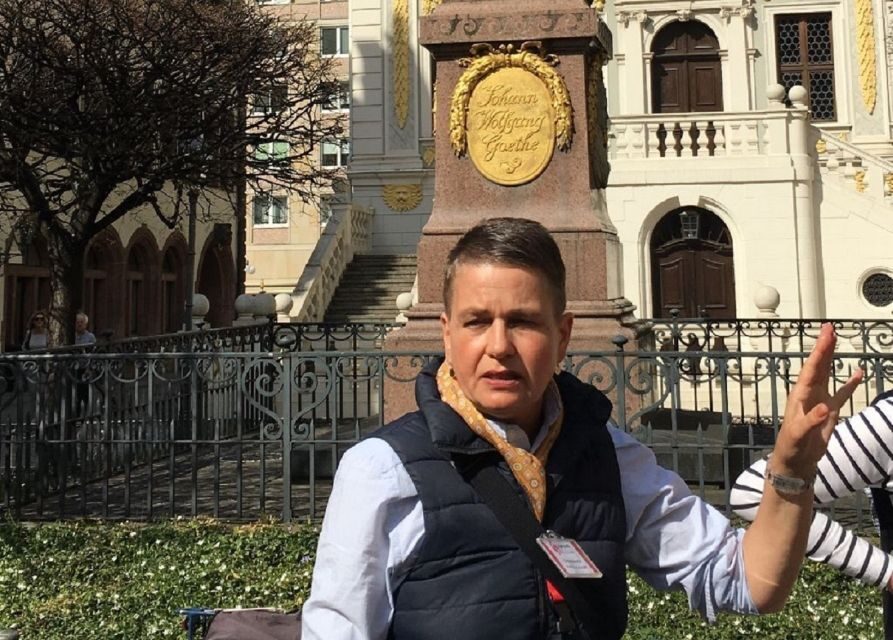
One example mentioned in guide feedback is that the experience can be led by an architect-style historian, with a guide named Dan leading with a great pace for a very small group. That kind of background matters, because it often means you’ll hear more about structure, design choices, and why the buildings look the way they do.
Also, the guide team isn’t limited to one type. You might meet professors, doctoral students, journalists, or enthusiastic hosts and storytellers. That variety can be good, as long as they keep the story grounded in what you can see.
Who Should Book This Tour
I’d point you to this tour if:
- you want Berlin history explained through places, not just dates
- you like political and architectural context (Reichstag dome, Prussian planning, memorial design)
- you prefer a small group over the big-bus crowd
- you’re short on time and want a clear, efficient route through central landmarks
It’s also a strong fit if you’re traveling with someone who loves structure and meaning. This kind of itinerary helps both “photo people” and “history people,” because each stop has a reason beyond visuals.
If you want long time inside museums or quiet neighborhood wandering, you’ll likely want to pair this with extra independent time. This walk is designed to connect and orient, not to replace full museum days.
Should You Book This Berlin Walking Tour?
Yes, if you want a well-planned central Berlin history route in a small group, with a guide who can tie Prussian power to what you see in the 20th century and beyond. The stop selection is practical: Reichstag, Brandenburg Gate, Museum Island, key Wall-area context via Potsdamer Platz, Unter den Linden, Tiergarten, the Holocaust Memorial, and Hackescher Markt.
Before booking, be honest about your travel style. If you’re okay with some public transport hops and you’re fine with short stops at major sites, this is a good use of a half-day. If you need a slower pace or a museum-first day, you may feel rushed.
FAQ
How long is the Berlin walking tour?
It runs for about 3 hours.
What is the tour price?
The price is $156.53 per person.
How many people are in the group?
The tour has a maximum of 8 travelers.
Is the tour offered in English?
Yes, it is offered in English.
Where do we meet the tour?
You meet at Unter den Linden 42, 10117 Berlin, Germany.
Is the tour ticket mobile?
Yes, you receive a mobile ticket.
Is food included?
No, food and drinks are not included.
Do I need to pay for admission at the stops?
The tour lists admission tickets for the included stops as free.
Will I need public transportation during the tour?
Yes, you will use public transport a few times since some distances between key sites would be too far to walk.
What if I need to cancel?
You can cancel for a full refund up to 24 hours in advance of the experience start time, and cancellation is free.