REVIEW · MUNICH
800 Years of History: A Munich GPS Audio Tour
Book on Viator →Operated by VoiceMap Audio Tours · Bookable on Viator
Munich’s heart gets simpler with GPS audio. This self-guided walk strings together major sights across centuries, starting at Marienplatz and moving on foot through squares, churches, markets, and royal-era buildings, all while you control the pace. You get a guided story in English that’s built for real walking time, not a rushed bus loop.
I especially like the offline setup: audio, maps, and geodata are available when you’re on the move. I also like the freedom to stop and start as you please, so you can pause for a snack or linger when something catches your eye instead of marching with strangers.
The main watch-out: if you hit construction or you’re not following the on-screen map cues, the route can feel harder than it needs to. I’d also recommend using the VoiceMap app with GPS rather than trying to run it in a less guided way, since the GPS guidance is a big part of making this smooth.
In This Review
- Key highlights that make this tour work
- Why this Munich GPS audio tour fits real travel days
- Price and timing: what $9.99 buys you in Munich time
- Getting started at Marienplatz: the easiest launch point
- How the VoiceMap GPS walk actually feels on the ground
- A quick tip to avoid the most common friction
- Marienplatz through St. Peter’s: the old city starts strong
- Consideration: large squares can confuse direction
- Viktualienmarkt and Honighäusl: markets, everyday life, and Munich flavor
- Hofbräuhaus and Alter Hof: beer hall energy and royal-era echoes
- Max Joseph Platz and the Residenz: where power becomes architecture
- Feldherrnhalle to Theatine Church: monuments that tell you who mattered
- Palais Holnstein and Frauenkirche: finishing with the skyline icon
- What you learn: 800 years without feeling like homework
- One caution on detail level
- Who this Munich walk suits best (and who should skip)
- My booking advice: when to run it and how to get the most value
- Should you book 800 Years of History: A Munich GPS Audio Tour?
- FAQ
- How much does the Munich GPS audio tour cost?
- How long is the tour?
- Where does the tour start and end?
- What language is the tour available in?
- Do I need an internet connection?
- Can I pause and restart the tour whenever I want?
Key highlights that make this tour work
- Offline audio and maps keep you going even when your signal is weak
- Live location tracking helps you stay on the right streets when routes change
- Stop and start anytime so the walk fits your energy and your schedule
- English narration ties landmarks together into a single timeline
- Lifetime access means you can replay it later or finish at a calmer pace
Why this Munich GPS audio tour fits real travel days
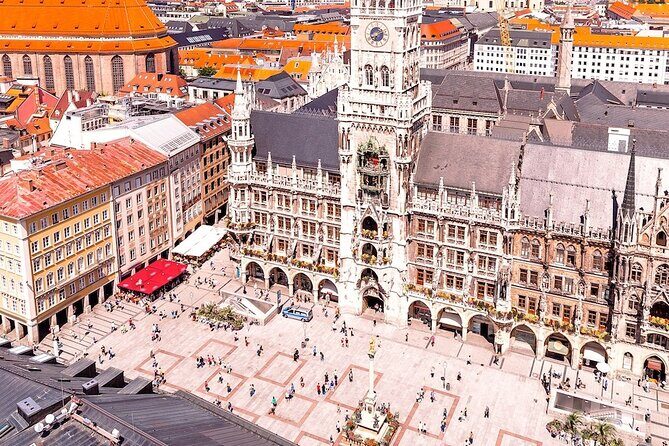
This is the kind of tour I like for Munich because it matches how most people actually explore: you want a plan, but you don’t want a schedule that punishes you for stopping to look at a facade. The walk begins in the thick of the city at Marienplatz, then threads through landmarks that most visitors list separately—this time you get them in sequence, with context that connects one era to the next.
At the same time, it’s not a “set it and forget it” history lecture. The experience is designed around walking. That matters because Munich’s highlights aren’t all spread out evenly; they’re clustered in areas where you’ll naturally slow down. When the pacing matches the city’s geography, you feel like you’re learning while you’re living the trip—not studying for it.
You can also read our reviews of more historical tours in Munich


Price and timing: what $9.99 buys you in Munich time
At $9.99 per person, this is priced like a low-friction way to get real context without committing to a long guided tour. The stated duration is about 1 hour 10 minutes to 1 hour 30 minutes, which is a sweet spot if you want history but you also need time for food, a coffee stop, or a second walk later.
You’ll also get something that’s easy to overlook when you’re comparing tours: lifetime access. That turns one payment into multiple chances to use it. If your first evening in Munich is busy, you can do the basics now and come back to replay sections later when you’re less rushed.
One practical note: headphones and a smartphone are not included. If you already carry both, you’re basically paying for the audio and the route experience. If you don’t, factor in a budget for at least basic listening.
Getting started at Marienplatz: the easiest launch point

The meeting point is Marienplatz (80331 München-Altstadt-Lehel), and the tour ends back at the same place. That is helpful because Marienplatz is a natural “anchor” in Munich. Even if you wander a bit before starting, you can usually find your way back there without stress.
The experience is available every day, 12:00 AM to 11:59 PM (per the listed opening hours window). In plain terms: you can start it in the morning, afternoon, or evening, which is useful for travelers who plan around markets, church hours, or meal timing.
When you download via your smartphone, you’re meant to start when ready. The big advantage here is that you’re not locked into a guided group’s meetup choreography. You show up at Marienplatz, press play, and let the route guide your next step.
How the VoiceMap GPS walk actually feels on the ground
This is a private tour/activity limited to your group, but it’s still self-guided. Translation: you’re not waiting for anyone, and you’re not performing in a crowd. The “private” part mainly means your experience isn’t mixed with strangers on the same device flow.
The stop-and-go style is key. The audio lets you pause when you need and continue later. That sounds small until you’re standing in a square with people flowing around you, or you’re deciding whether to pop into a nearby spot for a quick look.
You also get offline access to audio, maps, and geodata. That’s a huge quality-of-life feature in older city centers where signal can be patchy. And one more detail that matters: there’s a map on your screen that helps when your route is affected by short-term changes like construction.
A quick tip to avoid the most common friction
Use the VoiceMap app for GPS guidance. The GPS experience is meant to keep you aligned without needing to manually push forward at every step. If you’re the type who hates tapping on a phone while walking, this matters.
A few more Munich tours and experiences worth a look


Marienplatz through St. Peter’s: the old city starts strong
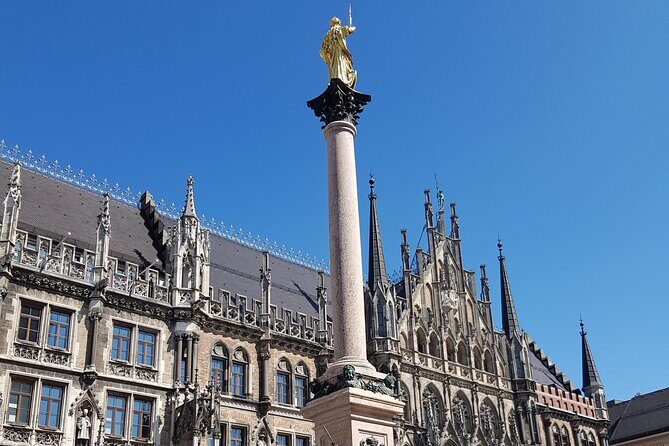
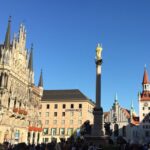
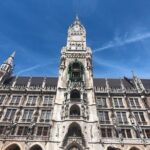
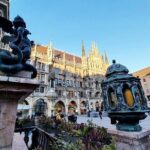
The tour begins at Marienplatz, and that’s the right move. This square is where many Munich stories intersect—medieval roots, civic pride, and landmark architecture all within a walkable radius. Starting here also gives you something to calibrate against: if you’re already oriented in the central core, the rest of the route feels like a natural continuation.
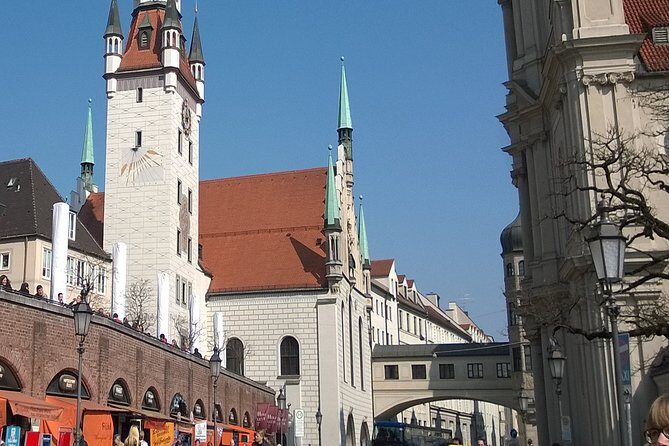
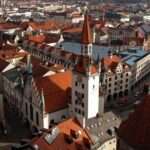
From there, the audio moves you toward St. Peters Church (Peterskirche). This stop is all about “how Munich looks when it turns historical.” Even if you’re only pausing outside or at the edge of the area, you’ll get narration that helps you place what you’re seeing into a bigger timeline rather than just admiring the facade.
Consideration: large squares can confuse direction
A few travelers note that meeting or navigating in big open areas can create confusion. My advice is simple: don’t rush the first minute. Take a breath, bring up the on-screen map, and let the GPS point you toward the next listening zone before you start moving at full speed.
Viktualienmarkt and Honighäusl: markets, everyday life, and Munich flavor
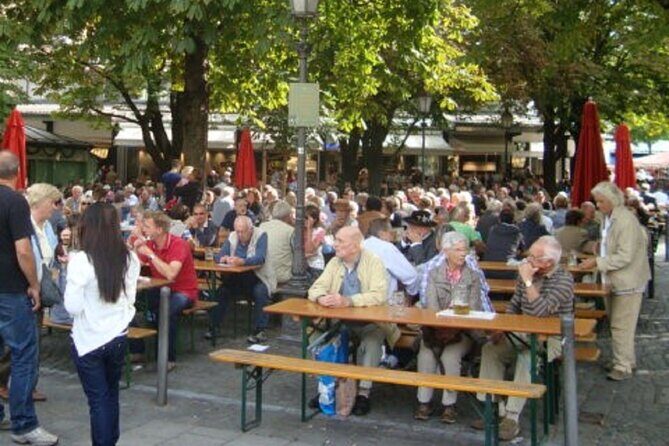
Next up is Viktualienmarkt, one of the city’s best-known market areas. This is where the tour shifts from “monument walking” into something closer to real life. You can easily imagine locals using these streets as a daily shortcut—not just a sightseeing route.
Right around here, the audio also passes by Honighäusl, which is worth paying attention to even if you’re just mentally bookmarking it. The narration makes the market area feel like more than stalls and benches; it becomes part of how Munich’s identity shows up over time.
If you’re hungry, this is where the self-paced format is a gift. The tour is built so you can pause and grab something without losing your place in the story.
Hofbräuhaus and Alter Hof: beer hall energy and royal-era echoes
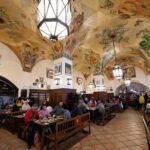
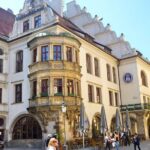
Then you come to Hofbräuhaus, a name that needs little introduction for beer lovers. Even if you’re not stepping inside, standing near it helps you understand how Munich turned brewing into culture and tourism into tradition. The audio keeps the focus on how the city’s power and reputation were shaped, not just what the building looks like.
After that, the tour makes a brief stop in Alter Hof. This area connects you to older layers of rule and court life. It’s the kind of pause that works well on a GPS audio tour because you’re not stuck reading placards. The story is delivered as you approach, which is perfect for places that can feel “important” but not immediately obvious unless someone gives you the thread.
Max Joseph Platz and the Residenz: where power becomes architecture
The route passes through Max Joseph Platz, a transition point that signals you’re moving from civic and street life into the world of rulers and grand institutions. This is where Munich’s architecture starts to feel like an argument for permanence.
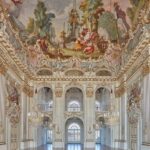
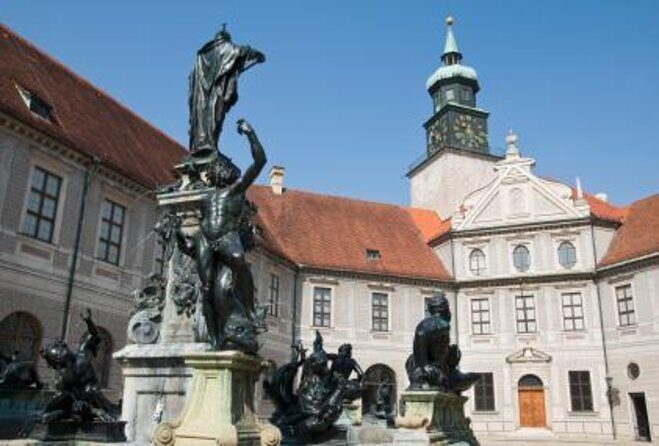
Next: Residenz. You’ll hear context that turns the building area into more than a sightseeing stop. The Residenz is one of those places where your eyes want to scan for details, but your brain also needs orientation—what you’re seeing, and why it was built this way. A GPS audio tour is particularly helpful here because you can keep moving while learning how to interpret what’s around you.
Feldherrnhalle to Theatine Church: monuments that tell you who mattered
The tour then passes by Feldherrnhalle. This is a “big statement” kind of landmark, and it works best with narration that explains the symbolic weight. Without that, you might treat it as another impressive structure; with audio context, it starts to read like a city’s short paragraph about power.
Then you pass by the Theatine Church. Churches in Munich often double as art lessons—stone, painting, and design that reflect belief and identity. Even if you only spend a moment here, the narration helps you notice that religious buildings weren’t built in a vacuum. They were part of politics, public messaging, and artistic taste.
A small but memorable detail you might hear: there’s mention of a pretzel motif in a church fresco. Keep your head up when you’re in the right spot. You don’t need to hunt like a detective, but it’s a nice payoff when you catch it.
Palais Holnstein and Frauenkirche: finishing with the skyline icon
As the tour continues, it passes by Palais Holnstein. This is a slower beat before the final big finale. It helps you notice that the route isn’t only about the most famous names; it also includes lesser-celebrated buildings that give you the texture of the city center.
Then comes Frauenkirche, Munich’s iconic church skyline moment. This is the stop where the tour’s pacing tends to pay off: after hearing about history, power, and civic life, the Frauenkirche feels like the city putting a period at the end of a sentence. You’ll finish with a better sense of why this silhouette is so closely tied to Munich’s image.
Finally, the tour passes through Frauenplatz, bringing you back into the heart of the central core. Ending back near Marienplatz means you can keep walking, eat, or hop onward to whatever you planned for the rest of your day.
What you learn: 800 years without feeling like homework
The title promises 800 years of history, and the approach feels designed to keep it human. Instead of throwing facts at you nonstop, the audio sequence nudges you through an era-by-era walk where each landmark acts like a chapter marker.
This is where the English narration matters. Language clarity can change the whole experience on a self-guided tour. If you’re the type who likes to catch every word, use comfortable volume and stay aware of the on-screen map prompts. When you do that, the story lands better—especially because you can pause and rewind in your own rhythm.
One caution on detail level
Some people found the information light or not detailed enough for their taste. That doesn’t necessarily mean the content is wrong—it may mean you’re expecting more like a live lecturer. If you want lots of deep, obscure facts, consider using this as an orientation tool, then follow up with a second, more focused visit to a museum or a longer guided tour.
Who this Munich walk suits best (and who should skip)
This tour is a strong match if you:
- want a low-cost way to connect major sights
- love the idea of pausing for food, shopping, or just taking photos
- are doing Munich in a short window and need a structured route
- prefer learning at your own pace rather than staying with a group
It may be less ideal if you:
- need frequent interaction or questions answered in real time
- hate audio narration that you can’t steer with back-and-forth conversation
- get frustrated if GPS guidance feels off due to route disruptions (construction can happen in any major European center)
My booking advice: when to run it and how to get the most value
If you’re short on time, I’d do this early—first evening or first full day. It helps you understand how the city’s center is laid out, and that makes later wandering more satisfying. You’ll know which streets lead where, and the landmarks stop being random photos and start being a connected story.
Set aside the full 1 hour 10 minutes to 1 hour 30 minutes plus a little breathing room. The point is not to sprint between stops. Let a market pause happen. Let a church facade pause happen. That’s where the tour feels like something more than a list of addresses.
Also, plan your listening setup: smartphone and headphones are on you, and the audio is built for mobile use.
Should you book 800 Years of History: A Munich GPS Audio Tour?
Yes, if you want an efficient, flexible way to learn Munich’s center on foot. For $9.99, the mix of offline audio/maps, stop-and-start control, and a route that links major landmarks (Marienplatz, Viktualienmarkt, Hofbräuhaus, Residenz, Frauenkirche) is strong value.
Skip it (or pair it with something else) if you need deep expert-level storytelling or constant guidance from a human. This tour is best as your practical “get your bearings fast” tool—then you choose where to spend extra time once you know what pulls you in.
FAQ
How much does the Munich GPS audio tour cost?
It costs $9.99 per person.
How long is the tour?
The tour takes about 1 hour 10 minutes to 1 hour 30 minutes.
Where does the tour start and end?
It starts at Marienplatz, 80331 München-Altstadt-Lehel, Germany, and ends back at the meeting point.
What language is the tour available in?
The tour is offered in English.
Do I need an internet connection?
No. It includes offline access to audio, maps, and geodata.
Can I pause and restart the tour whenever I want?
Yes. You can stop and start as you like, and you’ll have lifetime access to the tour.