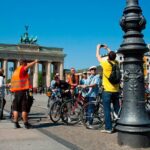
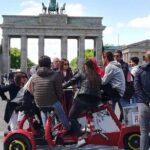
A short ride can still change how you see a city. This one brings you into Berlin’s Tiergarten and then into calmer, lesser-known streets where the stories feel close and human. I love the mix of bike lanes and quiet side streets, so you’re not constantly wrestling traffic. I also like the stop-and-story style, where each place links back to how Berlin reinvented itself over time. One thing to plan for: it’s a 3-hour stretch, and if you like snack breaks, you may want to bring a little water or money for a stop.
The tour runs with a professional guide and keeps the pace relaxed enough to enjoy what you’re passing—without turning it into a sightseeing slog. You’ll finish back at the start point near Poststraße 11, so it’s simple to build into a day of museums or neighborhoods. If you don’t read German, this is a key consideration: it operates in German only, and English is offered via private tour.
In This Review
- Key things to know before you pedal Berlin’s hidden corners
- Why this Berlin bike tour feels different than bus sightseeing
- Price and timing: is $45.10 worth 3 hours on two wheels?
- Meeting at Poststraße 11 and getting rolling smoothly
- Stop 1: Free Berlin (the start point and what you set up right away)
- Stop 2: Tiergarten—Berlin’s central park by bike
- Stop 3: Nikolaiviertel—where Berlin began, and why it feels quiet
- Stop 4: Märkisches Museum and the 3D city models
- Stop 5: Barenzwinger Berlin—where the name Berlin connects to bears
- Stop 6: Parochialkirche—survivors, destruction, and rebuild
- Stop 7: Franziskaner Klosterkirche—an abandoned place with medieval echoes
- Stop 8: Global Stone Project—Berlin’s Stonehenge and the idea of love
- Stop 9: Hansaviertel—housing futures from 1957
- Stop 10: Clärchens Ballroom—dancing, morbid charm, and street-level theater
- Stop 11: Scheunenviertel—courtyard oases, shopping, fine dining, culture, art, and party
- What you’ll learn from the guide (and why humor matters)
- Who this tour suits best (and the practical match)
- Should you book this Tiergarten and hidden Berlin bike tour?
- FAQ
- How long is the bike tour?
- What does the tour cost?
- What’s included?
- Is food or drinks included?
- What language is the tour in?
- Can I cancel and get a full refund?
Key things to know before you pedal Berlin’s hidden corners
- You ride comfortable city bikes with a helmet included, which makes the whole experience feel easy to join.
- Tiergarten plus old neighborhood streets means you get both green space and the city’s older layers in one loop.
- The 3D city models at Märkisches Museum are a smart way to understand how Berlin keeps rebuilding.
- Stops are story-driven, including bear-related naming at Barenzwinger Berlin and medieval echoes at old churches.
- Small groups (5–15) help the guide keep things clear and moving without chaos.
- It’s weather-ready, so dress for rain or chill and expect to ride through normal Berlin conditions.
Why this Berlin bike tour feels different than bus sightseeing
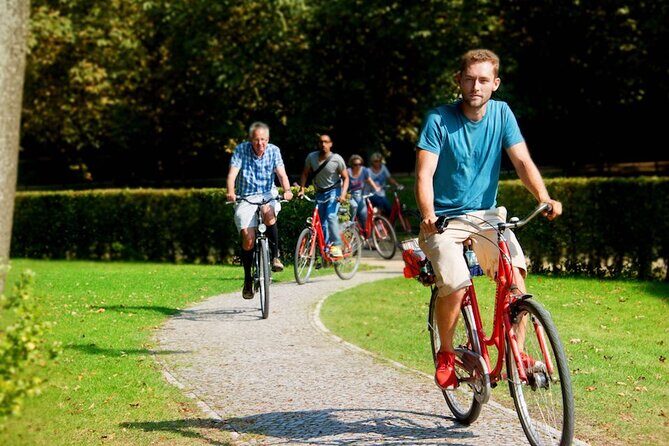
Berlin has a way of confusing you at first: big monuments here, dramatic history there, then suddenly a tidy café street or a quiet courtyard that feels nothing like the headline you read that morning. This bike tour is built to solve that problem. Instead of only pushing you past major sights, it threads through calmer routes—places where locals walk and bike, not where big buses park.
I like that the ride stays “human scale.” You’re on an urban cruiser, rolling at a pace where you can actually notice details. That matters in Berlin, because meaning is often in the small contrasts: a preserved survivor next to a rebuilt space, a pocket of peace surrounded by the energy of the city.
It also helps that the tour is designed around Tiergarten plus neighborhoods tied to Berlin’s origin stories and ongoing reinvention. The result is a route that feels like you’re learning how Berlin thinks, not just where it is.
You can also read our reviews of more cycling tours in Berlin

Price and timing: is $45.10 worth 3 hours on two wheels?
At $45.10 per person for about 3 hours, you’re paying for something practical: a guided route with a bicycle and helmet included. The value isn’t only the ticket price—it’s the “guided structure” you get in a short time window. You can wander Berlin on your own, but it’s harder to stitch together the city’s long timeline when you’re hopping between neighborhoods without context.
Here’s the trade-off to keep in mind: you’re on a bike for the whole session, so you can’t treat this like a slow museum day. The tour is long enough that you’ll likely want a water break, and one past participant specifically wished there had been a short pause to grab something to eat or drink. You can prevent that issue by planning ahead—bring water if you know you run thirsty, and consider a short break you can take right after the ride if you don’t see a built-in moment.
Meeting at Poststraße 11 and getting rolling smoothly
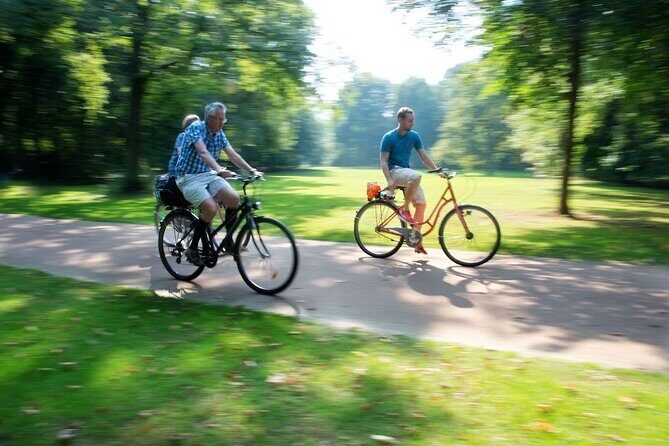
The tour starts and ends back at Poststraße 11, 10178 Berlin. That’s convenient because you can plan your day around one fixed point instead of rearranging transit after the ride.
Since group size is limited to 5–15 (with a max of 15), you’ll typically have more attention from the guide than on bigger city tours. That also makes it easier to keep the route tight and safe. The tour includes bicycle use plus helmets, so you’re not scrambling to rent or hunt gear on arrival.
One more practical note: the route is designed for bike lanes, garden paths, and quiet sidestreets. That doesn’t mean it’s a “no attention needed” ride—Berlin riding still asks you to stay aware. But it does mean you’re not stuck in the worst traffic scenarios the city can throw at you, and you can relax into the rhythm.
Stop 1: Free Berlin (the start point and what you set up right away)
Before you glide off into Berlin’s history, there’s a quick start at Free Berlin—your bike rental and meetup point. This first stop is really about readiness: you get your bike sorted and you get your bearings for how the ride will work.
Even if you’re an experienced rider, I like using this moment to check your comfort. Make sure the seat height feels right, get your helmet fitted comfortably, and listen closely when the guide explains how the group moves. A good guide doesn’t just talk about history—they also help you feel confident on the route.
Stop 2: Tiergarten—Berlin’s central park by bike
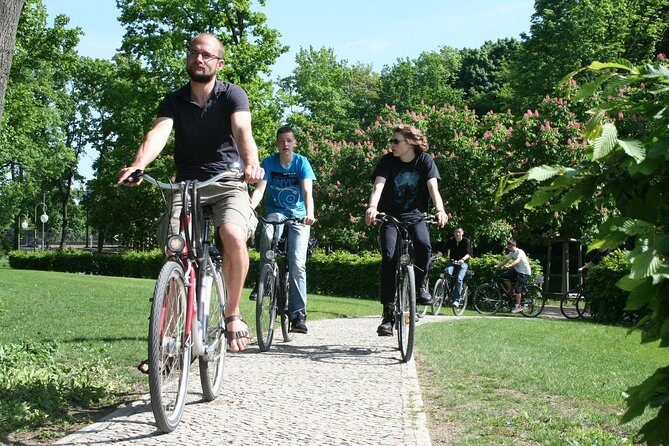
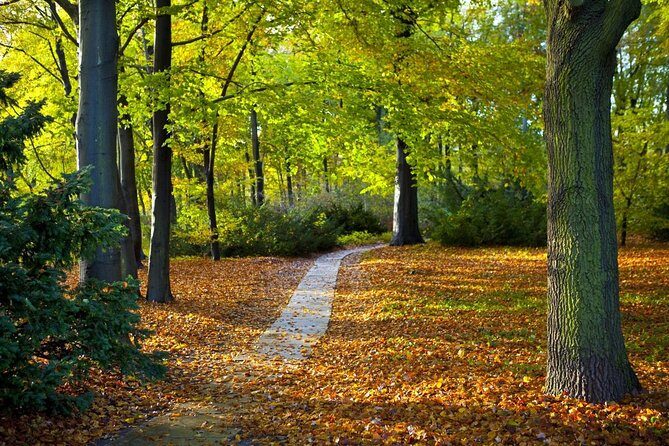
Tiergarten is Berlin’s biggest green release valve, and seeing it from a bike adds a layer you don’t get standing still. You can flow through the park’s leafy lanes while the guide ties the setting to the city’s broader story.
This stop is especially valuable because it gives you a “reset” after the energy of central Berlin. You’re not just accumulating facts; you’re also physically changing pace. In practical terms, that makes the rest of the tour easier to enjoy—your eyes and brain get a break in the middle of the city.
One of the best parts is how the bike route uses calmer lanes. You’re not battling the route like a commuter in full chaos, and that means you can actually look around while you ride.
A few more Berlin tours and experiences worth a look


Stop 3: Nikolaiviertel—where Berlin began, and why it feels quiet
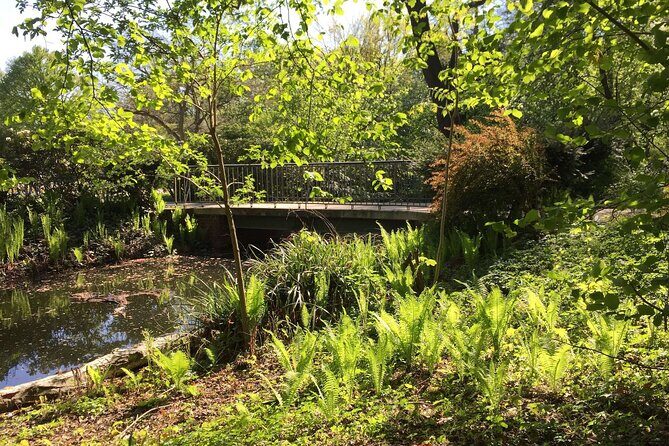
From Tiergarten’s open green space, the tour moves into Nikolaiviertel, described as the place of Berlin’s origin. Even without knowing the exact timeline, the neighborhood’s vibe helps you understand why it matters: it’s a quieter heart within the city.
This stop also connects the modern Berlin view to older layers. The neighborhood was remodelled after destruction during the 1980s, so you’re looking at a space that exists not only because it was preserved, but because it was rebuilt with intent.
That’s a theme you’ll feel throughout the ride. Berlin isn’t frozen in time. It’s rewritten—sometimes painfully, sometimes carefully—and Nikolaiviertel is a compact example of that idea.
Stop 4: Märkisches Museum and the 3D city models
Next comes a clever shift from “walking and looking” to “understanding the city’s shape.” Near the Märkisches Museum, you’ll get a look onto big 3D-city-models of Berlin. These models are useful because they show how constant renewal changes what you think you’re seeing.
I like stops like this because they help you stop taking the city for granted. When you understand how Berlin has been rebuilt and reorganized, you start noticing patterns during the rest of your trip—even after the tour ends. It’s the kind of visual tool that makes future sightseeing click.
The drawback here is simple: if you prefer only outdoor stops, this may feel slightly more informational and less “scenic.” Still, it’s short and it pays off.
Stop 5: Barenzwinger Berlin—where the name Berlin connects to bears
At Barenzwinger Berlin, you’ll hear the story behind where the name Berlin comes from and what bears have to do with it. This is one of those stops that sounds like a quirky detour—until you realize it’s actually how old city stories travel through time.
Berlin has plenty of serious monuments, but it also has humor and symbolism built into its identity. This bear-related stop gives your brain a break from heavy themes while still keeping you in the city’s narrative.
It’s a good moment to practice “curiosity mode.” Instead of asking only what a place is, ask why it’s remembered this way.
Stop 6: Parochialkirche—survivors, destruction, and rebuild
Parochialkirche brings the story back to the big turning points: religion, destruction, rebuild, and designated survivors. Even if you don’t know architectural details, you’ll feel the meaning in the way the guide frames what you’re looking at.
This stop is valuable because it makes Berlin’s past feel less abstract. The city’s history isn’t only dates—it’s buildings, scars, and choices about what to keep.
If you’re the type of person who likes to understand context before taking photos, this is a strong stop. It also sets up the next church-related pause with a clearer lens.
Stop 7: Franziskaner Klosterkirche—an abandoned place with medieval echoes
At Franziskaner Klosterkirche, you’ll look at an abandoned place and a rare memorial to Berlin’s medieval history. That combination—abandoned and memorial—often creates a unique feeling: quiet, slightly haunting, and also strangely reassuring that something survived long enough to matter now.
This stop works best if you enjoy places that don’t try to entertain you. It’s more atmosphere than spectacle, and that’s part of why Berlin stands out in the first place.
Practical note: churches can mean more walking on uneven ground. Wear shoes you’re comfortable with if your pedaling ends and your feet take over.
Stop 8: Global Stone Project—Berlin’s Stonehenge and the idea of love
Then you hit Global Stone Project, described as Berlin’s Stonehenge—love can be difficult sometimes. Even if you don’t grasp every layer immediately, the pairing of giant-stone symbolism with a human theme makes the stop memorable.
I like this kind of moment on a history bike tour because it prevents the ride from becoming one-note. Berlin is not only past and politics; it’s also public art, metaphors, and people using space to ask emotional questions.
This is a great pause for photos too, as long as you keep an eye on your surroundings and bike parking while you’re stopped.
Stop 9: Hansaviertel—housing futures from 1957
At Hansaviertel, the guide frames it as the future of housing—at least from the year 1957 perspective. That phrasing matters. You’re not just seeing buildings; you’re seeing a mindset.
This stop is for anyone who likes how cities plan for their next version of life. After the earlier history-heavy church pauses, Hansaviertel gives you a more forward-looking view. It shows Berlin’s constant drive to test new ideas in how people live.
Even if housing design isn’t your hobby, it’s a useful counterweight to the more solemn stops. It helps you understand the city’s energy between rebuilding eras.
Stop 10: Clärchens Ballroom—dancing, morbid charm, and street-level theater
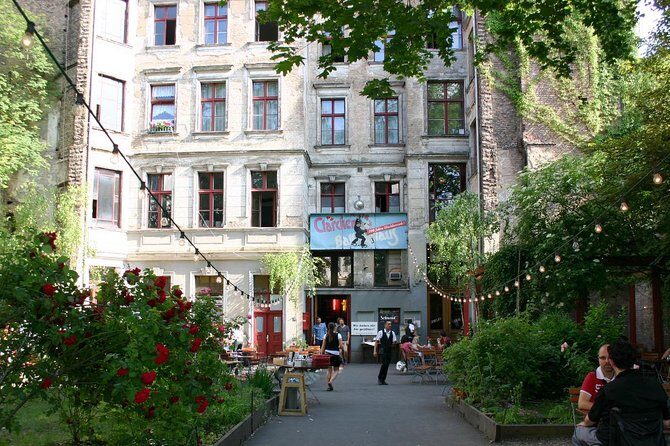
Clärchens Ballroom is framed as forever dancing, surrounded by morbid charme. That description is basically a warning: don’t come expecting a plain facts-only stop. This is Berlin personality—slightly strange, slightly theatrical, and deeply tied to the way the city remembers its own mood.
This is the point where the tour starts to feel like it’s about culture as much as it is about events. Berlin’s modern identity isn’t only museums and memorials; it’s also nightlife spaces, odd traditions, and buildings that hold stories in their style.
If you’re planning an evening out after your ride, this stop gives you a mental map. It helps you notice what kind of neighborhood energy you’ll be entering.
Stop 11: Scheunenviertel—courtyard oases, shopping, fine dining, culture, art, and party
The final neighborhood stop is Scheunenviertel, described as an urban paradise for the posh: courtyard oases, decent shopping and fine dining, culture, art, and party. That’s a lot of categories, and the key is that the neighborhood feels like a collection of small, distinct pockets.
This final stop is a smart closer because it shifts you from the past and the symbolic to the “now.” You finish the tour in an area where you can keep exploring—either by relaxing, grabbing food nearby, or planning where to go next based on what you liked most during the ride.
It also helps you understand that Berlin’s history isn’t locked away. It lives alongside daily life.
What you’ll learn from the guide (and why humor matters)
A big reason this tour tends to get strong ratings is the guide style. One guide name that shows up is David, and his combination of expertise and humor gets highlighted. That may sound like “tour-speak,” but it changes the experience. When a guide can explain clearly and also keep the tone human, you remember more and feel less like you’re being lectured.
You also benefit from the guide’s pacing. The route includes multiple short pauses—enough time to hear the story and take a mental snapshot. It’s not so long that you feel stuck at the same corner. You get the feeling of moving through the city in a way that locals might do, just with context added.
Who this tour suits best (and the practical match)
This works best if you:
- want an active way to see Berlin in a short time
- like bike-friendly routes with a mix of green space and neighborhoods
- enjoy story-based stops over long museum time
- can do a ride in German (the tour is only available in German)
It may not be the best choice if you need an English-speaking guide as a priority. The tour data here is clear: for English, you should choose a private tour option.
Kids can join, but they must be accompanied by an adult. And because it runs in all weather, dress appropriately so you can stay comfortable and focused instead of cold-checking your fingers.
Should you book this Tiergarten and hidden Berlin bike tour?
Book it if you want a guided Berlin route that avoids the “straight line, main sights only” approach. The mix of Tiergarten, Berlin-origin neighborhood mood, model-based understanding, and stops that connect naming, churches, medieval memory, and public art gives you a more rounded sense of the city than a single sightseeing walk.
Skip or reconsider if you’re very sensitive to long bike time without breaks to eat or drink. A small heads-up from past feedback is that people sometimes want more opportunity for a quick snack or beverage. If that’s you, solve it in advance with your own water/snack plan.
FAQ
How long is the bike tour?
The tour lasts about 3 hours.
What does the tour cost?
It costs $45.10 per person.
What’s included?
You get a professional guide, bicycle use, and a helmet.
Is food or drinks included?
Food and drinks are not included unless specified.
What language is the tour in?
The tour is available only in German. For English, you need to choose a private tour.
Can I cancel and get a full refund?
Yes. You can cancel for a full refund up to 24 hours before the experience starts. If you cancel less than 24 hours before, the amount paid is not refunded.