REVIEW · LEIPZIG
Guided tour of the Federal Administrative Court in Leipzig
Book on GetYourGuide →Operated by Leipzig Details GbR · Bookable on GetYourGuide
Justice in a palace feels unusual.
This guided tour of the Federal Administrative Court in Leipzig turns legal architecture into something you can actually picture, with certified guides walking you through the building. I especially liked the access to Germany’s largest Palace of Justice from the inside and the chance to see real ceremonial spaces tied to how Germany’s top administrative court works.
I also found the tour’s mix of courtroom detail and political history unusually concrete. You’ll visit the domed hall, historic courtrooms, the ancestral gallery of judges, and even parts of the president’s apartment, so you get both the “how the building functions” and the “what happened here” angle. One thing to factor in: it’s a German-language tour and entry is tightly timed, so show up early.
In This Review
- Key things I’d focus on before you go
- Entering Leipzig’s Federal Administrative Court building is like stepping into a timeline
- Your 1.5-hour circuit: domed hall, historic courtrooms, and the judges’ gallery
- A small reality check
- The Reichstag Fire Trial hall: history that isn’t stuck in textbooks
- President’s apartment ceremonial rooms: the formal side of administration
- Understanding the BVerwG: what Germany’s highest administrative court actually does
- Price and value: $16 for an insider look at justice architecture
- Practical tips so you don’t lose time at security
- Who should book this tour?
- Should you book the guided tour of Leipzig’s Federal Administrative Court?
- FAQ
- What is the duration of the Federal Administrative Court guided tour?
- How much does the tour cost?
- Where does the tour start?
- Is the tour wheelchair accessible?
- What language is the live guide?
- What areas of the building will we visit?
- Are pets allowed?
- Is it possible to enter if the tour has already started?
Key things I’d focus on before you go
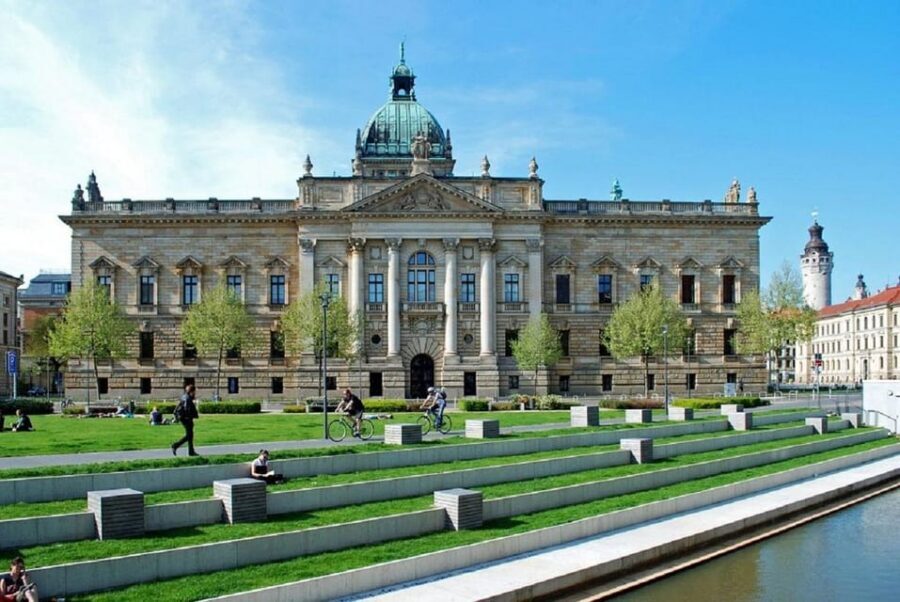
- Exclusive inside access to a major Palace of Justice in Leipzig (not just a look from the outside)
- Certified guidance that connects architecture to how justice is organized and practiced
- Courtrooms plus the judges’ ancestral gallery, so you see where authority is displayed
- The large hall tied to the Reichstag Fire Trial, with political context you can follow
- Karl Liebknecht’s self-defence story connected to the building’s past
- President’s apartment ceremonial rooms, a rare peek at the court’s formal side
Entering Leipzig’s Federal Administrative Court building is like stepping into a timeline
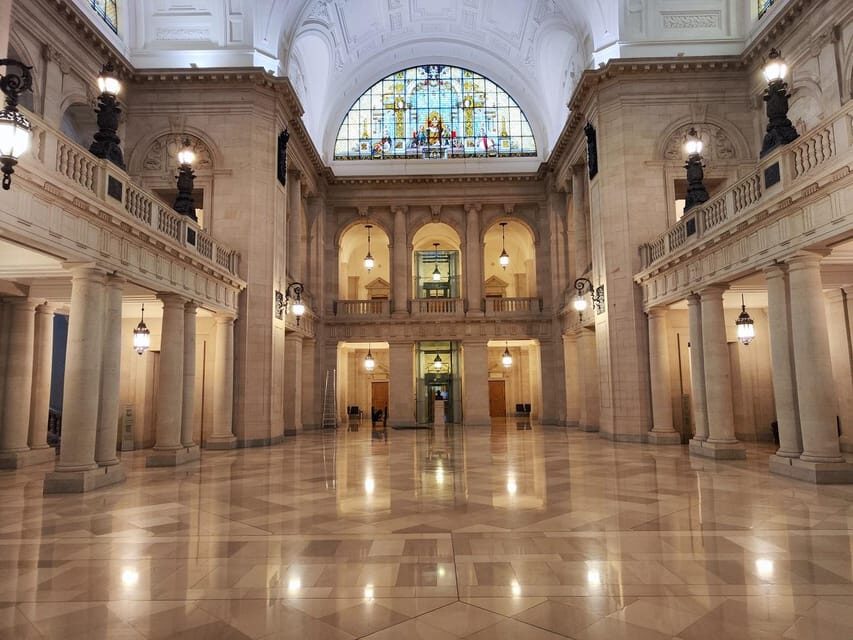
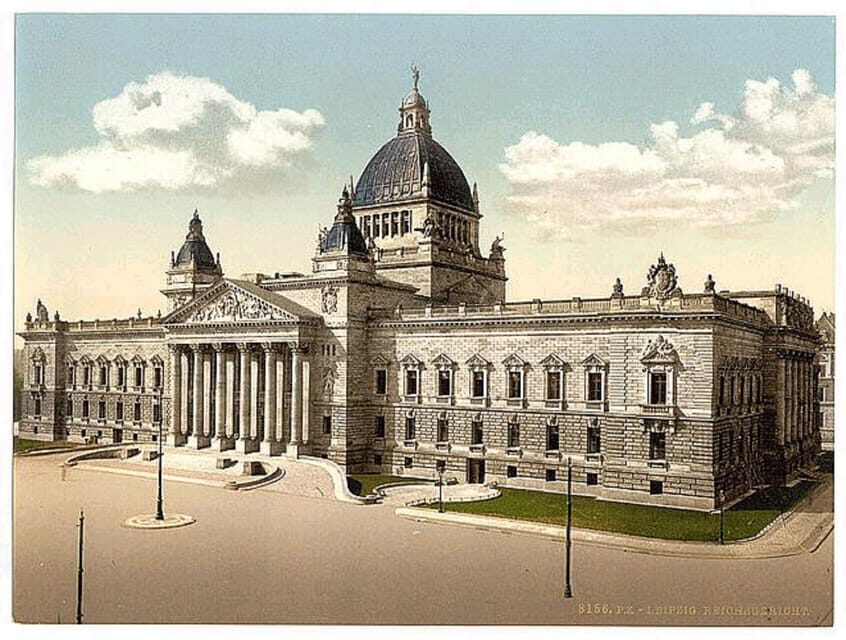
The tour starts in the foyer of the Federal Administrative Court, and from there you’re basically walking through layers of German legal history. The building you’ll see was built for the Imperial Court of Justice, which was founded in 1879 as the supreme court of the German Reich. The idea behind the architecture was simple: justice should be visible, not hidden.
Since 2002, the same building has housed the Federal Administrative Court (BVerwG). That matters because it shifts the focus from distant “museum history” to living institutions. You’re not just looking at old stone; you’re seeing how the highest administrative court in Germany operates today, at least as explained through the tour.
What I liked most is how the guide frames the building as both symbolic and practical. The tour doesn’t treat the court as a stage set. It keeps returning to how spaces support authority, procedure, and the work of resolving disputes in administrative law.
You can also read our reviews of more guided tours in Leipzig



Your 1.5-hour circuit: domed hall, historic courtrooms, and the judges’ gallery
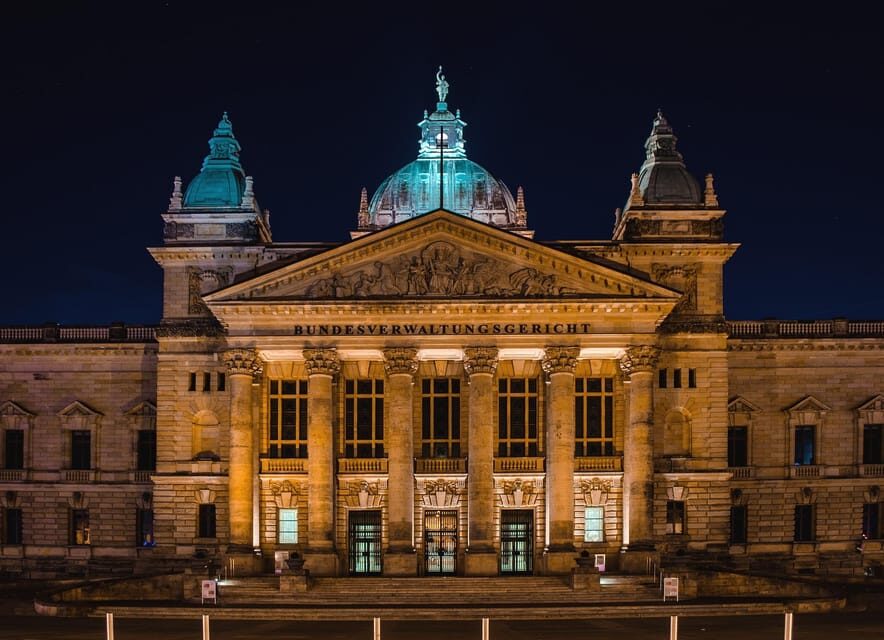
This is a 1.5-hour guided loop, and it moves at a pace that works well if you want something meaningful without eating your whole day. After meeting in the foyer, you’ll head into the court’s major spaces, including the domed hall. The domed hall is one of those rooms that instantly gives you the “this is a civic institution” feeling, even before you hear the details.
Next come the historic courtrooms. This part is the heart of why the tour feels more satisfying than just sightseeing: you get to stand where legal arguments were handled in a formal setting. The guide also shows the historic courtrooms in a way that connects the room to what courts do, rather than only focusing on style or ornament.
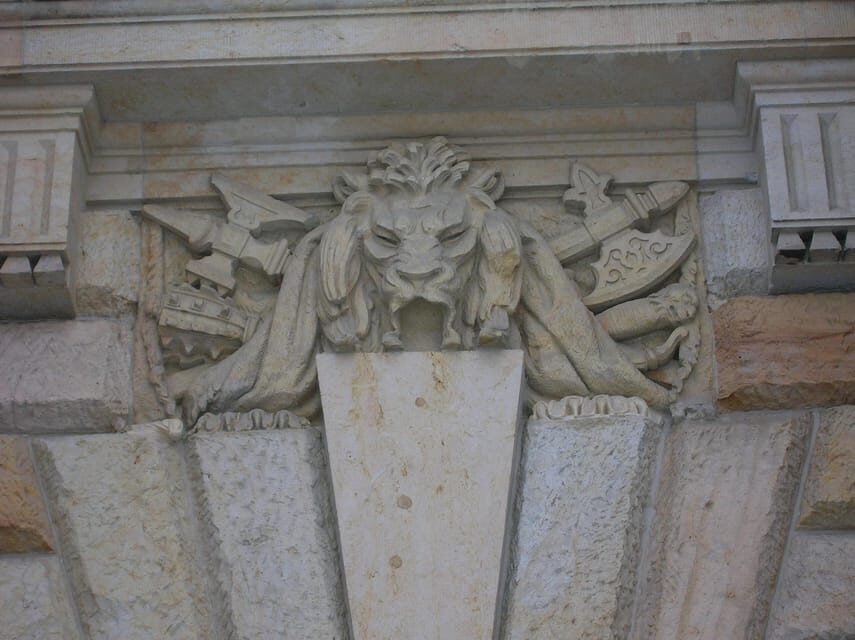
You’ll also see the ancestral gallery of the judges. Even if you’re not a legal-history nerd, this stops you for a second because it communicates rank, continuity, and legitimacy. It’s the kind of place where you can sense how institutions want to present themselves: not as temporary, but as inherited and accountable.
Finally, the tour includes the ceremonial rhythm of the building. You’ll have time to orient yourself in your head—where the important rooms are, how the tour connects them, and why the court’s formal layout matters.
A small reality check
This is a guided viewing of important rooms, not a hands-on or long-form lecture. If you want hours of deep legal theory, this might feel too short. If you want clear context in a tight loop, it’s a good fit.
The Reichstag Fire Trial hall: history that isn’t stuck in textbooks

One of the most memorable stops is the large hall where the Reichstag Fire Trial took place. This is the kind of historical reference that many people know at a distance, but seeing it connected to a real, specific room helps it click. The guide ties the space to what happened there, so you’re not only learning the event—you’re learning how a courtroom stage can shape public understanding.
The tour also connects the building to Karl Liebknecht, who defended himself here against accusations of high treason. That detail adds tension and gravity to the architecture. In other words, you’re not just absorbing facts; you’re watching how legal venues can become political battlegrounds.
What’s smart about this segment is that it doesn’t drown you in names and dates. It uses the building’s past moments to explain why the German justice system takes symbolism seriously—because courts don’t exist in a vacuum.
President’s apartment ceremonial rooms: the formal side of administration

A standout feature here is that you don’t stop at the publicly expected areas. The tour includes parts of the president’s apartment, including a ceremonial hall. That’s not the kind of access most visitors get, and it changes how you read the building.
The ceremonial rooms give you a sense of how the court’s top leadership is surrounded by formality. It helps you understand that administrative justice isn’t just paperwork in a back office. It’s also an institution with hierarchy, protocols, and public-facing legitimacy.
In plain terms: when you see the ceremonial space, you understand why courts look the way they do. They’re built to communicate order, seriousness, and trust—even when the disputes being handled are complicated.





Understanding the BVerwG: what Germany’s highest administrative court actually does

After you’ve walked the rooms tied to court tradition and historical events, the tour pivots to the present. The guide explains the tasks and work of the Federal Administrative Court (BVerwG), and this part is where the tour becomes more useful for everyday thinking.
Here’s the essential context: the BVerwG is Germany’s highest administrative court. It rules on disputes in the field of administrative law. That means the court’s job is to settle disagreements between citizens and the state—or among entities—when the issues involve how public authorities make decisions and apply rules.
This isn’t abstract when you connect it back to the building. Seeing the formal spaces makes the court’s role feel real. You start to understand why the tour emphasizes procedure, authority, and how decisions are presented.
If you like government and legal systems but don’t want to read a textbook, you’ll probably appreciate this segment. It gives you a clearer mental map of how the court fits into German public life.
Price and value: $16 for an insider look at justice architecture
At $16 per person, this tour is priced like a “small splurge” that’s actually grounded in access. You’re not just paying for information—you’re paying to go inside a building that most people only see from the outside.
You also get several components packed into 90 minutes: guided access with a certified guide, the domed hall, historic courtrooms, the judges’ gallery, and ceremonial spaces connected to the court’s president. Plus, you learn what the court does today and why it matters.
For Leipzig, this is a strong value because it’s not weather-dependent and it doesn’t require advance planning beyond showing up on time. The duration is short enough to slot into a day that already includes other sights, yet long enough to feel like you truly toured the place.
Practical tips so you don’t lose time at security
A few details can make or break the experience.
- Arrive 10 minutes early. The tour notes that it is not possible to enter the courthouse once the tour has started.
- Plan for a 1 euro coin required for the luggage compartment.
- The tour guide is German, so this is best if you’re comfortable following explanations in German.
- The tour is wheelchair accessible, which is a real plus if you want legal sites without barriers.
- Pets are not allowed, but assistance dogs are allowed.
- Party groups and bachelor/bachelorette party groups are not allowed. This keeps the tour calmer and more respectful of the setting.
One more thing: since the tour ends back at the meeting point, you don’t have to worry about navigating away afterward. Still, I recommend you use the 1.5 hours as “court time” and not as a fast add-on between trains.
Who should book this tour?
I’d point this one toward travelers who like architecture with meaning, history that connects to real institutions, and a guided format that turns rooms into stories.
You’ll likely enjoy it if you:
- care about how justice systems are presented through buildings and procedure
- want context behind major German legal moments like the Reichstag Fire Trial
- prefer a guided walk that stays focused rather than a long museum-style route
If you’re mostly chasing hands-on experiences or interactive exhibits, you might find the tone more formal. This tour is about seeing and understanding.
Should you book the guided tour of Leipzig’s Federal Administrative Court?
Yes, if you want a smart, insider look at one of Germany’s key legal buildings and you’re okay with the tour being German-language and scheduled tightly. At $16 for 90 minutes, the value comes from the access: domed hall, historic courtrooms, the judges’ gallery, and ceremonial rooms tied to the court’s president, plus context about the BVerwG and administrative law.
If German isn’t your strength, you’ll need to consider whether you can follow well enough to enjoy the historical and legal explanations. If you can, this is one of those tours that makes a civic building feel personal and understandable.
FAQ
What is the duration of the Federal Administrative Court guided tour?
The tour lasts 1.5 hours.
How much does the tour cost?
The price is $16 per person.
Where does the tour start?
You meet in the foyer of the Federal Administrative Court.
Is the tour wheelchair accessible?
Yes, the tour is wheelchair accessible.
What language is the live guide?
The live tour guide speaks German.
What areas of the building will we visit?
You’ll see the domed hall, historic courtrooms, the ancestral gallery of the judges, and the ceremonial hall in the president’s apartment, plus information about the court’s work.
Are pets allowed?
Pets are not allowed, but assistance dogs are allowed.
Is it possible to enter if the tour has already started?
No. The activity states it is not possible to enter the courthouse once the tour has started. You should arrive 10 minutes in advance.