REVIEW · BERLIN
2.5-Hour Berlin Wall and Memorial Sites Walking Tour
Book on Viator →Operated by Berlin Bike Tour · Bookable on Viator
The Berlin Wall is quieter than I expected. This 2.5-hour small-group walk turns the ground itself into a clear Cold War story, starting at the Square of 9th November 1989.
I love how the guide connects the sites to the 28-year arc of the division and its end, not just the day the wall fell.
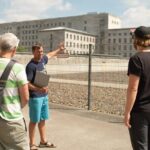
I also like the small group size (max 12). You move at a human pace between important places, and you get more than the usual, one-size-fits-all talking points.
One thing to consider: it’s still a solid walking experience. Plan on 2.5 hours on foot and keep up a moderate fitness level, and remember food and drinks aren’t included.
In This Review
- Key things to know before you go
- Why the tour begins at the Square of 9th November 1989
- Bornholmer Straße to Nordbahnhof: the route that makes sense
- Ulbricht Curve and Schwedter Way: seeing the wall’s design, not just the idea
- Gleim Tunnel: when you understand the motive, the facts hit harder
- Berlin Wall Park and the viewing moments you’ll want for photos
- Bernauer Straße Memorial and the Bernau Street tunnel: the border made visible
- The Church of Reconciliation: a surprising stop with a strong purpose
- The built-in pause that helps you absorb it all
- Price and value: $25.45 for a focused, high-impact route
- Timing and logistics that actually matter for your day
- What kind of traveler will enjoy this most?
- Should you book this Berlin Wall walking tour?
- FAQ
- How long is the Berlin Wall and Memorial Sites Walking Tour?
- Where does the tour start and end?
- What time does the tour run?
- How big is the group?
- Is food or drinks included?
- What major stops are included on the route?
- Is there a line-skip benefit?
- Can I cancel if plans change?
Key things to know before you go
- Start at the Square of 9th November 1989: the exact moment the wall’s era shifted
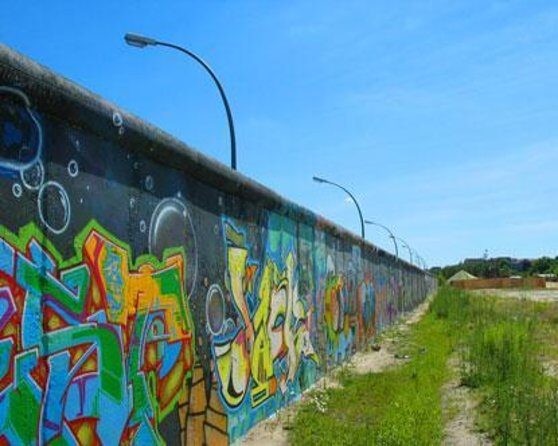
- Follow the former death strip: you’ll walk the line where escape and detection were real
- Multiple Cold War landmarks in one route: Bornholmer Straße to Nordbahnhof ties it together
- Stops include the Church of Reconciliation and key memorial tunnels: not just exterior views
- Small-group pace with a built-in pause: easier to absorb than a sprinting “see everything” tour
- Guaranteed skip the long lines: saves time at popular memorial stops
Why the tour begins at the Square of 9th November 1989
Starting at the Square of 9th November 1989 sets the tone fast. This isn’t just “Berlin Wall sightseeing.” It’s the story’s turning point, right where the wall came down after 28 years of splitting.
From there, the tour builds your sense of cause and effect. You’re not just looking at a barrier. You’re learning how policies, fear, and hope shaped daily life on both sides of the border. A good guide makes that feel logical instead of like a list of dates and names.
You can also read our reviews of more walking tours in Berlin



Bornholmer Straße to Nordbahnhof: the route that makes sense
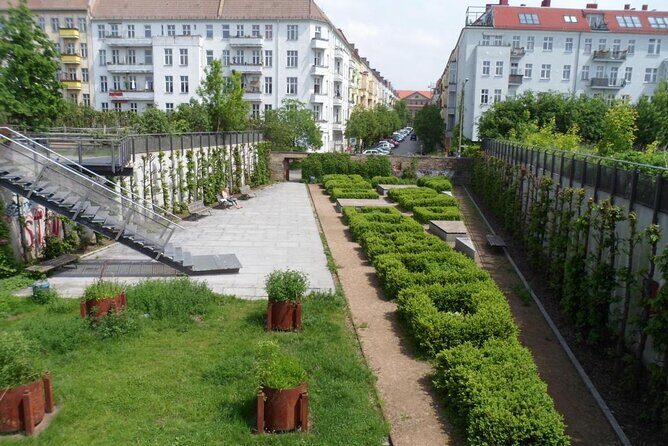
The walking route is designed to connect major border locations along the old boundary. It goes from the ex-border crossing at Bornholmer Street, moves through the former patrol landscape, and finishes at the ex-ghost train station Nordbahnhof.
That end point matters. Nordbahnhof wasn’t just nearby—it was part of the Cold War map of movement, restriction, and surveillance. By the time you reach it, the whole walk clicks into place: the wall wasn’t only a wall. It was a system.
You’ll also notice how the tour is structured for real understanding. It follows the old border line and the former death strip, where the consequences were most severe. Some parts are trails of the wall that aren’t always obvious if you’re walking on your own.
Ulbricht Curve and Schwedter Way: seeing the wall’s design, not just the idea
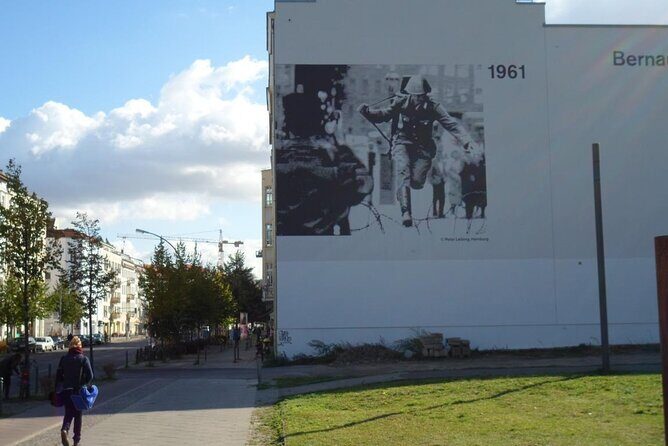
One of the most interesting parts is how the route highlights stretches that represent more than one big monument. You’ll pass sites tied to specific border features, including the Ulbricht Curve and Schwedter Way.
These names might sound like trivia at first. But on the walk, they turn into cues for how the boundary worked in practice. Curves, routes, and chokepoints mattered because people tried to escape, and the system had to respond fast.
This is also where a skilled guide pays off. The explanations help you picture what you’re seeing: the layout, how visibility and control likely worked, and why certain places became known among insiders and were later documented by the city.
Gleim Tunnel: when you understand the motive, the facts hit harder
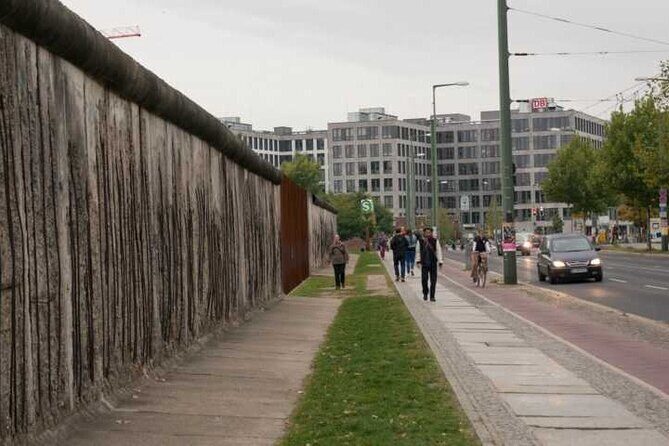
You’ll stop around the area associated with the Gleim tunnel. Even without a “storybook” presentation, the tunnel’s existence does something powerful. It reminds you that this wasn’t just propaganda and politics—it was people looking for a way out.
This kind of stop can feel heavy, but the tour keeps it grounded. You’re not asked to dramatize anything. You’re given the historical framing so the place makes sense on its own terms.
If you’re used to tours that move fast, this is a good antidote. The guide gives you time to connect the location to what was at stake, then you keep walking along the boundary where similar pressures shaped behavior.
Berlin Wall Park and the viewing moments you’ll want for photos
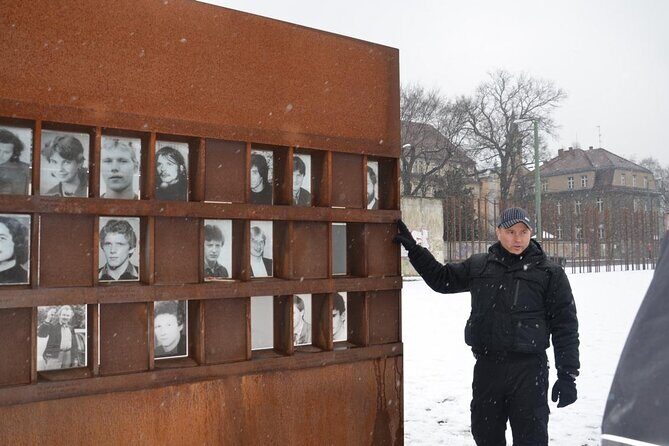
Berlin Wall Park is one of the spots where the outside world and history overlap. You’re moving through an area that helps you picture the wall’s presence in everyday space—where it cut across streets, neighborhoods, and routes people once used.
This is also where I’d plan a quick mental reset. The walking has been building tension. In a park-like setting, you can breathe for a moment and let the scale sink in.
The tour includes a viewing platform connected to the Berlin Wall Memorial. That’s useful because you get a better sense of sightlines—how a viewer might see trouble, how defenders might monitor, and how distance played a role. Even if you’re not a photographer, you’ll probably feel the value of stepping back and looking.


Bernauer Straße Memorial and the Bernau Street tunnel: the border made visible
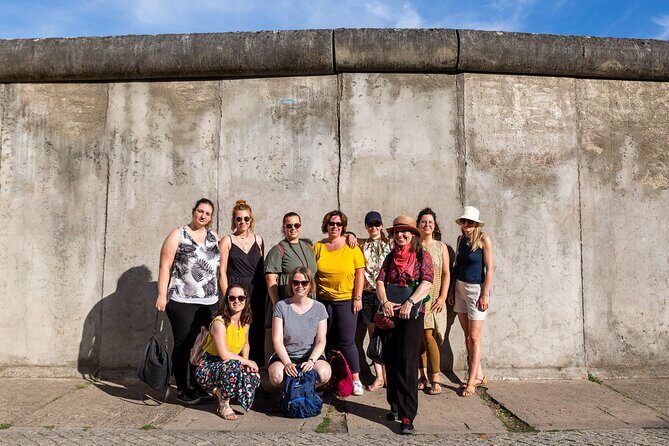
The Bernauer Strasse Memorial is a core stop. The tour places it where it belongs in the storyline, helping you understand the border’s physical reality—not only in concept, but in walls, crossings, and nearby structures.
You’ll also encounter the Bernau Street tunnel during this section. A tunnel is an extreme idea, but that’s the point. When ordinary routes are blocked, people get creative, desperate, and stubborn.
Here’s what makes this memorial section especially worthwhile on a guided tour: the guide helps you read the place like a document. You don’t just walk past markers. You learn why certain elements were preserved and how the memorial format shapes the story you take home.
The Church of Reconciliation: a surprising stop with a strong purpose
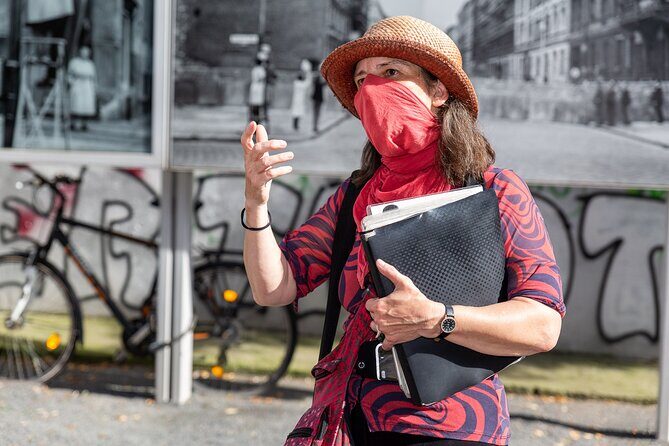
The Church of Reconciliation stands out because it’s not purely an outdoor wall walk. It adds another layer to the theme: what the Cold War meant for communities, belief, and moral arguments about freedom and captivity.
If you think of the wall only as engineering, this stop counters that. It nudges you toward the human side of the story—how people responded, argued, worshiped, and tried to cope under a system that limited movement.
This is also a good place to listen closely. The value of a tour like this is that you get a guided explanation for why a location like this belongs on a wall route, even if it doesn’t look like a typical border site at first glance.
The built-in pause that helps you absorb it all
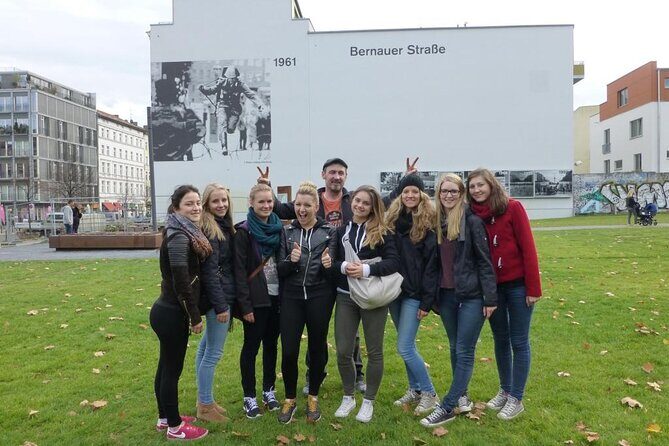
The walk includes a pause that’s part of the tour experience. That may sound minor, but it’s not. In a route full of heavy history, a breather helps you keep your focus instead of going numb.
I like that the tour doesn’t pretend you can absorb everything while moving nonstop. You get a small reset, then you continue toward the final stretches of the border area and the ghost station.
Price and value: $25.45 for a focused, high-impact route
At $25.45 per person for about 2.5 hours, this tour is priced like a deal—especially if you’ve ever tried to piece together wall memorial sites on your own. What makes it good value isn’t just the price. It’s the combination of:
- A local guide to explain what matters and what doesn’t
- A professional guide angle for historical context
- Guaranteed skip-the-long-lines for stops that commonly get crowded
Food and drinks aren’t included, so you’ll want to eat before you start (or plan to grab something after). But for a guided wall route that hits multiple named memorial and border-related locations, the money goes toward interpretation, not just transportation.
Group size also affects value. With a maximum of 12, the tour stays personal enough for better questions and less waiting around. You’re not just being marched. You’re being taught.
Timing and logistics that actually matter for your day
This tour starts at 3:00 pm and runs about 2 hours 30 minutes, ending at Berlin-Nordbahnhof at Invalidenstraße 131. That late-afternoon start can be a plus: you avoid the most chaotic morning crowds some days, and you finish with enough daylight (often) to handle dinner plans without rushing.
You should also know the tour uses a mobile ticket. That’s convenient. Just make sure your phone is charged enough to show it when you meet the guide.
Since transportation to and from the attractions isn’t included, you’ll need to plan how you’ll reach the starting point at Bornholmer Str. 75A. The route’s end at Nordbahnhof is handy because it ties into common transit options around the area.
What kind of traveler will enjoy this most?
This is a strong fit if you want more meaning than just photo stops. If you like walking tours where the guide connects locations to a big story, you’ll likely enjoy this one a lot.
It also works well for people who want structure. The route goes from Bornholmer Street to Nordbahnhof and includes multiple named points along the former boundary. That makes it easier to follow than a DIY route where you’re stuck guessing what you’re looking at.
I’d think twice if you dislike long walks. It’s not an all-day hike, but it is a steady walking experience. Bring comfortable shoes, and keep a moderate fitness level. If you get tired quickly, you might find the pace challenging.
Should you book this Berlin Wall walking tour?
Yes—if you want a guided route that helps you understand what you’re seeing, not just where the wall used to stand. The strongest reason to book is the guide-led explanation across key sites, plus the focus on the former death strip and major memorial locations like Bernauer Strasse and the Church of Reconciliation.
You’ll probably feel best about this tour if you like small-group experiences and you’re okay handling a couple hours of walking. The price is fair, the route is concentrated, and the guided context is what makes the memorials land.
If you’re only after quick exterior views and don’t care about historical framing, you might not need a tour. But for most people, the value comes from learning how the wall worked as a system—and why these places were preserved.
FAQ
How long is the Berlin Wall and Memorial Sites Walking Tour?
It lasts about 2 hours 30 minutes.
Where does the tour start and end?
It starts at Bornholmer Str. 75A, 10439 Berlin and ends at Berlin-Nordbahnhof, Invalidenstraße 131, 10115 Berlin.
What time does the tour run?
The start time is 3:00 pm.
How big is the group?
The tour has a maximum of 12 travelers.
Is food or drinks included?
No. Food and drinks aren’t included.
What major stops are included on the route?
You’ll visit places such as the Square of 9th November 1989, the Berlin Wall Park, the Bernauer Strasse Memorial area, the Church of Reconciliation, and a viewing platform of the Berlin Wall Memorial, plus border-related sites along the former route like Bornholmer Street and Nordbahnhof.
Is there a line-skip benefit?
Yes. The tour includes guaranteed skipping of long lines.
Can I cancel if plans change?
You can cancel for a full refund if you cancel at least 24 hours before the experience’s start time.