REVIEW · BERLIN
The Cold War and The Wall – Private Tour with Jacob
Book on Viator →Operated by Nadav Jacobs Berlin experience · Bookable on Viator
Berlin’s division still hangs in the air.
This private Cold War walk with Jacob is a focused, story-driven way to connect major East-West landmarks to the real 40-year pressure cooker behind Berlin’s split. I especially liked two things: you get a personal guide with time to answer your questions, and the route hits the big “how did this work?” places—Checkpoint Charlie and the Brandenburg Gate—without turning it into a rushed photo sprint. The only drawback to plan around is simple: it’s a lot of walking on uneven city sidewalks, and the tour runs in all weather, so you’ll want good shoes and an umbrella.
With a small group (up to 6), the pace feels more like a smart conversation than a bus tour lecture. You’ll walk through the city’s Cold War geography—places where decisions were made, where people crossed, and where the wall’s control showed up in daily life. If you want Berlin’s Cold War story in a single coherent thread, this tour is built for that.
In This Review
- Key takeaways before you go
- Berlin’s Cold War, explained through the places that caused it
- Price and value: what $310 gets you for a private 2h45 walk
- How pickup and the mobile ticket help your day run smoother
- Stop-by-stop: Siegessaule to Alexanderplatz without losing the plot
- Stop 1: Siegessaule (Victory Column) and the 1953 revolution
- Stop 2: Brandenburg Gate and the rise-and-fall symbolism
- Stop 3: Potsdamer Platz and the city split after the Cold War
- Stop 4: Berlin’s Aviation Ministry site—utopia, plans, and an escape attempt
- Stop 5: Trabi Museum and the East German car
- Stop 6: Checkpoint Charlie—the main crossroad story
- Stop 7: Friedrichstraße and the Checkpoints Street
- Stop 8: Unter den Linden—East Germany’s main avenue toward the border
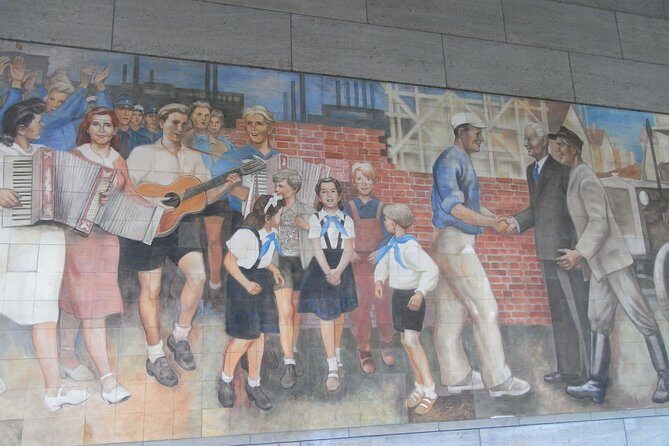
- Stop 9: Palace of Tears—citizens and communist control
- Stop 10: Alexanderplatz, TV tower, and the space race
- Guide quality: Jacob’s style and how it helps on a first visit
- Getting the most from a 2h45 private walking route
- Who should book this tour (and who might want something else)
- Should you book the Cold War and The Wall private tour with Jacob?
- FAQ
- How long is the Cold War and The Wall private tour?
- What is the group size?
- Is pickup included?
- Where does the tour start and end?
- Do I need to buy public transport tickets?
- Are tickets and entry fees included?
- Is the tour available in bad weather?
- Can I cancel if my plans change?
Key takeaways before you go
- Small-group private format: up to 6 people, so you can actually ask questions and steer the conversation a bit
- A tight 2h45 route: major East-West sites connected by context, not just names
- Your own guide plus support materials: picture folder (A3), plus a big subway map to keep things straight later
- Landmarks with “why it mattered”: you’ll learn what each place meant during the Cold War, not just what it looks like
- Pickup in Berlin: hotel/B&B/train station/airport pickup is included, which saves you time and stress
- Weather-ready planning: it operates in all conditions—bring an umbrella just in case
Berlin’s Cold War, explained through the places that caused it
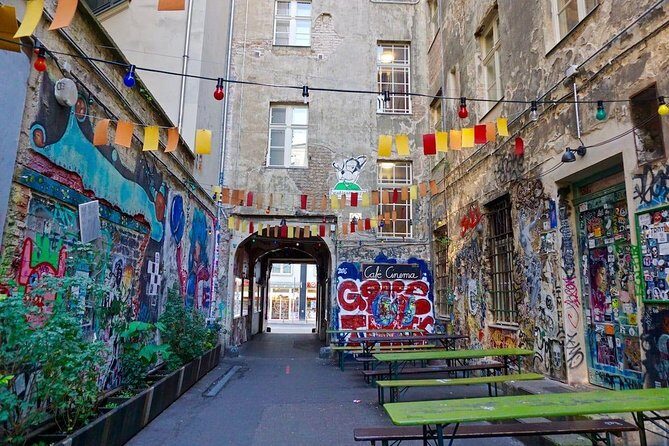
Berlin didn’t just “have” the Cold War. Berlin became the Cold War’s daily reality—through border checkpoints, propaganda streets, escape attempts, and families split by a line on a map.
That’s why I like this tour’s approach. Instead of treating famous sites like postcards, you walk from one decision point to the next. Each stop adds a layer: revolution and control, symbolic power, division in the city’s fabric, and the methods the communist system used to monitor citizens.
The result is a route that helps you understand the logic of the division. You start to recognize patterns: how the border shaped movement, how checkpoints worked, and why certain places became touchstones for East-West contact.
You can also read our reviews of more private tours in Berlin


Price and value: what $310 gets you for a private 2h45 walk
At $310 per group (up to 6), this isn’t priced like a mass-market group tour. The value is in three practical things.
First, it’s truly private for your group, not a shared “everyone listen up” format. Second, the tour includes pickup in Berlin, which can easily be the difference between a smooth start and a stressful scramble to meet a guide across town. Third, you leave with take-home support: an A3 guidance picture folder and a big subway station map. That matters because Cold War Berlin is easy to get turned around in, and having a visual guide helps you follow up on your own.
If you’re traveling solo, the cost can feel steep. If you’re splitting the price with friends or family, it starts to look like smart value—especially on a topic where context makes the difference between seeing a landmark and actually understanding it.
How pickup and the mobile ticket help your day run smoother
You don’t have to build your morning around transit to a meeting spot. Hotel/B&B/train station/airport pickup is included within Berlin, and you’ll also have a mobile ticket.
This matters because the tour ends at Alexanderplatz. In other words, you’re set up to keep going afterward in a major transit hub, rather than needing to backtrack just to get home.
If you’re coming in from outside Berlin or have luggage, pickup is one of those “small” benefits that prevents a lot of wasted time. And since public transport tickets aren’t included (you’ll pay your own ticket, roughly 3–11 euro depending on what you use and how long you stay out), having a guide means you can keep the schedule efficient without burning time figuring everything out yourself.
Stop-by-stop: Siegessaule to Alexanderplatz without losing the plot
This is a 2 hours 45 minutes walking tour that moves through Berlin like a connected timeline. The stops are short (often 10–20 minutes), which keeps energy up and lets the guide pack a lot of meaning into each location.
Here’s what to expect, and what to watch for at each stop.
Stop 1: Siegessaule (Victory Column) and the 1953 revolution
You begin near Siegessaule (Victory Column) and the Straße des 17. Juni area. This part of the walk sets the political tone: it points you toward the story of the 1953 revolution in East Germany and how power responded.
What I like about starting here is that it reminds you the Cold War wasn’t only about walls and tanks. It was also about unrest, pressure, and how governments tried to control what people wanted.





Stop 2: Brandenburg Gate and the rise-and-fall symbolism
Next is the Brandenburg Gate, the kind of landmark that looks timeless—until you learn what it meant in Berlin’s divided decades. This stop ties together the erection and fall of the Berlin Wall through symbolism: how power brands certain places, and how history later re-frames them.
You’ll only spend about 10 minutes here, so don’t expect a slow linger. Instead, treat it like a story anchor: you’ll walk away with a clearer idea of why this gate became a major stage for East-West meaning.
Stop 3: Potsdamer Platz and the city split after the Cold War
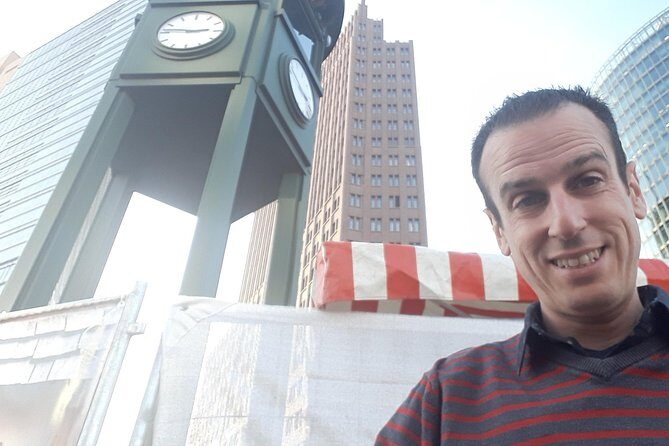
Then you move to Potsdamer Platz, often discussed for its modern life, but here it gets connected to division and recovery. The stop includes the idea of a post-Cold War freedom concert, which helps you see how the same urban space changed roles once control loosened.
Drawback to consider: Potsdamer Platz can feel busy. Your guide will help you translate what you see into what it meant during the split, but if you hate crowds, you may feel the difference compared with quieter neighborhood streets.
Stop 4: Berlin’s Aviation Ministry site—utopia, plans, and an escape attempt
The route continues to the Aviation Ministry of Berlin area. The story at this stop is specific: Max Linger’s communist utopia and Heinz Holzapfel’s escape attempt.
This is one of the most interesting stops because it shifts from architecture and speeches into real human behavior—plans made, systems enforced, and attempts to break out. It also shows how Cold War politics wasn’t theoretical. It shaped documents, buildings, and the risks people took to get free.
Stop 5: Trabi Museum and the East German car
After that comes the Trabi Museum, focused on the East German car (the Trabi). Spending about 30 minutes here gives you a breather plus a very “daily life” lens on politics.
This matters because it’s easy to think of the Cold War as only borders and bureaucracy. A car is a window into supply, expectations, and what ordinary life looked like in the East. If you’re into design or everyday history, this stop is a good payoff.
If you’re not a museum person, the time still works because it breaks up the walking and keeps the story grounded in real objects rather than just big-picture geography.
Stop 6: Checkpoint Charlie—the main crossroad story
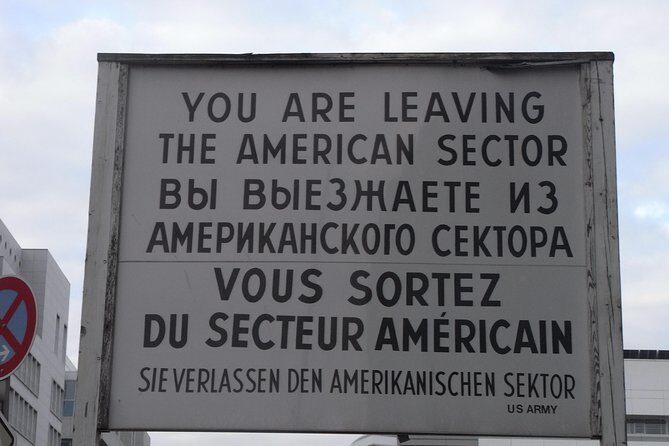
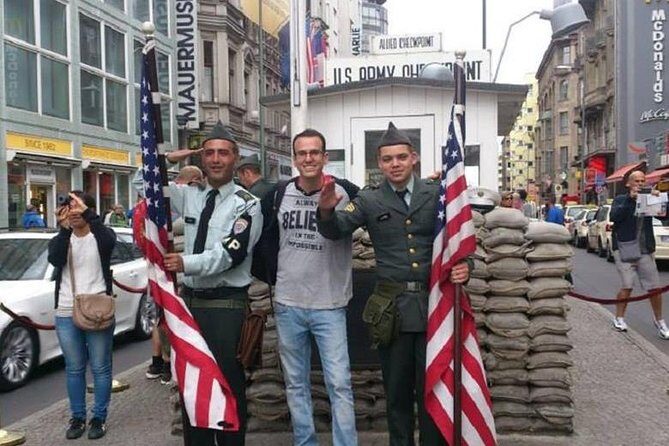
Now you hit the headline site: Checkpoint Charlie, described as the main crossroad between East and West. You’ll spend about 10 minutes here.
Don’t expect a long stop. Instead, use the time to understand how checkpoints functioned as a system, not just as a movie set. The value is in connecting what you see to the larger Cold War structure—who controlled movement, and what crossing meant on the other side.
Stop 7: Friedrichstraße and the Checkpoints Street
From there, you go to Friedrichstraße, tied to the story of the Check points Street. This segment is about the border’s influence on the city’s movement patterns—how a street becomes a boundary, and how the boundary becomes part of daily navigation.
Because the stop is around 20 minutes, it’s a good moment to slow down and actually listen. The guide’s explanations here are what help you stop treating the city like a set of disconnected stops.
Stop 8: Unter den Linden—East Germany’s main avenue toward the border
Next is Unter Den Linden, presented here as East Germany’s main avenue leading toward the border. This stop helps you see how official power shaped the “front door” of the city—even when the city behind the scenes was constrained.
This is also a great photo area, but the real point is the alignment: the avenue-to-border connection is the story, not just the buildings.
Stop 9: Palace of Tears—citizens and communist control
Then you reach Palace of Tears, framed as a main checkpoint for citizens and communist control. You’ll spend about 20 minutes.
If you want a Cold War stop that feels emotionally direct, this is it. Even without dramatizing anything, a checkpoint with that kind of name tells you what people attached to crossings: fear, separation, and the stress of being processed by a system.
Practical note: checkpoint-related stops can feel heavy. Give yourself a moment before moving on and don’t try to mentally “speed through” the explanation.
Stop 10: Alexanderplatz, TV tower, and the space race
Finally, the walk ends at Alexanderplatz. The tour ties in the TV tower and the space race, which is a smart twist at the end. It reminds you the Cold War also played out in technology dreams and propaganda ambitions, not only on borders.
You’ll finish at Alexanderplatz in central Berlin, which makes it easier to continue exploring using major transit connections.
Guide quality: Jacob’s style and how it helps on a first visit
The guide is the heart of this tour. Jacob’s impact shows in how smoothly the information connects across stops. On a first time to Berlin, that’s a big deal. You’re not just collecting facts; you’re learning the city’s logic.
I also liked the way the guide gives you options for what to do next on your own. That kind of forward-looking advice is useful. Once you understand the Cold War geography, it’s easier to choose your follow-up walk, museum visit, or transit route.
One more detail: there’s guide availability for questions and help with your Berlin visit. That’s helpful when you leave a tour with a few lingering uncertainties—like where something is located relative to where you’re staying.
Getting the most from a 2h45 private walking route
This tour is long enough to be substantial, short enough to stay energetic. To make it work, I’d plan like this:
- Wear comfortable shoes and expect city sidewalks, not a themed walkway.
- Bring an umbrella. The tour runs in all weather conditions, and Berlin weather changes fast.
- Bring questions. The format is private, so don’t save everything for the end.
- If you’re into Cold War specifics, mention what you’re most curious about—borders, daily life, escape attempts, or the “why these places” angle.
Also, keep in mind the stop timing. Several locations are brief, so it helps to listen actively and not get stuck in one spot trying to take every angle. Your guide connects the dots faster than you could alone.
Who should book this tour (and who might want something else)
This tour fits best if you want context, not just sightseeing.
You’ll probably love it if you:
- Want an organized way to understand Berlin’s Cold War division
- Like private guides who can answer questions and shape the pacing for your group
- Prefer a walking tour that still includes a museum-style break (the Trabi Museum)
It may be less ideal if you:
- Hate walking or have limited mobility (the route is designed as a walking tour)
- Only want a slow, leisurely tour of a single landmark like Checkpoint Charlie without the rest of the city story
Should you book the Cold War and The Wall private tour with Jacob?
If you’re coming to Berlin and you want the Cold War explained in a clear, connected path—from early tensions to famous checkpoints and the post-division symbolism—this is a very strong pick. The private group size, included pickup, and the take-home picture folder and map make it feel like more than a quick walk. It’s built to help you understand Berlin, so you can enjoy the rest of your trip with less guesswork.
I’d book it if you’re within budget for a private experience and you’re excited by the idea of learning how the border shaped the city. If that sounds like your kind of travel, this tour delivers exactly that—one smart route, lots of meaning, and a guide like Jacob who keeps the story human.
FAQ
How long is the Cold War and The Wall private tour?
The tour lasts about 2 hours 45 minutes.
What is the group size?
It’s a private tour/activity, limited to your group, with up to 6 people per group.
Is pickup included?
Yes. Hotel, B&B, train station, or airport pickup in Berlin is included.
Where does the tour start and end?
It starts in Berlin, Germany, and ends at Alexanderplatz (10178 Berlin).
Do I need to buy public transport tickets?
Public transport tickets are not included. The fee is around 3–11 euro for a 2-hour or day ticket.
Are tickets and entry fees included?
Admission tickets for the listed stops are marked as free, and the tour includes a mobile ticket.
Is the tour available in bad weather?
It operates in all weather conditions, so bring an umbrella if needed.
Can I cancel if my plans change?
Yes, free cancellation is available up to 24 hours before the experience start time for a full refund.