REVIEW · STUTTGART
Stuttgart: Mercedes-Benz Museum Entry Ticket
Book on GetYourGuide →Operated by Mercedes-Benz Museum · Bookable on GetYourGuide
Cars start their stories long before you reach them. The Mercedes‑Benz Museum in Stuttgart is built for a satisfying walk through automotive history, and I like two things right away: the free audioguide in 8 languages and the sheer scale—16,500 square meters packed with 160+ vehicles. The main drawback to plan for is time: if you only have a couple hours, you’ll miss plenty.
One extra bonus is how the museum structures your visit. You can follow two narrative routes—Legend and Collection—so you’re not stuck with one rigid order of cars and themes. Open Tuesday to Sunday from 9am to 6pm (last admission 5pm), it’s also the kind of place where a late start can quietly cut your experience short.
In This Review
- Key highlights before you go
- Mercedes-Benz Museum at a glance: what you’re really buying
- Plan your route: Legend and Collection inside the museum
- Ticket value and timing: when to arrive for a calmer visit
- The exhibition walkthrough across 12 rooms and multiple floors
- Starting point: early automotive milestones
- Middle rooms: technology meets daily life and society
- Toward the end: racing, legendary machines, and what comes next
- Media and floor-by-floor storytelling
- What to focus on: 160+ vehicles, motorsport, and futuristic research
- Audioguides in 8 languages: how to use them without missing details
- Facilities, pacing, and who this fits best
- Should you book the Mercedes‑Benz Museum ticket in Stuttgart?
- FAQ
- What are the Mercedes‑Benz Museum opening hours?
- What’s included with the Stuttgart Mercedes‑Benz Museum entry ticket?
- Is the audioguide included, and what languages are available?
- How big is the exhibition and how many vehicles are on display?
- How much does the ticket cost?
- Can I cancel for a full refund?
- Is the museum wheelchair accessible?
Key highlights before you go

- Free audioguide in 8 languages so you can actually understand what you’re seeing
- 16,500 square meters of exhibition space across 12 rooms
- More than 160 vehicles, from early automobiles to racing and future research concepts
- Two narrative routes: Legend and Collection, for different interests and pacing
- Wheelchair accessible, with step-free entry through the main entrance
Mercedes-Benz Museum at a glance: what you’re really buying
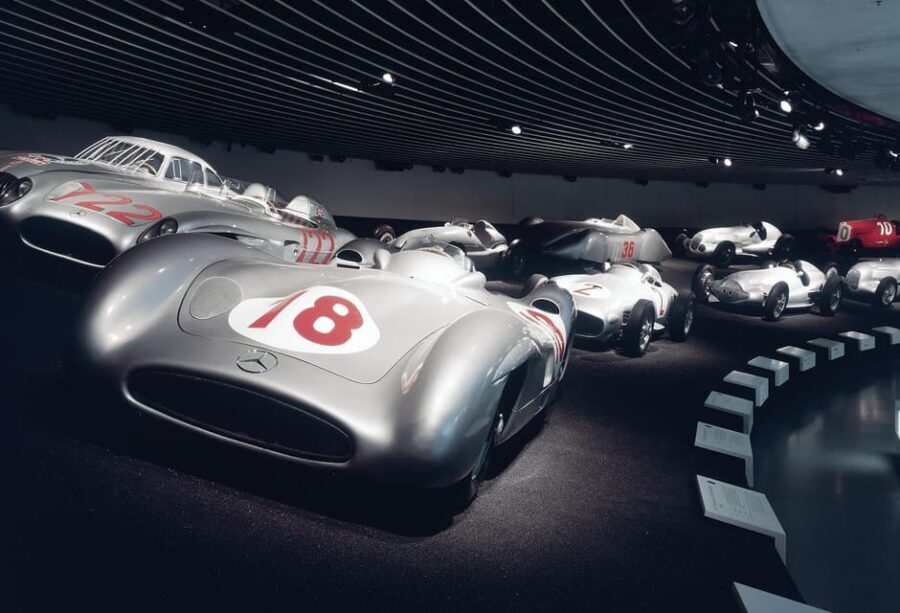
This isn’t just a garage of shiny cars. The Mercedes‑Benz Museum is organized around the idea that the automobile is a technology that changed daily life, social history, and popular culture—not only engineering.
Your ticket gives you admission to the permanent exhibition and a free audioguide (German, English, Italian, Spanish, French, Chinese, Japanese, Russian). Since it’s self-paced, the value comes from control: you decide how fast you move, and which era gets your attention.
It also helps that the museum’s footprint is big: 16,500 square meters and 12 rooms. That space is what makes the chronological layout feel like a journey instead of a quick walk-by.
A few more Stuttgart tours and experiences worth a look



Plan your route: Legend and Collection inside the museum
The museum’s permanent exhibition is designed around two different ways of telling the story: Legend and Collection. You don’t just pick a “tour name.” You pick a vibe.
- Legend is built around turning points and the mythology of Mercedes‑Benz in automotive history—think big ideas, big leaps, and why certain vehicles became symbols.
- Collection feels more like a curated sweep of vehicles and themes, with a strong emphasis on seeing lots of machines and how they fit into a wider timeline.
If you’re the type who likes a clear story thread, choose Legend. If you’re more “show me the vehicles and let me compare,” choose Collection. Either way, the museum uses the same core strength: many vehicles positioned so you can spot changes in design, engineering, and purpose over time.
A practical tip: don’t try to “do everything” in one go. With 12 rooms and 160+ vehicles, your visit will get better if you commit to one narrative route and treat the rest like bonus material.
Ticket value and timing: when to arrive for a calmer visit
The price is listed as $18 per person, which works out well if you treat the museum as a half-day to full-day activity rather than a quick stop. This is one of those places where even “car people” end up wanting more reading time, more floor time, and more comparisons between eras.
The museum hours are Tuesday to Sunday, 9am–6pm, with last admission at 5pm. In plain terms: if you show up late, you won’t just lose time—you’ll lose the ending act. One of the stronger parts of the experience is the progression toward motorsport and futuristic research vehicles, and that’s not the stuff you want to rush at the end.
Also: you can enter through the main entrance, and there’s a skip-the-ticket-line setup included with this entry product. If you’re traveling with limited flexibility, the reserve now & pay later option can help you avoid overcommitting before your day in Stuttgart firms up.
The exhibition walkthrough across 12 rooms and multiple floors
The museum’s permanent exhibition is set up as a chronological journey. The idea is simple: cars and technology don’t exist in a vacuum. You’ll see how engines and vehicle design connect to technology, everyday life, social change, and cultural trends.
Here’s how the experience typically lands as you move through the rooms:
Starting point: early automotive milestones
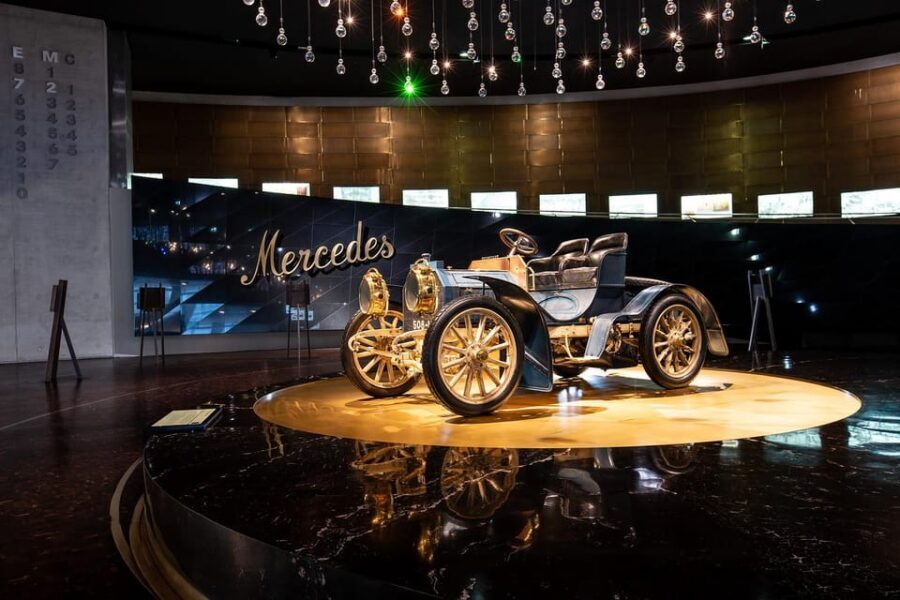
The visit begins by grounding you in the origins of the automobile story, including the 1886 milestone tied to Carl Benz. Expect this part to focus more on context than on polished glamour.
This is useful, even if you’re not a technical reader. You get a baseline for what “innovation” meant at the start—then you can better notice what later cars are improving.
You can also read our reviews of more museum experiences in Stuttgart


Middle rooms: technology meets daily life and society
As you move forward, the museum broadens from invention into impact. The exhibition explicitly frames the automobile in relation to day-to-day life and social history, not just branding.
This is where the timeline approach really helps. Instead of treating Mercedes‑Benz as a separate world, you start seeing patterns: how engineering priorities shift, how design language evolves, and how cars fit into broader changes in technology and culture.
You might also see how automotive know-how spills into other modes and industries. One visitor noted themes that extended beyond cars, like applications related to aircraft and even trams—so if your interest isn’t limited to passenger cars, this section can still feel relevant.
Toward the end: racing, legendary machines, and what comes next
Near the later stages, the museum leans harder into the kinds of vehicles people remember: racing cars, legendary models, and futuristic research concepts.
This is the payoff zone. Even if you’re not obsessed with motorsport, racing vehicles tend to showcase engineering choices that don’t always show up in everyday road cars—materials, aerodynamics, and performance-focused thinking.
It’s also where you’ll likely want your slowest walking. The museum’s own structure encourages comparison: oldest-to-most-modern isn’t only visual—it’s conceptual.
Media and floor-by-floor storytelling
Some parts of the exhibit use video screens to reinforce the story on each floor. That’s helpful when you want a quick reframe before moving into the next era. If you like a museum that keeps your momentum without skipping explanation, this kind of media support is a win.
What to focus on: 160+ vehicles, motorsport, and futuristic research
With more than 160 vehicles, you’ll never see every detail in one visit unless you’re willing to spend a long time reading. So the trick is to focus your attention.
Here’s a smart way to do it:
- Pick 2–3 vehicles per room to study closely.
- Use the audioguide to understand why those machines matter.
- Let the rest of the displays act like context around your “main picks.”
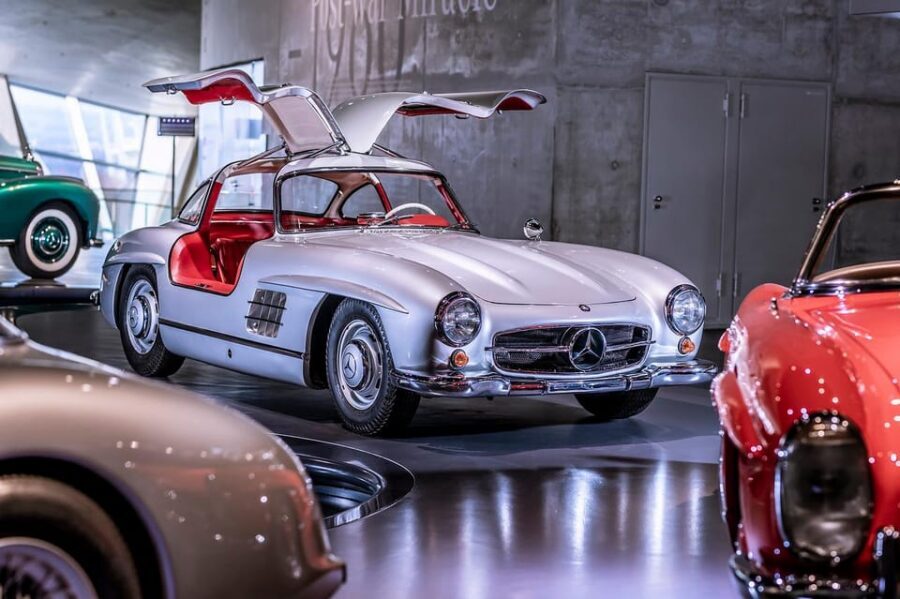
The museum’s collection ranges from some of the oldest automobiles ever built to famous racing cars and futuristic research vehicles. That broad range is the point: it shows how the same basic goal—moving people and goods—keeps evolving as technology changes.
Also, don’t ignore the idea behind the placements. The museum positions the vehicles in the permanent exhibition so the story reads across rooms, not just within a single display case. That makes it easier to notice the shift from early mechanical breakthroughs to design-driven and performance-driven engineering.
If you’re bringing kids, there’s enough variety to keep things interesting. One review mentioned activities for younger visitors, including coloring options and a kid-focused audio experience with puzzles. So you won’t need to rely only on your own enthusiasm to keep everyone engaged.
Audioguides in 8 languages: how to use them without missing details
The free audioguide is one of the biggest reasons this ticket feels like good value. It turns the museum from a room full of cars into a readable, understandable story—especially because the exhibition covers not only vehicle history, but also technology, everyday life context, social history, and popular culture.
You can choose among German, English, Italian, Spanish, French, Chinese, Japanese, Russian. That matters because the museum is broad: without audio support, you’d be doing a lot of guessing about what’s important and why.
Two practical notes from the experience data:
- Sometimes handheld units may not work, and staff support may not be immediate. If you start and your headset doesn’t activate, don’t waste time searching on your own. Move to the point where staff can help you swap it.
- Audio volume can be tricky in a loud gallery. If you find it hard to hear, pause, adjust volume if your model allows it, and position yourself closer to the display the audio is describing.
In short: treat the audioguide like your pacing tool. You don’t need to listen nonstop, but you should use it often—especially when you come to an era that you don’t know well.
Facilities, pacing, and who this fits best
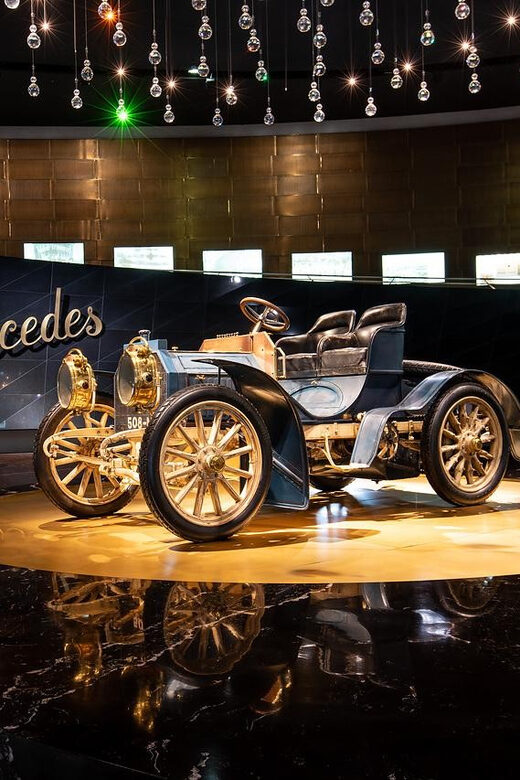
The museum is clean and well organized, which sounds minor until you’re touring a building with lots of floors and lots of people. Smooth organization helps you keep your head above water when you’re deciding which corridor to take next.
Pacing is the real make-or-break factor here. Reviews highlight that you can easily spend 4–5 hours, and that 3 hours may still feel like you’re skipping parts of the collection. One visitor even called out that a rushed visit can make it hard to see the evolution properly.
So I’d plan like this:
- If you want the story and the big cars, aim for at least 3 hours.
- If you want more calm reading and more comparison, go for 4–5 hours.
- If you only have 90 minutes, go with a focused plan and accept that some rooms will become “pass-through” time.
Who should book?
- Car enthusiasts who want the whole arc, from early invention to modern and futuristic concepts.
- People who like museums that explain why technology matters, not just what it looks like.
- Families with older kids who can follow an audioguide and enjoy puzzles or activities.
And a small reality check: if you’re hoping for lots of hands-on stuff, this museum is primarily a walk-through of exhibits, vehicles, and media. Build your day around observation, reading, and listening—not around expecting interactive gadget stations.
Should you book the Mercedes‑Benz Museum ticket in Stuttgart?
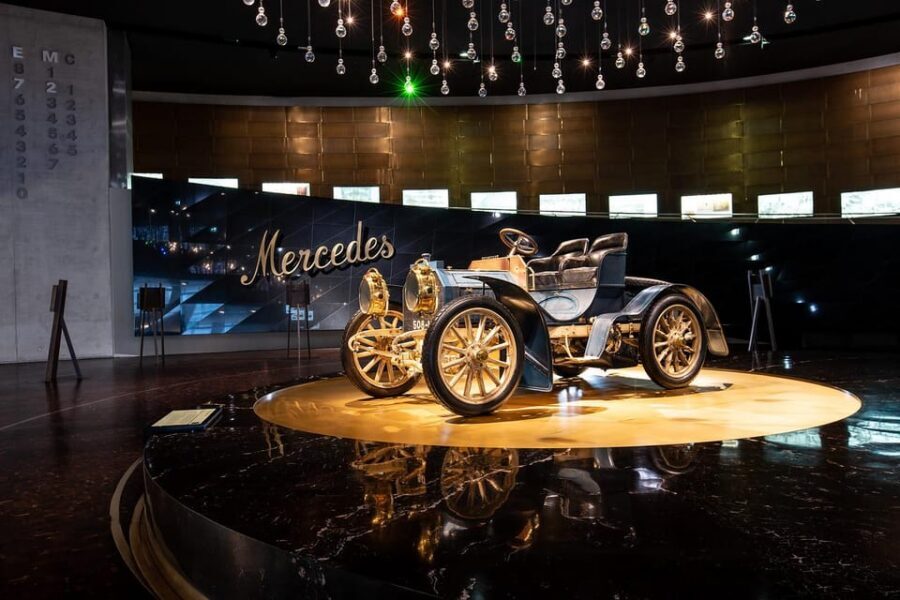
If you’re in Stuttgart and you care about cars, this ticket is an easy yes. The value comes from three things that reinforce each other: the large exhibition area, the high vehicle count, and the free audioguide that gives the context you’d otherwise have to hunt for on your own.
Book it if:
- You can give the museum a solid chunk of time (think half-day to full-day).
- You want both engineering and culture, not just a lineup of famous models.
- You’re comfortable using an audioguide to guide your pacing.
Skip or reschedule if:
- Your schedule only allows a short window and you’ll be stressed walking room to room.
- You strongly prefer tiny, ultra-focused exhibits where everything is short and simple.
My advice: treat this as a main activity for your day in Stuttgart, not a side stop. If you do that, the museum’s format works with you—and you’ll leave with a much clearer idea of how the automobile story evolved, vehicle by vehicle.
FAQ
What are the Mercedes‑Benz Museum opening hours?
The museum is open Tuesday to Sunday from 9am to 6pm, with last admission at 5pm.
What’s included with the Stuttgart Mercedes‑Benz Museum entry ticket?
Your ticket includes admission to the Mercedes‑Benz Museum exhibition and a free audioguide.
Is the audioguide included, and what languages are available?
Yes, the audioguide is included. It’s available in German, English, Italian, Spanish, French, Chinese, Japanese, and Russian.
How big is the exhibition and how many vehicles are on display?
The permanent exhibition covers 16,500 square meters across 12 rooms, and it includes more than 160 vehicles.
How much does the ticket cost?
The entry ticket price is $18 per person.
Can I cancel for a full refund?
Yes. Free cancellation is available up to 24 hours in advance for a full refund.
Is the museum wheelchair accessible?
Yes, the museum is wheelchair accessible.