Berlin changes fast. Bowie’s route makes it make sense. This private walk-and-train tour traces the places David Bowie referenced in his 2012 song Where Are We Now?, using real locations like Potsdamer Platz, Hansa Studios, and his former home in West Berlin. Two things I really like: the way it links music to streets you can stand on, and the fact that it’s led in a way that connects more than just Bowie trivia.
I also appreciate the guide approach—when the guide is Martin, you get a smooth mix of music, architecture, and even heavier context like the Holocaust, handled professionally and without turning the day into a lecture. The one possible drawback: this is a moderate-walking, mixed transit plan with a few train rides, so if you want a slow, fully foot-only museum day, this won’t feel as relaxing.
In This Review
- Key things to know before you go
- How Bowie’s West Berlin sites turn into a story you can walk
- Starting at Potsdamer Platz: from hub to wasteland and back
- KaDeWe and Kaufhaus Des Westens: a shopping stop with lyrics attached
- Bahnhof Zoologischer Garten: where fan culture meets West Berlin mood
- Hansa Studios: photo time with a major Berlin Trilogy link
- The Dschungel location and KaDeWe-era hangouts
- A train ride and Neues Ufer: the nightcap bar story
- Hauptstraße 155: ending at Bowie’s 1976–1978 home
- Price and logistics for a 3-hour private group up to 8
- Who this tour is perfect for
- What to do before and during the tour
- Should you book this Bowie’s West Berlin private tour?
- FAQ
- How long is the Private Tour of David Bowie’s West-Berlin?
- What’s the price for this tour?
- Where do we meet, and where does the tour end?
- Is this tour private or shared with other groups?
- Do we get a ticket for entry?
- Are any admissions required at the stops?
- Will I be walking a lot?
- What famous Bowie-related locations are included?
- Can I bring a service animal?
- Is there a cancellation policy with a refund?
Key things to know before you go
- Private group size up to 8 means you can move at your pace and ask questions.
- 3 hours approx. packs major West Berlin touchpoints without dragging.
- A mobile ticket keeps your entry simple, and the scheduled stops are admission-free.
- Hansa Studios is a major highlight tied to Bowie’s Berlin Trilogy, plus photo-friendly sights.
- Nightlife details matter at Neues Ufer, where Bowie’s nightcap culture is part of the story.
- A guided ending at Hauptstraße 155 gives a poignant final moment at his 1976–1978 home.
How Bowie’s West Berlin sites turn into a story you can walk
Most Berlin tours list landmarks. This one strings them together like chapters. You’re following Bowie’s Where Are We Now? references, so each stop feels less like a random stop and more like a clue about the city as it was—and the city as it became.
What makes it work is the scale of change. West Berlin in the 1970s was one thing; today it’s another. The tour’s core idea is simple: you’re not just looking at buildings. You’re comparing eras, and you’re learning why Bowie’s lyrics hit with that specific kind of longing.
And because it’s private, the guide can pace the “why this matters” parts to your group. If you have a Bowie-obsessed friend, you’ll get that angle. If your group prefers city planning, you’ll get the architecture and street-level changes too.
You can also read our reviews of more private tours in Berlin


Starting at Potsdamer Platz: from hub to wasteland and back
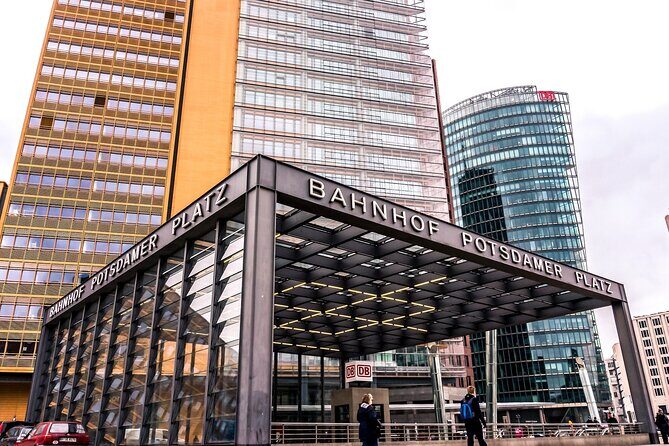
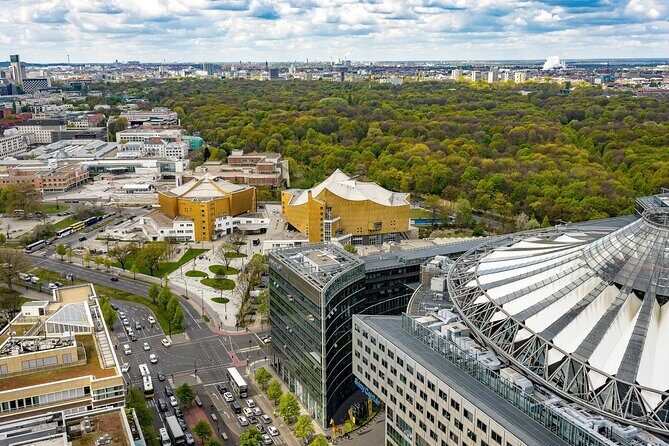
You begin at Deutsche Kinemathek on Mauerstraße 79, then you head to Potsdamer Platz. This square is one of Berlin’s best examples of how quickly a city can flip from chaos to rebuilding and then to modern hustle again.
Bowie actually points listeners to Potsdamer Platz in Where Are We Now?, so the tour treats it as more than a photo spot. You get a sense of how the area transformed over time, and you start noticing how a lyric can act like a time machine.
Practical note: Potsdamer Platz is an easy place to orient yourself. Even if parts of Berlin feel confusing at first, the guide helps you connect the dots fast.
KaDeWe and Kaufhaus Des Westens: a shopping stop with lyrics attached
Next comes Kaufhaus des Westens—often discussed as KaDeWe. It’s a landmark that matters in the Bowie story because the tour frames it as a place he went for everyday life, not just a backdrop.
This is one of my favorite kinds of stops: the ones that show what a person did day-to-day. You’re not just chasing fame. You’re imagining routine—groceries, errands, regular city wandering—and that makes the music references feel more grounded.
Drawback to consider: if your group wants only studio-and-famous-person spots, a department store can feel a bit ordinary at first. The guide usually brings it back around by tying it to what Bowie referenced and why that matters to how he viewed Berlin.
Bahnhof Zoologischer Garten: where fan culture meets West Berlin mood
Then you move to Bahnhof Zoologischer Garten (Zoo Station). This stop has a story beyond Bowie. Christiane F.—a major Bowie fan—hung out around Zoo Station with friends, and the tour uses that connection to explain the feel of the area back then.
The tour also brings in the film connection: Bowie’s music appears throughout the movie based on Christiane F’s book, and the guide notes that Bowie allowed the producer and director to use his songs. It’s an interesting reminder that even when Bowie’s lyrics are reflective, his presence in Berlin pop culture wasn’t distant—it was embedded.
How to get more out of this stop: pause and look at the space itself. Station districts can blend together unless you slow down. The guide helps you see how a transit hub becomes part of a cultural memory.
Also, Zoo Station today is much cleaner and brighter than what you might picture from older stories. That contrast is part of the point.
Hansa Studios: photo time with a major Berlin Trilogy link
One of the clearest highlights is Hansa Studios. This is where Bowie recorded much of his Berlin Trilogy, and the tour treats the studio as a centerpiece rather than a quick pass-by.
What I like here is the combination of “iconic and specific.” You’re not only hearing that Bowie recorded there—you’re being pointed to visual details and photo opportunities. The tour even mentions a GIF-animation of Bowie in one of their windows, which gives you a modern, playful touch without losing the historical weight of the studio.
This is also a great moment if your group includes non-Bowie fans. Studios are easy to understand as places where craft happened. Even if someone isn’t deep into the discography, they can still appreciate what it means for Berlin to have shaped that work.
Time-wise, plan for this to be a “camera out, then listen again” stop. It’s short, but it lands well.






The Dschungel location and KaDeWe-era hangouts
After Hansa, you go toward the erstwhile Dschungel hangout area. The tour points out the address tied to the former Dschungel: Nürnberger Str. 53. The venue no longer exists, but the location still carries that sense of late-night Berlin culture that Bowie loved to reference.
This stop is powerful because it’s not about a building still standing in the exact same form. It’s about the way a city keeps memory even after the venue is gone.
And that theme—what disappears, what remains—connects back to the KaDeWe shopping stop and forward to the nightlife bar at the end. The tour is quietly teaching you how Berlin’s social geography works: where people went to meet, unwind, and become someone else for the night.
A train ride and Neues Ufer: the nightcap bar story
From there you board the train again and head toward Neues Ufer, a local gay bar tied to Bowie’s West Berlin routines. The tour notes it was formerly known as Anderes Ufer and that the bar was open 24/7. Bowie often stopped in for a nightcap, and the guide frames this as part of why his lyrics feel so tied to lived experience.
The tone here shifts from sightseeing to atmosphere. You’re still learning, but you’re also getting a sense of what “going out” meant in a divided city.
Can you drink? The tour says it’s optional. Many people choose to have one after the tour, which makes sense because you’ll end the day with the kind of story that pairs well with a final sit-down.
Practical consideration: if you don’t drink, that’s totally fine. Treat it like a story stop. You’re learning the social rhythm of West Berlin, not being pushed to spend extra money.
Hauptstraße 155: ending at Bowie’s 1976–1978 home
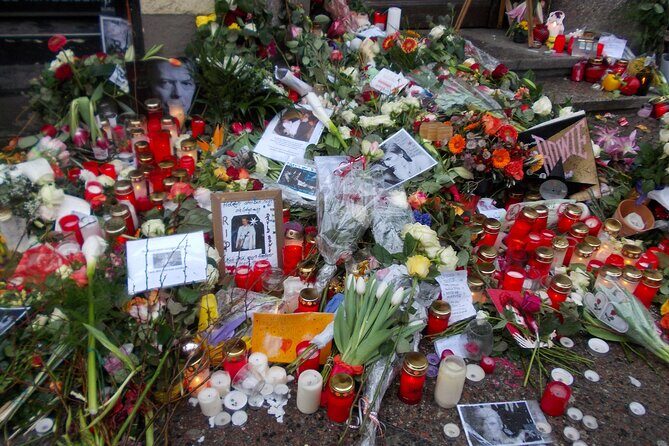
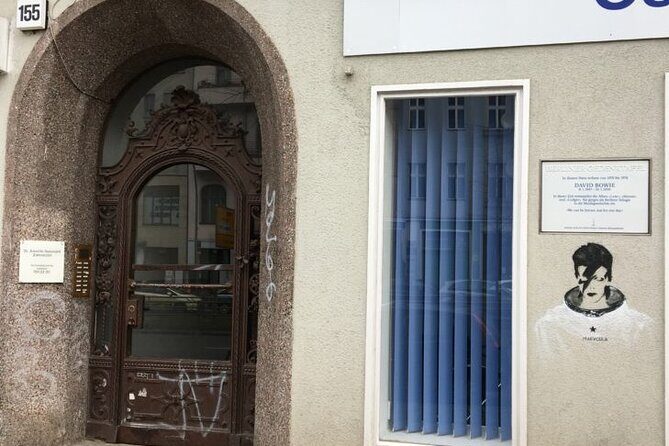
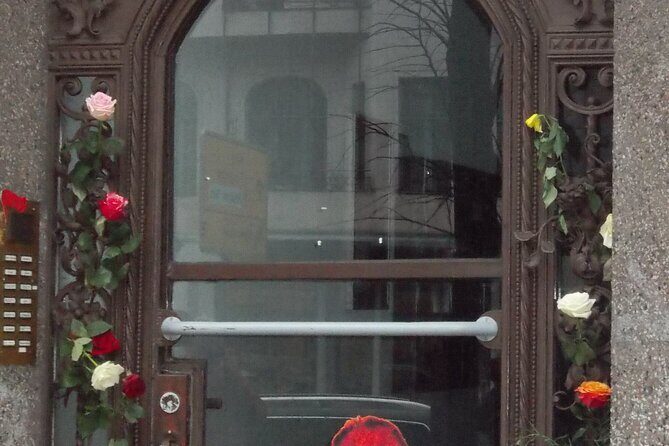
The tour concludes near Hauptstraße 155, where Bowie lived between 1976 and 1978. This final stop is where the day’s themes start to feel emotional instead of just informative.
The guide shows you a spot where fans often leave flowers or candles. It’s a simple touch, but it changes the energy of the group. Suddenly you’re not only matching lyrics to landmarks. You’re standing where a real person lived, close enough to imagine daily life rather than just fame.
Also, the tour notes the building’s ledge and the way it has become a natural place for tributes. That detail matters because it explains why memorials show up exactly where they do—not just in a vague, sentimental way.
Time-wise, the final visit is brief, but it sticks. Ending at home rather than at a museum makes the whole day feel more human.
Price and logistics for a 3-hour private group up to 8
Let’s talk value, because it’s not a cheap day on paper: $285.07 per group (up to 8), for about 3 hours. The good news is that the price is group-based. If you fill the max group size, you’re roughly in the mid-$30s per person range, which is a strong deal for a private guide, multiple transit segments, and very specific Bowie-site planning.
A few logistical points you’ll care about:
- It’s private, so only your group participates.
- It uses mobile tickets, which keeps entry smoother.
- You’ll have a mix of walking and train rides, not just one long straight line.
- It’s designed for moderate physical fitness, so don’t plan on a fully sedentary outing.
The tour is also near public transportation, which is helpful if your timing is tight or if you want an easy escape plan for your day.
Also, the scheduled stops are marked as free admission in the tour plan. The guide services are included, but anything like coffee/tea isn’t, and the general note is that tickets or extras aren’t included. In plain terms: you’ll likely spend more only if you add personal extras like drinks.
Who this tour is perfect for
This experience fits best when your group loves one of these things:
- Bowie fans who want more than casual name-dropping.
- People who like Berlin as a city of change—social, cultural, and architectural.
- Anyone who wants the music story linked to real places.
It’s also a smart choice for families with students. In one case shared with me, the guide Martin tailored the tour around a GCSE-style curriculum, helping a student connect history and culture in a way that led to top marks. Even if you’re not doing schoolwork, that kind of flexibility usually means you can get the day tuned to your group’s interests.
If your group hates walking or wants a strict museum rhythm with lots of indoor time, you might feel less satisfied. The stops are short, and the route is active, by design.
What to do before and during the tour
I’d plan this as a morning or early afternoon activity, since it’s only about 3 hours and it helps you connect the rest of your Berlin day to what you learned. Because you’re moving between neighborhoods and using trains, it’s helpful to wear comfortable walking shoes and keep layers ready for Berlin’s shifts in weather.
Bring a camera, but don’t spend the whole day filming. The best part of this tour is the story thread. If you keep your attention on what the guide is explaining, the photo stops like Hansa Studios and Zoo Station feel more meaningful.
And if you’re the type who likes to follow lyrics closely, this tour is a good companion day. You’ll start seeing how Bowie used Berlin as a mood, not just as a setting.
Should you book this Bowie’s West Berlin private tour?
I think you should book if you want a Berlin day that’s specific to Bowie without turning into a scavenger hunt. The private setup, the short admission-free stops, and the way the guide connects music references to architecture and lived experience make it a good use of limited time in the city.
I’d skip it if you want a purely indoor tour, or if train rides and short walking segments make you uncomfortable. But if you’re okay with moving around and listening closely, this is one of those rare tours where a song becomes a map—and the map becomes a story you can actually feel.
FAQ
How long is the Private Tour of David Bowie’s West-Berlin?
The tour lasts about 3 hours.
What’s the price for this tour?
It costs $285.07 per group, for up to 8 people.
Where do we meet, and where does the tour end?
You start at Deutsche Kinemathek, Mauerstraße 79, 10117 Berlin, Germany. The tour ends near Bowie’s former home at Hauptstraße 155, 10827 Berlin, Germany.
Is this tour private or shared with other groups?
It’s private. Only your group participates.
Do we get a ticket for entry?
Yes. The tour includes a mobile ticket. Tickets, etc. are not listed as included beyond that.
Are any admissions required at the stops?
The tour plan marks each listed stop as free admission. If you add extra activities on your own, those would not be included.
Will I be walking a lot?
The tour calls for a moderate physical fitness level. There’s walking plus train rides between stops.
What famous Bowie-related locations are included?
The tour includes Potsdamer Platz, Kaufhaus des Westens (KaDeWe), Bahnhof Zoologischer Garten (Zoo Station), Hansa Studios, the former Dschungel location at Nürnberger Str. 53, Bowie’s home area at Hauptstraße 155, and the gay bar Neues Ufer.
Can I bring a service animal?
Yes. Service animals are allowed.
Is there a cancellation policy with a refund?
Yes. You can cancel for a full refund up to 24 hours before the experience starts. If you cancel less than 24 hours before, the amount paid won’t be refunded.