REVIEW · POTSDAM
Private Potsdam City Tour in an authentic vintage van
Book on Viator →Operated by Berlins Taiga · Bookable on Viator
Cold War landmarks ride shotgun in a van. This private Potsdam tour uses an authentic vintage Russian minibus and a local guide, Holger, born in Potsdam, to connect the city’s WWII-to-Cold-War story in plain language.
I like two things a lot: the Potsdam Conference setting at Cecilienhof and the way you get unfiltered time to ask questions without dodging a crowd. You’ll also get to focus on the Soviet-era layers of the city, not just the postcard views.
One thing to consider: stop time is set up to be efficient, so if you’re hoping for long museum-style exploring, this 3-hour format may feel a bit fast.
In This Review
- Key Highlights You’ll Feel Immediately
- Entering Potsdam Through Cold War Eyes (Not Just Postcards)
- A 3-Hour Route That Works: Tight Stops, Strong Context
- Old Market Square: Where Rebuilding Became a Debate
- Bassinplatz: Big Squares, Big Meaning
- Riding Past the Dutch Ensembles: Architecture as a Clue
- Schloss Cecilienhof: The Potsdam Conference in the Palace Garden
- Leistikowstrasse Memorial: The Soviet KGB Chapter You Can’t Ignore
- Kunsthaus Rechenzentrum Potsdam: When Socialist Modernism Met Space-Race Dreams
- Price and Value: Why $30 Can Make Sense Here
- Getting There and Timing Your Day
- Should You Book the Private Potsdam City Tour in a Vintage Van?
- FAQ
- How long is the private Potsdam city tour?
- Is this tour private?
- Where does the tour start and end?
- What will we see during the tour?
- Is there a mobile ticket?
- What’s the cancellation policy?
Key Highlights You’ll Feel Immediately
- Private van experience in an authentic vintage Russian minibus
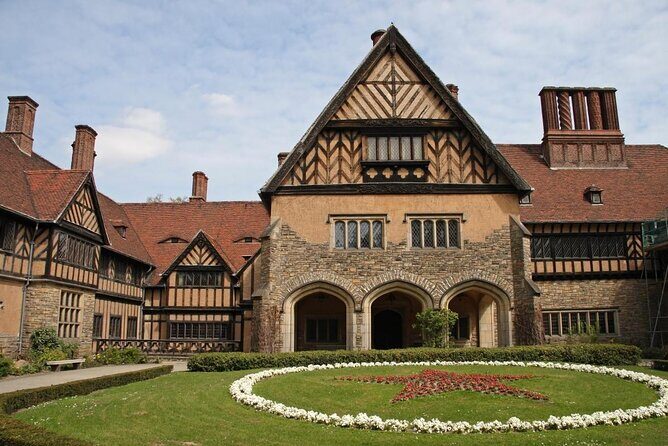
- Cecilienhof Palace gardens at the Potsdam Conference site
- Old Market Square and the debate around rebuilding after WWII
- Bassinplatz, Soviet War cemetery, and Peter and Paul church
- Leistikowstrasse memorial area tied to KGB-era confinement
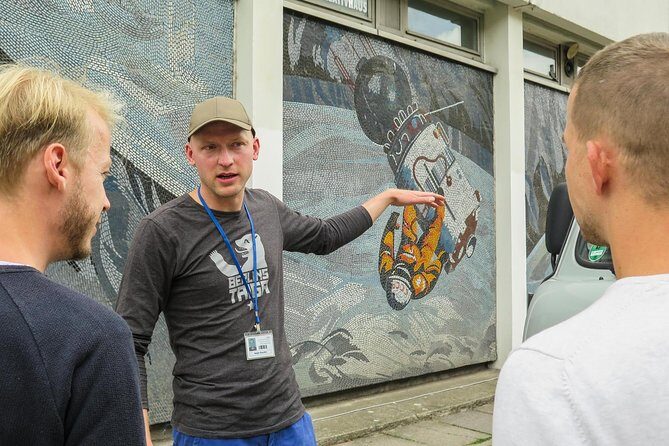
- Kunsthaus Rechenzentrum and its 70-meter socialist mosaic of the space race
Entering Potsdam Through Cold War Eyes (Not Just Postcards)
Potsdam can look calm and elegant, but the city’s 20th-century history cuts right through that calm. This tour is built around that tension: royal palaces and planned squares on one side, and Soviet control and Cold War machinery on the other.
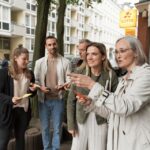
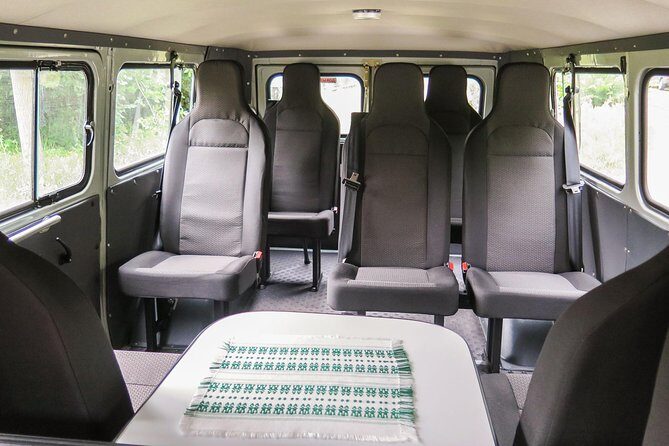
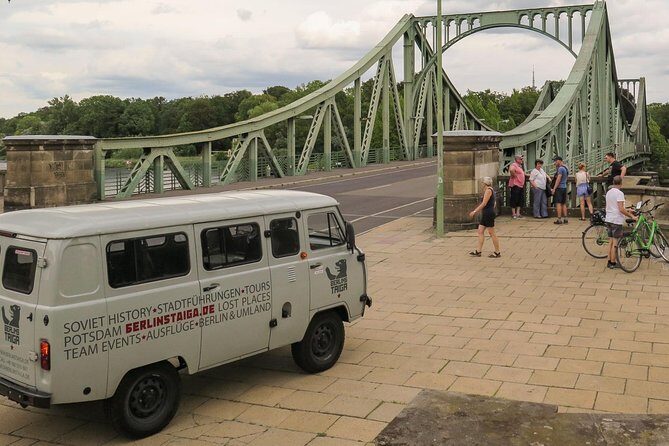
The ride matters. An authentic vintage Russian minibus doesn’t just add charm. It also sets the tone. You’re not floating through the city like a generic bus tour; you’re traveling in a vehicle that feels like part of the era your guide is talking about. Holger’s local perspective gives that talk weight, too. He was born in Potsdam, so the stories come out like lived-in knowledge rather than a script.
And because this is private, the pace is more human. You can slow down, ask something off-topic, or ask the same question twice until it clicks. That matters in Cold War history, where one missing detail can throw off the whole picture.
You can also read our reviews of more city tours in Potsdam

A 3-Hour Route That Works: Tight Stops, Strong Context
The tour runs about 3 hours and loops back to the meeting area. The structure is simple: short walks in key places, plus drive-by segments where Holger explains what you’re seeing and what it meant at the time.
Stop durations are modest—think quick orientation moments rather than all-day wandering. That’s actually a good deal for most visitors, because you get variety without feeling like you’re constantly in transit for hours. The tradeoff is that you won’t be doing slow, deep museum study. You’ll be doing history at street level.
You’ll also use a mobile ticket, and the stops listed for the tour have free admission for what you’re visiting (like outdoor areas and the kinds of access described for each stop). It’s a low-friction way to spend a short afternoon.
Old Market Square: Where Rebuilding Became a Debate
Old Market Square is the kind of place where you can read a city’s scars. The central historical area was destroyed in WWII, and today it’s in reconstruction. That alone makes it worth the quick stop, but the tour goes beyond visuals by focusing on the arguments around what gets rebuilt and how.
What I like about this part is that you don’t just hear a timeline. You hear the tension: reconstruction isn’t neutral. Decisions about urban design can reflect politics, identity, and even whose version of history gets to feel permanent. If you enjoy cities as living systems—with choices, compromises, and disagreements—Old Market Square gives you that angle fast.
At about 15 minutes, you won’t linger long. But that timing works because the stop is meant to set the emotional baseline before you move into more explicitly political sites.
Bassinplatz: Big Squares, Big Meaning
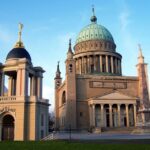
Next comes Bassinplatz, Potsdam’s largest city square. It sits between the Dutch Quarter and the French Quarter, which already hints that Potsdam has always been a crossroads—architectural influences and all.
Here you get two important visual anchors: Peter and Paul church and the Soviet War cemetery. Even if you’re not a cemetery person, the combination is a useful reminder: public squares can be staged spaces where a society honors sacrifice, marks control, or signals what the future should look like.
This stop also gives you a chance to connect the dots between different eras. A square can look like “just a place to meet,” but in a city shaped by regime change, squares become messaging boards. Holger’s explanations are what turn the view into meaning.
The time is again around 15 minutes. I’d treat it as a reset point—photos, a short walk, and time to ask questions if something your guide said earlier sparks curiosity.
Riding Past the Dutch Ensembles: Architecture as a Clue
As the van moves, you pass one of Potsdam’s largest Dutch ensembles outside the Netherlands. That’s the kind of detail many first-time visitors miss because they’re focused on the major palaces or the obvious WWII landmarks.
I like including these “in-between” architecture moments because they keep the city from turning into a single-note history lecture. Potsdam isn’t just a Soviet story, and it’s not only a royal story. It’s also a city of imported styles and planned neighborhoods.
If you’re the type who enjoys noticing building details—roof shapes, street rhythm, and how neighborhoods feel laid out—this passing segment can be surprisingly satisfying. Just remember: it’s a drive-by, so don’t expect long photo sessions unless your guide slows the van down.
You can also read our reviews of more private tours in Potsdam
Schloss Cecilienhof: The Potsdam Conference in the Palace Garden
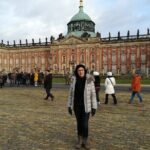
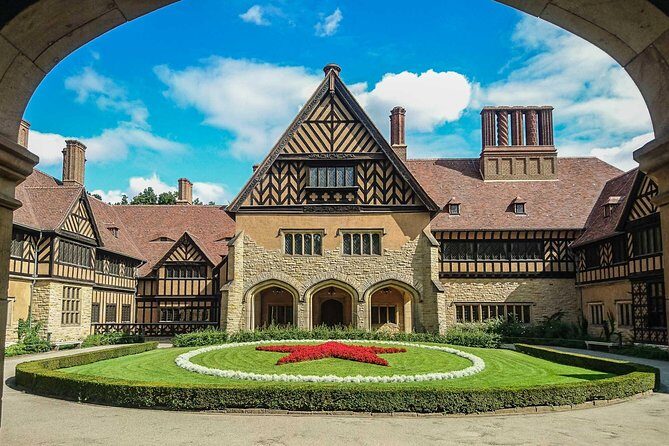
The main gravity of the tour is Schloss Cecilienhof, the historical site of the Potsdam Conference in summer 1945. This is where world leaders shaped the post-war order, and it’s the kind of place where your brain naturally speeds up: you start asking how decisions made here played out on the ground later.
The tour includes a stroll around the garden of the last royal palace of the Hohenzollern family. That garden walk is key because it keeps things human. You’re not stuck staring at plaques. You’re walking through the setting where people came together, where diplomacy happened, and where power decisions were treated like everyday business.
Holger ties the site to the big names you’ve likely seen in history books: U.S. President Truman, British Prime Minister Churchill (later Attlee), and Soviet leader Stalin. That triad matters. When you see the setting, it stops feeling like distant world history and starts feeling like political theater with consequences.
Time here is about 25 minutes. It’s not a long visit, but it’s long enough to feel oriented: you can take in the atmosphere and absorb the context without feeling rushed through the entire site.
Potential drawback: if you’re hoping for extended, quiet time inside buildings or a heavy deep-dive on conference documents, this stop may feel like a preview. Think of it as a focused orientation into the meaning of the place.
Leistikowstrasse Memorial: The Soviet KGB Chapter You Can’t Ignore
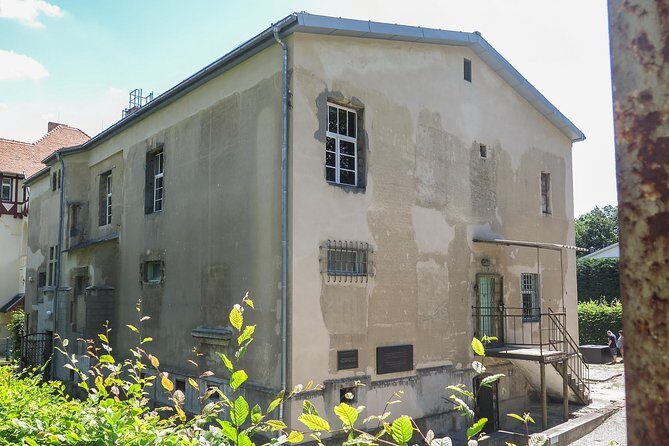
After Cecilienhof, the emotional temperature drops. You get a brief stop at Gedenk- und Begegnungsstatte Leistikowstrasse, described as the once “forbidden city” of Potsdam.
This area connects to the Soviet security apparatus. It was a Soviet KGB district with a remand prison. The word forbidden fits the theme. It suggests access controlled by power, not by public right.
This stop is about 20 minutes, and for many people that’s the hardest part of the tour. Not because it’s sensational, but because it makes the Cold War feel concrete. You’re not just hearing about ideology—you’re standing in the shadow of detention and coercion.
I like how the tour balances the palaces and the human cost. Royal and political spaces can sometimes make the era feel clean. Leistikowstrasse forces the messy reality back into focus.
If you prefer upbeat history tours, this won’t match that mood. But if you want the full story, it’s one of the most important stops on the route.
Kunsthaus Rechenzentrum Potsdam: When Socialist Modernism Met Space-Race Dreams
The last major stop is Kunsthaus Rechenzentrum Potsdam, formerly a huge data center built in socialist modernism. That architectural label matters because it signals a whole way of thinking: technology, ideology, and future promises welded together.
The front features a massive 70-meter socialist mosaic depicting scenes tied to the Cold War space race. The mosaic turns the building into a billboard for ambition. It’s propaganda energy, but it’s also an art object you can actually stand in front of and study.
This stop is short—about 15 minutes—but it gives you a very specific visual takeaway. You leave with a concrete image: the Cold War competing futures, drawn large enough to be seen from far away.
A practical note: since this is centered on the building and mosaic, it’s easier to experience than a museum that requires extended indoor time. You’re not dependent on long queues or slow exhibit reading to get value out of the stop.
Price and Value: Why $30 Can Make Sense Here
At $30 for about 3 hours, the value comes from the private format plus the focus of the route.
Here’s what you’re paying for beyond transportation:
- A local guide (Holger) who was born in Potsdam and can connect locations to lived context
- A route that covers both conference diplomacy and Soviet-era control
- Efficient timing across multiple sites so you don’t burn an entire day
If you were to try to assemble this yourself, you’d likely spend more time planning and you’d miss the interpretive glue that makes the stops click together. The private aspect also reduces friction. You’re not squeezed into a fixed group rhythm while you try to ask questions that matter to your interests.
That said, the price is only a good deal if you’re into meaning, not just sightseeing. If your goal is purely casual photos and you don’t care about WWII and Cold War context, you might feel the tour is too history-heavy for the time you’re spending.
Getting There and Timing Your Day
The tour starts at Bahnhofspassagen Potsdam, Babelsberger Str. 16, 14473 Potsdam and returns there. It’s also described as being near public transportation, which helps if you’re arriving by train.
Pickup is offered. In one example from the guide’s past guests, Holger even arranged a pickup from Berlin, which suggests the service can be flexible depending on where you’re coming from. If you want that option, it’s worth checking your exact pickup details ahead of time so you can plan your day without stress.
Because the tour is about 3 hours, it fits nicely into a half-day window. It’s a strong companion to a longer Potsdam or Berlin itinerary, especially if you’re already thinking about WWII sites, Soviet history, or post-war European politics.
Should You Book the Private Potsdam City Tour in a Vintage Van?
Book it if you want:
- A private tour with room to ask questions
- A route that connects Potsdam’s rebuilding, 1945 conference politics, and Soviet KGB-era reality
- A guide who can turn locations like Cecilienhof and Leistikowstrasse into a coherent story, not scattered facts
Skip it or consider a different option if:
- You prefer slow, museum-grade exploring at a leisurely pace
- You’re coming mainly for casual views and don’t want the Cold War focus
- You need long time inside specific buildings, since the time at each stop is designed to be efficient
If you’re on the fence, this is one of those tours where the format itself is the point. The vintage van plus Holger’s Potsdam-born perspective make the Cold War story feel closer, more human, and easier to understand.
FAQ
How long is the private Potsdam city tour?
The tour lasts about 3 hours.
Is this tour private?
Yes. It’s a private tour, so only your group participates.
Where does the tour start and end?
It starts at Bahnhofspassagen Potsdam, Babelsberger Str. 16, 14473 Potsdam, Germany, and ends back at the meeting point.
What will we see during the tour?
You’ll visit or stop at Old Market Square, Bassinplatz, Schloss Cecilienhof (Potsdam Conference site), Gedenk- und Begegnungsstatte Leistikowstrasse, and Kunsthaus Rechenzentrum Potsdam. You’ll also pass by an important Dutch ensemble.
Is there a mobile ticket?
Yes. The tour includes a mobile ticket.
What’s the cancellation policy?
Cancellation is free up to 24 hours in advance for a full refund. If you cancel within 24 hours of the start time, the amount you paid will not be refunded.