REVIEW · POTSDAM
Potsdam: Palace Tour by Boat
Book on GetYourGuide →Operated by Weisse Flotte Potsdam GmbH · Bookable on GetYourGuide
Potsdam looks different from the water. I love the close-up palace views as the boat glides along the Havel, and I also love the bilingual narration that helps you place each landmark as you pass. It’s a relaxed way to see a lot without hauling yourself between multiple sites on land.
There is one catch: this is a moving sightseeing tour, not a walk-and-explore day. If you want time to linger inside buildings or wander off on your own, you’ll need a different plan alongside this cruise—because you’re mostly watching from the deck as the story rolls past.
In This Review
- Key things to know before you board
- Why a palace cruise makes Potsdam click
- The 90-minute route: Babelsberg to Cecilienhof
- Glienicke Bridge and the former border: the part that hits hardest
- Palaces and parks: what you’re really seeing from the deck
- Getting the best experience on the top deck (and why sound can vary)
- Price and value: why $27 can feel like a bargain
- Onboard comfort, snacks, and simple rules
- Who should book this cruise (and who should pair it)
- Quick tips before you go
- Should you book the Potsdam Palace Tour by Boat?
Key things to know before you board
- A fast 90-minute route that stacks major Potsdam sights into one outing
- Glienicke Bridge views plus the former East–West border context as you pass through
- A ship that’s built for comfort, with clean indoor facilities reported by passengers
- Outdoor deck time is the payoff, especially on mild or overcast afternoons
- Food and drinks are available onboard, so you don’t have to snack beforehand
- Language coverage is solid, with German and English commentary via loudspeakers and optional audio
Why a palace cruise makes Potsdam click
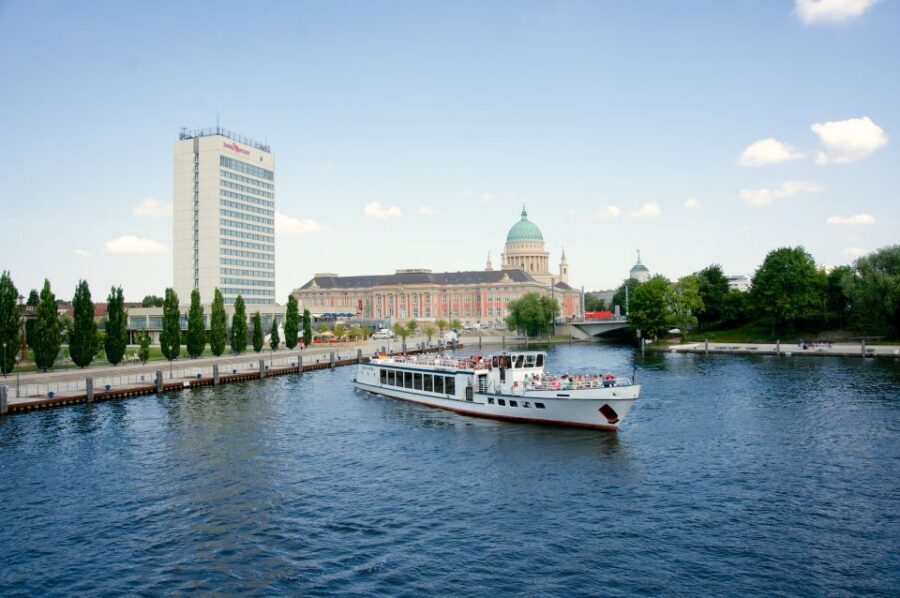
Potsdam can feel like a puzzle at street level. You visit one palace, then you’re told another is just “nearby,” and suddenly you’re doing logistics instead of enjoying the place. On the Havel, the order of things makes more sense.
From the boat, the palaces and formal gardens sit in their intended setting. You don’t just see buildings—you see why rulers picked these spots: the water, the lines of sight, and the way parks connect across the river system. I find that the Havel route turns Potsdam into a single story, with landmarks appearing like scenes in sequence.
And the narration matters. With commentary delivered in German and English, you’re not left guessing what you’re looking at when the boat slides under big structures or glides by islands and park edges.
You can also read our reviews of more boat tours in Potsdam
The 90-minute route: Babelsberg to Cecilienhof
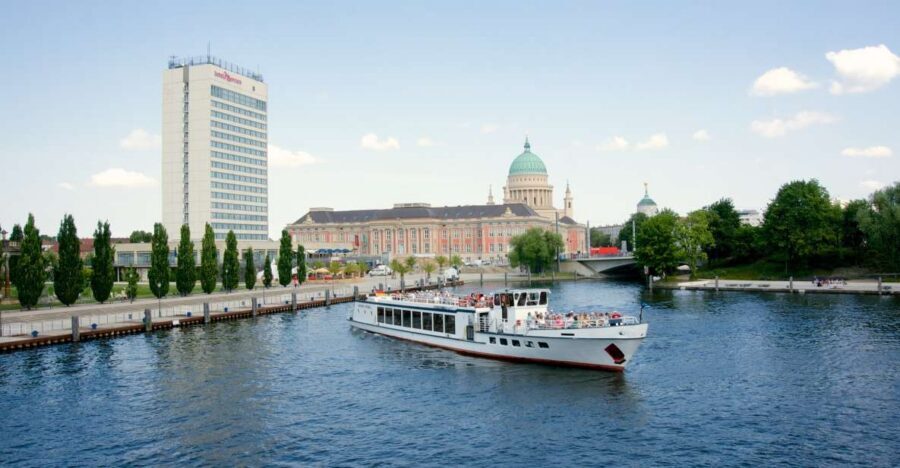
You’ll cover a loop designed for maximum sightseeing in a short time. Expect to see the major Prussian royal landscape from the water, with key moments spaced out so you can keep your attention without burning your day.
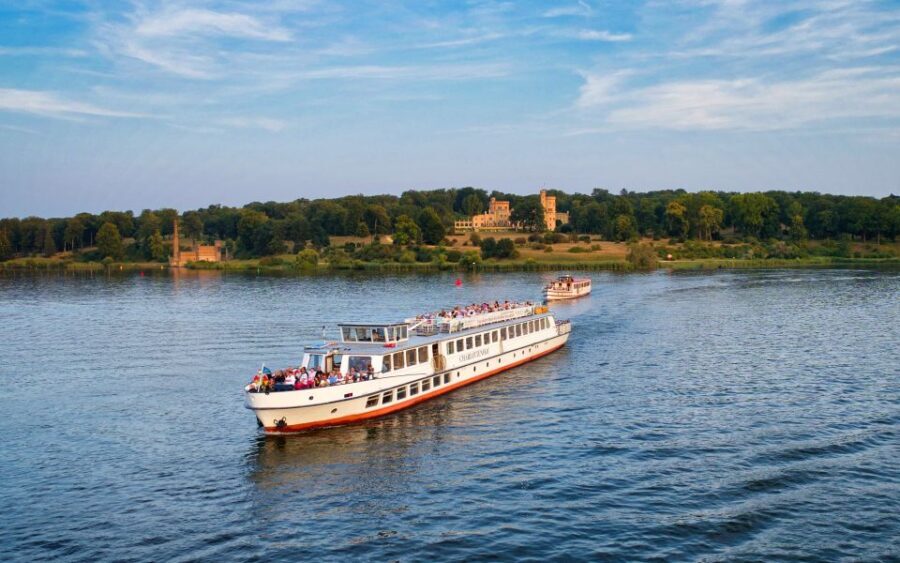
The cruise starts along the Babelsberg Park area. As you approach, you’ll get a view of the imposing palace setting there, plus landmarks like the Flatow Tower and the Hofdamenhaus. These aren’t just pretty backdrops; they help you understand how the royal estates were planned—grand buildings placed within curated park structures, all meant to be viewed from specific viewpoints.
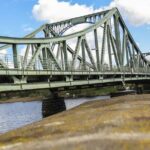
Next comes one of the tour’s most powerful segments: the stretch around the historical border landscape. You’ll pass under the Glienicke Bridge to Jungfernsee, and the narration frames what you’re seeing as part of the former East–West divide. From the deck, the idea lands fast: you’re not watching a museum panel. You’re floating alongside the physical geography that shaped real divisions.
After that, the boat turns toward the religious and island highlights. You’ll see the Church of the Redeemer, then Sacrow, and you’ll also pass the fairytale-like Pfaueninsel (Peacock Island). Finally, the cruise moves into the big estate grand finale territory: the New Garden with its marble palace, and then Cecilienhof Palace—the site where the Potsdam Agreement was signed in 1945.
Glienicke Bridge and the former border: the part that hits hardest
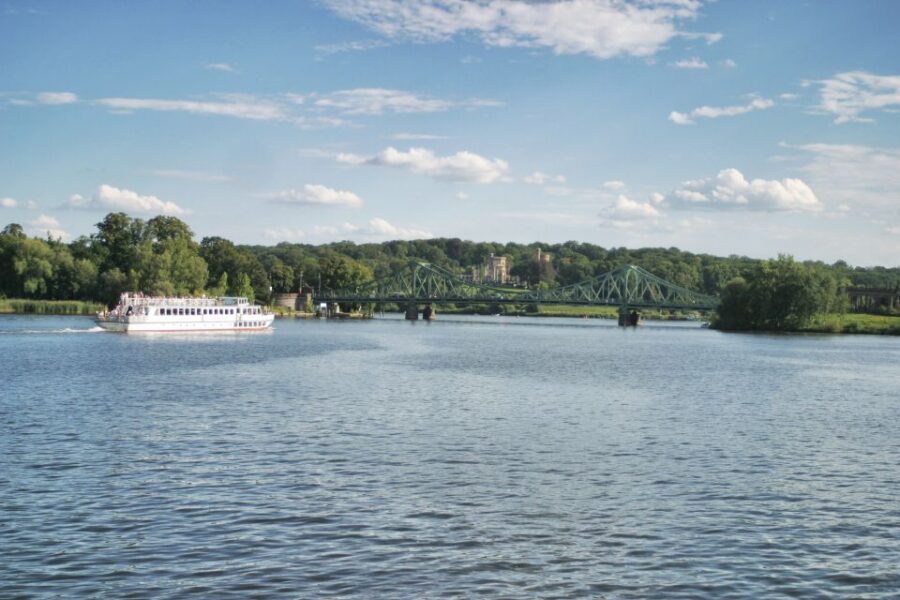
Glienicke Bridge isn’t just a photo stop. It’s a hinge point in modern German history, and the tour uses the boat’s path to make that clear.
When you ride under the bridge and continue along the river toward Jungfernsee, the narration ties together geography and politics. The bridge marks a transition, and being on the water helps you understand how movement, control, and separation worked in real time.
If you like history, this is the moment where the cruise turns from scenery into meaning. You’ll likely notice how the tour doesn’t treat the border as an abstract concept. The boat route puts you in the same corridor that once mattered to people trying to cross, watch, or avoid crossing.
Palaces and parks: what you’re really seeing from the deck
The Havel corridor is basically Potsdam’s greatest hits, but the boat perspective changes how you take them in.
In Babelsberg Park, the palace surroundings read as a whole designed composition—buildings plus park edges plus the way the water frames them. The Flatow Tower and Hofdamenhaus add those “I’ve seen this in postcards” details that become more vivid when you’re actually level with the scene.
Later, when the narration points out Sacrow and the Church of the Redeemer, you’re watching architecture positioned to feel calm, controlled, and intentional. Even if you’ve only read quick background on Potsdam, seeing these structures from the water helps you understand why the rulers’ estates shaped the look of the region.
Then comes Pfaueninsel, where the story shifts from formal garden planning to something closer to a fairytale island mood. You don’t go ashore on this cruise, but the view helps you grasp how the island setting works visually—especially when the boat is moving smoothly.
By the time you reach the New Garden and the marble palace area, and then Cecilienhof Palace, the cruise feels like it’s building toward a crescendo. Cecilienhof is the historical anchor here, and the fact that the tour brings you past it as part of the flow makes the Potsdam Agreement feel less like a separate lesson and more like the end of the route’s larger theme: power, planning, and what comes after.
Getting the best experience on the top deck (and why sound can vary)
The outside deck is where this tour pays off. On a mild day, you’ll probably want to stay outside for most of the cruise to catch uninterrupted views of the palaces, parks, and water angles.
That said, a couple practical points can change your comfort. On warmer afternoons, direct sun can get intense, and in that case an overcast sky can be a gift because it makes the deck more wearable. I’d also plan for a cool layer in shoulder season, since the boat ride can feel brisk even when the city isn’t.
Audio can be a real factor. The narration is provided over loudspeakers in both languages, and passengers have found that sound clarity depends on where you sit. If you struggle to hear the English (or any language), don’t assume the commentary is bad—move a little toward the speakers or shift your seat earlier in the cruise so you don’t miss the key history moments like Glienicke Bridge.
One small comfort note: the boat experience is generally calm and smooth, and the indoor seating is a solid backup if the weather turns. Clean indoor facilities have been mentioned as well, which matters when you’re spending 90 minutes on the water.



Price and value: why $27 can feel like a bargain
At around $27 per person for an approximately 1.5-hour cruise, this is a pretty strong value play for Potsdam. You’re paying for two things at once: transport plus interpretation. You’re also getting a perspective that’s hard to replicate casually on foot.
If you try to assemble a similar mix of landmarks on land, you’d spend time coordinating routes, walking between separated sites, and losing the visual connections between palaces and the river system. On the boat, those connections are built in. The cost becomes less about entrance fees and more about gaining a “big picture” view in a short window.
Add to that the onboard commentary in German and English, and it’s easier to turn the cruise into a meaningful mini-lesson rather than just a sightseeing loop.
Onboard comfort, snacks, and simple rules
This tour doesn’t come with food included, but you’re not going hungry either. Culinary offerings are available on all ships, so you can buy drinks and snacks onboard if you want. That’s handy if your timing doesn’t line up with a proper meal back on land.
You’ll also want to know about two practical policies:
- Dogs are allowed on the palace tour, but they must be on a lead and wearing a muzzle if necessary.
- If you’re traveling with a wheelchair, specific ships are suitable (the MS Schwielowsee and the MS Sanssouci). It’s best to contact the operator so they can match you to the right vessel.
One more comfort detail to keep in mind: passengers have described the boat as modern and clean, which is what you want when you’re taking a short trip and don’t want to worry about basics.
Who should book this cruise (and who should pair it)
This is a strong fit if you’re:
- short on time but want the big Potsdam highlights
- interested in Prussian-era estates and the WWII-era turning point connected to Cecilienhof
- traveling with teens who enjoy scenery but also want the story explained
- visiting with kids who might enjoy staying on a boat and getting explanations in two languages
It’s also a smart choice if you want low-stress planning. You don’t need to map out how to reach each sight. The boat does the connecting.
If you’re the type who wants to go inside every palace or spend a long afternoon exploring gardens on foot, this should be paired with land time. Treat the cruise as the orientation pass, then choose one or two sites to explore in depth on another day.
Quick tips before you go
A few small choices can make the difference between a good cruise and a great one.
- Dress for the deck. Even in mild weather, boat breeze is real. Bring a layer.
- Aim to hear the narration. If you’re on the outside deck and sound feels faint, shift your position early so the English (or German) commentary stays clear during major history moments.
- Plan for photos. Glienicke Bridge and the palace-and-park views look best from the moving angles on the water, so keep your phone ready when the boat slows for key sights.
- If you’re traveling with mobility needs, ask about the specific ship. The MS Schwielowsee and MS Sanssouci are suitable for wheelchairs, but you’ll want the operator to place you correctly.
One more detail: the cruise needs a minimum number of participants (20) to run, so check availability for your travel days.
Should you book the Potsdam Palace Tour by Boat?
Yes, if you want a high-value Potsdam overview without a full day of transit and walking. This cruise is especially good when you like history that you can see in real space—Glienicke Bridge and the former border section are the kind of moments that land quickly from the water.
I wouldn’t book it as your only Potsdam plan if your heart is set on long indoor visits or spending lots of time in gardens on foot. Think of the boat as the fast, beautiful framework.
If you’re weighing weather worries, don’t overthink it. The experience can still work even on rainy days, because the route is designed around moving views, not shoreland wandering.
If you’re in Potsdam for a short stop or you want a simple, informative way to see multiple royal-era highlights, this is an easy “yes” to add to your itinerary.