REVIEW · POTSDAM
In the Forbidden City – Potsdam Walking Tour
Book on Viator →Operated by Berlins Taiga · Bookable on Viator
Cold War Potsdam is a story you can walk. This small-group tour strings together WWII and the Cold War through street-level stops like Glienicke Bridge and Cecilienhof, so the era makes sense fast. I love the way the route connects world-shaping decisions to very real places. I also like that you focus on Soviet-era sites, including the former KGB prison area.
One thing to consider: you only see Schloss Cecilienhof from the outside, not inside. If you want museum-style rooms and interiors, plan for this tour to be more viewing and storytelling than hands-on entry.
In This Review
- Key Points You’ll Remember
- Why Soviet-Era Potsdam Is Worth a Walking Tour
- Price and Value: What You Pay for (and What You Don’t)
- Getting Oriented: Berlin Start, Potsdam End
- Stop 1: Glienicke Bridge and the Real Bridge of Spies
- Stop 2: Schwanenallee and the Wall’s Effect on Daily Life
- Stop 3: Schloss Cecilienhof Outside the Palace Where WWII Ended
- Stop 4: Neuer Garten UNESCO and How Borders Cut Through Beauty
- Stop 5: Leistikowstraße and the Soviet Military Town No. 7 (KGB Prison Area)
- How the Timing Feels Over 2.5 Hours
- Guides and Group Size: Why This Works Better Than DIY
- Who This Tour Suits Best (and Who Might Prefer Something Else)
- Should You Book the Forbidden City in Potsdam Walking Tour?
- FAQ
- FAQ
- How long is the Forbidden City in Potsdam Walking Tour?
- Where does the tour start and end?
- What time does the tour begin?
- How big is the group?
- Do I need to buy separate tickets for the stops?
- Is the tour indoors or outdoors?
- What level of fitness do I need?
- Is the ticket mobile?
Key Points You’ll Remember
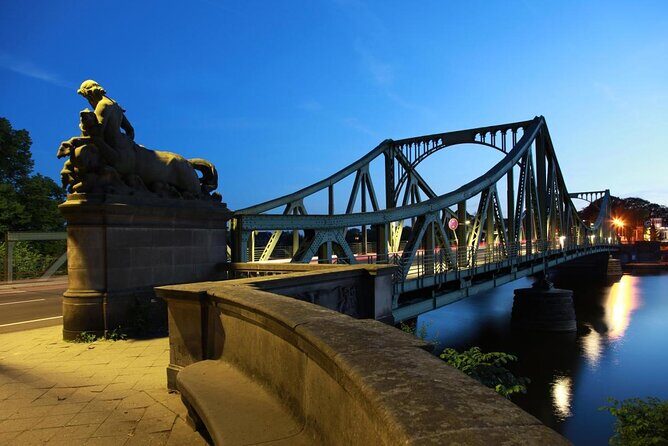
- Glienicke Bridge (Bridge of Spies): CIA and KGB agent exchanges happened here during the Cold War
- Schloss Cecilienhof Conference: you’ll see the palace where Truman, Churchill, and Stalin met in 1945
- UNESCO Neuer Garten: learn how Berlin Wall border fortifications ran through the park
- Leistikowstrasse area (Soviet Military Town No. 7): the former KGB prison was nearby, part of a restricted world for decades
- Stops paced for learning: about 15 to 45 minutes at each highlight, in a route built for walking
- Good value for the sites: the tour price covers a guided walk; the listed stops have free admission
Why Soviet-Era Potsdam Is Worth a Walking Tour
Potsdam gets a lot of attention for castles and gardens, and that part is real. But the city also sat on the sharp edge of 20th-century power—WWII aftermath, Berlin division, and the Cold War’s spy games. This tour gives you the missing layer, without making you hunt for context on your own.
I like walking tours most when they turn geography into meaning. Here, each stop is a piece of the puzzle: borders, negotiations, and surveillance. Even if history isn’t your main travel interest, you’ll still get a clear timeline because the guide keeps pointing out what changed—and what didn’t.
You’ll also enjoy that the pace is friendly. With a maximum of 15 people, you’re not packed like a tour bus in a trench coat. You can hear the guide, ask questions, and actually look at what you came to see.
You can also read our reviews of more walking tours in Potsdam

Price and Value: What You Pay for (and What You Don’t)
At $23.72 per person, this isn’t the kind of tour where the ticket price feels inflated. The value is in the guided interpretation: the route is designed around major WWII and Cold War landmarks, and the tour includes a local guide plus a professional guide.
Another strong value point: the scheduled stops are listed as free admission. That matters in practice. You’re paying for the thinking, not a stack of entrance fees.
The one trade-off is simple: transportation to and from attractions isn’t included. So you’ll want to plan how you get to the start point in Berlin and how you’ll reach your next stop after the tour ends in Potsdam.
Getting Oriented: Berlin Start, Potsdam End
The walk starts at Glienicker Brücke (Königstraße, 14467 Berlin) at 1:15 pm, and it ends near Leistikowstraße 1, 14469 Potsdam. That “start in Berlin, finish in Potsdam” setup is exactly why this route works: you’re tracing the border-era story as it moved across the region.
It’s also why you should plan your day with a little flexibility. Your end point is close to bus 603 (stop Langhansstraße/ Große Weinmeisterstraße), which can help you roll back toward Potsdam city center. If you plan to go straight somewhere else after the tour, you’ll save time by checking your route in advance.
No need to overpack for this one—bring a day bag, water if you like, and a layer. The tour runs in all weather, so you’re not betting your day on sunshine.
Stop 1: Glienicke Bridge and the Real Bridge of Spies
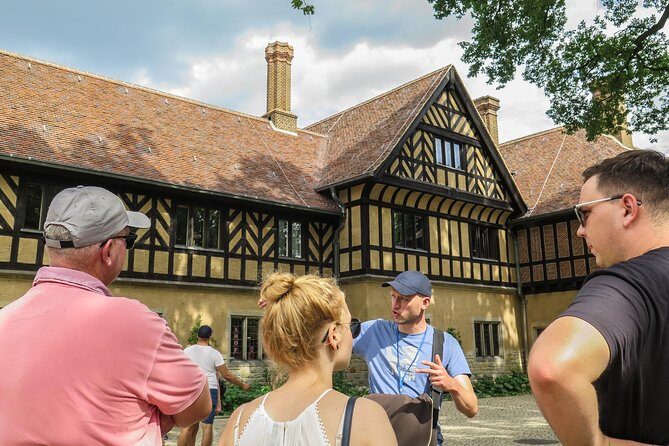
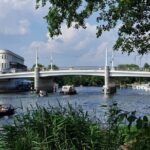
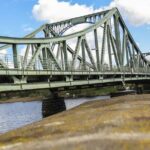
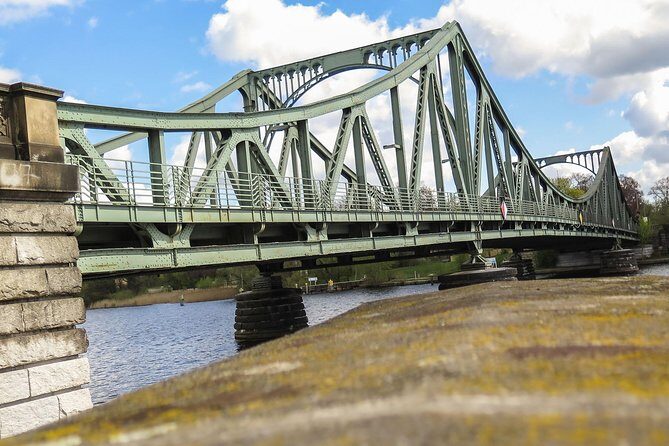
Glienicke Bridge is famous for a reason: during the Cold War, it became a stage for spy exchanges. This is the “Bridge of Spies” most people have heard about, and it’s directly tied to CIA and KGB agent swaps.
Here’s what makes this stop click when you’re standing there. The bridge wasn’t just a bridge—it was a border. It marked the line between the GDR and the American sector in West Berlin, and before the Berlin Wall fell, the area was heavily secured as a restricted zone. When you look at it in that context, you start to understand why exchanges like these carried so much symbolic weight.
You’ll also hear that the Hollywood film Bridge of Spies was shot here. That connection helps you “see” the Cold War atmosphere without needing a special effect budget.
Practical note: the stop is about 15 minutes, so keep your eyes open early. If you wait until the last minute to look around, you’ll feel rushed. This is one of those places where a few minutes of quiet watching is worth it.
Stop 2: Schwanenallee and the Wall’s Effect on Daily Life
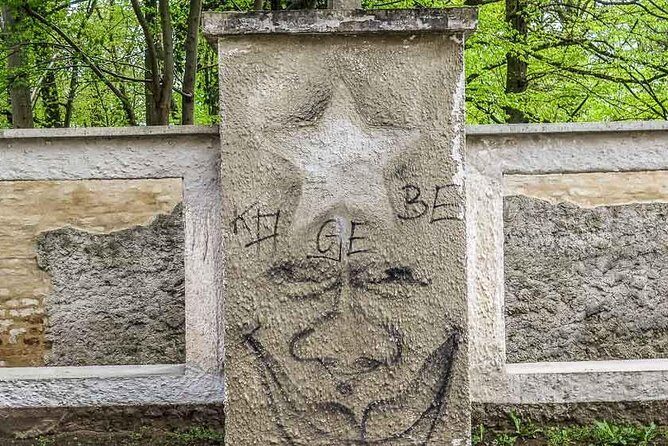
Next up is Schwanenallee, a place where geography and fear collided. This street was once located directly next to the Berlin Wall, which shielded the houses from the riverbank.
That detail sounds small, but it helps you understand life under a border system. When something separates people, it also changes what’s “safe” and what’s “exposed.” The Wall wasn’t only a political symbol; it reshaped everyday space and sight lines.
Today, those villas are in a prime location. That contrast is part of the lesson. Standing here, you can feel the shift from restriction to normal life—without the city pretending the past didn’t happen.
The stop is also listed at about 15 minutes, so you’ll move on while the image is still fresh.
You can also read our reviews of more city tours in Potsdam

Stop 3: Schloss Cecilienhof Outside the Palace Where WWII Ended
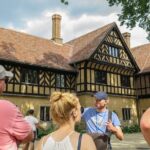
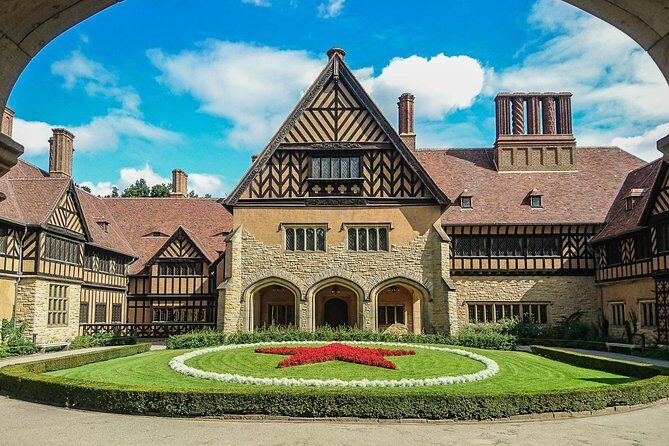
Now you get to the big name: Schloss Cecilienhof, the historic venue of the Potsdam Conference in summer 1945. This is where Harry S. Truman, Winston Churchill, and Josef Stalin met—leaders whose choices helped shape Europe’s next decades.
You won’t enter the palace. You’ll see it from the outside, which is honestly fine. Cecilienhof is visually distinctive enough that the exterior gives you a clear sense of place. And the guide’s focus keeps you from treating it like a pretty building. You’ll understand why this conference mattered as an endpoint for WWII and a starting point for the Cold War.
Why outside viewing can be a good thing: it keeps the story anchored to the setting. Indoors, it’s easy to get pulled into exhibits. Outside, you stay in “this is where decisions were made” mode.
Still, it’s a consideration. If you were hoping for interior rooms and a deeper walk-through of the palace itself, this tour won’t fully satisfy that. Think of it as a guided route that points you to the historic core, not as a palace ticket with galleries.
Stop 4: Neuer Garten UNESCO and How Borders Cut Through Beauty
Neuer Garten is a UNESCO World Heritage site, but it also has a side most people don’t associate with UNESCO: it was long a restricted area. The Berlin Wall’s border fortifications ran through the park alongside its historic palaces.
That’s the kind of fact that changes how you look at everything. Parks are supposed to feel open. In this place, the fortifications turned leisure space into controlled territory. The tour’s value is that it doesn’t let you admire the setting without acknowledging the restrictions that once defined it.
This stop is about 30 minutes, which is a good length. You’ll have time to let the setting register, and then time to connect it to the political story the guide is telling.
Possible drawback here is more about your expectations than the tour. If you’re coming only for gardens and photos, you might feel torn between sightseeing and absorbing facts. But if you like your travel with context, this is a win.
Stop 5: Leistikowstraße and the Soviet Military Town No. 7 (KGB Prison Area)
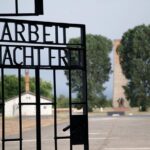
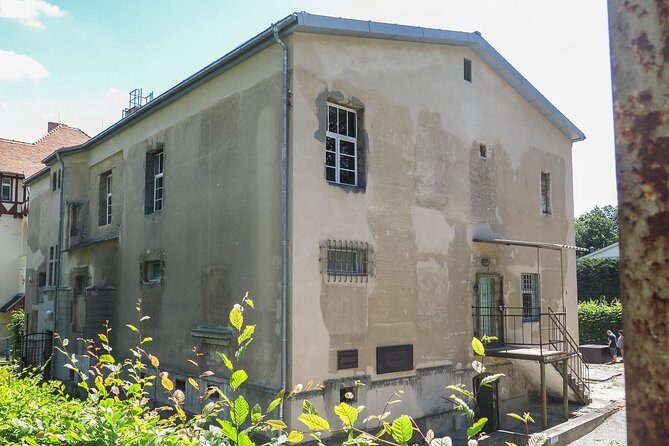
The final stop is the one that lands hardest. You’ll visit the Gedenk- und Begegnungsstatte Leistikowstrasse area, connected to the Soviet military town No. 7—described as a forbidden city in the tour context.
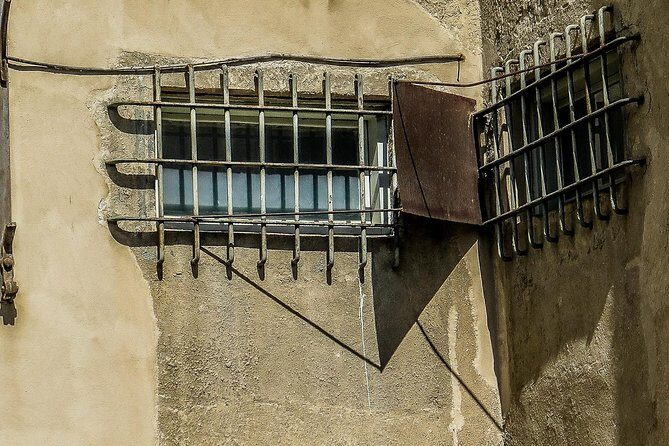
This is one of the most important intelligence sites of the Soviets during the Cold War. The former KGB prison is located in this area. And unlike some “history points” that feel like a plaque, this one is about neighborhood and environment—how a restricted zone shaped daily life and human choices.
The tour focuses on discovering the neighborhood, which for almost 50 years was a Soviet restricted area in the middle of Potsdam. That’s a long time. When you think about it, you realize how quickly a city can normalize something that should never feel normal.
This stop runs about 45 minutes, so it’s your most time-intensive segment. It also tends to be the most meaningful. If you want one part of the walk that gives you a clear emotional and intellectual takeaway, this is it.
How the Timing Feels Over 2.5 Hours
The full tour is roughly 2 hours 30 minutes, and the time is divided across five major moments: short photo-and-context stops early, then longer site storytelling at the palace area and especially the forbidden city/KGB prison zone.
Because stops are scheduled around 15 to 45 minutes, you won’t feel like you’re only walking with a stream of facts. You’ll stop, look, hear what matters, then move again. That structure is great for keeping attention in a subject that can otherwise feel heavy.
Fitness-wise, the tour asks for moderate physical fitness, and it’s still a walking itinerary. If you’re comfortable strolling for about a couple hours with occasional pauses, you should be fine.
Also, you should dress for weather. The tour operates in all weather conditions, which means you’ll get the full experience whether it’s sunny or not.
Guides and Group Size: Why This Works Better Than DIY
A lot of Cold War sites in this region are easy to spot. The hard part is understanding them as one connected story. That’s where the guide earns the ticket price.
This tour runs with a maximum of 15 travelers, which is a sweet spot for learning. In a smaller group, your guide can pace the discussion and keep questions from being shuffled to the back of the line. With a strong guide, you also avoid the common problem of reading random facts and never tying them into a timeline.
Even if you come in with zero background, you’ll leave with a coherent understanding: the Cold War wasn’t just ideology. It was borders on bridges, fortified lines in parks, and restricted neighborhoods in the middle of real cities.
Who This Tour Suits Best (and Who Might Prefer Something Else)
This is ideal if you:
- Want Potsdam beyond gardens and palaces
- Like WWII-to-Cold-War connections you can physically trace
- Enjoy walking tours where each stop has a clear takeaway
- Want to see Cold War landmark types: border crossing, negotiation site, and intelligence-restricted zone
It may not be ideal if you:
- Only want indoor attractions and museum rooms
- Don’t enjoy walking in all weather
- Prefer a more traditional castle-and-garden pacing
There’s also a “mindset” match. This tour asks you to hold two images at once: beautiful palace and restricted world. If that doesn’t sound appealing, you might want a different Potsdam tour. If it does, you’re in the right place.
Should You Book the Forbidden City in Potsdam Walking Tour?
I’d book it if your travel style is about context. For $23.72, you get a tight, guided route through major Cold War and WWII landmarks, plus the chance to understand why Potsdam mattered. The best reason to go is the storyline you can follow on foot: from the Bridge of Spies to the Potsdam Conference site, through UNESCO park restrictions, and ending in the Soviet Military Town area tied to a former KGB prison.
Book it when you can spare the time and you’re okay with outside viewing (especially at Cecilienhof). If you’re craving a guided explanation more than interior tickets, this is a strong fit.
FAQ
FAQ
How long is the Forbidden City in Potsdam Walking Tour?
It’s approximately 2 hours and 30 minutes.
Where does the tour start and end?
It starts at Glienicker Brücke (Königstraße, 14467 Berlin) and ends near Leistikowstraße 1 (Memorial and Meeting Place Leistikow Street, 14469 Potsdam).
What time does the tour begin?
The start time is 1:15 pm.
How big is the group?
The tour has a maximum of 15 travelers.
Do I need to buy separate tickets for the stops?
The listed stops show free admission, and the tour includes the guide. Transportation to and from the sites is not included.
Is the tour indoors or outdoors?
It’s a walking tour with outdoor stops, and it operates in all weather conditions.
What level of fitness do I need?
A moderate physical fitness level is recommended.
Is the ticket mobile?
Yes, it features a mobile ticket.