REVIEW · MUNICH
Mystic Munich – Sagas and Legends of the Old Town
Book on GetYourGuide →Operated by DIE STADTSPÜRER® · Bookable on GetYourGuide
Munich has a darker side, if you listen. This 105-minute walk through Old Town Munich turns familiar stops into legends and legends’ real-world clues, so you understand the city’s symbols instead of just seeing them. I like that the route is efficient—Marienplatz and the major church and town-hall landmarks stay in play—and I like how the stories are told with enough specificity that you can picture what the sculptures and facades are actually showing.
One consideration: if the group is larger and you’re moving through dense streets at dusk, you’ll want to keep close so you don’t lose the guide in the crowds.
In This Review
- Key highlights worth your time
- Meeting at Marienplatz: Toy Museum entrance under the Old Town Hall
- A tight 105-minute “myths-at-dusk” route in Munich’s center
- New Town Hall and the Lindwurm: why Munich keeps a dragon on display
- Old Town landmarks you’ll actually understand: Marienplatz and the town-halls
- Marian Column and Putti: the monsters story you can see in stone
- Old Peter and the devil-stopper tale: how legends explain a church’s power
- St. Onuphrius: the quick stop that makes you look back
- Old Court and Frauenkirche: ending with scale and symbolism
- Tour value and price: $26 for a guided “how to look” lesson
- Who should book Mystic Munich (and who might want a different style)
- Should you book Mystic Munich?
- FAQ
- How long is the Mystic Munich tour?
- Where does the tour meet?
- What language is the tour in?
- How much does it cost?
- Is there free cancellation?
- Is the tour wheelchair accessible?
Key highlights worth your time
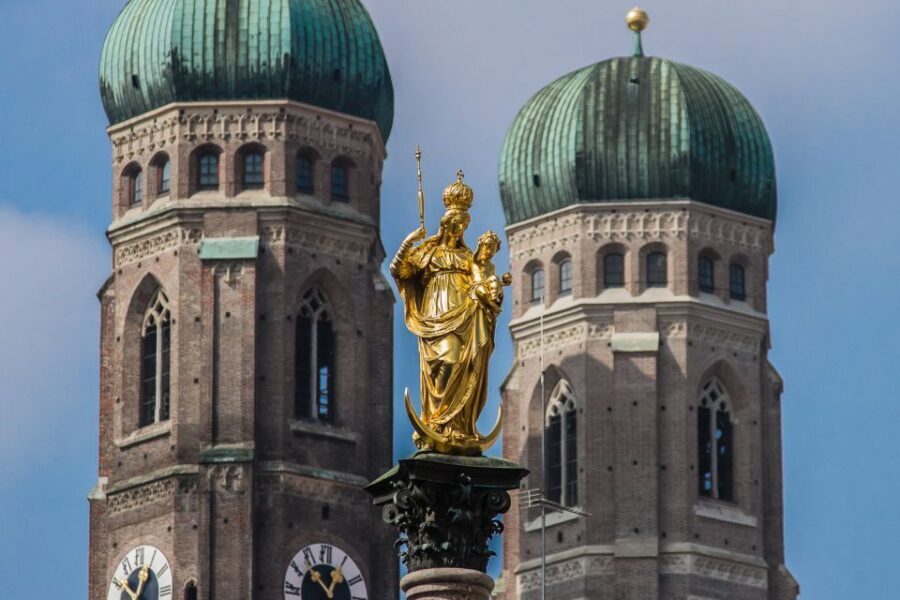
- Lindwurm at the New Town Hall: why Munich uses a monster-shaped reminder instead of a simple decoration
- Marian Column + Putti’s fight: the “myth” links to the figures and scenes you can look at up close
- Old Peter and the devil-stopper story: a dramatic legend that explains how people talked about this church
- St. Onuphrius eye-contact moment: a quick stop that makes you pay attention in a different way
- Frauenkirche and the Old Court area: the tour ends with big Munich visuals, not just small plaques
Meeting at Marienplatz: Toy Museum entrance under the Old Town Hall
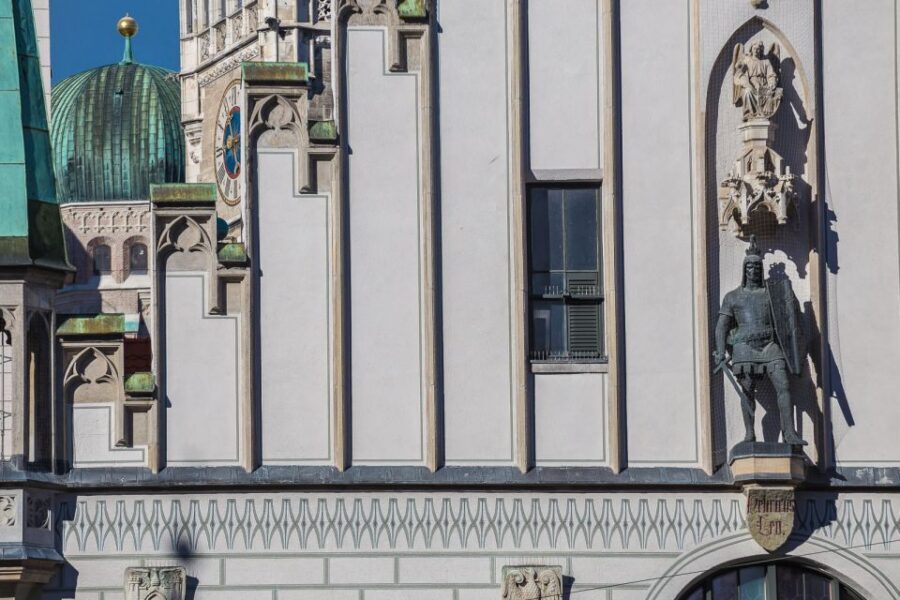
You’ll start at Marienplatz 15, right in front of the entrance of the Toy Museum (the entrance is under the old town hall between Marienplatz and Tal). It’s a smart meeting point because Marienplatz is the city’s main stage—easy to orient yourself even before the stories begin.
If you’re coming early, I’d use the time to check your landmark awareness. Look at where Marienplatz opens up, and notice the flow of pedestrian streets. When the tour starts, you’ll spend less time scanning the map and more time listening to what the guide points out.
Also: if you’re not a big fan of cold feet, plan for it. One of the best things about this tour is the dusk vibe, but dusk in Munich can mean chilly air and slower walking, so warm layers help you enjoy the mood instead of hurrying through it.
You can also read our reviews of more tours and experiences in Munich.



A tight 105-minute “myths-at-dusk” route in Munich’s center
This is a short tour on purpose. At about 105 minutes, you’ll get a focused hit of Old Town sights without the day-long “stand here, then stand there” routine.
The tour is built around the idea that legends feel different at dusk. That matters because so many Munich landmarks are all about faces, angles, and stone details—things you can actually see better when the lighting shifts. You’re not just passing by the big names; you’re learning how to look at them.
You’ll also be walking through an area where crowds can thicken quickly. Stay close, and keep an eye on the guide’s position. If you tend to wander to take photos, do it in brief bursts and then rejoin. This one works best when the group movement stays tight.
New Town Hall and the Lindwurm: why Munich keeps a dragon on display
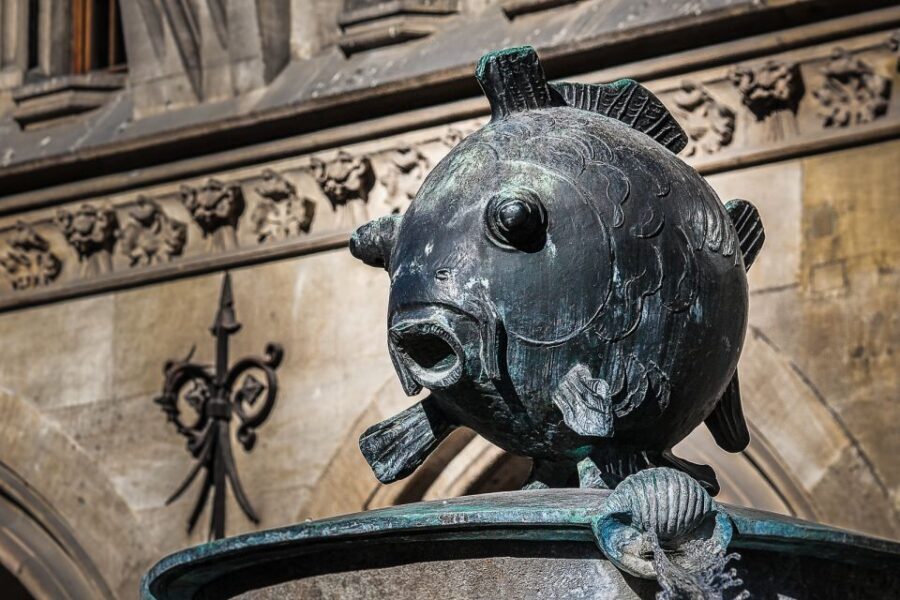
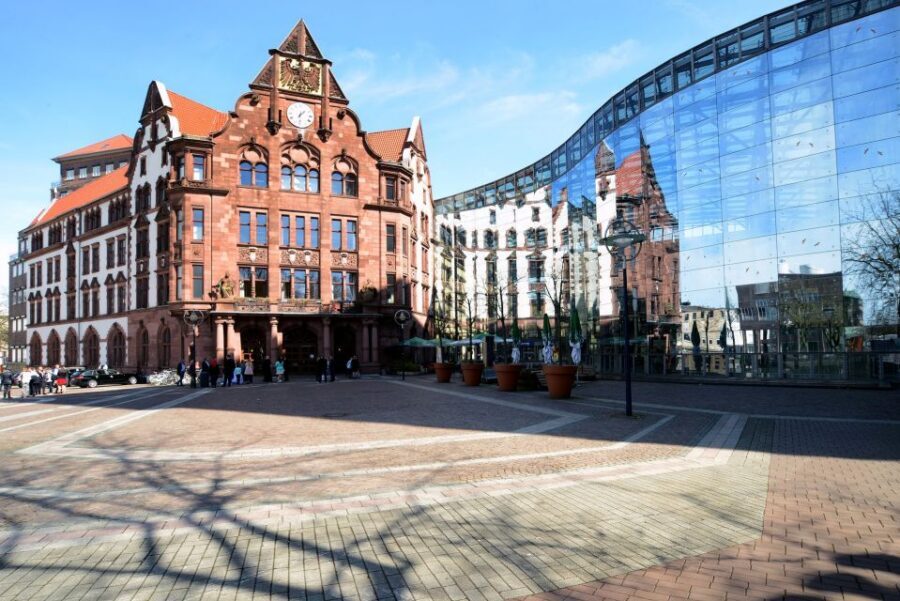
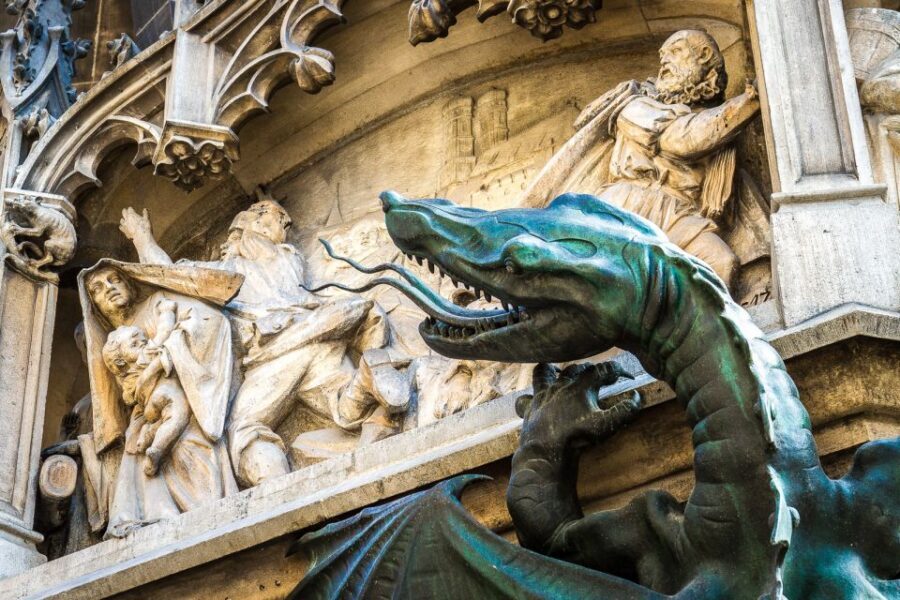
One of the most memorable parts of this tour is the focus on the Lindwurm at the New Town Hall. The Lindwurm legend gives you a way to read the building as more than architecture. It’s Munich using a myth-shaped symbol to talk about identity—what’s dangerous, what’s protected, and what the city wants you to remember.
When you’re learning the story, look at the monster imagery as if it’s part of a public message. Legends like this aren’t random spooky decoration. They usually reflect how people explained threats and order in a city that grew over generations.
Practical tip: take a few seconds to get your bearings before the guide starts pointing. Once you know where you’re standing in relation to the sculpture, it becomes much easier to follow the explanation.
Old Town landmarks you’ll actually understand: Marienplatz and the town-halls
You’ll spend time around Marienplatz and the town-hall areas, including the Old Town Hall. This is valuable even if you’ve visited before, because it changes your attention. Instead of thinking, I’ve seen this square, you start asking, Why are the figures here? Why does the design look the way it does?
This tour works well for first-timers because it gives structure. It also helps repeat visitors because it adds a “why” layer. In practice, you walk through the same place you’d normally tour, but you learn how the city’s stories attach to the skyline.
And Marienplatz is ideal for this style. It’s the kind of space where monuments sit in full view, so you can connect the legend to what’s right in front of you instead of relying on imagination alone.
Marian Column and Putti: the monsters story you can see in stone
Another highlight is the Marian Column, tied to the legend of the hero Putti and the monsters the hero fought. This is one of those storylines that feels theatrical—until the guide points out the figures and scenes that make it concrete.
Here’s what I like about this stop: it shows you how Munich’s religious and civic world overlap. Marian columns aren’t just religious objects. They often function like public storytelling tools—visual summaries meant to stick in the local mind.
When you’re standing there, don’t rush your photos. First, take in the composition. Then listen for which elements the guide is naming, like specific characters and what they represent. Once you connect those details, the whole column stops being a background landmark and turns into a legend you can read.




Old Peter and the devil-stopper tale: how legends explain a church’s power
You’ll also hear about Old Peter—including the dramatic question of how it was possible to stop the devil from destroying it. This type of legend matters because it tells you how people thought. When a city builds something like a church and makes it central, stories often rise up around it to explain protection, danger, and luck.
So instead of viewing Old Peter as just a “nice old church,” you start seeing it as a focal point for community belief. Even if you don’t treat the legend literally, you learn how much emotion and meaning locals attached to the place.
If you’re the type who likes history facts, you’ll likely appreciate how the guide connects the legend to the reality of the site. If you’re more into atmosphere, this stop still works, because the story gives the building a personality—something you can feel when the street light catches the facade.
St. Onuphrius: the quick stop that makes you look back
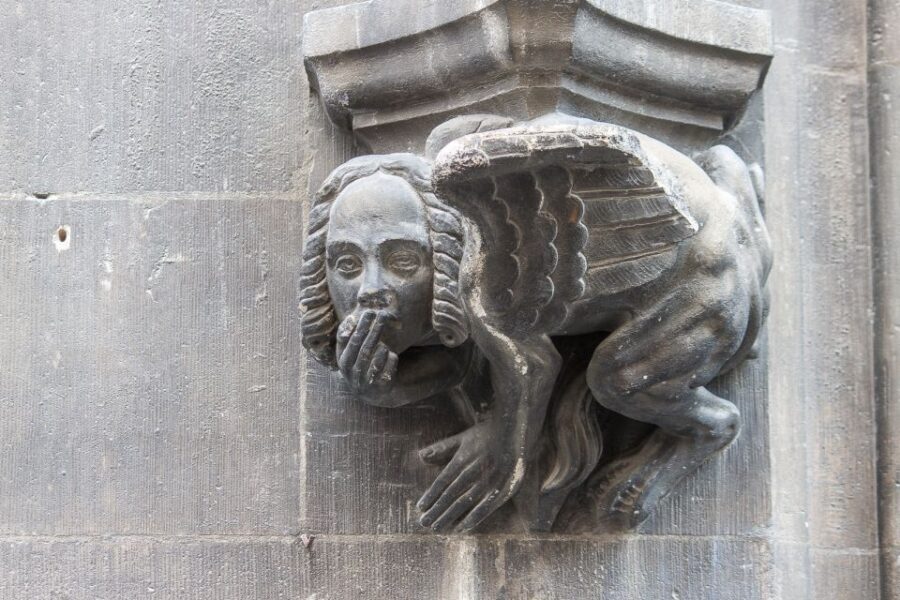
One of the tour’s sharper, stranger-sounding moments is the instruction to look St. Onuphrius straight in the eye. I like stops like this because they don’t require long explanations. They change how you look at what’s usually passed over.
This is also where you’ll feel the “legend perspective” most clearly. The guide isn’t asking you to memorize facts. They’re training your attention. And when you do that, you walk away with a better understanding of why Munich’s streets feel story-rich: the details are there, but you have to notice them.
Don’t rush past it to catch up. This is the kind of moment you’ll remember later because it’s specific and physical—you’re the one doing the looking.
Old Court and Frauenkirche: ending with scale and symbolism
As the tour moves toward Old Court and the Frauenkirche, your perspective widens. Earlier stops teach you to read stone details and public sculptures like story pages. The later landmarks give you scale—big forms that dominate the skyline, where symbols sit on purpose.
This ending phase is practical: it helps you cap the tour by connecting legends to the places that define Munich visually. Even if you plan to revisit on your own later, you’ll know what to look for, and why.
If you want to keep the momentum going after the tour ends, I’d suggest picking one landmark you liked most and spending an extra 10–15 minutes there. The best value comes when you give yourself time to re-check what the guide said—like tracing a figure’s placement or spotting the element you were told to notice.
Tour value and price: $26 for a guided “how to look” lesson
At $26 per person for roughly 105 minutes, this sits in the sweet spot between casual sightseeing and a full-on private guide experience. You’re paying for two things that are hard to get on your own: a tight route through major Old Town points and a story framework that changes your attention span.
The tour is in German with an experienced local guide. That language piece is important. If you speak German comfortably, you’ll likely get the most from the storytelling pacing and the way the guide ties legends to specific figures. If you’re not strong in German, consider whether you’ll still enjoy the atmosphere of the visuals even when you miss some phrasing.
The small gift can be a nice touch, but the real value is the way you leave knowing Munich’s main icons have layers. You stop treating the city like a photo checklist and start treating it like a place where people have been telling the same kinds of stories for centuries—using stone, symbolism, and public space.
Who should book Mystic Munich (and who might want a different style)
This tour is a great match if you:
- like legends but also enjoy seeing the real-world anchors (figures, facades, monuments)
- want an efficient way to cover Marienplatz, Old Peter, and Frauenkirche in a single session
- enjoy tours where the guide’s voice and pacing matter, not just the stop count
It’s less ideal if you:
- strongly prefer tours in English (this one is German)
- want to roam at your own pace instead of following a planned route
- dislike crowds and may have trouble keeping track of your group near dusk
One small note from real-world touring logic: if you do book, wear something that helps you spot yourself easily in a crowd, and keep your contact plan simple. This style of tour works best when the group stays together.
Should you book Mystic Munich?
I’d book it if you want Munich to feel like more than postcard stops. For $26 and about 1.75 hours, you get a concentrated Old Town route plus a story lens that helps you “read” the landmarks instead of just viewing them.
If you’re comfortable with German, you’ll likely enjoy it even more, especially the way the guide connects the Lindwurm, Putti on the Marian Column, and the Old Peter devil legend to what you can see in front of you. If you’re not confident with German, you can still enjoy the visuals—but your best odds come when you’re able to follow most of what’s being said.
FAQ
How long is the Mystic Munich tour?
The tour lasts about 105 minutes.
Where does the tour meet?
Meet at Marienplatz 15, in front of the Toy Museum entrance (the entrance is under the old town hall between Marienplatz and Tal).
What language is the tour in?
The live tour guide speaks German.
How much does it cost?
The price listed is $26 per person.
Is there free cancellation?
Yes. You can cancel up to 24 hours in advance for a full refund.
Is the tour wheelchair accessible?
Yes, it is wheelchair accessible.