REVIEW · MUNICH
Munich: Walking Tour Old Town 3D VR Tour in GERMAN
Book on GetYourGuide →Operated by Weis(s)er Stadtvogel GmbH · Bookable on GetYourGuide
You walk, then you time-travel in 3D. This Old Town experience in Munich uses smartphone VR to show Marienplatz in 1570 and again about 300 years later, while a guide connects the scenes to what you see around you. I love the way it puts hard-to-see details on the map—think the grain market setting and the darker side of public life—and I also like how easy it is for friends and family to stay engaged. One thing to consider: the VR setup quality can be inconsistent, and some people find the phone view works better than the glasses.
Meet your guide directly in front of the Orlandohaus at Platzl 4, where they’ll be carrying a big blue bag with the white words Weis(s)er Stadtvogel. This is a German-language, walking-based format with 3D renderings at four key stops across Munich’s Old Town, built for a smooth 2-hour loop.
In This Review
- Key highlights you’ll feel right away
- First meet at Orlandohaus: spotting Weis(s)er Stadtvogel fast
- The VR method: your smartphone becomes the engine
- Marienplatz in two halves: 1570 on the west, then centuries later
- The medieval grain market scene: executions and the disgraceful donkey
- Old town hall in 1870: carriages and old professions in action
- Platzl in 1895: how the area became the Urmünchner place
- Hofbräuhaus past and present: iconic and specific
- Price and value: $37 for the guide + VR experience
- What this tour is best for (and what it might not be)
- Small details that can make or break your experience
- Should you book this Munich 3D VR Old Town tour?
- FAQ
- How long is the Munich Old Town 3D VR walking tour?
- Is the tour guided?
- What language is the tour in?
- Where do I meet the guide?
- What should I bring?
- Do I need to download an app?
- What is included in the price?
- What is not included?
- Is the tour wheelchair accessible?
- What part of Munich will the VR focus on?
Key highlights you’ll feel right away
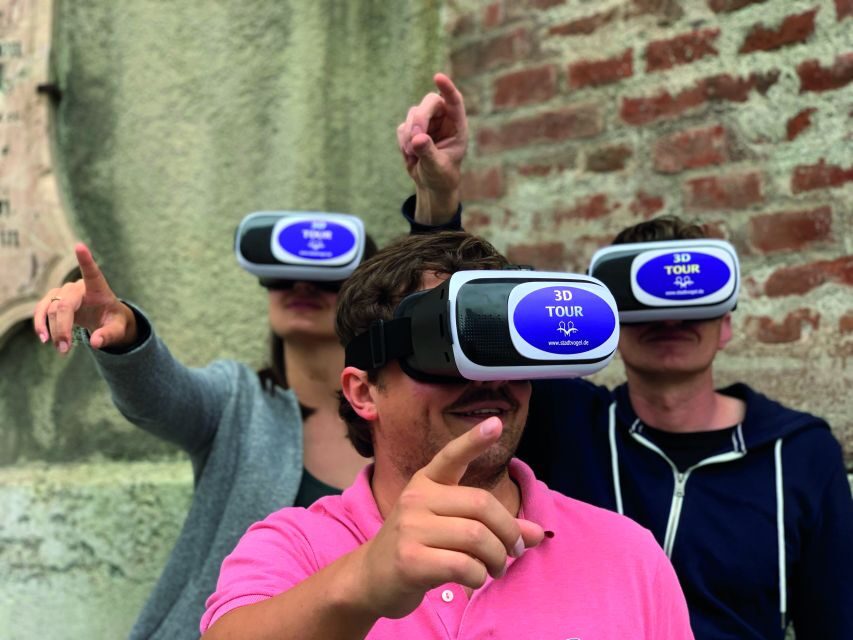
- Marienplatz time-split (1570 vs about 300 years later) so you can compare two eras on the same square
- Execution-era and street-life details tied to what’s under your feet in the medieval grain market
- Platzl surprises in 1895 plus how the area evolved into what locals call the Urmünchner place
- Hofbräuhaus past and present brought into the story, not just served as a photo-op
- Smartphone-based app + VR glasses built into the experience, so you control the view you get
First meet at Orlandohaus: spotting Weis(s)er Stadtvogel fast
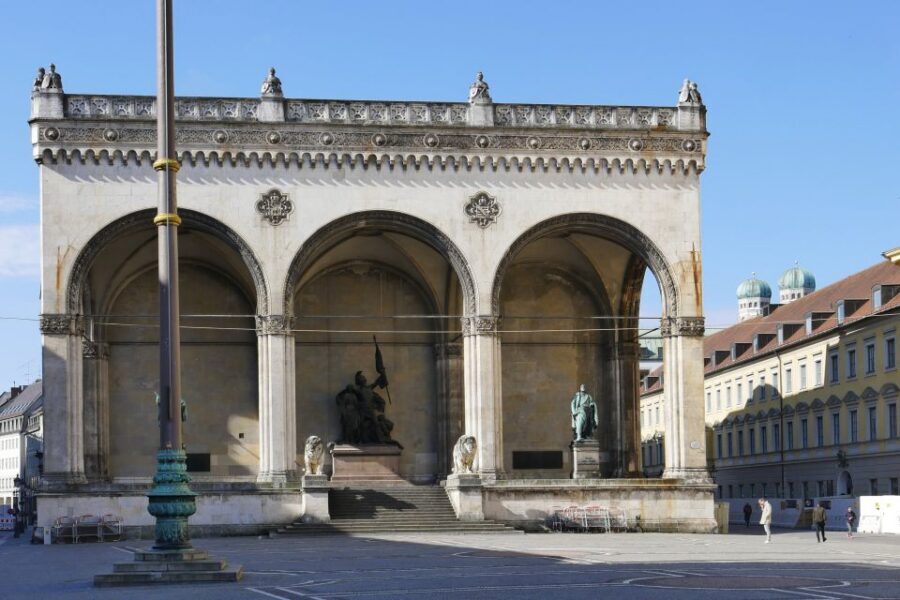
Plan to arrive a few minutes early at Platzl 4, right in front of the Orlandohaus. Your guide is easy to spot: a big blue bag with Weis(s)er Stadtvogel written on it, plus a visible 3D Tour sign. It’s the kind of meeting point that keeps the “where do we go?” stress low.
This tour is German only, and it lasts about 2 hours, so you’ll want to keep your phone charged and ready. You’ll also be using your smartphone during the VR part, not just as a camera.
You can also read our reviews of more walking tours in Munich


The VR method: your smartphone becomes the engine
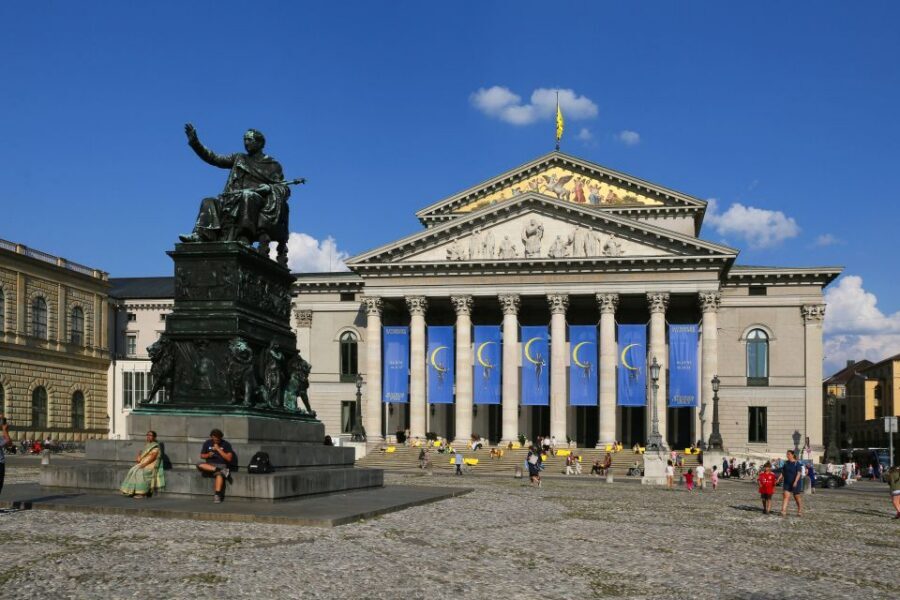
Here’s the core mechanic: at the meeting point, everyone must download an app on their smartphone. That phone then gets inserted into the VR glasses so you can see the 3D renderings that the guide cues during the walk.
That matters because you’re not dealing with a stand-alone headset. You’re managing a phone + app + glasses system the whole time. If your phone battery is low, or your internet access is weak right when the app is needed, the experience can slow down or feel less satisfying.
The upside is that it’s also flexible. When the VR glasses are temperamental, you can often still see the content on your own phone screen. Just treat the tech as part of the adventure, not something guaranteed to be top-tier.
Marienplatz in two halves: 1570 on the west, then centuries later
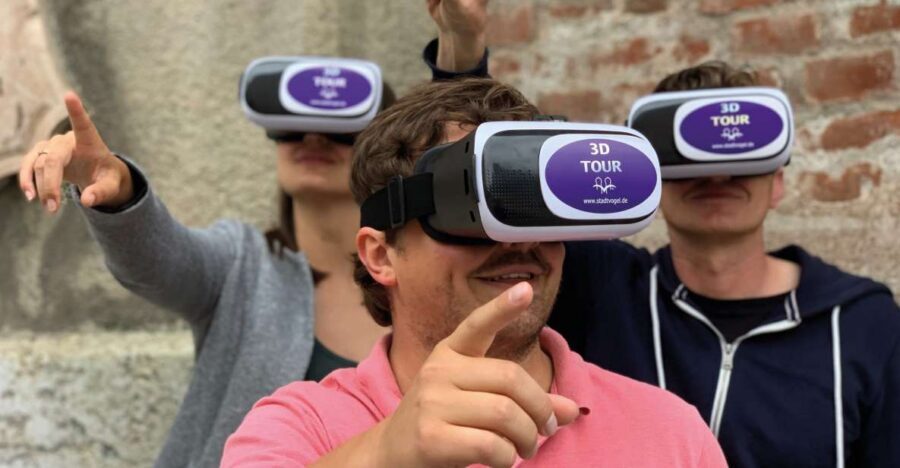
Marienplatz is where the tour really teaches you how to “read” the city. For the sake of the experience, the square is treated like it has two time zones: the western side takes you into 1570, and the eastern side jumps to roughly 300 years later.
I like this structure because it keeps the comparison clean. You’re standing in the same public space, but the story changes based on where you stand. That’s a smarter way to time-travel than trying to hop across town and guess where things used to be.
During the walking route, your guide uses the 3D renderings to show what you might otherwise miss—small details, street-level setups, and the feel of everyday public life at different times.
The medieval grain market scene: executions and the disgraceful donkey
On the 1570 side of Marienplatz, the tour focuses on the medieval grain market atmosphere and how the square functioned beyond shopping. You don’t just hear that Munich was once medieval; you see the square staged in that era through the 3D visuals.
Then the guide adds a difficult but memorable layer: references to gallows used for special executions and something called the disgraceful donkey. This is one of those parts of history that isn’t “pretty,” but it’s useful. It explains how public punishment and public spectacle worked in everyday civic life.
If you’re the type who wants only rosy old-town postcards, this segment may feel heavy. If you like your history honest—signposts to power, rules, and fear—this is where the tour earns its keep.
Old town hall in 1870: carriages and old professions in action
When you shift to the eastern side of Marienplatz, the time jump changes the vibe. Now you’re looking at what the old town hall looked like around 1870, including the first completed part of the hall, plus the street activity around it.
The 3D renderings and guide storytelling add motion to the idea of city life: carriages and old professions are highlighted so you understand what “working in town” meant in a pre-modern rhythm. The point isn’t to memorize every trade. It’s to help you picture the square not as a monument, but as a daily workplace and meeting point.
Practical note: this is the section where the VR experience needs to work well. If your phone/app connection is stable, you’ll enjoy the contrast between centuries much more.



Platzl in 1895: how the area became the Urmünchner place
After Marienplatz, you get to Platzl, where the tour brings in surprises set in 1895. This stop is less about a single building and more about how the neighborhood identity formed.
Your guide explains how Platzl came to be and how it changed into the Urmünchner place you recognize today. That’s a valuable kind of context because it helps you understand why streets feel the way they do, not just what they look like on a map.
This is also a good moment to notice your surroundings as you walk. Even without the VR, you’ll start connecting shapes, angles, and landmarks to the story the guide is building. With the VR, those connections land faster.
Hofbräuhaus past and present: iconic and specific
The tour also includes Hofbräuhaus—both its earlier presence and its current form. This stop plays a nice role as a payoff: you’ve spent time in medieval and 19th-century scenes, and now you end up at one of Munich’s biggest nameplates.
I like that the tour doesn’t treat it as a generic “famous beer hall” stop. It frames Hofbräuhaus as part of the changing city fabric, meaning the area around it developed over time rather than appearing fully formed.
If you’re planning to do Hofbräuhaus in the afternoon, this tour gives you a head start. You’ll look at the building and its place in the square with more context than “it’s famous.”
Price and value: $37 for the guide + VR experience
At $37 per person for about 2 hours, you’re paying for three things: a guided walking story, 3D renderings delivered through VR glasses, and the convenience of having the tech guided by a real person. That’s fair value if you enjoy interpretation and you’re curious how the past maps onto today’s streets.
But you should calibrate expectations about the VR. Some people report the glasses are more like a toy than a serious headset, and some find the content works better on their phone screen. In other words: the tour value is strongest when you’re open to “tech-as-enhancement,” not when you expect cinematic-quality VR motion.
For best value, show up with:
- a charged smartphone
- internet access for the app
- patience while the app + glasses setup clicks into place
If you’re coming only for high-end VR, you may feel let down. If you come for a guided Old Town walk with a fun tech layer, the price makes sense.
What this tour is best for (and what it might not be)
This experience is ideal if you:
- enjoy Munich’s Old Town and want a guided route with clear time periods
- like interactive tech, especially when a guide keeps the story moving
- travel with family or friends who want something more playful than a standard walking tour
- speak German and want a German-led explanation
It’s not the best match if you:
- expect fully immersive, high-definition, moving VR footage
- hate using your phone for core parts of an activity
- get easily frustrated by setup tech
Think of it as a guided “then-and-now” city story, where VR is the spotlight.
Small details that can make or break your experience
A few practical points are worth taking seriously because they influence your enjoyment more than you’d think.
First, keep your phone charged. VR + app use can drain a battery faster than expected, especially while you’re moving outside. Second, have internet access ready at the meeting point, since the app download is part of the flow.
Third, wear comfortable shoes. Even though the VR stops are the centerpiece, you’re still doing a walking tour across Old Town. The tour is only about 2 hours, but you’ll be moving at a city pace.
Finally, be ready for a guide who uses the group setup to keep everyone synced. That’s part of the design.
Should you book this Munich 3D VR Old Town tour?
I’d book it if you want a German-guided walk that turns Munich’s landmarks into a time story: Marienplatz in 1570, then about 300 years later, with Platzl 1895 and Hofbräuhaus past vs present closing the loop. The idea of standing in the same places and seeing different eras staged over the real square is genuinely fun, and the guide role is key to making it click.
Skip it if your main goal is premium VR quality with flawless hardware and motion. The VR glasses and phone setup can be the weak link, and your enjoyment will depend on how well your app + phone cooperate that day.
If you want a techy twist on a classic Old Town route—and you’re comfortable troubleshooting your own phone gear just a bit—this is a solid pick.
FAQ
How long is the Munich Old Town 3D VR walking tour?
The tour lasts about 2 hours.
Is the tour guided?
Yes. It includes a live tour guide.
What language is the tour in?
The tour is in German.
Where do I meet the guide?
Meet directly in front of the Orlandohaus at Platzl 4. The guide carries a big blue bag and a 3D Tour sign.
What should I bring?
You should bring a charged smartphone and plan to have internet access.
Do I need to download an app?
Yes. All participants must download an app onto their smartphone at the meeting point, and then insert the phone into the VR glasses to see the 3D images.
What is included in the price?
Included: a guide, a walking tour, and VR glasses.
What is not included?
Hotel pickup and drop-off, and food and drinks are not included.
Is the tour wheelchair accessible?
Yes, it is wheelchair accessible.
What part of Munich will the VR focus on?
The VR content is designed around four places, including Marienplatz (split into 1570 and about 300 years later), plus Platzl (with surprises set in 1895) and Hofbräuhaus, shown in past and present forms.