REVIEW · MUNICH
Munich: Night Watchman Tour in English
Book on GetYourGuide →Operated by Weis(s)er Stadtvogel GmbH · Bookable on GetYourGuide
A lantern turns Munich’s center into a time machine. This 1.5-hour Night Watchman walk uses medieval costume, a real lantern, and story-driven guiding to make the city feel strangely close to its past.
It’s a good fit if you like history told with attitude, not just dates.
I especially like the theatrical guide performance—you’ll often hear characters and folktales delivered with real humor, sometimes even with a bit of showmanship (guides such as Monique, Hans, and Heinz Taubmann have been mentioned on past departures). I also like that the route focuses on small alleys and hard-to-find corners, so you don’t just repeat the same big-square loop.
One thing to consider: it’s a night walk in cool weather. Even when the stories are great, you’ll be outside for a short stretch, so pack layers and expect a brisk pace near the end if it gets cold.
In This Review
- Key things that make this tour worth your time
- Munich after dark: why the Night Watchman theme works
- Starting at Mary’s Column in the heart of Marienplatz
- The medieval walk through little alleys and secret-feeling corners
- Marienplatz at night: watching the “closed gates” story come alive
- Viktualienmarkt and the everyday city-life angle
- Frauenkirche area: seeing the city’s change through one short walk
- The guide performance: lantern, costume, humor, and Q&A
- How to plan for a 1.5-hour night walk (and not freeze)
- Value: what $22 gets you in Munich’s center
- Who should book, and who might want a different option
- Should you book the Munich Night Watchman tour?
- FAQ
- How long is the Munich Night Watchman tour?
- Where is the meeting point?
- Is the tour offered in English?
- What’s included in the price?
- How much does it cost?
- Is the tour wheelchair accessible?
- Is there free cancellation?
- Can I reserve now and pay later?
- How do I find the starting times?
- What kind of experience will I get?
Key things that make this tour worth your time
- Lantern-led storytelling that turns Marienplatz and nearby lanes into medieval scenes
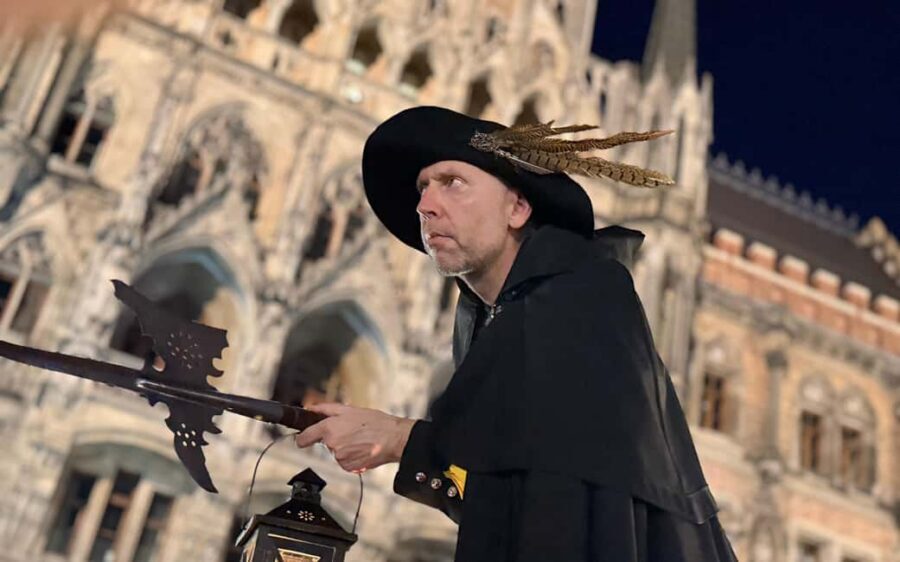
- Medieval costume acting, not just a lecture, with guides bringing humor and energy
- Short, walkable core route that stays around Marienplatz, Viktualienmarkt, and the Frauenkirche area
- Folktales mixed with history, including saints, monks, and everyday beliefs
- Clear “what you’re looking at” explanations, including iconography when relevant
- A local, night-time mood that makes Munich feel smaller, older, and more secret
Munich after dark: why the Night Watchman theme works
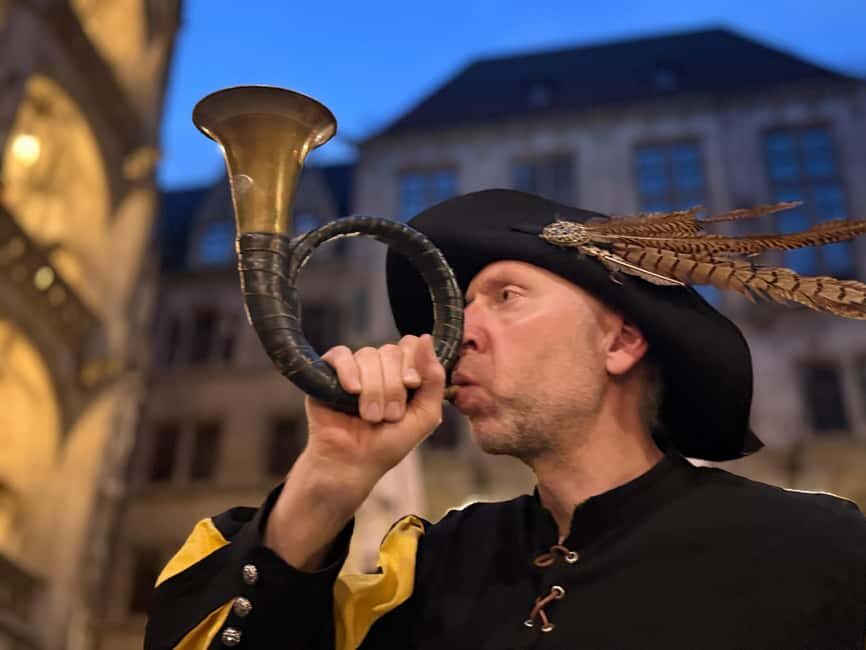
Night walks can turn into either pure sightseeing or pure storytelling. This one does both, and that’s the trick. Munich in the Middle Ages isn’t presented as a textbook subject. Instead, it’s framed like a lived-in world: gates closed, streets dark, and one official figure watching for danger.
The tour’s premise is simple and effective. You’re told to imagine medieval Munich as compact and walled—so close that 800 years ago would feel almost walkable today. From dusk till dawn, the city gates are closed and people stay inside. That turns normal landmarks into “light in the dark” moments, which is why the lantern matters so much. When the only visible glow is the watchman’s light, you start looking at corners differently.
I like that the story sticks to daily life. It’s not only kings and monuments. You’ll hear about the “divine order,” superstitious beliefs, and how people made sense of the world when most couldn’t read or write. Even if you’ve visited Munich before, the tour reframes familiar places as part of a much smaller, more guarded city.
It also has an ending that feels honest. One common comment: if you’re cold, the guide may speed things up at the end. That’s not a problem—it’s practical theater.
You can also read our reviews of more evening experiences in Munich
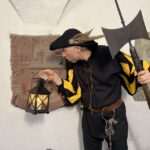
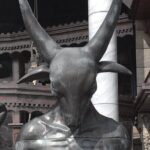

Starting at Mary’s Column in the heart of Marienplatz
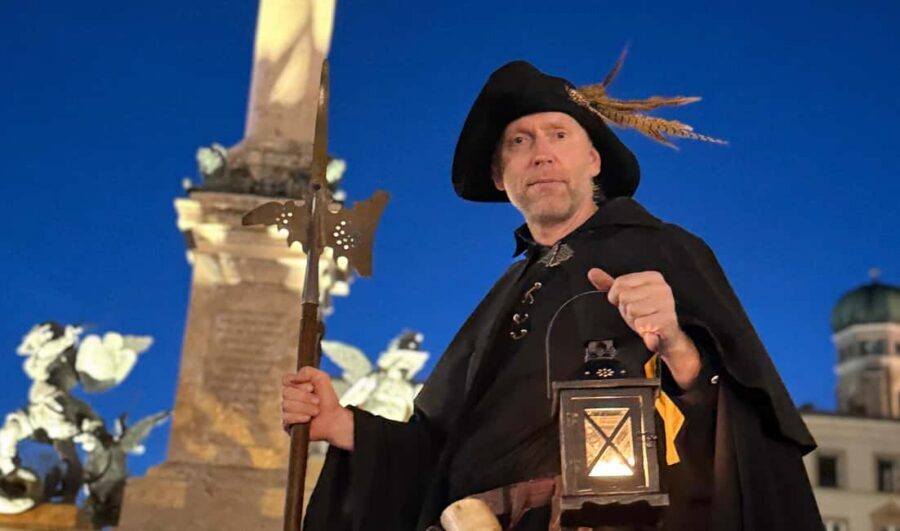
You meet at Mary’s Column in the center of Marienplatz. This is a smart starting point for two reasons.
First, you immediately have orientation. Marienplatz is the “center of gravity,” so it’s easy to find and easy to anchor the stories to real buildings and squares. Second, the tour begins in the exact kind of setting that medieval Munich would have revolved around—public space where people gathered, watched, and moved through the city.
If you’re arriving from a busy afternoon, aim to show up a little early. Night tours feel more relaxed when you’re not sprinting to the meeting point in the last ten minutes. And since you’ll be outside, arriving early also gives you a chance to adjust your layers before the pace gets set.
The medieval walk through little alleys and secret-feeling corners
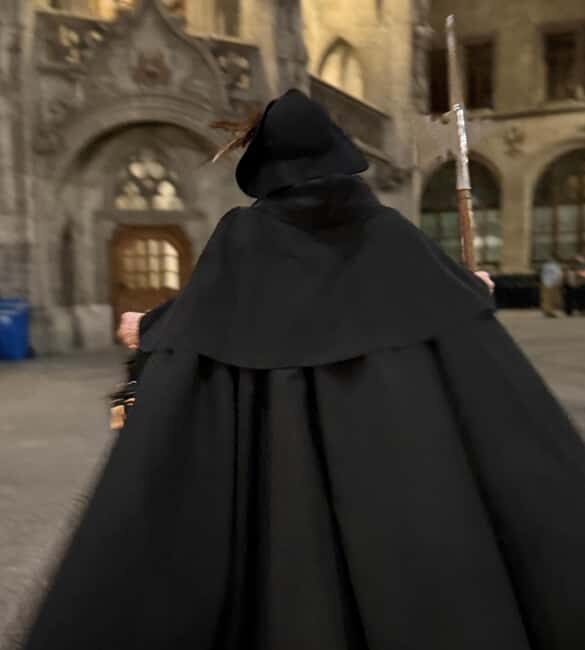
This is a “follow the lantern” format: the watchman’s character leads you from place to place while the guide explains what life looked like. The focus stays on small streets and sights that are hard to spot on your own. That means you get the best kind of walking tour payoff: you leave knowing shortcuts and side streets you didn’t even realize existed.
You should expect more than a few “point and explain” moments. The tour leans on a cycle of stories—medieval life from the cradle to the grave—with themes like monks and saints, plus practical watchman duties like guarding and warning. The result feels like a mini performance with history threaded through it.
One practical detail: because the theme is dark streets and lantern light, your attention is pulled toward details you might normally skip. Look for the way buildings line up along narrow lanes. Listen for the story beats that explain why those lanes mattered—where people could hide, where danger could creep in, and how the city’s layout shaped daily routines.
Also, the pacing is usually described as relaxed. People mention not feeling rushed, which matters on a winter night. Short walks with steady narration tend to feel better than long marches where you just start zoning out.
Marienplatz at night: watching the “closed gates” story come alive
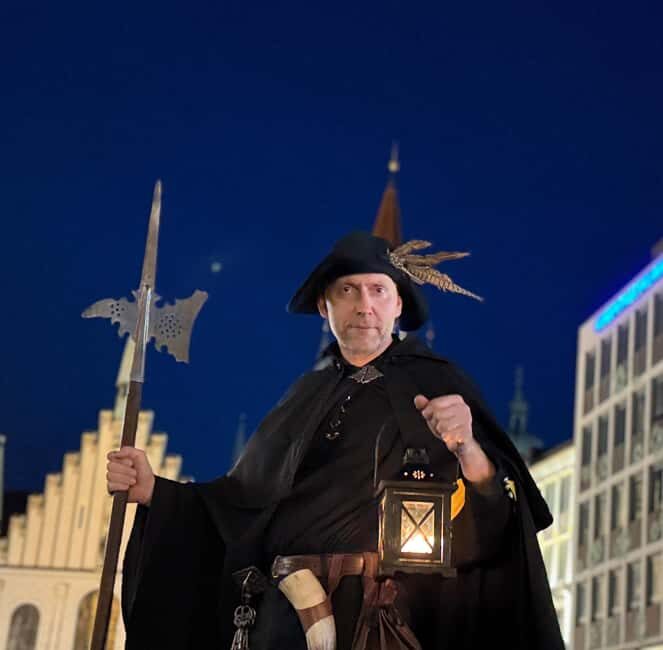
Marienplatz isn’t just a meeting point here. It becomes part of the medieval setup. The tour uses this area to help you imagine the shift from daylight movement to night-time rules.
When the story says the gates are closed at night, you don’t have to “visualize from scratch.” You’re standing in a place where you can see how public space works, where crowds gather in daylight, and how quickly the mood changes after evening. That contrast makes the explanation land.
I like how this stop sets expectations for the rest of the walk. You’re not thrown straight into random facts. You first get the “why” behind the rules: a city trying to stay safe after dark, with superstition and limited literacy shaping how people interpreted danger and the world around them.
If you’re new to Munich, this helps you get your bearings fast—without turning the tour into a dry orientation lecture. If you already know Munich, it still works because it gives you a different lens, not just a retread of what you’ve seen in daylight.
Viktualienmarkt and the everyday city-life angle
A big part of the tour’s appeal is that it stays grounded in real neighborhoods. The walk range is described as relatively compact—around Marienplatz to Viktualienmarkt to the Frauenkirche area. That’s a sweet spot for night tours: you get variety without long transit or big fatigue.
Viktualienmarkt is where the story can tilt toward everyday life. Even when the tour leans medieval, the point is to connect daily routines to the city’s pulse. Think of markets and supply as a lifeline in any era. In a world where people can’t easily read or spread information, physical spaces—like where goods are bought and sold—become even more important.
What you’ll gain here is context. The tour’s “night watchman” isn’t just a romantic character. It’s the symbol of order in a city with limited ways to communicate and educate. So as you pass lively public places by night, you understand why watchmen mattered and why the city needed rules.
If you tend to prefer history that feels human—beliefs, routines, and how people reacted to uncertainty—this segment is likely to click.




Frauenkirche area: seeing the city’s change through one short walk
The tour’s final stretch lands near the Frauenkirche area, keeping you in Munich’s historical center without dragging you too far. This part is useful because it lets the medieval framing meet the Munich you can still see today.
You’ll get explanations that help you “read” what you’re looking at. One guide is noted for clear explanations about history plus folktales and iconography. Even if you’re not trying to become an architectural scholar, that kind of guidance changes how you interpret churches and statues—what they represent, what people might have believed when they were built or used.
This is also where the stories often feel like they’re closing a loop. The “cradle to the grave” idea isn’t just poetic. It connects the idea of divine order and daily fear to the way communities built institutions that offered comfort, identity, and meaning.
And because the walk is short, you don’t get stuck in the all-night listening trap. You finish while you’re still mentally sharp.
The guide performance: lantern, costume, humor, and Q&A
The star of the show is the guide. This tour is one of those rare ones where the costume isn’t a gimmick—it’s part of the storytelling engine. You’ll hear medieval Munich stories delivered by a night-watchman character, lantern in hand, with a tone that can be funny and energetic.
From past departures, guides like Monique, Hans, and Heinz Taubmann have been highlighted for acting the role, telling entertaining stories, and keeping historical facts clear. People also mention good humor and showmanship, plus a relaxed pace that doesn’t bulldoze through stops.
If you like asking questions while you walk, this is another reason it works. One comment mentions the guide answering additional questions, so you’re not limited to just listening and moving on. The best guides use those questions as jumping-off points for more story and explanation.
Also note the “balance” idea. Multiple descriptions mention a mix of historical facts and anecdotes. That’s what makes the tour feel more like a guided conversation than a scripted route.
How to plan for a 1.5-hour night walk (and not freeze)
This tour lasts 1.5 hours. That length is ideal for a night theme: it’s long enough to feel like a journey, but short enough that you’re not exhausted before the end.
Still, it’s a nighttime outdoor experience. Several comments point out it can be chilly, including one where the guide sped up at the end because everyone was cold. So treat this like a winter evening stroll, not a summer sunset ramble.
My practical advice:
- Dress in layers and bring something windproof.
- Wear shoes with grip. Cobblestones can be slick at night.
- Bring a scarf you can keep on even while you’re listening.
Because the walking range is relatively compact, you’re not dealing with lots of transit. You’re doing a focused core walk that fits well into an evening plan.
Value: what $22 gets you in Munich’s center
At $22 per person, this is priced like an affordable, story-led “evening activity” rather than a premium production. And that makes sense, because your main “product” is the guide plus the walking route through the historic center.
Where the value really shows: you’re not paying just for a viewpoint. You’re paying for a performer who connects places to the medieval idea of fear, superstition, order, and everyday belief. People also mention the tour feels informative and that time moves quickly when the guide is in character.
The 4.2 rating (with a substantial number of reviews) is also a decent signal that the experience is consistently delivered—especially for a short, weather-dependent night activity.
If you’re on a tight budget or you’re trying to balance paid tours with free exploring, this one earns its keep. It gives you a guided lens for places you might otherwise walk past in daylight without thinking much about what made them matter.
Who should book, and who might want a different option
This tour is a great match if you:
- like folktales and legends alongside real historical context
- enjoy walking tours that stay in a tight area
- want a Munich experience that feels different from museum days
- appreciate humor and character-based narration
It may be less ideal if you:
- want a long, multi-hour route covering a wide span of sights
- prefer mostly modern-day Munich stories
- dislike cold outdoor time, even for a short period
For most people who enjoy history told with personality, it’s a strong fit. It also works well as an evening companion to daytime self-guided wandering, because it gives you a story framework you can carry into your own exploration afterward.
Should you book the Munich Night Watchman tour?
I think you should book it if you want an easy, affordable way to experience medieval Munich without turning your night into a museum marathon. The guide-in-costume approach, the lantern vibe, and the focus on small alleys make it feel like a special evening rather than just another city walk.
If you’re sensitive to cold, plan for it. Bring warm layers and expect the outdoors to matter. Otherwise, this is one of those tours that makes you look at the center differently—short, memorable, and well suited to a winter evening in Bavaria.
FAQ
How long is the Munich Night Watchman tour?
It lasts about 1.5 hours.
Where is the meeting point?
You meet at Mary’s Column in the center of Marienplatz.
Is the tour offered in English?
Yes, it’s a live tour guided in English.
What’s included in the price?
The included item is the tour guide in medieval clothes for the 1.5-hour experience.
How much does it cost?
The price is listed as $22 per person.
Is the tour wheelchair accessible?
Yes, it’s listed as wheelchair accessible.
Is there free cancellation?
Yes, free cancellation is available up to 24 hours in advance for a full refund.
Can I reserve now and pay later?
Yes. The option is listed as reserve now & pay later.
How do I find the starting times?
Starting times depend on availability, so you’ll need to check what’s offered for your date.
What kind of experience will I get?
Expect medieval Munich storytelling about life in earlier centuries, including the night watchman role, plus walking through little alleys and sights that are harder to find on your own.