REVIEW · LEIPZIG
Leipzig Highlights Private Walking Tour
Book on Viator →Operated by Leipzig Tours · Bookable on Viator
Leipzig gets under your skin fast. In a short 2-hour private walk, you’ll connect music, trade, publishing, and revolution to the streets you actually stand on. Two things I really like: the way the tour hits major historical moments without getting heavy, and the focus on Leipzig’s musical roots through places like St. Thomas Church. One possible drawback: with about 20 minutes at most stops, you’ll get great context, but you won’t have time to linger forever.
You start at Burgplatz and end near Oper Leipzig, so you leave with a clean mental map of the center. The route also mixes grand buildings with stranger stories—like a vanished real-estate tycoon tied to Barthels Hof. Add in free admission at each stop and you’ve got a low-friction way to learn a lot without feeling like you’re paying entry fees all afternoon.
In This Review
- Key Highlights You’ll Feel on the Walk
- Getting Oriented in Leipzig: A Smart 2-Hour Route
- Neues Rathaus: The Luther-Era Story Behind the New Town Hall
- Nikolaikirche and 1989: Why This Church Mattered
- Barthels Hof: Trade History with a Criminal-Plot Twist
- Haus Zum Arabischen Coffe Baum: Coffee House Lore in a Real Setting
- Stadtgeschichtliches Museum Leipzig / Altes Rathaus: The Crooked Facade Question
- Madle Passage: Trade, Architecture, and the Leipzig Roots of Faust
- St. Thomas Church: Composers and the Long Road to Fame
- Universitat Leipzig and Paulinerkirche: A Hard Question With Real Context
- Where the Tour Leaves You: Eating, Next Stops, and Your New Route
- Price and Logistics: What You’re Really Paying For
- Should You Book the Leipzig Highlights Private Walking Tour?
- FAQ
- How long is the Leipzig Highlights Private Walking Tour?
- What is the price?
- Is this a private tour?
- Where does the tour start and end?
- Is pickup available?
- Do I need to pay admission for the stops?
- Do I get a mobile ticket?
- What happens if the weather is bad?
- Can I cancel for a refund?
- Are service animals allowed?
Key Highlights You’ll Feel on the Walk
A tight, private route that makes Leipzig’s center easy to navigate afterward
Free access at every main stop, so your time goes into stories (not ticket lines)
Clear focus on music and turning points, including 1989 at Nikolaikirche
Unexpected Leipzig lore, from a famous coffee house to Madle Passage and Faust
You’ll get practical ideas for where to eat and what else to do next
Getting Oriented in Leipzig: A Smart 2-Hour Route
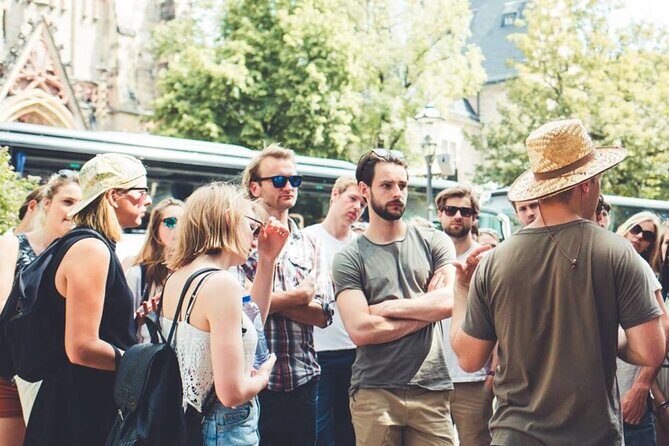
This is a private walking tour for groups up to 15 people, priced per group at $214.16. That matters, because it changes how “cost effective” it feels. If you split it across 2 people, it’s around $107 each. If you split across 6, it’s about $36 each. With a full group, you can get the per-person price much lower. For a guided walk that includes multiple landmark stops, that’s solid value—especially when every listed stop is free to enter.
The duration is about 2 hours, and the pacing reflects that. Most stops are around 20 minutes, with shorter time at St. Thomas Church and a couple of quick, punchy viewpoints. If you’re the type who likes to sit and soak, plan to do a second pass on your favorite sites later. If you like learning quickly and moving on, this timing fits perfectly.
Logistics are also thoughtfully simple. Pickup is offered, and you can use a mobile ticket. The tour runs with service animals allowed, it’s near public transportation, and most people can participate. You’ll start at Burgplatz (Burgpl. 04109 Leipzig) and finish at Oper Leipzig (Augustuspl. 12, 04109 Leipzig), which is convenient because you end in a busy, central area where it’s easy to continue your day.
One more practical point: the tour requires good weather. If the weather turns, you’ll be offered another date or a full refund. That’s a big deal for a walking tour—Leipzig can be beautiful, but you’ll want it to be dry.
You can also read our reviews of more walking tours in Leipzig
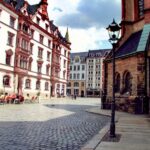


Neues Rathaus: The Luther-Era Story Behind the New Town Hall
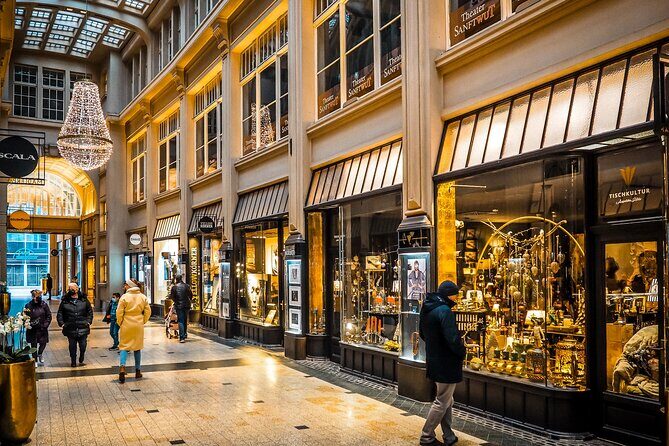
Your first stop is the New Town Hall (Neues Rathaus), and the tour starts with a clever hook: the history behind the building goes back much further than you’d expect. Even though this is the New Town Hall in name, the story connects to an older castle-era period—plus the famous dispute involving Martin Luther.
That’s not just trivia. It sets up Leipzig as a city where big ideas mattered long before it became known for music and publishing. When your guide ties Luther’s dispute to the early power center of the city, it makes the later chapters feel less random. You’re not just seeing architecture. You’re seeing how Leipzig’s influence grew.
What to watch for: spend a few minutes looking at the scale and location of the building in the square. It helps you understand why this spot became a stage for events that shaped the city’s direction.
Potential drawback: since the tour starts strong, you may feel like you have to keep up right away. If you’re arriving from far away, give yourself a few minutes to settle and orient at Burgplatz before you begin.
Nikolaikirche and 1989: Why This Church Mattered
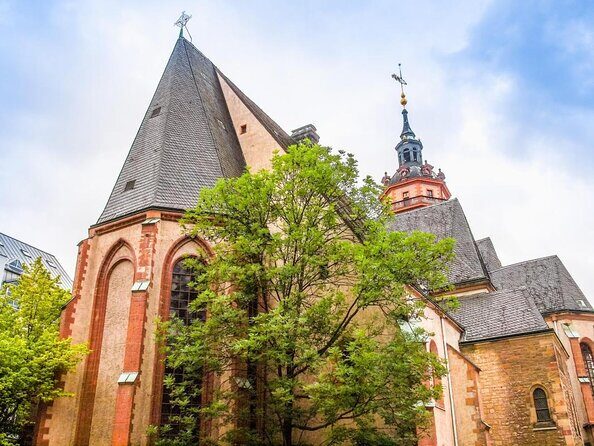
Next up is St. Nicholas Church (Nikolaikirche), and the focus here is the peaceful revolution of 1989. This is the kind of stop where the story carries emotional weight. The way the tour explains the church’s role helps you understand how Leipzig wasn’t only shaped by kings and merchants, but also by ordinary people pushing for change.
It’s powerful because it’s local. You’re not hearing a distant, abstract political history—you’re standing at a place that helped define a turning point. The tour keeps it clear and grounded, so even if you don’t know much about 1989 going in, you’ll leave with a real sense of why this church gets referenced again and again.
What I like about this stop: it gives you a timeline feeling. You start Leipzig as a center of ideas and authority, and then you land in a modern moment when citizens demanded a new reality.
Small consideration: church interiors can mean less freedom to wander and more attention on where you stand. It’s worth keeping your expectations focused: you’re here for context, not a long independent sightseeing session.
Barthels Hof: Trade History with a Criminal-Plot Twist

After that, you’ll hit Barthels Hof, an old trade house. This part of the walk turns the city into a story about money—who controlled it, how deals worked, and how schemes could go sideways.
The guide connects Barthels Hof to a Leipzig real-estate tycoon who misled banks. The tale doesn’t end locally either. It’s eventually found in Florida after he disappeared. That’s the kind of story that makes Leipzig feel more real, more human, and frankly more entertaining than a straight chronology of dates.
This is where the “trade and publishing” theme starts to click. Leipzig wasn’t just building churches and halls. It was building networks—of credit, property, commerce, and influence. When the tour links a specific building to a specific financial scandal, you understand why the city’s commercial past shaped its growth.
Watch for: the architecture and the “old business” vibe. Even if you can’t read every detail, you can sense how trade houses were designed to signal stability and seriousness.
Possible drawback: if you prefer purely cultural stops (music, art, and architecture), the financial-crime angle might feel a little surprising at first. I found it useful because it shows how power in Leipzig wasn’t always polite.
Haus Zum Arabischen Coffe Baum: Coffee House Lore in a Real Setting
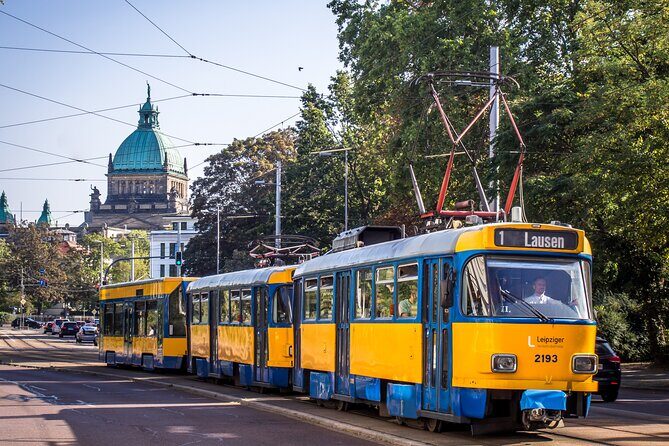
Then the route swings to Haus Zum Arabischen Coffe Baum, an old coffee house. Here, the topic is who gathered at this place—meaning you’re looking at Leipzig as a meeting ground for conversation, ideas, and social life.
Coffee houses across Europe often played an outsized role in public debate and informal networking, and this stop gives that feeling a Leipzig-specific anchor. You’re not just hearing that coffee houses were important. You’re hearing that people gathered here, and the tour helps you imagine why it mattered.
Why this stop is worth it: it adds a softer layer between the heavy political story at Nikolaikirche and the big music sites later on. It’s a reminder that cultural change also happens through everyday routines: meeting, chatting, exchanging opinions.
Practical note: since you’ll only have around 20 minutes, look quickly, take the story in, and then if you want to linger, plan to come back later. You’ll probably want a second visit if coffee-house history grabs you.
You can also read our reviews of more private tours in Leipzig
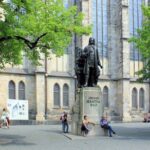




Stadtgeschichtliches Museum Leipzig / Altes Rathaus: The Crooked Facade Question
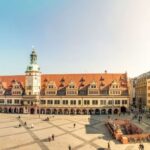
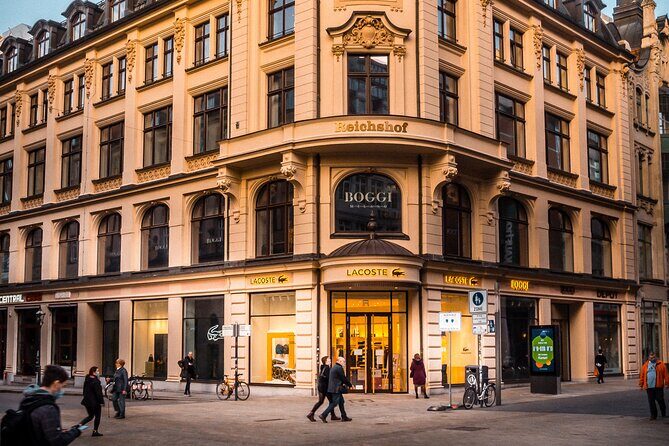
Next you’ll see the Stadtgeschichtliches Museum Leipzig, Altes Rathaus—set in an old Renaissance building. The tour’s focus here is twofold: the splendor of the building and the mystery of why the facade seems crooked.
That “why does it look like that?” question is exactly the kind of detail I love on walking tours. It turns the building from background scenery into a puzzle you can carry around in your head. Even if you don’t go inside (and the stop notes admission is free), you’ll walk away understanding that the city’s visual quirks have explanations tied to how the place evolved.
What you gain: a stronger sense of how Leipzig’s older layers coexist with newer ones. The crooked facade becomes a metaphor for the city itself—never one straight line, always shaped by time and change.
Potential drawback: if you’re very detail-focused, you may want more time here. The tour gives you the key answer, but not a full building study.
Madle Passage: Trade, Architecture, and the Leipzig Roots of Faust
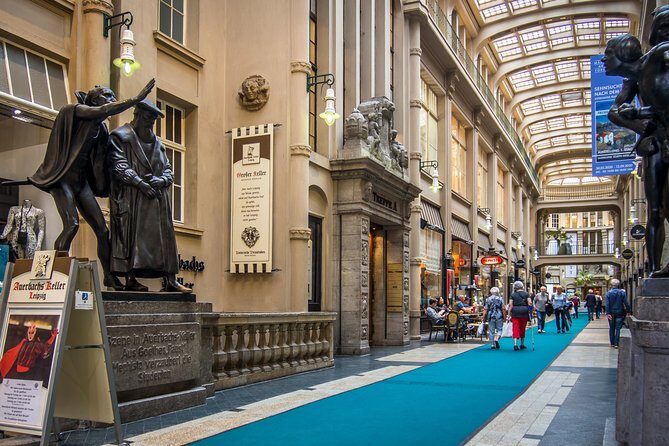
Now comes Madle Passage, another old trade house. This stop links Leipzig commerce to the creation of Goethe’s Faust. That pairing—business history and literature—might sound odd until the guide makes the connection feel natural.
Here’s what I think you’ll appreciate: Leipzig’s identity isn’t only about sound. It’s also about print culture and storytelling, and Goethe’s Faust is a way to show how ideas traveled. The passage itself helps you picture the city as a pipeline for people, goods, and published works.
What to look for: the passage’s character as a connector space. Places like this often functioned as literal shortcuts through the city—meaning they shaped how people moved and how quickly news and culture circulated.
Small consideration: because this is another ~20-minute stop, the Faust connection might feel like a lot of story in a little time. That’s not a problem if you enjoy “quick lessons.” If you want deep reading, you’ll want to follow up later with your own Faust session.
St. Thomas Church: Composers and the Long Road to Fame
You end the core history run at St. Thomas Church. The tour focuses on famous composers who resided in Leipzig and how they got to fame much later.
That timing detail is a nice mental correction. It prevents the common mistake of thinking that famous composers were instantly famous in the moment. By explaining that recognition could arrive later, the tour gives you a more human view of artistic careers—and it connects to why Leipzig became such a magnet for music in the first place.
You also get a short stop here (about 10 minutes), so it works as a meaningful close to the tour’s “music thread” without draining the whole session.
My advice: even on a quick stop, pause and take in the atmosphere. This is one of those places where a few minutes of stillness makes the story land better.
Universitat Leipzig and Paulinerkirche: A Hard Question With Real Context
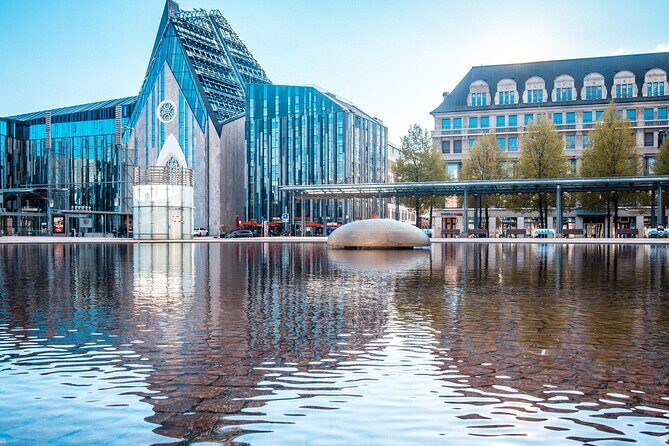
Finally, you reach Universitat Leipzig, where the key question is why the Paulinerkirche (part of the complex) was dynamited.
This is the stop that adds sharper edges to the walk. Earlier you were hearing about Luther and 1989; here you get a story that’s tied to physical loss and political or wartime pressures. The guide’s job is to explain the reason, and that explanation matters because it shows how history doesn’t just change laws and beliefs—it changes buildings and communities.
What you’ll take away: Leipzig’s music and culture didn’t grow in a vacuum. The city went through damage and decisions that left visible marks. Understanding that helps you read the city more honestly.
Possible drawback: if this topic feels heavy, it’s still worth it. The tour doesn’t linger long here, but it gives you a necessary piece of the full picture.
Where the Tour Leaves You: Eating, Next Stops, and Your New Route
One of the most useful parts of this tour is that your guide shares ideas for where to eat and what else to do. Even if you don’t follow every suggestion, you’ll leave with a short list that makes your next moves easier—especially if you’re only in Leipzig for a day or two.
Because the tour ends by Oper Leipzig, you can keep going in multiple directions right away. It’s a convenient finish point for both casual wandering and planned sightseeing. And since the tour centers on understanding how Leipzig rose and why it attracts people today, it gives you context for whatever you do next—whether that’s more music sites, old town streets, or simply grabbing food and people-watching.
If you like to plan lightly, this kind of guided orientation is gold. You’re not committing yourself to a rigid day. You’re getting your bearings fast.
Price and Logistics: What You’re Really Paying For
At $214.16 per group (up to 15 people), the price is more about what you’ll get than about the headline number. You’re buying a guided path through the Leipzig core with free admission stops and a focused narrative thread: music, trade, publishing, and big turning points.
Is it cheap? Not exactly. But it’s not pricey for a private, 2-hour walk that covers eight major stops and gives practical advice for your remaining time. The best way to judge value is split size. If you’re traveling as a small party, it can still be reasonable compared with multiple separate paid attractions, especially because you’re not stuck in ticket lines.
Two logistics notes that affect comfort:
- Pickup is offered, which can save time if you’re not starting right at Burgplatz.
- The tour uses a mobile ticket and meets near public transportation, so you should be able to get there without a long detour.
Weather matters here. If it’s canceled due to poor weather, you’ll get a different date or a full refund—important for a walking plan.
Should You Book the Leipzig Highlights Private Walking Tour?
Book it if you want a fast, guided way to understand why Leipzig is Leipzig. This is for you if you care about the city’s music connections, like the stories behind St. Thomas Church, and if you also want the trade and publishing angle that explains why ideas and culture spread here.
I’d skip it (or at least add extra solo time afterward) if you need long, slow museum-style visits. This tour is built for moving—20-minute stop rhythm, quick transitions, and a strong narrative arc. Think of it as your orientation and story primer, not a stand-alone replacement for deeper independent exploring.
If you’re traveling with a small group and want a private guide who can tailor pacing a bit, this setup makes a lot of sense. Leipzig rewards curiosity, and this tour feeds it directly.
FAQ
How long is the Leipzig Highlights Private Walking Tour?
It lasts about 2 hours.
What is the price?
It’s $214.16 per group, up to 15 people.
Is this a private tour?
Yes. Only your group participates.
Where does the tour start and end?
It starts at Burgplatz (Burgpl., 04109 Leipzig) and ends at Oper Leipzig (Augustuspl. 12, 04109 Leipzig).
Is pickup available?
Yes, pickup is offered.
Do I need to pay admission for the stops?
The listed stops are described as having free admission or free entry.
Do I get a mobile ticket?
Yes, a mobile ticket is included.
What happens if the weather is bad?
The tour requires good weather. If it’s canceled due to poor weather, you’ll be offered a different date or a full refund.
Can I cancel for a refund?
Yes. You can cancel up to 24 hours in advance for a full refund.
Are service animals allowed?
Yes, service animals are allowed.