REVIEW · ROTHENBURG
Rothenburg’s Historical Gems: A Private Walking Tour
Book on Viator →Operated by Opatrip.com US LLC – Local Tours in Germany · Bookable on Viator
Rothenburg goes by fast. This private, interest-tuned walking tour squeezes a lot into about two hours, including the Holy Blood altarpiece inside St. Jakobskirche, plus classic Rothenburg sights like Das Plönlein. I like that it’s truly private (only your group) and that each stop is built around what you can see and photograph without complicated admissions. One thing to consider: at roughly 2 hours, you’ll get great highlights, but you won’t have time to do every museum or linger for long inside buildings.
You’ll start at Gerlachschmiede (Wenggasse 50) and finish at Spital Gate (Spitalgasse 55), which is convenient because the route ends right where Rothenburg’s defensive wall story continues. The tour is offered in English, and you’ll use a mobile ticket. It’s also described as near public transportation, so you should be able to time it without stressing over getting back.
The vibe is history with a practical pace: outside looks at key sites, plus one major interior moment at St. Jakobskirche. If you enjoy medieval craft details, Gothic church art, and those postcard corners that actually matter, this tour fits well. If you’re hoping for a long, slow crawl through one big attraction, you may want a longer format instead.
In This Review
- Key things that make this tour worth your time
- A private, interest-tuned stroll through Rothenburg’s center
- Where you meet and how the 2-hour timing works
- Gerlachschmiede and the craft story behind the town
- Town Hall and the Renaissance face of civic power
- St. Jakobskirche and Tilman Riemenschneider’s Holy Blood altar
- Crime and justice outside the Medieval Museum
- Das Plönlein: cobblestones, half-timbered houses, and the best photo corner
- Spital Gate and Die Rossmühle: walls, defense, and everyday craft
- Price and value: what $349 per person buys you
- Who this tour suits best
- Should you book this Rothenburg walking tour?
- FAQ
- How long is the Rothenburg Historical Gems private walking tour?
- Where does the tour start and end?
- Is the tour private?
- What language is the tour offered in?
- Do I need admission tickets for the stops?
- Do I get a mobile ticket?
- Is free cancellation available?
- Is there group discount pricing?
- Is this tour near public transportation and can most people participate?
- Who provides the tour?
Key things that make this tour worth your time
- Private-only group: you’re not sharing the experience with strangers.
- Holy Blood altarpiece inside St. Jakobskirche: Tilman Riemenschneider’s work is the centerpiece.
- A tight seven-stop route: blacksmith heritage, Gothic church art, civic Renaissance flair, and gates/walls.
- Most stops are admission-free: each listed stop is marked admission ticket free, so you can focus on the sights.
- Ends at Spital Gate: your walk continues naturally into the city’s defensive wall area.
A private, interest-tuned stroll through Rothenburg’s center
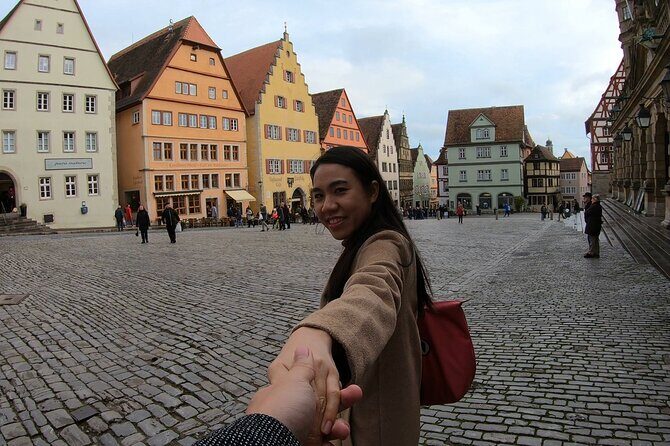
What I like most about this tour style is that it’s private. That matters in Rothenburg because the town can feel like a photo scavenger hunt if you’re left to your own devices. With a guide, you get direction on what to look at, how to read the architecture, and how to pace your time so you don’t burn it circling the same lanes.
This tour is also tailored to your interests and preferences. The itinerary is structured, but the time spent at each stop can work for different tastes. If you love churches and art, you’ll focus on St. Jakobskirche’s interior moment. If you’re more into civic buildings and social history, you’ll likely lean into the Town Hall and justice-related museum stop.
And yes, Rothenburg is one of those places where “medieval” can start to feel like a label. Here, the stops are specific: a blacksmith’s house, a Renaissance Town Hall facade, a Gothic church altar, a justice-themed museum exterior, and defensive architecture at the Spital Gate. That specificity keeps the walk from feeling generic.
You can also read our reviews of more walking tours in Rothenburg
Where you meet and how the 2-hour timing works
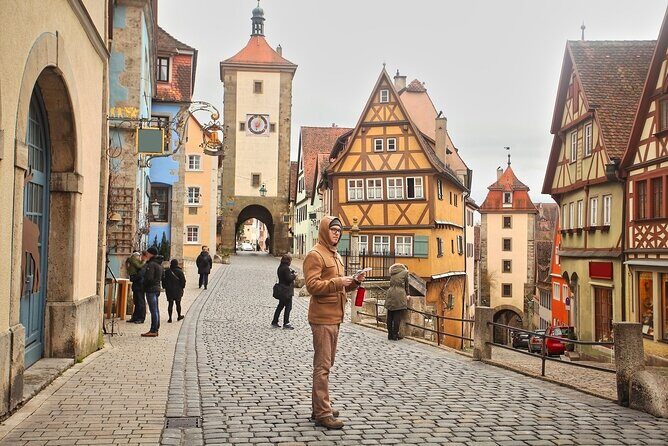
You’ll meet at Gerlachschmiede, Wenggasse 50, Rothenburg ob der Tauber, and you’ll end at Spital Gate, Spitalgasse 55. That end point is handy because it’s not just a random “meet back later” finish. You walk out with the city’s wall story still fresh in your mind.
The tour lasts about two hours, which is long enough to hit seven named stops, but short enough that you stay energized. The schedule is light on “long waits” and heavy on “see and move.” Each stop is time-boxed (for example, around 10–20 minutes at most listed sites), so you’ll know what you’re trading: you’ll get breadth over deep single-site time.
One more practical note: the tour is described as near public transportation. In a compact old town, this usually means fewer last-minute route problems if you’re planning your day around trains or buses.
Gerlachschmiede and the craft story behind the town
Stop 1 is Gerlachschmiede, a historic blacksmith’s house that’s described as picturesque and tied to Rothenburg’s medieval craftsmanship. It’s an outside visit for about 10 minutes, with admission ticket free.
What this stop does for your tour experience is grounding. Rothenburg isn’t only about monuments; it was a working town full of crafts and trades. A blacksmith’s house is a quick way to shift your mindset from postcard images to the people who made the town run. If you like details, use this early segment to train your eye for the half-timbered textures and medieval building forms you’ll see repeatedly later.
If your only goal is photography, this is also a good “warm-up” stop. You get a quick win without needing to buy tickets or figure out interior access.
Town Hall and the Renaissance face of civic power
Next comes the Town Hall, where you’ll spend about 20 minutes exploring the Renaissance facade. The listing marks admission ticket free here as well, which is great because it keeps the schedule smooth.
I like civic buildings like this because they show another side of medieval life: rules, administration, and public authority. A Renaissance facade in a medieval town can feel like a contrast, but it actually helps you see Rothenburg as a place that kept changing instead of freezing in time.
For your experience, this stop also acts like a visual anchor. After the smaller-scale craft feel of a blacksmith’s house, the Town Hall gives you scale. You’ll likely notice how the town’s identity shows up in how it presents itself to residents and visitors.
St. Jakobskirche and Tilman Riemenschneider’s Holy Blood altar
This is the moment most people remember: St. Jakobskirche. You get about 20 minutes here, with a key interior highlight being the Altar of the Holy Blood (Heilig Blutaltar).
The altar is credited to Tilman Riemenschneider, and the church is described as stunning Gothic architecture. Admission ticket is marked free, and the structure of the tour suggests you’ll focus on seeing the altar rather than trying to do everything.
Why this stop is such a big deal in a short walking tour is simple: church art is one of the fastest ways to understand the emotional and spiritual priorities of the era. You can learn about medieval Rothenburg from streets and buildings, but an altar gives you symbolism, craftsmanship, and religious storytelling all in one place.
If you’re planning your photos, treat St. Jakobskirche as your “slower” part of the route. Even with only 20 minutes, you’ll do best if you stand back first to take in the whole altar area, then move in for the details. That way you don’t end up with only close-up fragments.
Crime and justice outside the Medieval Museum
Stop 4 is the Medieval Crime and Justice Museum, but you’re viewing it from the outside for about 10 minutes, admission ticket free.
This stop is a tonal shift. Rothenburg is often presented as charming and storybook, and then you hit a reminder that there was law, punishment, and real hardship behind the walls. Even from outside, the museum acts like a narrative bridge between the beautiful facades and the stricter social side of town life.
The drawback here is also clear: because it’s an outside visit, you won’t get the full depth of the museum collection. Still, as part of a two-hour highlights loop, it works well as a quick dose of context without turning your day into a museum marathon.
Das Plönlein: cobblestones, half-timbered houses, and the best photo corner
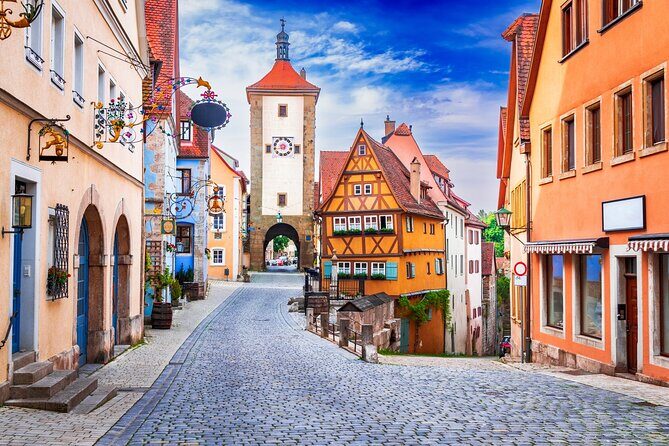
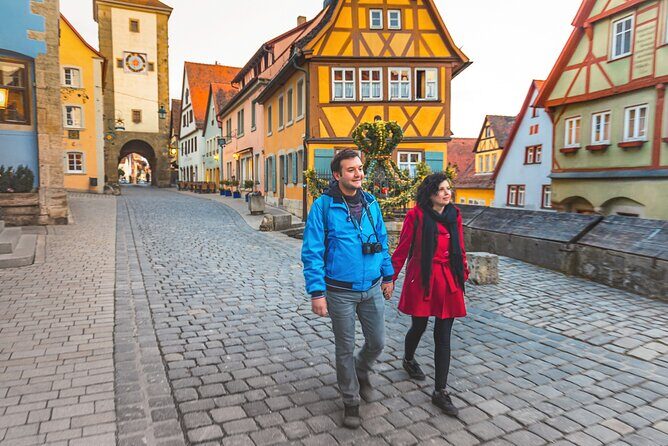
Stop 5 is Das Plönlein, with about 20 minutes on the iconic view—half-timbered houses and cobblestone streets in a way people often describe as fairy-tale perfect. Admission is marked free.
This is the stop where Rothenburg’s famous visual identity takes over. If you like architecture, you’ll appreciate that the framing here comes from real building placement and street geometry, not just scenic luck. If you like history, it still connects, because the houses and lanes reflect the town’s medieval and early-modern fabric.
A practical tip: spend the first part of your time simply looking before you start shooting. Das Plönlein photographs well from multiple angles, but standing still first helps you pick the angle that shows the story of the place. Then you can move for your pictures without wasting all your time wandering.
Spital Gate and Die Rossmühle: walls, defense, and everyday craft
Stop 6 is the Spital Gate, where you’ll spend about 20 minutes. It’s described as one of Rothenburg’s robust defensive walls from earlier times, and admission ticket is marked free.
This is the section that turns your view from “pretty town” into “built to protect people.” Defensive architecture changes how you read the town. You start noticing thickness, entrances, and the logic of where movement funnels. Even without a deep dive into fortifications, standing at the gate ties together earlier stops like craft, civic order, and how a town defended itself.
Finally, Stop 7 is Die Rossmühle, described as an old medieval craft example. You’ll also get about 20 minutes here, admission ticket free.
This ending is satisfying because it brings you back to practical life. Mills and craft workshops weren’t only historical props; they were essential infrastructure. Finishing at Spital Gate and then moving to a craft site gives you a final “how the town worked” note as you wrap up the walk.
Price and value: what $349 per person buys you
At $349 per person for a private two-hour walking tour, the price is not trying to be cheap. It’s paying for a few specific things that can genuinely matter on a visit: private guiding, a set route of seven named highlights, and a tailored approach to your interests.
Here’s where the value math can work in your favor:
- You’re getting more than one kind of sight in one outing: craft heritage, civic facade, a major church art moment, a justice-themed stop, a famous photo corner, and defensive architecture.
- Because it’s private-only your group participates, your time stays flexible instead of being controlled by a large group schedule.
- Admission tickets are marked free for the listed stops, which helps keep the experience focused on seeing and learning rather than adding costs and entry queues.
Group discounts are mentioned, so if you have friends traveling with you, ask about that when booking. Even small adjustments in total group cost can make a private guide feel more reasonable.
Who this tour suits best
This tour is best for you if you want a high-impact highlights walk in a short time. I’d especially point it at people who:
- Prefer a guided plan instead of trying to stitch together sights on your own
- Want the Holy Blood altar experience without turning the day into a longer church-and-museum project
- Enjoy a mix of architecture, civic buildings, and medieval social context
It may be less ideal if you’re the type who wants long time inside major attractions or a deeply academic pace. With about two hours, you’re choosing overview and flow over extended time at any one site.
Should you book this Rothenburg walking tour?
If you like Rothenburg’s look and want the story behind it—without getting stuck on logistics or ticket puzzles—this is a strong choice. The route is built around recognizable highlights, and the guide approach is private and tailored, which is exactly what you want when you’re trying to see the best parts of an old town efficiently.
One small review detail that stood out to me: a five-star experience called out guide Karin as wonderful, and mentioned a memorable hillside/forest-edge viewpoint over the valley with Rothenburg rising on a steep hill above. Even if your pace is different, it suggests this kind of guided walk can bring in those extra “moment” views, not just stop names.
Book it if your goal is two hours of meaningful Rothenburg highlights—especially the St. Jakobskirche altar and the postcard corners. Skip it if you’re planning a slower day where you’ll want longer museum time at the expense of variety.
FAQ
How long is the Rothenburg Historical Gems private walking tour?
It runs for about 2 hours (approx.).
Where does the tour start and end?
The tour starts at Gerlachschmiede, Wenggasse 50, Rothenburg ob der Tauber, and ends at Spital Gate, Spitalgasse 55.
Is the tour private?
Yes. It’s a private tour/activity, and only your group participates.
What language is the tour offered in?
The tour is offered in English.
Do I need admission tickets for the stops?
The listed stops are marked admission ticket free in the tour details.
Do I get a mobile ticket?
Yes. The tour includes a mobile ticket.
Is free cancellation available?
Yes. Free cancellation is available up to 24 hours in advance for a full refund.
Is there group discount pricing?
Group discounts are mentioned in the tour details.
Is this tour near public transportation and can most people participate?
It’s described as near public transportation, and most travelers can participate.
Who provides the tour?
Opatrip.com US LLC provides the local tour in Germany.
If you tell me how many people are in your group and what you care about most (church art, medieval life, photos, or city walls), I can help you decide if this route matches your day.