REVIEW · MUNICH
Inside the Third Reich (Private Tour)
Book on Viator →Operated by Big Hat Tours · Bookable on Viator
Munich can feel ordinary until you notice what’s hidden in stone. This private tour connects the dots around the Third Reich with on-the-ground stops, and it uses an iPad full of historic photos and films so you can actually see what’s changed.
I like two things a lot: the way Curt Milburn turns key moments into walkable, street-by-street stories, and the flexibility of a private setup where you can ask questions as you go. One heads-up: this tour covers heavy subject matter, so if you’re sensitive to Holocaust-era topics and Nazi violence, be ready for an emotionally intense route.
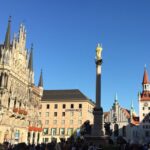
You’ll move through central Munich on a tight schedule (about 2–3 hours), starting at Marienplatz 18. Most stops are listed as free-admission, which helps you focus on the experience instead of ticket math.
In This Review
- Key Things You’ll Like About This Private Munich Tour
- Why This Private Third Reich Tour Feels More Meaningful Than DIY
- Meet Curt Milburn and Use the iPad Like a Time Machine
- Isartor to Platzl: The Beer Hall Connections and Hitler’s First Big Moments
- Old Town Hall and the Start of Kristallnacht
- Platzl War Damage and Odeonsplatz: What Survived and What Stopped Being Safe
- Platz der Opfer des Nationalsozialismus: A Memorial Stop That Doesn’t Rush
- Glyptothek: Rally Grounds and Fascist Buildings Still in View
- Alter Botanischer Garten and the Largest Nazi Eagle on Public Display
- Residenz München: Failed Putsch and Stories of Resistance
- Price, Group Size, and What $180.72 Buys You in Munich
- A Practical Walk-Through: Timing, What to Expect, and How to Prepare
- Should You Book Inside the Third Reich (Private Tour)?
- FAQ
- How long is the Inside the Third Reich private tour in Munich?
- What’s the group size for this private experience?
- Do I need to buy separate tickets for the stops?
- What time does the tour start, and where do we meet?
- Is there a mobile ticket?
- Are service animals allowed?
- Can I cancel for free?
Key Things You’ll Like About This Private Munich Tour
- Curt Milburn’s street-level storytelling at major Third Reich-linked sites in central Munich
- iPad visuals that help you match today’s buildings to historic scenes
- On-the-spot Q&A thanks to your group-only format (up to 15 people)
- War damage and surviving fascist architecture you might miss on your own
- Multiple remembrance moments, including a dedicated memorial for victims
Why This Private Third Reich Tour Feels More Meaningful Than DIY
If you’ve ever tried to piece together Nazi-era Munich from plaques and guidebooks, you already know the problem: it’s easy to wander past the point. What makes this tour work is the way it gives you a guided line through the city—so the buildings start to make sense, not just look impressive.
The private format matters too. You’re not stuck with a script read at speed. Your group can keep the conversation moving—questions, clarifications, and context—while you’re standing right in front of the sites connected to Hitler’s rise, the Nazi crackdown, and the aftermath.
And because this is designed for a short walk-through (2 to 3 hours), it’s a realistic choice even if you have just one morning or afternoon in Munich. I like that the pace stays focused: you’re not touring every museum in town—you’re learning how the city itself reflects what happened.
You can also read our reviews of more private tours in Munich


Meet Curt Milburn and Use the iPad Like a Time Machine
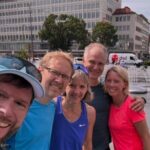
Curt Milburn isn’t just naming locations. He’s known for bringing the Munich he loves into the story, and he backs it up with lots of visuals.
You’re given an iPad with hundreds of films and images from European history (over 1000 years), and that changes how you experience the walk. Instead of guessing what a site looked like in the moment, you can compare present-day streets and buildings to historic images while he explains what’s relevant.
This also helps you follow along even if your background knowledge is mixed. The tour is built to move from big turning points (Hitler’s rise and fall) down to smaller, human-scale details—like the kinds of events that shaped public life and how people reacted at the time.
One more practical perk: he’s the type of guide who makes room for questions. From my point of view, that’s huge with this topic—because people often want to ask about how events unfolded, not just what happened.
Isartor to Platzl: The Beer Hall Connections and Hitler’s First Big Moments
You start in the old-town core at Marienplatz 18, then head to Isartor. This stop is tied to the original beer hall where Hitler met the Nazis. It’s not a flashy “museum stop.” It’s the city’s older structure and setting doing part of the work, showing you how politics and public spaces used to overlap.
Next is Platzl, where the focus shifts to Hitler’s first speech and his rise to success. The value here is that you’re not only seeing where speeches happened—you’re learning why they mattered. Curt’s narration helps you connect the dots between crowd moments and political momentum.
Timing stays short at these early stops (around 15–20 minutes each), which keeps the energy up. If you’re worried the tour will be slow, that’s a fair concern to consider—but the schedule keeps it moving while still giving you time to look around.
And because the listed admissions for these stops are free, you can spend more of your attention on the story and less on logistics.
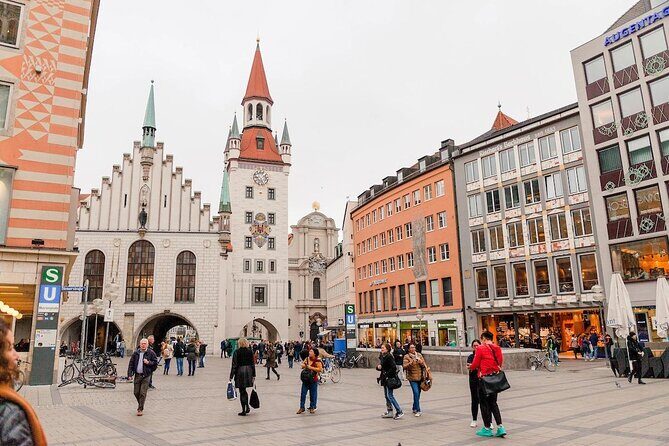
Old Town Hall and the Start of Kristallnacht
Old Town Hall is where the tour turns darker, fast. Here, you’re shown the beginning of Kristallnacht and the site of an assassination attempt on Hitler’s life.
This is one of those stops where I think a guide really matters. Self-guided walking can turn into reading a plaque and moving on. With Curt, you get the framing: why this moment became a turning point and how events of violence and power were tied to public life in Munich.
A practical note: because this is a private walk, you can ask what you need to understand, right there. If you want more about how this shifted events, or how to interpret what you’re seeing in the present, you can steer the conversation—within reason, of course, since the tour still has a set route.
Platzl War Damage and Odeonsplatz: What Survived and What Stopped Being Safe
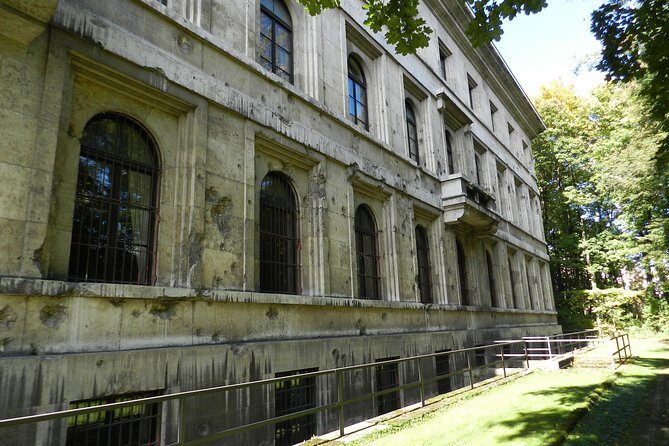
From Old Town Hall, the route returns through Platzl with a different theme: evidence of war damage on the beautiful buildings of Munich. This is a powerful contrast. In places that look polished today, you can still see marks of destruction—physical reminders that history doesn’t just happen in documents.
Then you move to Odeonsplatz, tied to Hitler’s purge of the SA and a site of his speeches. Even if you know the general outline of Nazi history, the payoff here is seeing how public spaces became stages for intimidation, control, and political theater.
This is also where the tour’s tone is at its most “street-level.” You’ll look at architecture and squares, then hear how people used them during the Nazi period. If you like your history grounded in real geography, you’ll probably enjoy this part the most.


Platz der Opfer des Nationalsozialismus: A Memorial Stop That Doesn’t Rush
Not every tour includes a remembrance moment in a way that feels integrated. Here, you stop at Platz der Opfer des Nationalsozialismus, Munich’s memorial to those who died at the hands of the Third Reich.
I appreciate that this isn’t just a photo stop. Curt uses the moment to redirect attention from the machinery of power to the human cost. If you’re coming to Munich specifically for historical context, this balance helps the tour feel more responsible.
This stop runs about 15 minutes, which is enough time to read, look, and absorb without turning it into a quick pass-through.
Glyptothek: Rally Grounds and Fascist Buildings Still in View
Next comes Glyptothek, described as Munich’s rally grounds and the still-standing fascist buildings of Hitler. Even if you’re not visiting for architecture, this is the kind of place that changes how you think about “surviving” history.
The buildings are still there. The setting still exists. That’s exactly why this tour format works: you’re not only learning ideas—you’re standing where those ideas were given an address, a stage, and an environment.
At around 20 minutes, you get time to take it in and ask questions. If your interest is in how Nazi symbolism used real spaces (not just posters and speeches), you’ll likely find this stop especially useful.
Alter Botanischer Garten and the Largest Nazi Eagle on Public Display
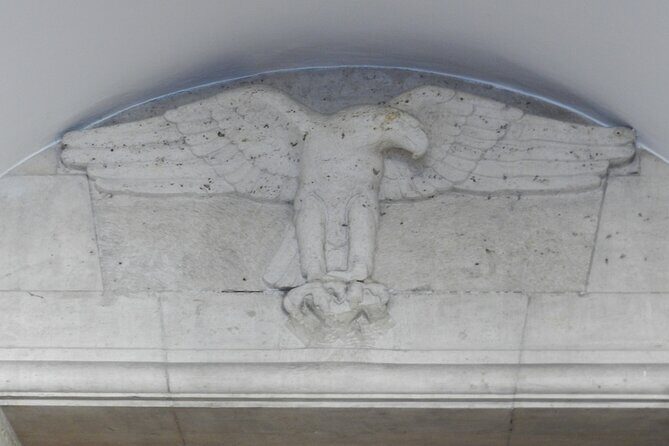
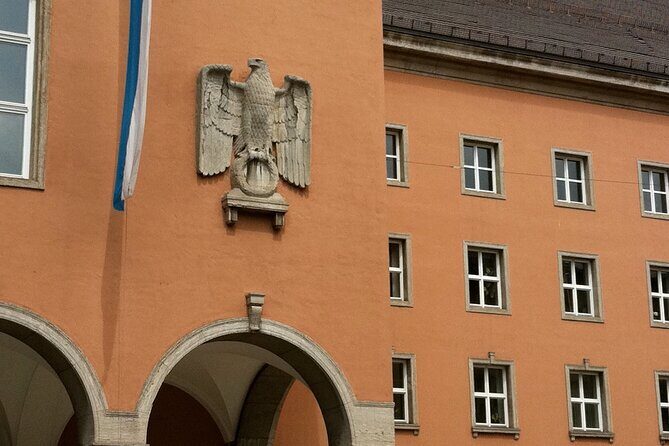
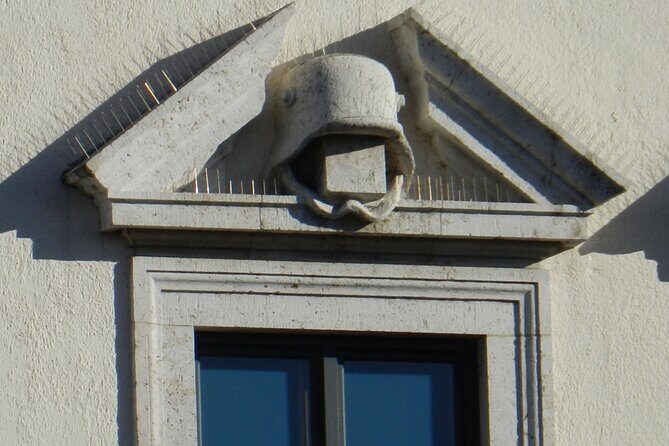
Alter Botanischer Garten is another standout. You’ll see the largest Nazi Eagle still on public display in Germany, plus evidence of Nazi architecture and art.
This is the kind of detail that’s easy to miss on a casual walk. With a guide, it becomes more than an object. Curt’s commentary helps you interpret what you’re looking at and why it still matters that this kind of imagery has remained visible.
The stop is about 15 minutes. That’s a good length for a moment that can feel unsettling. You get enough time to look closely, connect it to the broader story, and move on without being stuck in the same emotional space for too long.
Residenz München: Failed Putsch and Stories of Resistance
The final stop is Residenz München, tied to Hitler’s failed putsch and the story of resistance to the Nazis during the Third Reich.
Ending here helps the narrative land in a more complex way. The tour doesn’t just track the rise of power. It also includes the fact that there was opposition and resistance, even if the Nazi regime ultimately imposed enormous harm.
About 20 minutes here gives you room to absorb the ending theme: that events weren’t inevitable and that people did fight back in different ways. You leave with a clearer sense of the full arc—how momentum built, how violence worked, and how resistance existed inside the same city.
Price, Group Size, and What $180.72 Buys You in Munich
The price is $180.72 per group (up to 15 people). That structure changes how you think about value. You’re not paying per person for a lecture. You’re paying for a private guide experience focused on specific Third Reich-connected sites.
In a normal group tour, you might get rushed answers and limited time at each stop. Here, your group stays together, and the schedule is built around short stops (many at 10–20 minutes) where Curt can keep the story tight.
One more value point: mobile ticketing. It’s a small detail, but it reduces friction on travel days. You’re also starting and ending at the same place, so you’re not spending your limited sightseeing time figuring out where to meet next.
Also, this tour gets booked about 66 days in advance on average. If your dates are fixed, I’d treat that as a hint to reserve early rather than hoping for last-minute availability.
A Practical Walk-Through: Timing, What to Expect, and How to Prepare
This is a 2 to 3 hour outing, starting at 10:30 am. You’ll keep moving through central Munich, with the tour broken into a sequence of short stops.
What I’d prep for:
- Comfortable shoes for uneven historic streets
- A mental switch for heavy content (this is not light sightseeing)
- Curiosity. The guide’s strong point is connecting details to the bigger arc of events
Because many stops are listed as free-admission, your main “ticket” is the guide’s time and interpretation. That means your preparation can be simple: show up, be ready to look closely at buildings and squares, and let the iPad images guide you through what’s hard to imagine.
If you’re traveling with a small group, this is especially good. Up to 15 people sounds like a lot until you realize it’s still a private setup, with room for questions and pacing that works for a group.
Should You Book Inside the Third Reich (Private Tour)?
I think you should book this if you want your Munich history to connect to real places—fast—and you like asking questions while you’re standing at the scene. The combination of Curt Milburn’s storytelling, the iPad visuals, and the tight route through major Nazi-linked sites makes it feel far more than a basic walking tour.
Skip it (or at least reconsider) if you’re looking for an upbeat sightseeing route or if you know you struggle with Holocaust-era and Nazi violence topics. This tour is respectful, but it is still dealing with brutal history.
If you can handle that, you’ll likely come away with a clearer, more grounded sense of how power operated in Munich—and how much of it still shows up in the cityscape today.
FAQ
How long is the Inside the Third Reich private tour in Munich?
It runs about 2 to 3 hours.
What’s the group size for this private experience?
It’s a private tour/activity, limited to your group, with pricing set per group up to 15.
Do I need to buy separate tickets for the stops?
The stops listed for the route show admission ticket free, and the tour includes the guided experience.
What time does the tour start, and where do we meet?
The meeting point is Marienplatz 18, 80331 München, Germany, and the start time is 10:30 am.
Is there a mobile ticket?
Yes, the experience uses a mobile ticket.
Are service animals allowed?
Yes, service animals are allowed.
Can I cancel for free?
Yes. You can cancel up to 24 hours in advance for a full refund, and the cut-off is based on local time.