REVIEW · BERLIN
Homeless on chic streets: city tour in Berlin from personal experience
Book on GetYourGuide →Operated by querstadtein e.V. · Bookable on GetYourGuide
Berlin changes shape when you hear Dieter Bichler. On this 2-hour city tour through Charlottenburg, you start at Berlin Zoologischer Garten and walk the same kind of streets where he learned daily survival, moving along Kantstraße to organize food, warm up, and look for a place to sleep. I love the first-hand focus on homelessness in an affluent neighborhood, and I love that the tour leaves room for personal conversations. One caution: this is not a classic sights-and-snacks route, and if you want exact, practical details on sleeping options, you may feel it doesn’t go as far as you’d like.
The point hits fast: on the streets, everything is public and nothing is private. That shift in perspective turns everyday Berlin corners—stations, parks, big streets—into the center of life, and it makes the city feel less like a postcard and more like a place where people are trying to get through the day.
In This Review
- Key Things You’ll Notice on This Charlottenburg Walk
- Starting at Berlin Zoologischer Garten: The Meeting Point That Sets the Tone
- Dieter Bichler’s Story: From Thuringia to Zoo Station in 2012
- Walking Charlottenburg Beyond the Postcard Streets
- Homelessness on Kantstraße: What Changes When Everything Is Public
- How the Conversations Work (and Why They Matter)
- What $23 Buys You for Two Hours (Value, Not Just Cost)
- Practical Tips for a Comfortable 2-Hour Walk in Berlin
- Who This Tour Fits Best (and Who Might Want Another Option)
- Should You Book This Berlin-Charlottenburg Tour?
- FAQ
- Where is the meeting point for the tour?
- How long is the tour?
- How much does it cost?
- What language is the live guide?
- Is the tour wheelchair accessible?
- Is this tour suitable for children?
- What should I bring?
Key Things You’ll Notice on This Charlottenburg Walk
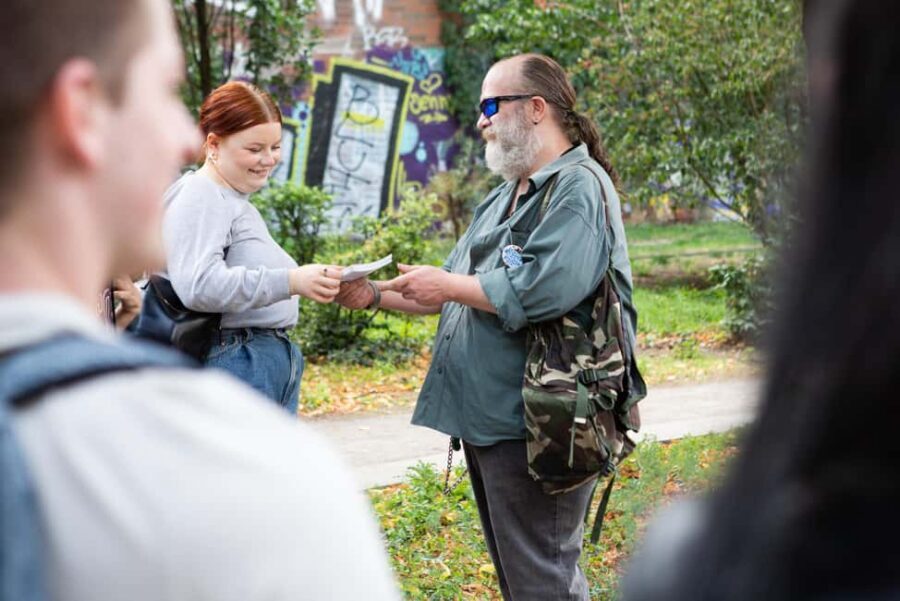
- A guide with lived experience: Dieter Bichler explains what daily survival looks like in Berlin.
- A route through contrast: you’re in Charlottenburg, an affluent area, while hearing about poverty and displacement.
- Street-life rules made real: the tour highlights how public space works when you have no home base.
- Conversations are part of the format: you’re invited to ask questions and talk, not just listen.
- A moving biography map: you connect the story to important points in Dieter’s life as you go.
- Hidden-feeling Berlin, not museum Berlin: you’ll see the city through a different set of priorities.
Starting at Berlin Zoologischer Garten: The Meeting Point That Sets the Tone
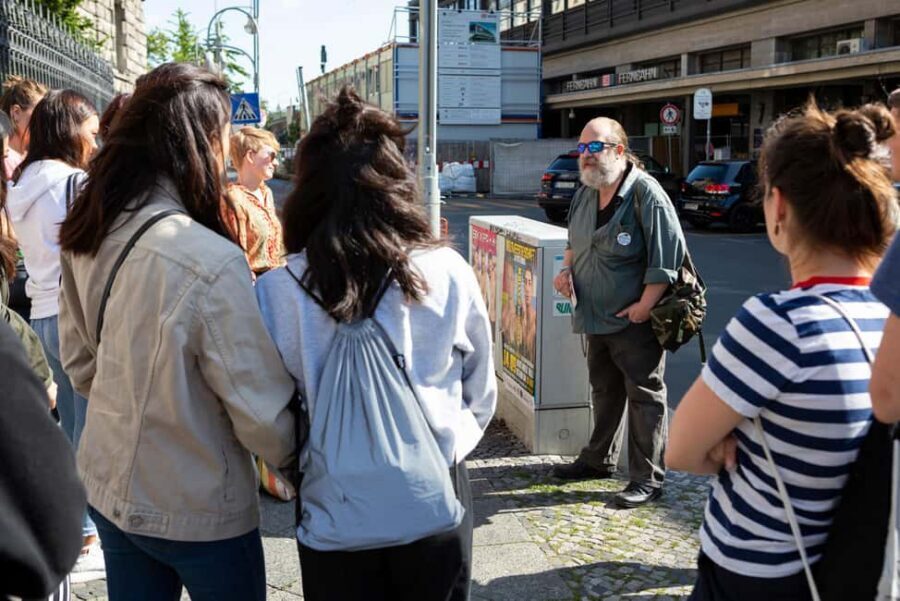
The tour meets at Berlin Zoologischer Garten station, right at the stairs of the McDonald’s on Hardenbergpl. 11. That matters. Zoo station is busy, connected, and very easy to treat like background noise—until you’re standing there knowing the story started here, in fall 2012, after Dieter lost his apartment back in Thuringia.
From the first minutes, you’re not asked to be a spectator. You’re set up to pay attention: how people move through a station, how a neighborhood feels when it’s not just for commuters, and how quickly a city corner can switch from normal to essential. If you’re the type who walks with headphones in, consider this your reminder to turn them off early.
You can also read our reviews of more city tours in Berlin


Dieter Bichler’s Story: From Thuringia to Zoo Station in 2012
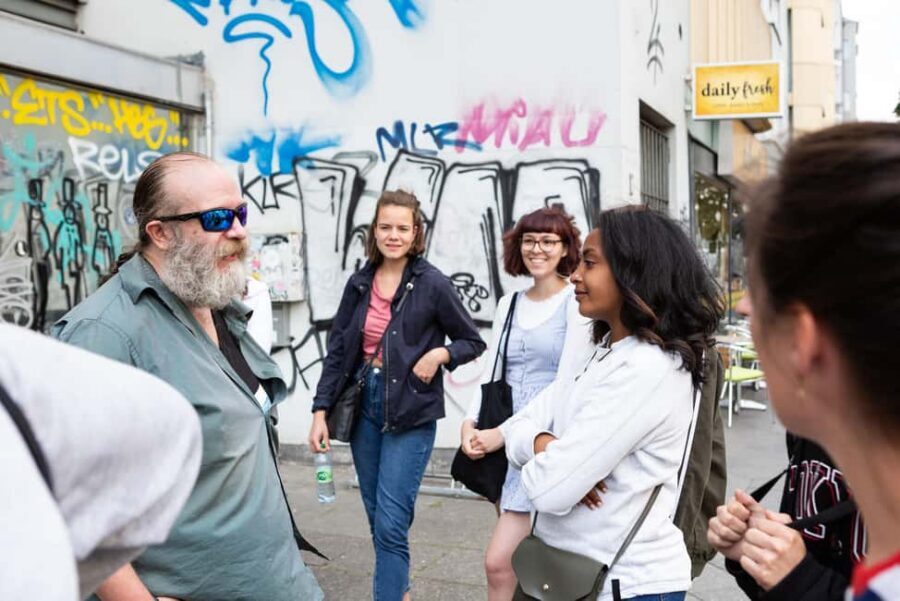
Dieter Bichler’s path is the backbone of the tour. After losing his apartment in Thuringia, he ended up at the Zoo station area, and that’s where the practical reality of homelessness starts to appear—not in theory, but in routine.
The tour follows that timeline to explain what the first days feel like: you don’t just need a place to sleep. You need food, warmth, and a way to keep moving without drawing constant trouble to yourself. The route connects those needs to actual city geography, so you understand why certain street habits form and why some areas matter more than others at specific times of day.
One detail I really appreciate is how clearly the tour frames the contrast. Charlottenburg can look polished from the sidewalk. But hearing about poverty right there makes the city’s inequality harder to ignore. It’s not a far-away story. It’s happening in the same district where people shop, commute, and relax.
Walking Charlottenburg Beyond the Postcard Streets
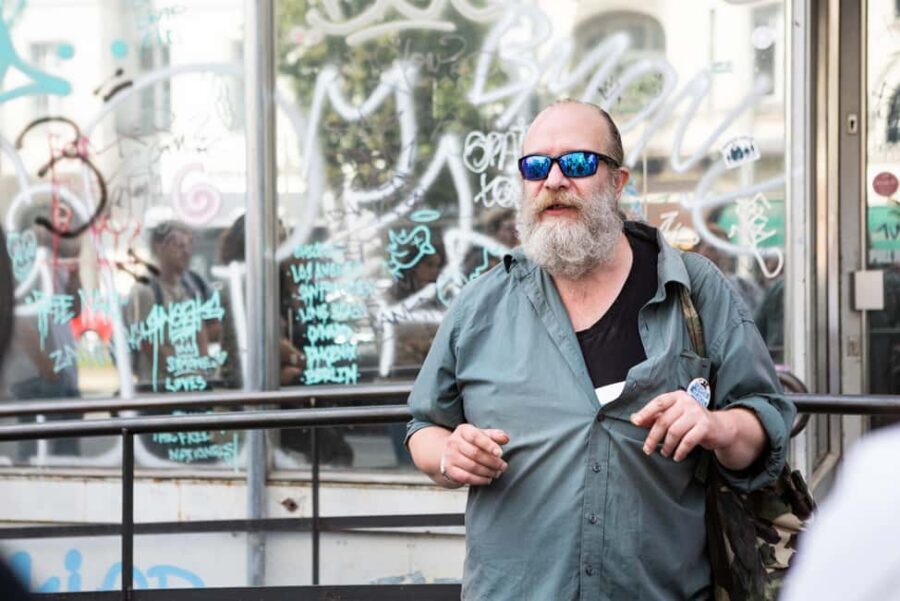
You’ll spend your 2 hours moving through Berlin-Charlottenburg from an unusual angle. The tour is designed around lived perspective, so you don’t get the usual checklist of big monuments. Instead, you’re offered something more personal: places and moments linked to Dieter’s biography and the realities of being without housing.
Because the focus isn’t on classic sights, your pace and attention change. You look for what helps people navigate: where crowds gather, where there’s shelter from weather, where movement is constant, and how stations and main streets create both anonymity and risk. If you’re hoping for panoramic views or photo stops, this may not deliver that. If you want to understand Berlin from the street level, it does.
Also, the tour format includes time for real interaction. That’s not just a feel-good promise; you can sense it in how the guide communicates—less like a lecture, more like a guided conversation with a structure.
Homelessness on Kantstraße: What Changes When Everything Is Public
A core part of the story is the walk along Kantstraße. Dieter describes it as a route used for survival tasks: organizing food, warming up, and trying to find a suitable place to sleep. That’s a different kind of way to read a city street. Instead of thinking, What’s here to see? you start asking, What does this street offer at 3 p.m. versus 11 p.m.?
The tour also leans into a hard truth: life on the streets has its own rules. Everything is public, nothing is private. On the surface, you might think that’s obvious. But the tour makes it concrete by linking the rule to the experience—train stations become daily centers, parks become more than scenery, and main streets become less about walking for pleasure and more about managing needs.
This is also where the tour’s value becomes emotional, not just informational. People often talk about homelessness as if it’s a single condition. Here, you hear it as a daily system—weather, timing, access to basic resources, and the social side of coping.
How the Conversations Work (and Why They Matter)
This is one of the most praised parts of the experience. Even with a small number of reviews, the common thread is how kind and approachable Dieter comes across. One review highlighted that he’s a very nice man. Another gave it top marks with a simple Fantastisch, which fits the vibe: you leave feeling you heard something real, not something packaged.
You’re also told up front that the goal is perspective, not performance. People affected by homelessness take the floor. The tour invites dialogue, which helps you avoid the trap of treating homelessness as a distant topic. In practice, that means you can ask the kind of questions you’d actually want answered if you ran into someone in the city.
One caution from a review: there’s a request for more about sleeping places. That tells me the tour’s emphasis is broader than a strict practical guide. If you’re looking for a detailed map of where people sleep or how to find it, this tour isn’t positioned that way. It’s more about understanding the lived logic behind the choices.




What $23 Buys You for Two Hours (Value, Not Just Cost)
At about $23 per person for a 2-hour walk, the price is reasonable for the kind of access you’re buying: a guide with lived experience, plus a route shaped around personal survival needs rather than standard sightseeing.
What you’re paying for isn’t just a person leading you around. It’s the chance to see Berlin through the eyes of someone who learned the city differently after losing housing. You also get something many tours don’t offer: a framework for understanding homelessness as daily logistics—food, warmth, safety, and community.
This also explains the trade-off. You’re not getting classic highlights. You’re getting context, empathy, and street-level observation. If you want to spend your time ticking off famous Berlin spots, you’ll probably feel underwhelmed. If you want to understand the city in a way that changes how you walk through it afterward, this price starts to feel like a bargain.
Practical Tips for a Comfortable 2-Hour Walk in Berlin
You’ll want to dress like you’re going to be outside and walking—because you are. The basics are clear:
- Comfortable shoes
- Water
- Weather-appropriate clothing
In summer, bring a hat and water. In winter, dress warmly. The tour runs in real seasons, so don’t rely on Berlin being mild just because the day looks calm at noon.
One more thing: you’re in a conversation-based tour, so give yourself a bit of room mentally. This isn’t a high-energy party walk, but it is emotionally grounded. If you’re the type who gets anxious in intense discussions, it can help to come with one or two questions ready, then listen closely to the answers.
If you feel moved, tipping is welcome. No pressure, though—your support can also be as simple as being respectful, listening, and not turning the subject into awkward small talk.
Who This Tour Fits Best (and Who Might Want Another Option)
This is best for adults who want Berlin that goes beyond monuments. The tour isn’t suitable for children under 16, which makes sense given the subject matter and the conversation style.
You’ll likely enjoy it if:
- You’re curious about homelessness from a real-person perspective
- You like tours that feel personal and specific, not generic
- You’re okay with a route that focuses on people and daily realities, not top-10 landmarks
You might reconsider if:
- You want a classic sightseeing route with lots of famous stops
- You’re expecting a step-by-step guide for sleeping options
- You need a light, distraction-free tour with minimal emotional weight
The tour is also described as wheelchair accessible, so it’s designed with that in mind. Just remember you’ll still be outside and walking part of the time.
Should You Book This Berlin-Charlottenburg Tour?
If you want Berlin with a human spine, book it. This tour is built around first-hand experience, a specific neighborhood contrast, and a walk that teaches you how the city can look when your needs are different. The guide’s warmth also comes through strongly in the feedback, and the overall rating of 4.6 reflects that people tend to leave feeling they gained something real.
If you’re coming only for sights, skip it. And if you specifically want more detail about sleeping places, I’d temper expectations—this isn’t presented as a practical handbook, it’s a perspective-based conversation grounded in survival.
FAQ
Where is the meeting point for the tour?
The exact meeting point is at Berlin Zoologischer Garten station, at the stairs of the McDonald’s (Hardenbergpl. 11, 10623 Berlin, Germany).
How long is the tour?
The tour lasts 2 hours.
How much does it cost?
It costs about $23 per person.
What language is the live guide?
The live tour guide is German.
Is the tour wheelchair accessible?
Yes, the tour is wheelchair accessible.
Is this tour suitable for children?
No. It is not suitable for children under 16 years.
What should I bring?
Bring comfortable shoes, water, and weather-appropriate clothing. In summer, bring a hat. In winter, dress warmly.