REVIEW · HAMBURG
Hamburg: Ultimate Barge Tour with Live Commentary
Book on GetYourGuide →Operated by Kapitän Prüsse · Bookable on GetYourGuide
Big ships and quiet facts share the same ride. On this 2-hour Hamburg harbor cruise, you float through a working port while your captain explains what you’re seeing and why it matters, from the city’s waterfront to industrial docks along the Elbe.
I especially like the live commentary led by Kapitän Prüsse and barge guides—real “on the job” talk about how Hamburg’s harbor functions today. I also love the up-close look at major port operations, including the huge container ships near Waltershof, plus big-city landmarks like the Elbphilharmonie from the water.
One thing to consider: it’s an outdoors cruise, so if you’re sensitive to cold or your view depends on where you sit, you’ll want to plan for that. And the tour commentary is in German, so people who don’t read German will rely mostly on the visuals.
In This Review
- Key highlights you’ll feel during the cruise
- Why Hamburg’s harbor cruise feels different from the usual city boat ride
- Landing at Landungsbrücken and figuring out the best side of the trip
- Speicherstadt, HafenCity, and Elbphilharmonie: the city-side opener
- Locks and canals: watching how ships move, not just where they end up
- Shipyards and container terminals: the industrial heart of the route
- Waltershof: seeing giant container ships where the action is
- Övelgönne and the return to Landungsbrücken: a more relaxed ending
- Live commentary with Kapitän Prüsse: how to get the most from German narration
- Price and value: is $34 worth two hours in Hamburg’s working port?
- Weather, warmth, and seating: your comfort checklist
- Who should book this cruise (and who might pass)
- Should you book the Hamburg Ultimate Barge Tour?
Key highlights you’ll feel during the cruise
- Landungsbrücken to the Elbe: you get the harbor layout early, then expand into the industrial side of town
- Locks, canals, and shipyards: watch the “plumbing” of the port, not just pretty waterfronts
- Container terminals up close: see how massive freight handling looks from the waterline
- Port of Waltershof: the stretch with huge container ships that changes the whole mood of the trip
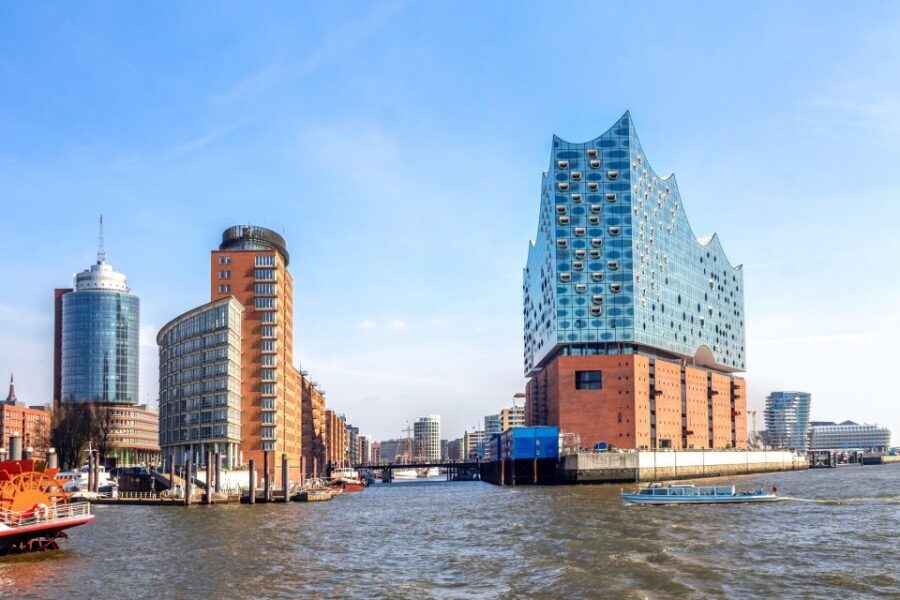
- Elbphilharmonie from the water: a classic Hamburg skyline moment, timed into a working-ports route
- Live captain-led narration in German: you’ll learn how the harbor works, not just what it looks like
Why Hamburg’s harbor cruise feels different from the usual city boat ride
Hamburg’s waterfront can be pretty, sure. But this cruise is built for another kind of appreciation: how goods actually move, how ships actually operate, and how the city and the port keep feeding each other.
That mix is what makes the experience click for most people. You’re not only spotting landmarks; you’re watching the systems behind them—water traffic control, canal transitions, and the industrial choreography that keeps one of Europe’s busiest ports running.
The boat ride is also long enough to matter. With two hours, you get time to leave the tourist shoreline behind and still return with a full picture of what the port is doing today.
You can also read our reviews of more tours and experiences in Hamburg.

Landing at Landungsbrücken and figuring out the best side of the trip
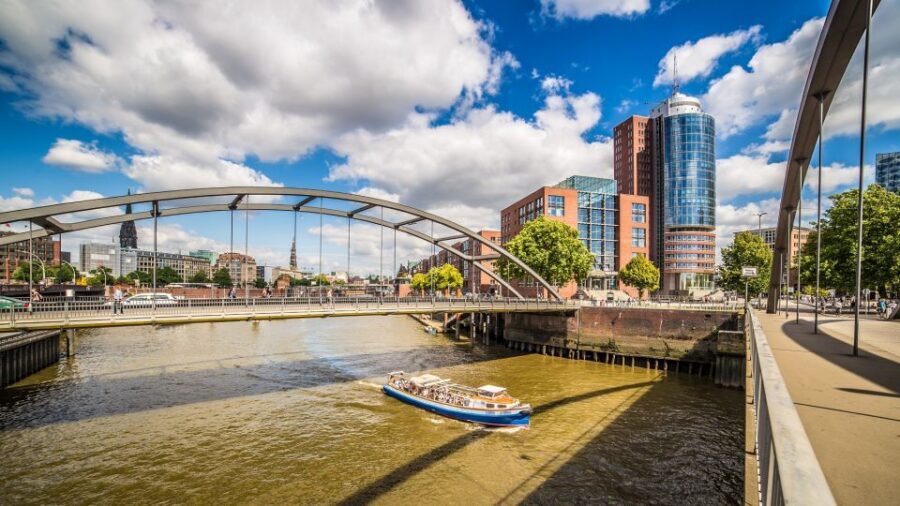
Your start point is practical: pier 3 at Landungsbrücken, where Kapitän Prüsse runs the cruise. Landungsbrücken is one of those places that instantly makes sense once you arrive—boats everywhere, water traffic in motion, and Hamburg’s port energy right in your face.
From here, the route quickly connects the city to the working harbor. You’ll cruise past well-known areas like Speicherstadt and HafenCity, then continue toward the Elbe so the skyline moments give way to industrial views.
One smart tip for this kind of tour: decide early that you’re going to optimize your seat for viewing. Because the cruise spends time around ports and terminals (where the action can be on one side of the boat), being settled in place early helps you catch the best angles.
Speicherstadt, HafenCity, and Elbphilharmonie: the city-side opener
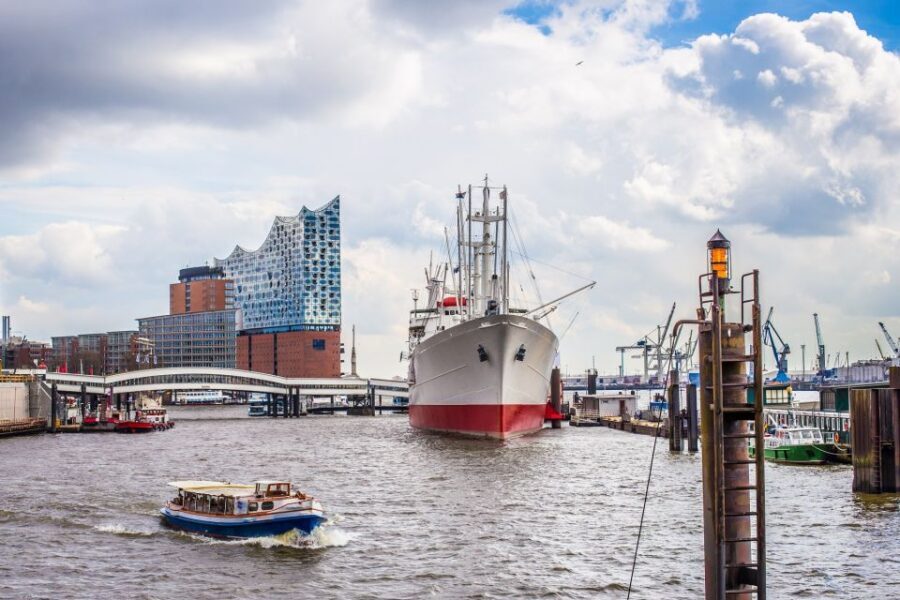
The early part of the cruise is your “Hamburg identity check.” You’ll see major landmarks from the water, and that matters because the port isn’t off to the side—it’s part of the city’s story.
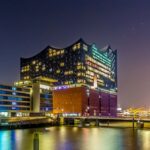
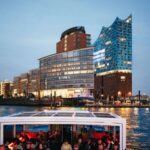
Elbphilharmonie is the headline for many people, and the water gives it a different character than photos. From the harbor, you tend to notice geometry: the building against the river channel, with cranes and industrial structures framing it like a backdrop.
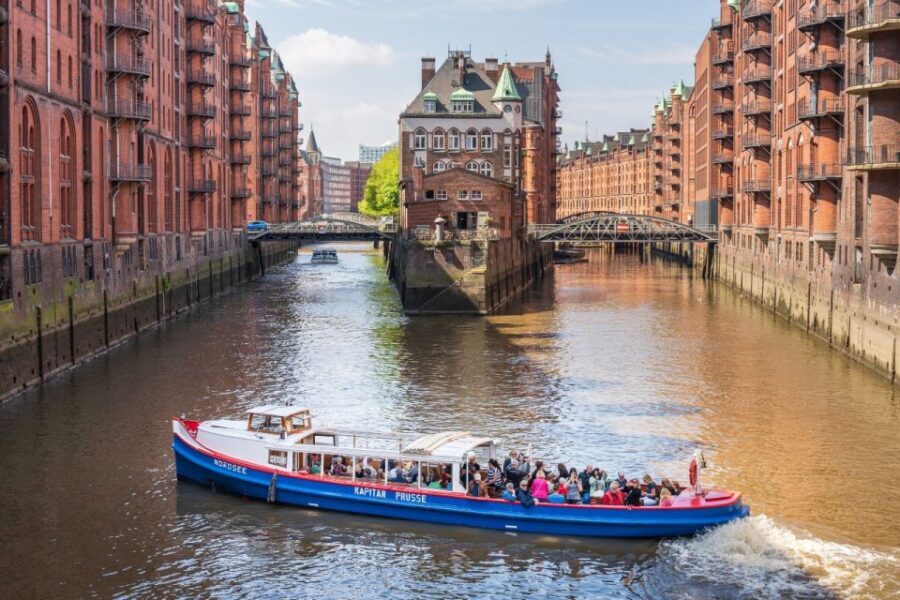
Speicherstadt and HafenCity also work well as a contrast set. Speicherstadt represents historic Hamburg brick-and-warehouse identity, while HafenCity is the newer layer of redevelopment. The tour uses these contrasts as a quick way to show how Hamburg has kept trading culture and infrastructure together.
Locks and canals: watching how ships move, not just where they end up
Here’s where the cruise becomes more than sightseeing. You’ll go through locks and canals, which are basically the harbor’s way of controlling water and timing ship movement.
It’s easy to think of a port as simply “big ships next to land.” But locks and canals show you the controlled side: how water levels and passage routes help ships transition safely through busy waterways.
Even if you don’t catch every German detail (and you won’t always), you’ll still understand what’s happening. You’ll see the boat slowing, waiting, and lining up with the passage. That rhythm teaches you something fast: this harbor is a system with rules, not just scenery.
Shipyards and container terminals: the industrial heart of the route
After the city-side landmarks, the cruise shifts into the working zone. You’ll pass shipyards and container terminals, and that’s where the scale can surprise you.
Watching ships and terminals from a boat changes your sense of distance. On land, you feel “nearby.” On water, you feel embedded in the operation—long stretches of cranes, container stacks, and moving logistics that look almost architectural.
One of the most praised parts of this tour is the closeness you get. You don’t just glance at container handling; you get the chance to watch large-scale freight operations from a vantage point where you can actually see motion and structure.
For many people, this is the mental shift that makes the tour feel worth the price: the harbor becomes understandable. You start noticing how the port is organized for throughput—where massive volumes get handled efficiently, and how ships relate to specific industrial sections.


Waltershof: seeing giant container ships where the action is
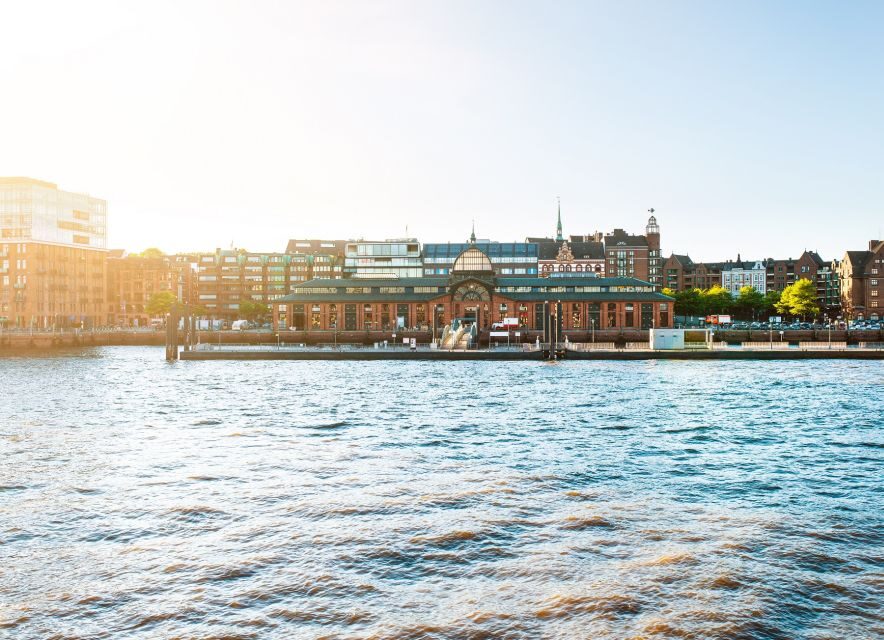
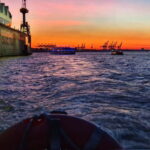
The cruise continues down the Elbe to the port of Waltershof. This is one of the key moments because Waltershof is where you’ll see huge container ships—the kind of sight that makes the whole two hours feel like it’s “really going somewhere.”
This part of the tour matters because it brings you from the general idea of shipping to the reality of scale. Container ships aren’t just large; they’re rolling logistics. When you see them in the working harbor context, you immediately understand the role of terminals, water routes, and scheduling.
It’s also a good time to pay attention to the narration. The live captain and barge guides explain technical and economic aspects of how the port operates. That doesn’t turn the cruise into a classroom, but it does give your images meaning.
If you’re the kind of traveler who likes to connect design to function—where the industrial landscape is shaped by trade—you’ll probably get the most out of this stretch.
Övelgönne and the return to Landungsbrücken: a more relaxed ending
On the way back, you’ll return to the Elbe via Övelgönne, passing the waterfront area with beaches, restaurants, and bars before heading back to Landungsbrücken.
This return leg does two useful things. First, it softens the hard industrial visuals with more human-scale waterfront life. Second, it gives you a quick “recalibration” moment—so the port feels connected to everyday Hamburg, not like a separate world.
For photographers, it can also be a nice change. After intense industrial views, the waterline with restaurants and bars tends to feel more colorful and varied.
And after two hours, you’ll be ready for a walk, a snack, or just to process what you saw—because the cruise doesn’t only show sights. It gives you a route you can mentally map when you explore later on your own.
Live commentary with Kapitän Prüsse: how to get the most from German narration
The cruise includes live commentary by experienced captains and barge guides, and it’s listed as German. That’s a key detail because the value of this tour is interpretation, not just motion.
If you speak German, you’ll get the full benefit: explanations of port history, today’s operations, and the technical/economic logic behind what you’re observing. Even if you don’t, the best part is that the narration is tied to visible actions: locks, canal movement, shipyard areas, and container handling.
One practical approach: don’t try to translate every word. Instead, listen for the “what this is” cues and watch what changes right after the explanation.
Also, since the tour features multiple guides and captains (plus the captain-led perspective from Kapitän Prüsse), the flow can feel like a conversation between the boat crew and your questions. It’s a big reason many people rate the experience highly.
Price and value: is $34 worth two hours in Hamburg’s working port?
At $34 per person for 2 hours, the value comes from what you’re getting, not from what you’re repeating.
You’re paying for:
- Live captain and guide narration
- A route that combines major landmarks with the industrial harbor
- Close viewing of operational zones like container terminals and the port of Waltershof
Many short city cruises show skyline highlights. This one uses the harbor’s working areas to give you context you can’t easily get from a waterfront walk alone. And that context—how the port actually functions—turns the visuals into understanding.
Is it perfect value for everyone? No. If you want a purely relaxed, sightseeing-only boat ride with minimal technical talk, you might find the industrial focus less your style. But if you like seeing how big systems work, and you enjoy a bit of practical explanation, this price feels fair.
It’s also worth noting the overall rating: 4.6 based on 409 reviews. That typically signals that most people come away satisfied with what they learned and what they saw.
Weather, warmth, and seating: your comfort checklist
This cruise is very weather-dependent. One of the clearest notes from the experience is simple: it can be very cold, especially in cooler months. If you run cold easily, treat warm layers as non-negotiable.
Also plan for real-life boat seating tradeoffs. Some people can end up with less-than-ideal sightlines depending on where they sit and how sections of the boat are arranged. If you care about views, get settled early after boarding at pier 3.
Bring weather-appropriate clothing, and don’t assume you’ll be warm just because you’re moving. A working harbor boat ride can feel chilly once you’re out in open wind.
Who should book this cruise (and who might pass)
This tour suits you if:
- You want Hamburg beyond the postcard, with the port’s real operation as the main event
- You like technical explanations tied to real sights—locks, canals, shipyards, container handling
- You’re interested in how major landmarks like Elbphilharmonie look when framed by industrial infrastructure
- You’re happy spending two hours outside with live guidance in German
You might skip it if:
- You need guaranteed step-by-step narration in a language you fully understand and you’re not comfortable with German
- You’re only here for relaxed sightseeing and don’t want the cruise to focus heavily on shipping and port functions
- You’re very sensitive to cold and don’t want to dress for wind and chill
Should you book the Hamburg Ultimate Barge Tour?
If you like ports, ships, and how big cities actually run, I’d book this. It’s one of those Hamburg experiences where the visuals do the convincing, and the live commentary helps you connect the dots fast—especially around Waltershof and the container terminals.
My main caution is comfort and expectations. Dress warm, pick a good seat early, and go in knowing it’s a working harbor ride with German live narration and technical/economic talk as part of the package.
If that sounds like your kind of travel—practical, on-the-ground, and real—then this is a strong use of your time in Hamburg.