REVIEW · HAMBURG
Hamburg: City Tour by Bike with Elbphilharmonie
Book on GetYourGuide →Operated by Kaupert-Hamburg-Radtour.de · Bookable on GetYourGuide
Hamburg by bike turns city sightseeing into something you can actually feel. You’ll glide from the calm lakeside Alster views into the working-port grit of Speicherstadt and finish at the Elbphilharmonie area with perspectives from both old and new Hamburg. It’s a smart mix: canals and brick warehouses for atmosphere, plus modern HafenCity angles for the jaw-drop factor.
What I like most is how the route stitches together Hamburg’s stories without turning it into a history lecture. You’ll ride along the Binnenalster panorama, then push onward past designer shopping streets toward the UNESCO-protected brick harbor district, with stops designed for photos and short guided explanations. The second big win is the scope of scenery in just 3.5 hours: old ports, the Fleete waterways, and HafenCity’s postmodern edge all in one outing.
One thing to consider: Elbphilharmonie access can be restricted on days with major events, and the tour also notes that the drive to the plaza is subject to unpredictable accessibility. So if your heart is set on getting as close as possible, keep your expectations flexible.
In This Review
- Key things you’ll notice on this Hamburg bike tour
- Why biking works so well in Hamburg’s “old + new” story
- Getting oriented: meeting at the University bike station and setting your pace
- Alster Lake and Binnenalster panoramas: Hamburg’s water calm
- The Gängeviertel and the working-class-to-art shift
- Fleet-Island and the 1842 Great Fire route
- Neuer Wall, passages, and the modern shopping edge
- Deichstraße and Alt-Hamburg’s port-operation roots
- Speicherstadt: UNESCO brick architecture and the Fleete waterways
- HafenCity and the contrast with a former harbor district
- Elbphilharmonie views: getting angles from below
- Baumwall area, publishing steel, and St. Michael’s Church passing
- St. Pauli piers and the port mood at the end of the ride
- Price and value: is $39 worth it for 3.5 hours?
- Who should book this bike tour (and who might skip it)
- Should you book the Hamburg Bike with Elbphilharmonie?
- FAQ
- FAQ
- How long is the Hamburg bike tour?
- How much does the tour cost?
- Where do I meet the group?
- Where does the tour end?
- What sights do we pass or visit?
- Is the tour guided, and in which languages?
- Is a photo series included?
- Do we get to go to the Elbphilharmonie plaza?
- Can Elbphilharmonie access be restricted?
- What’s included in the price besides the guide?
Key things you’ll notice on this Hamburg bike tour
- Alster-to-port route: from Rotherbaum and the lake waters to the Fleete and warehouse canals
- UNESCO Speicherstadt by bike: massive brick architecture sitting on millions of oak poles
- HafenCity viewpoints: a strong contrast to the older harbor scenes
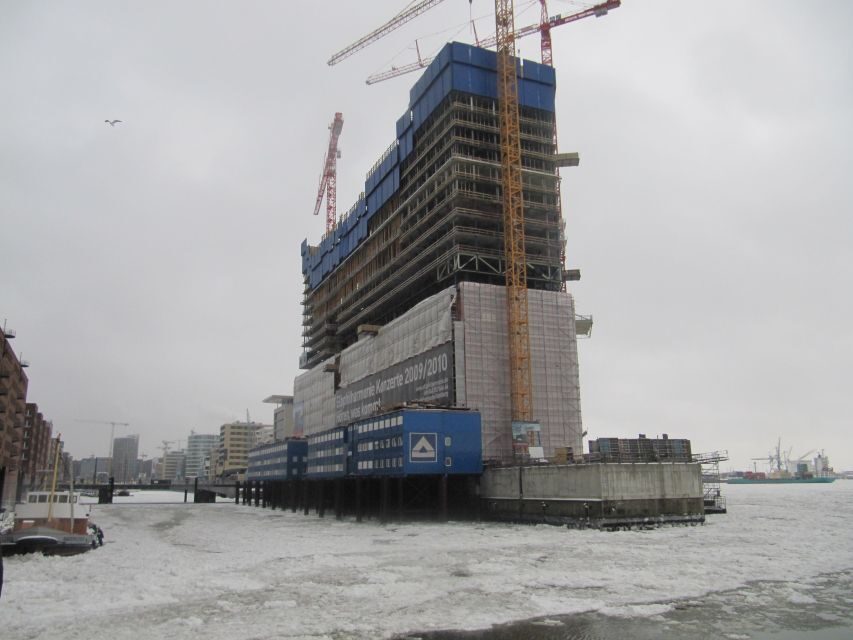
- Elbphilharmonie from below: a perspective that’s different from the usual street-level photos
- Short guided stops: you get direction and context at the key photo moments
- Guide energy: English or German narration with lots of city details (a guide named Bernhard was especially praised)
Why biking works so well in Hamburg’s “old + new” story
Hamburg isn’t just one vibe. It’s a patchwork of water, commerce, and reinvention. By bike, you cover ground fast enough to feel the connections between neighborhoods, without being stuck watching traffic or waiting for buses to crawl. The route is also built for “stop and look” moments, so you’re not rushing through the best parts.
You start in the Rotherbaum area around the University of Hamburg bicycle station, then head toward the lake system. From there, the tour keeps switching lanes—sometimes literally in the mental sense. You go from park-and-water calm to harbor operations streets, then into the dense, photogenic blockwork of Speicherstadt, and finally into the sweeping lines of HafenCity.
For many visitors, the biggest value is clarity. You’ll leave with a mental map of where the old harbor functions lived, how new districts were planned, and why the Elbphilharmonie sits where it does. That context makes everything you see later in town click faster.
You can also read our reviews of more cycling tours in Hamburg

Getting oriented: meeting at the University bike station and setting your pace
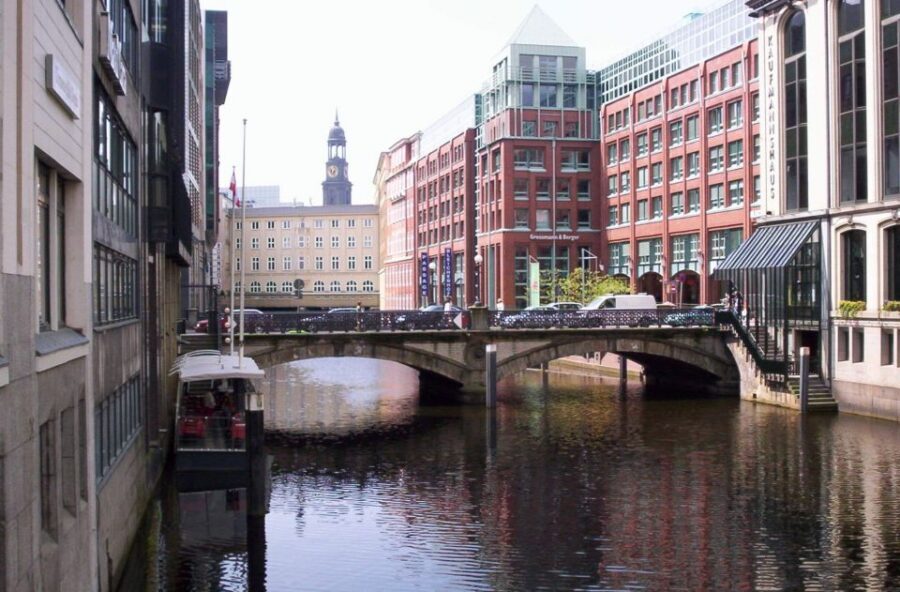
You meet outside the Fahrradstation of the University of Hamburg, with route details pointing to Schlüterstraße 11 as the starting location. That’s a practical choice: you’re not thrown into a confusing end-of-the-line pickup. Once you’re rolling, you’re on a guided path that links neighborhoods together in a logical arc.
The tour runs about 3.5 hours, with multiple potential starting times depending on availability. Since this is a bike tour with guided photo stops, it’s paced for seeing and listening rather than sprinting. That helps if you want the “I get it now” effect at the end of the ride.
Tip for getting the most from it: wear shoes you can walk in quickly at photo stops. Even when you’re on a bike schedule, some moments work best when you step off, turn your phone/camera, and listen to the guide’s point.
Alster Lake and Binnenalster panoramas: Hamburg’s water calm
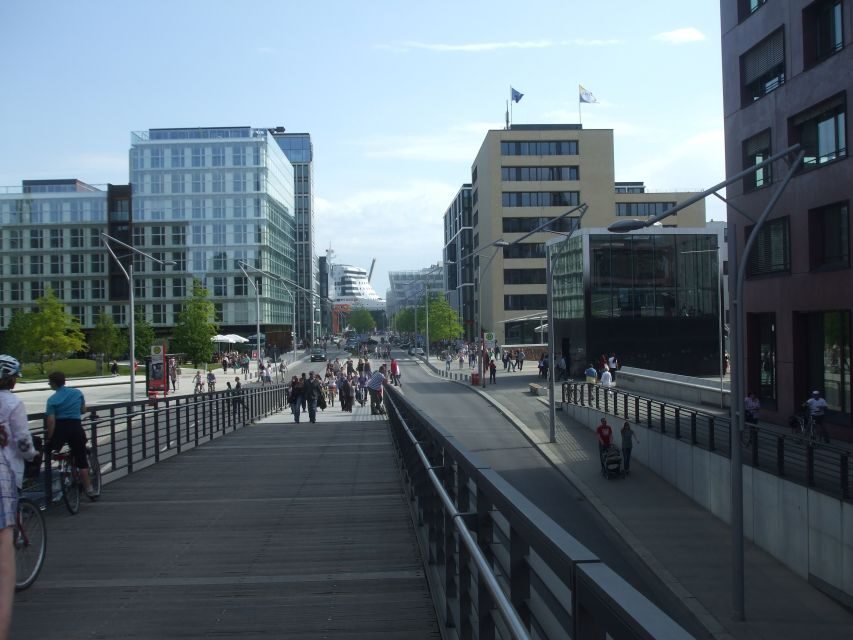
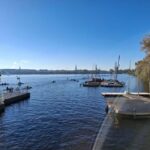
Early on, you ride along the Außenalster and then around to the Binnenalster. This part matters because it teaches you what kind of city Hamburg is. The water isn’t background decoration here—it shapes how people live, work, and move.
You’ll get a photo stop and guided explanation around the lake areas. Expect open views and a gentler pace compared with the harbor sections. It’s also the moment where many people realize the city isn’t flat and uniform. You’ll see how Hamburg frames waterways with streets, parks, and skyline edges.
If you like towns where the best photos are tied to real walking paths and easy overlooks, this first water sequence is a strong start. It sets a tone before you hit the heavier maritime districts.
The Gängeviertel and the working-class-to-art shift
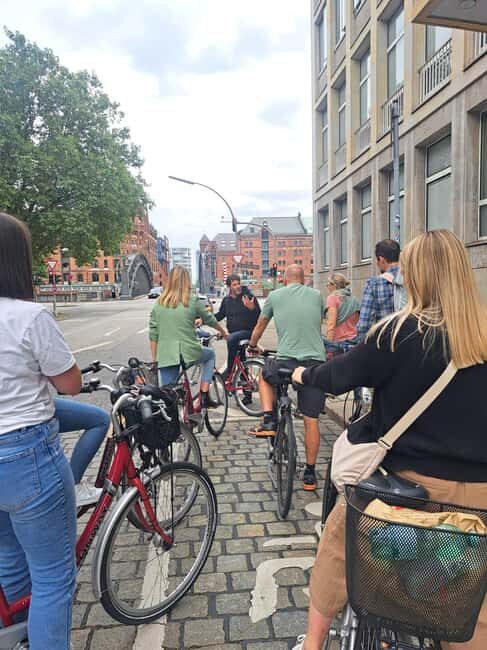
Next comes the newer-town streets, including the Gängeviertel, described as a preserved working-class district from the 18th century that now hosts the art scene. This is a great stop for understanding Hamburg’s habit of reusing spaces with purpose instead of wiping everything clean.
You’ll also hear about the memorial stone connected with the birthplace of Johannes Brahms. That detail is the kind of thing you would easily miss on your own, especially if you only focus on the big postcard landmarks. It’s proof the tour pays attention to cultural anchors, not just skyline views.
The tradeoff is that this area can feel more “local neighborhood” than “grand monument.” If you’re expecting only dramatic architecture for every minute, you might find a few sections slower. But the payback is that the city starts to feel lived-in rather than staged.
Fleet-Island and the 1842 Great Fire route
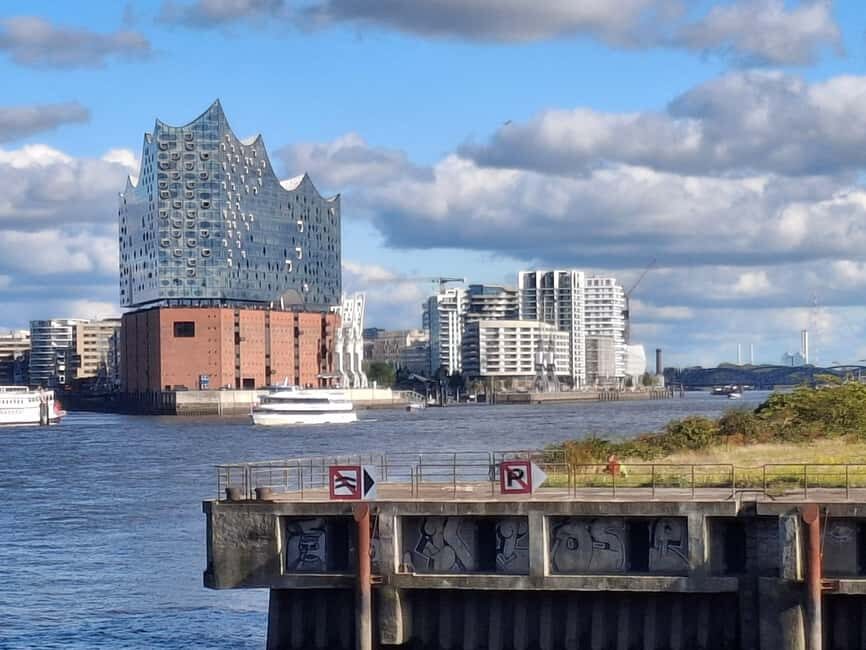
From there, you cross through areas connected to Fleet-Island, described as a former harbor with a link to the great fire of 1842. This is one of those historical breadcrumbs that makes later sights make more sense.
Why it’s valuable: harbor fires weren’t random disasters in shipping towns. They shaped building style, density, and where commercial districts grew or shifted. Even without a long lecture, the guide’s framing helps you read the city more intelligently as you keep cycling.
On a bike, you get the advantage of quick transitions. You’re not stuck inside museums to understand why buildings look the way they do. You move through the urban pattern itself.
You can also read our reviews of more city tours in Hamburg


Neuer Wall, passages, and the modern shopping edge
As you pass Neuer Wall, you’ll feel the metropolitan pulse. This is where Hamburg shifts again—less docks and warehouses, more designer streets and covered passages. The tour uses this moment as a contrast: it tells you that the city’s center of gravity doesn’t stay in the past.
You’ll get photo stops and guided context as you glide through. If you enjoy mixing a strong visual landmark with the everyday city experience, this stop delivers. It’s not all historic brick and canal haze. You get the shopping and business side too.
One consideration: if you dislike shopping areas, you’ll still have a sense of place here, but you may not linger. That’s fine. The tour keeps you moving toward heavier maritime atmosphere afterward.
Deichstraße and Alt-Hamburg’s port-operation roots
Next is Deichstraße, described as the origin of port operations of Alt-Hamburg. This street-specific framing is a smart way to understand what the tour is really doing. Hamburg isn’t just “a port city.” Different streets point to different operational roles over time.
You’ll get a guided photo stop here. The value is in linking the dots between today’s waterfront scenes and the older commercial logistics that powered the city. Even if you only catch a portion of the explanation, the street name context helps your memory later.
This segment works best if you pay attention to how the terrain and streets relate to water access. The tour keeps hinting at that relationship—where shipping could run, where goods could move, and why certain zones developed the way they did.
Speicherstadt: UNESCO brick architecture and the Fleete waterways
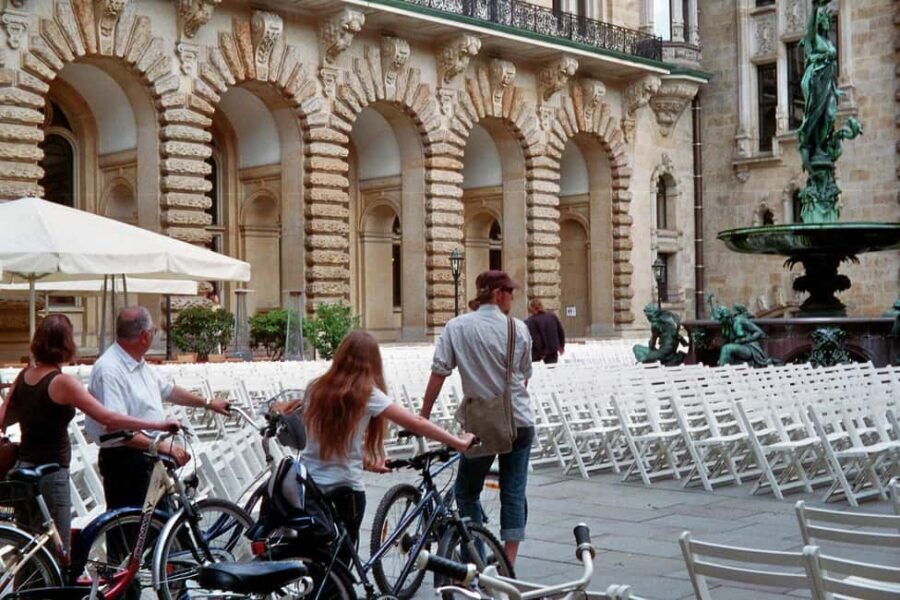
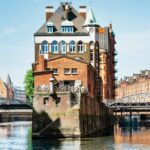
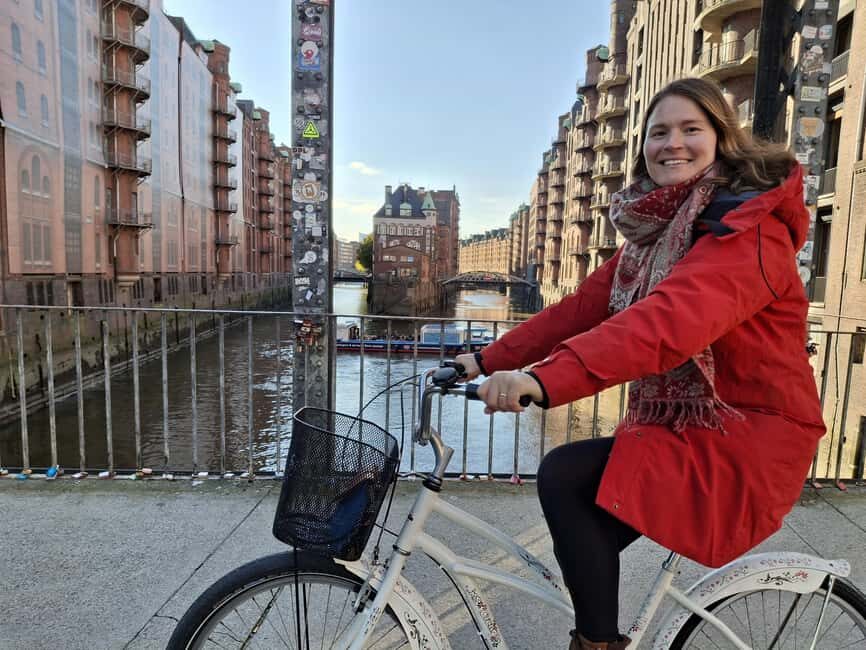
Then comes the big star: Speicherstadt, Hamburg’s UNESCO World Heritage site. You’ll be guided through the harbor warehouses known for their massive brick architecture from the 19th century.
The tour emphasizes a distinctive detail: these warehouses sit on millions of oak poles within the waterways called Fleete. That’s not just trivia. It explains why this district looks and works the way it does. The city built in water conditions, adapted to them, and turned limitations into identity.
You’ll get photo stops and guided touring as you move through the area. This is where biking pays off again. On foot, Speicherstadt can feel like one long maze. On a bike route, you get a steady flow of angles—enough variety to keep it interesting without feeling like a sprint.
Potential drawback: this district is packed with visual targets. It’s easy to get “camera fatigue.” I’d suggest choosing 2-3 priorities—one for the brick canal views, one for the warehouse textures, and one for the broader street perspective. Let the rest be a bonus.
HafenCity and the contrast with a former harbor district
From Speicherstadt, you roll into HafenCity, described as the former harbor area now shaped into a modern district. This is where Hamburg changes its language: the old warehouses give way to new urban planning, wider sightlines, and a more postmodern feel.
You’ll have guided stops and photo moments as you cycle through, giving you time to compare old brick canal forms with newer building styles. If you like architecture, this is one of the best parts of the tour because you’re seeing the city’s “before and after” in sequence.
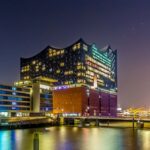
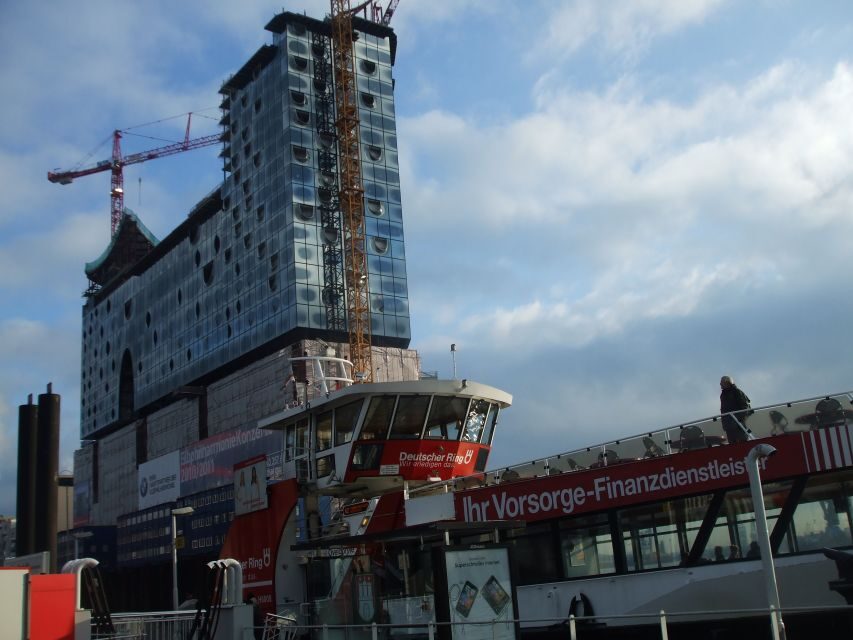
The tour also highlights the controversial Elbphilharmonie and its 110-meter-high presence. Even if you’re not a hardcore concertgoer, it’s hard to miss the impact. The guide’s framing helps you understand why it’s talked about, not just why it’s photographed.
Elbphilharmonie views: getting angles from below
The highlight area closes with Elbphilharmonie and a path across a new flood protection system offering views from below. This matters because many visitors only think of the Elbphilharmonie as a skyline object. Here, you also get the infrastructure perspective—the flood protection system shaping the waterfront experience.
The tour includes time to drive to the Elbphilharmonie plaza, but it’s explicitly noted that access can be subject to unpredictable situations. On a major-event day, entrance or access may be restricted or closed.
Still, the “from below” viewpoints are a practical workaround. You’re not completely dependent on plaza access to enjoy the building’s scale and design.
Photo tip: if you can position yourself on the lower paths, you’ll get the kind of perspective that makes the structure feel taller and more dramatic than street-level shots.
Baumwall area, publishing steel, and St. Michael’s Church passing
After HafenCity, you follow the tour path through the area around Baumwall, described as including a steel publishing building in a utopic-like design. You also pass St. Michael’s Church—a major visual anchor that adds traditional Hamburg weight to the modern waterfront sequence.
Then you continue through the historic Peterstraße area, linked with the Brahms- and Telemann Museum. This gives cultural continuity after the architecture contrasts. You’re not only seeing buildings; you’re passing through places that connect to major German music names.
For many people, St. Michael’s Church is a good moment to reset your brain. After modern shapes and canal geometry, it helps to see a landmark that feels deeply rooted and unmistakably Hamburg.
St. Pauli piers and the port mood at the end of the ride
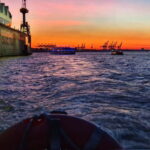
In the later stages, the route includes Neustadt and St. Pauli Piers, both linked with photo stops and guided context. This is a useful shift because it keeps the tour grounded in maritime atmosphere rather than stopping at the museum-piece waterfront.
You’ll approach the end of the tour still surrounded by water-and-port vibe. That’s a strong choice. It means your last impressions still match the city’s core identity.
Finally, you return to the original meeting point area near Schlüterstraße 11 after about 3 hours of riding and touring, passing exhibition halls along the way.
Price and value: is $39 worth it for 3.5 hours?
At $39 per person for a roughly 3.5-hour guided bike tour, the value comes from three things you don’t easily replicate on your own without planning:
- Guided context at the right spots
You’re not just moving between landmarks. The tour frames each area with the kind of “why this place matters” detail that makes photos and architecture feel meaningful.
- A bike route that connects multiple neighborhoods
The Alster, Speicherstadt, HafenCity, and Elbphilharmonie area aren’t in a neat one-block circle. The tour stitches them together efficiently.
- Extra media help
You get a city map and a photo series emailed to you afterward. That’s a practical perk if you’re trying to keep a clean camera workflow and still come home with good city imagery.
Where you might hesitate: if you’re the type who hates listening while biking, or if you already know Hamburg’s major sites inside out, you could get a similar sense of place by building your own route. But for first-time visitors or anyone who wants structure without heavy planning, $39 feels fair.
Who should book this bike tour (and who might skip it)
This tour fits best if you want a strong mix of water views, maritime districts, and architecture contrast without wasting time figuring out logistics. It’s also great if you like short guided stops where you can ask questions and keep moving.
Skip it (or swap your expectations) if you’re primarily interested in only one area, like Speicherstadt alone, or if you know you’ll be stressed by possible access limitations around the Elbphilharmonie on event days.
Also, if you’re visiting during a big event calendar, remember that Elbphilharmonie access may be restricted. Plan to enjoy the broader route even if plaza access isn’t possible.
Should you book the Hamburg Bike with Elbphilharmonie?
Yes, if you want an efficient, story-driven way to connect Hamburg’s Alster, old harbor warehouses, and modern HafenCity in one ride. The biggest reason to book is the order of scenes: calm lake panorama first, then the UNESCO brick canals, then the modern waterfront climax at Elbphilharmonie with views from below.
I’d book it especially if you care about getting context, not just photos. The guide experience is clearly a selling point, with strong praise for a guide named Bernhard and the amount of information shared. At the same time, keep a flexible mindset about Elbphilharmonie plaza access on busy days, because that part is not guaranteed.
If you’re comfortable biking and want a guided route that helps you understand Hamburg fast, this one is a solid pick.
FAQ
FAQ
How long is the Hamburg bike tour?
It runs about 3.5 hours.
How much does the tour cost?
The price is $39 per person.
Where do I meet the group?
You meet outside the Fahrradstation of the University of Hamburg. The route details also list Schlüterstraße 11 as the starting location.
Where does the tour end?
It ends back at the meeting point near where you started.
What sights do we pass or visit?
You’ll cycle past or stop for photo and guided moments at places including Alster Lake, Hamburg Old Town, the Townhall, Deichstraße, Speicherstadt, HafenCity, Elbphilharmonie, Neustadt, St. Michael’s Church, and St. Pauli Piers.
Is the tour guided, and in which languages?
Yes. The live guide is available in English and German.
Is a photo series included?
Yes. You get a photo series about Hamburg via email.
Do we get to go to the Elbphilharmonie plaza?
The tour includes time to drive to the Elbphilharmonie plaza, but access can be subject to unpredictable situations.
Can Elbphilharmonie access be restricted?
On days with major events, access to the Elbphilharmonie may be restricted or closed.
What’s included in the price besides the guide?
In addition to the guide, the tour includes a bicycle, a city map, and the 3-hour/3.5-hour guided bike experience.