REVIEW · OBERHAUSEN
Oberhausen: The Last Days of Pompeii Immersive Experience
Book on GetYourGuide →Operated by FKP Scorpio Entertainment GmbH · Bookable on GetYourGuide
If you like history with your feet moving, this one fits. The Last Days of Pompeii in Oberhausen blends a 360° immersive show of the city’s final moments with a Metaversum section focused on Roman daily life and beliefs.
Two highlights are easy to love: you get to experience the eruption of Vesuvius as a cinematic, room-filling event, and the VR adds kinetic spectacle with a gladiator fight plus a Naumachia battle. One thing to think about: a few people noted audio dropouts during moving-image moments, so if you’re sensitive to sound glitches, go in with realistic expectations.
In This Review
- Key takeaways before you go
- Pompeii, in Oberhausen: what this show is really good at
- The ancient city tour and the Vesuvio moment (360° projections)
- A practical note on sound
- Metaversum: Villa of the Mysteries and Pompejan traditions
- VR gladiator fight: arena energy without the travel
- VR Naumachia battle: naval-style drama
- The charging-car VR moment that pushes you into the amphitheater
- How the pacing helps (and who it suits best)
- Value: why it can be worth your money even with a premium ticket
- What to do before and after to get the most out of it
- Provider and why that matters
- Should you book The Last Days of Pompeii in Oberhausen?
- FAQ
- How does the 360° immersive show work?
- What is included in Metaversum?
- What VR experiences are included?
- Is this experience good for people who like action and spectacle?
- Can I buy a gift voucher for this experience?
- Can I reserve now and pay later?
Key takeaways before you go
- 360° Vesuvio outbreak scene with projections built for full-room sightlines
- Metaversum + Villa of the Mysteries route that explains how Pompejans lived and thought
- VR gladiator and Naumachia combat for a faster, action-heavy pace
- Charging-car VR moment that feeds into the amphitheater storyline
- High satisfaction score (4.6/5 from 65 reviews), with most feedback focused on how fun and memorable it felt
Pompeii, in Oberhausen: what this show is really good at
Oberhausen is not where you expect to meet Pompeii face-to-face. Yet that’s exactly the point. This experience is built to bring you close to the story of Rome’s doomed city—without you needing to travel to southern Italy.
What I like about the format is that it mixes three ways of learning. First, you’re guided through an ancient-city setting with 360° projections that turn the eruption into something you can look around during. Second, you switch gears to a Metaversum area that focuses less on chaos and more on Roman culture—especially what people believed and how they lived. Third, you add VR, where the story becomes physical and fast, with arena combat and naval-style battle action.
The result is not a museum lecture. It’s a paced experience that keeps changing tools: show staging, interactive exploration, then VR. That variety matters, because Pompeii can turn into “lots of ruins and dates” for some visitors. Here, you’re encouraged to stay engaged through different formats.
You can also read our reviews of more tours and experiences in Oberhausen.



The ancient city tour and the Vesuvio moment (360° projections)
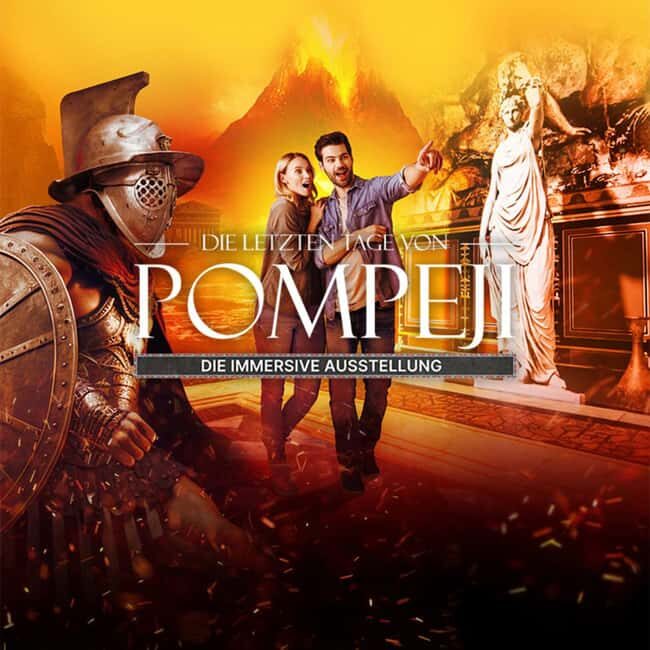
The heart of the event is the guided, cinematic walk through the ancient city during the outbreak of Vesuvius. Instead of simply showing you disaster from one angle, the production uses 360º projection coverage so you’re surrounded by what’s happening.
Think of it like this: you’re not just watching a clip on a wall. You’re positioned to react to a scene unfolding around you. That’s valuable because the last days of Pompeii aren’t easy to picture from photos alone. The eruption is bigger than any single statue, fresco, or doorway—and this format tries to communicate that scale with your body in the room.
What to look for during the tour:
- How the production frames the city streets: you’ll get a sense of movement and density, not just “static ruins.”
- The shift from normal life to crisis: the story is staged to take you from everyday city rhythm toward the moment ash and lava take over.
A practical note on sound
A couple of people flagged occasional audio issues during moving-image parts. So if you rely on narration or sound effects to follow every beat, it’s smart to show up ready to enjoy it even if you miss a line here and there. Keeping your eyes on the visuals will still carry the experience.
Metaversum: Villa of the Mysteries and Pompejan traditions
After the disaster storyline, the experience transitions into Metaversum, which focuses on the Villa of the Mysteries and the world inside Pompeii. The key promise here is cultural context: you learn more about the Pompejans as people, not just as victims of a volcanic event.
The Villa of the Mysteries is a strong choice for this kind of setting. It’s tied to religious imagery and ritual themes, and that matters because Pompeii wasn’t only buildings—it was also beliefs, ceremonies, and daily routines shaped by those ideas. In a guided, immersive-style environment, you’re not just told that these symbols existed; you get a chance to connect them to what life might have felt like.
In this Metaversum section, you can expect:
- A look at the Villa of the Mysteries
- Exploration of the Pompejans and their traditions
Why this section is worth your time
If the Vesuvio moment grabs you emotionally, this part grounds you intellectually. It helps you understand that the city’s end is not the whole story. Pompeii’s final days hit harder when you remember it was a functioning place with routines and rituals.
VR gladiator fight: arena energy without the travel
Then comes VR, and it’s the fastest-paced part of the experience. You’ll watch a gladiator fight in virtual form, where combat becomes something you can visually track rather than simply imagine. Even if you’re not a Roman-history superfan, gladiators are one of those subjects that make history feel immediate.
VR works best here because it turns a topic that’s often explained in words into a sequence you can follow. You don’t need to know every term to understand the vibe: crowd pressure, movement, and the intensity of the arena.
A few people said the VR element was a highlight, and that makes sense. It’s the part that feels the most “today,” while the rest of the show feels more cinematic and staged.


VR Naumachia battle: naval-style drama
Next is the Naumachia battle. A Naumachia, in simple terms, is a staged spectacle—often described as a naval combat event—used for entertainment and spectacle. Here, you get to see that battle concept through VR, which is a big deal because “battle at sea” is hard to grasp from static displays.
Why I think this works for visitors
Pompeii is remembered for the eruption, but Roman public spectacle is the bigger cultural thread. The Naumachia VR segment helps you connect Pompeii’s world to the Roman Empire’s taste for major shows and performance.
The charging-car VR moment that pushes you into the amphitheater
One VR detail stands out: you don’t only watch from the sidelines. The experience includes a moment where you drive on a charging car with gladiators into an amphitheater.
This is the kind of add-on that’s easy to dismiss as “extra fun” until you realize it changes how you perceive the story. Being carried into the arena space—literally via motion in VR—turns the event from storytelling into sensation. That’s the best use of VR: not replacing everything, but adding a physical layer to a narrative.
How the pacing helps (and who it suits best)
The format alternates between:
- a guided show with 360° projections
- a cultural exploration area in Metaversum
- VR segments focused on action and spectacle
That matters because it prevents attention fatigue. Pompeii topics can feel heavy. Switching mediums keeps it from turning into one long, emotionally intense stretch.
Who will likely enjoy it most
- People who want Roman history with energy, not just reading labels
- Visitors who like a mix of visual storytelling and quick, memorable “wow” moments
- Families and groups who want different activities in one ticket (city scenes + Metaversum + VR)
Who should consider their expectations
If you want strictly academic interpretation, this might feel more like a high-production show than a traditional history visit. Also, if sound is essential to your understanding, the occasional audio dropout noted by some visitors is worth keeping in mind.
Value: why it can be worth your money even with a premium ticket
The big question for any ticketed show is value. Here’s how I’d judge it.
You’re not paying for one thing. You’re paying for a bundle: 360° projections, a Metaversum exploration tied to the Villa of the Mysteries and Pompejan traditions, plus multiple VR experiences (gladiator fight, Naumachia battle, and the charging-car/amphitheater moment).
That bundle is where value comes from. Even if one segment doesn’t fully land for you, you still have other pieces to enjoy. That’s different from a single attraction where you’re dependent on one component hitting for everyone in your group.
There is a practical extra cost people should watch for: one visitor mentioned a 6€ parking fee being hard to justify because the entry price already felt high. Whether you drive or not, it’s a reminder that total costs can go beyond the ticket itself. If you’re local or planning to use public transport, you avoid at least one surprise.
What to do before and after to get the most out of it
Since the experience is heavy on storytelling and visuals, I’d use the “prep light, pay attention hard” approach.
Before you go:
- Read just enough to know what Pompeii represents: a city preserved by ash after the eruption of Vesuvius.
- Don’t try to cram Roman history. The show is doing the heavy lifting.
During the experience:
- Watch how each section changes your role. In the 360° scenes, you’re reacting to disaster around you. In Metaversum, you’re studying culture and ritual themes. In VR, you’re the spectator-turned-participant.
- If you notice sound dropouts, shift your focus to the visuals and the staging. The event is still designed to communicate through images.
Afterward:
- If you still want more, this is the type of experience that makes you want the real-world context: other Roman sites, museum frescoes, and deeper explanations of Roman ritual life.
Provider and why that matters
This experience is run by FKP Scorpio Entertainment GmbH. That name matters less for your day-of-plan and more for what it signals about production style. You’re dealing with entertainment-first staging—serious visuals, structured pacing, and tech-driven segments like VR.
In plain terms: expect a performance you move through, not a quiet self-guided museum stroll.
Should you book The Last Days of Pompeii in Oberhausen?
Book it if you want a memorable, multi-format way to experience Pompeii’s final days and Roman spectacle in one outing. The strongest reasons to go are the 360° Vesuvio show and the fact that VR adds action—gladiators, a Naumachia battle, and that charging-car moment—without requiring you to be an expert.
Skip—or at least weigh your expectations—if you’re mainly seeking scholarly detail or you’re very sensitive to audio/narration. In that case, you might find the technical show elements less satisfying than a traditional guided tour.
If you’re traveling with mixed interests in your group, this is one of those rare options where everyone can find something to like: disaster drama, cultural context in Metaversum, and VR action for the people who want the most energy.
FAQ
How does the 360° immersive show work?
The immersive show guides you through an ancient city setting and includes the outbreak of Vesuvius, using 360° projections to show the last moments of the city.
What is included in Metaversum?
Metaversum is part of the experience where you explore the Villa of the Mysteries and learn about the traditions of the Pompejans.
What VR experiences are included?
VR includes a gladiator fight and a Naumachia battle, plus a scene where you drive on a charging car with gladiators into an amphitheater.
Is this experience good for people who like action and spectacle?
Yes. Between the gladiator and Naumachia VR content and the charging-car amphitheater moment, the experience includes plenty of high-energy spectacle.
Can I buy a gift voucher for this experience?
Yes. There are gift vouchers available for the last few days of Pompeii.
Can I reserve now and pay later?
Yes. You can reserve your spot and pay nothing today, and you can cancel up to 24 hours in advance for a full refund.