REVIEW · HAMBURG
Hamburg: 1-hour harbor tour
Book on Viator →Operated by Rainer Abicht Elbreederei GmbH & Co. KG · Bookable on Viator
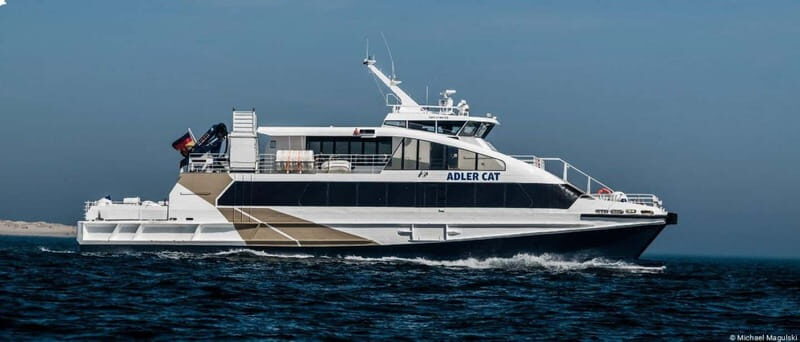
Hamburg’s port moves fast, and so does this tour. A short 1-hour Elbe harbor cruise gives you big views of Speicherstadt, working docks, and the cruise-ship area, plus a live guide on board. I like the practical route length (you won’t feel stuck at sea all day) and the way the commentary connects what you’re seeing, including the industrial highlights around St. Pauli and the port. One key consideration: the live narration is in German, so your English experience depends on the app.
You start at Rainer Abicht Elbreederei by the St. Pauli Landungsbrücken (Brücke 1), which keeps things simple and close to the action. Bring your own patience for one thing: if the English audio app doesn’t load quickly, you’ll be riding along with mostly German live narration.
In This Review
- Key things to know before you go
- Price and value for a 1-hour harbor cruise
- Finding Brücke 1 at St. Pauli Landungsbrücken without stress
- The 1-hour route: what you’ll see at each stop
- New landmarks and the “growing city” view
- Speicherstadt-style warehouses, cafes, museums, restaurants
- A modern district under development
- St. Pauli Landungsbrücken: the big docking hub
- Altona Fish Market area (including Sunday-life notes)
- Container terminals and the “real port” moment
- Elbe beach break for coffee and sun
- Cruise-ship docking zone and Blohm & Voss shipyard area
- The historic tunnel under the Elbe (still functional)
- Musical venues and a viewing platform
- Language reality: German narration vs. English audio app
- Who this harbor tour fits best (and who might feel shortchanged)
- Onboard comfort: restrooms and the “enough time” factor
- Should you book this Hamburg harbor tour?
- FAQ
- Is the harbor tour narrated in English?
- How long is the Hamburg harbor tour?
- Where do I meet the tour?
- Do I need to buy a separate ticket to use the restroom?
- Are drinks or meals included in the price?
- Can I choose the ship after I purchase tickets?
- Is there an option for people with disabilities?
- Is a mobile ticket required?
- Can I bring a service animal?
- What if plans change at the last minute?
Key things to know before you go
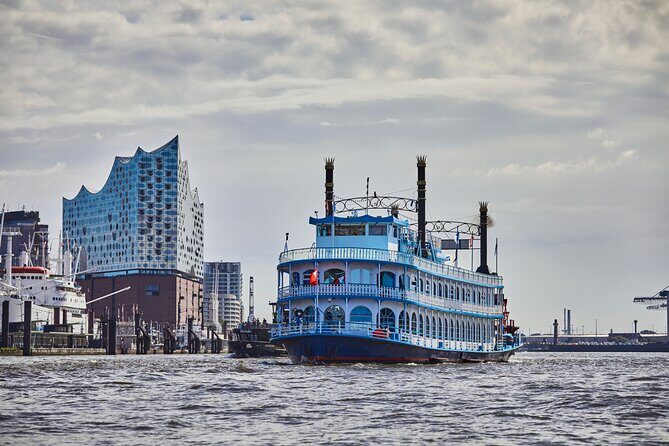
- Meet at Brücke 1 (Landing Bridge 1) near the city center, not some far-off dock maze.
- Live commentary is German, while English comes via the RainerAbicht audio app.
- Plan for headphones if you want English tracks to make sense during the ride.
- You’ll see real port operations, including container terminals and ships being loaded.
- Accessibility can work well on certain ships (River Star, Louisiana Star, MS Hamburg) and service animals are allowed.
- Choose your ship later: you can still pick a ship after purchase, and daily departures are guaranteed.
Price and value for a 1-hour harbor cruise
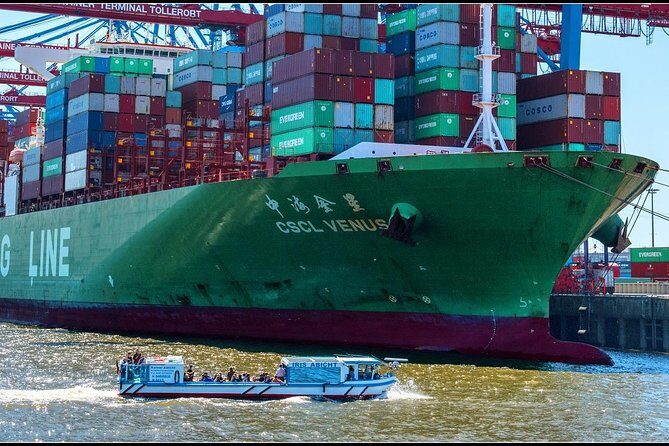
At about $36 per person for roughly an hour on the water, this isn’t a bargain-only deal. It is, however, good value for what you get: a working-port perspective plus live narration, without needing a full day or extra transfers.
If you’re the kind of traveler who enjoys seeing how a city actually functions (not just the postcard parts), you’ll likely feel the payoff right away. The port is one of Hamburg’s biggest characters, and the cruise window is long enough to notice patterns—how ships berth, how cargo moves, and how the waterfront shifts from old warehouses to newer development areas.
The catch is language. You can absolutely get an English experience, but only through the app. If you don’t want to manage that on the day, you may prefer a different tour that’s fully English-speaking.
A few more Hamburg tours and experiences worth a look

Finding Brücke 1 at St. Pauli Landungsbrücken without stress
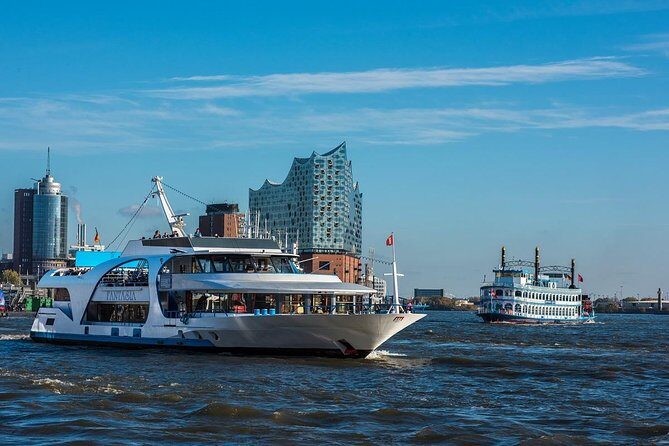
Meeting points can make or break short tours, and this one helps you out. You’ll be looking for Rainer Abicht Elbreederei at the St. Pauli Landungsbrücken, Brücke 1. That’s the big passenger docking station along the Elbe, on the northern edge of the port.
From the city side, this feels reachable on foot or by public transportation. Once you’re at the Landungsbrücken, the “port energy” hits quickly—passenger traffic, ship motion, and the constant sense that this area is in use, not staged.
One practical tip: arrive early enough that you can park your phone, check the app, and settle in with headphones. Short tours don’t give you time for tech troubleshooting.
The 1-hour route: what you’ll see at each stop
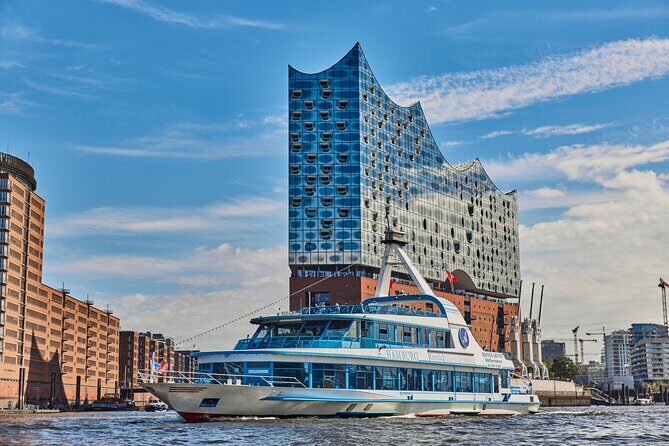
This cruise is built around variety. You get old and new Hamburg in a tight loop, plus a mix of passenger-ship sights and working cargo operations. Here’s what the route is designed to show you, stop by stop.
New landmarks and the “growing city” view
The ride kicks off with new landmarks of Hamburg, where you can spot how the city keeps expanding along the river. Even if you’re not chasing architecture details, these segments help you understand the timeline: Hamburg isn’t only about old warehouses—it’s also a city building forward.
What I like about this start is that it sets context. When you later see warehouses, shipyards, and port infrastructure, you’ll have a clearer mental map of what’s older, what’s under development, and what’s functioning today.
Potential drawback: if you’re hoping for more of the classic tourist-heavy sights, this portion can feel more “current city planning” than “wow landmark.”
Speicherstadt-style warehouses, cafes, museums, restaurants
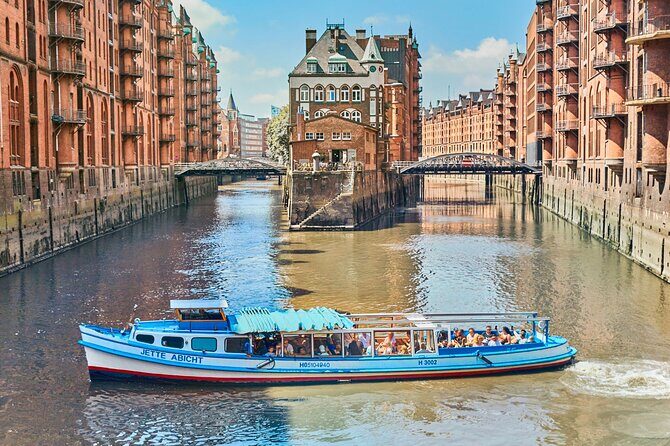
Next you shift toward historic buildings and warehouses—the kind of waterfront that tells you how Hamburg used to work and trade. Depending on timing and angle, you’ll also catch glimpses of everyday spots like small cafes and museums along the edges of the port.
This is a good moment to slow down visually. Warehouses and dock buildings read differently from the water: you’ll often notice how loading areas line up with water level, and how the waterfront was shaped for goods movement.
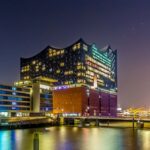


A modern district under development
Then comes a modern district under development. From the boat, you can see how new development is tied to the riverfront. It’s less about one specific building and more about the overall shift in the skyline and waterfront use.
Why it matters: seeing development from the water helps you avoid a common trap. In photos, waterfronts look static. From a moving boat, you see the transitions—old structures, new construction areas, and different shoreline functions in one view.
St. Pauli Landungsbrücken: the big docking hub
When you reach St. Pauli Landungsbrücken, you’re at the core of passenger port life. This is the main docking station for cruise and passenger ships on the Elbe’s port side, right along the area between Niederhafen and the St. Pauli Fish Market.
If you want the “Hamburg at waterline” feeling, this is where it clicks. The docks are busy, ships are close, and the river feels like it’s doing the work of the city.
Altona Fish Market area (including Sunday-life notes)
The route also includes the Altona Fish Market area. The tour information highlights that it’s a public market where you can find more than fish—groceries, flowers, and even clothing—especially on Sundays.
From the boat, you won’t necessarily see shoppers in close-up detail. Still, you’ll get the location’s feel: this is a working port district that mixes commerce with public life.
Container terminals and the “real port” moment
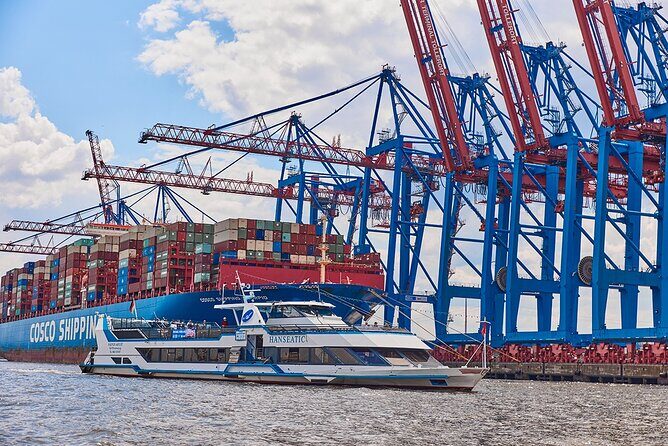
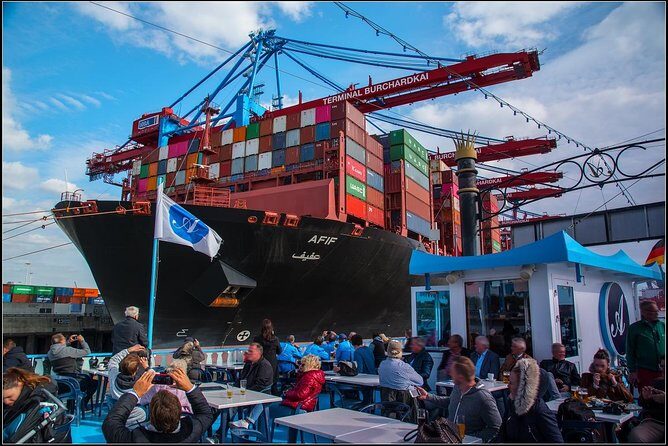
After that comes one of the main thrills: container terminals, container ships, and loading operations. This is where the cruise earns its keep for people who like scale and machinery.
It’s the difference between seeing a ship as a picture and seeing it as a system. From the water, you get a clearer sense of how containers move, how ships sit relative to the dock, and how logistics shapes the shoreline.
This is also a top pick for families and seniors, because it’s visually interesting without requiring long walking. You can take in the port without tiring your legs.
Elbe beach break for coffee and sun
You’ll pass the Elbe beach area, described as a great spot to relax, sunbathe, or grab a coffee. If the weather cooperates, this segment is a mental reset. Hamburg’s harbor is industrial, then suddenly you get this calmer shoreline vibe.
Practical note: drinks and meals aren’t included in the tour. If you want coffee, you’ll be making your plan on your own during/after.
Cruise-ship docking zone and Blohm & Voss shipyard area
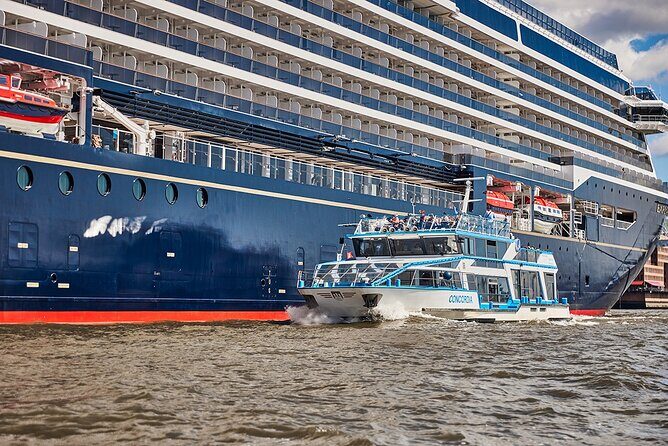
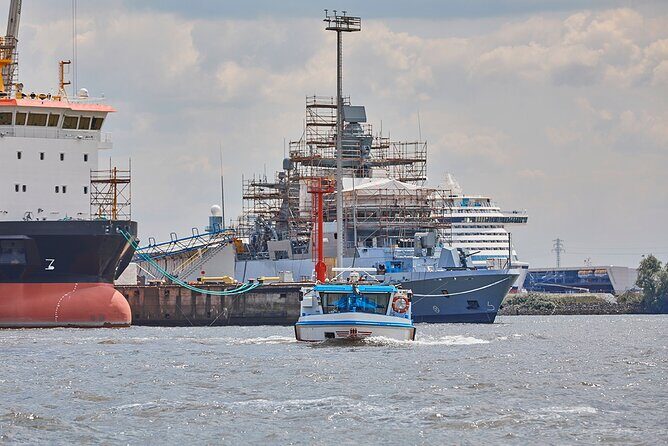
Next is the area where many cruise ships dock, with examples like Queen Mary 2 and AIDA depending on the date. You’ll also see the Blohm & Voss area, tied to shipbuilding and/or repairs.
This is a great contrast moment. Cruise ships bring tourism glamour; shipyard zones bring engineering reality. Together, they explain why Hamburg is both a visitor city and a major maritime workplace.
The historic tunnel under the Elbe (still functional)
One stop highlights a historic tunnel under the Elbe that still runs from the Landungsbrücken area to Steinwerder. Even if you don’t have time to study it like a museum, seeing that you’re passing above a functional under-river connection adds a whole extra layer.
It’s one of those “wait, that’s real?” details that makes the port feel like infrastructure, not scenery.
Musical venues and a viewing platform
Finally, the route points you toward major musical venues in Hamburg and a nearby viewing platform. From the water, you get a sense of how St. Pauli’s entertainment district sits right next to the working riverfront.
This pairing is part of why Hamburg feels different. You don’t get one theme per neighborhood. You get layers stacked together.
Language reality: German narration vs. English audio app
Here’s the make-or-break detail. The tour includes live commentary by the guide in German, and English is delivered through the RainerAbicht audio guide app. The app is available in English, Spanish, Italian, Russian, and Chinese.
What I recommend:
- Download the English track before you board (use Wi‑Fi if you can).
- Bring headphones. If you try to listen through phone speakers or without audio, you’ll miss a lot.
- If your phone battery runs low, keep a portable charger handy.
The trade-off is simple: if you don’t speak German and you show up without the app ready, you’ll likely feel like you’re mostly watching rather than learning. If you do prep the app, you can turn this into a more meaningful tour in a short time.
Who this harbor tour fits best (and who might feel shortchanged)
This is a strong match for:
- Families with small kids who need a short outing with big visuals.
- Seniors who want movement without long walks.
- Travelers who enjoy port-industrial scenes more than classic monuments.
The tour also notes that some ships are accessible for those with disabilities, including River Star, Louisiana Star, and MS Hamburg. Service animals are allowed, and the meeting point is near public transportation.
Who might feel disappointed:
- If you specifically want a fully English-guided experience without relying on an app.
- If you don’t want to manage headphones or phone setup during a short ride.
And one small onboard practical note from real-world experience: if you plan to buy something on-site, it’s smart to be prepared with payment methods, since onboard purchase options may not match what you expect.
Onboard comfort: restrooms and the “enough time” factor
For a one-hour cruise, the essentials are covered. You have a restroom on board, which sounds basic until you’re with kids or you’re traveling with mobility needs.
The time also works. One hour is long enough to see multiple districts and pass major port zones, but short enough to stay comfortable—especially if you’re doing lunch immediately afterward. If your plan includes a meal nearby in the St. Pauli area, this kind of duration is easy to plug into your day.
Groups are capped (up to 400 travelers), and the tour offers guaranteed daily departures. That helps if you’re on a tight schedule.
Should you book this Hamburg harbor tour?
Book it if you want:
- A high-views, low-walking way to understand how Hamburg uses its riverfront.
- A fast introduction to both port operations (containers, loading scenes) and the cruise-ship world.
- To use the RainerAbicht app so you can actually enjoy the narration in English.
Skip or reconsider if:
- You need a truly English live-guide experience with no phone dependence.
- You don’t like doing audio downloads before you travel.
- Your group includes someone who can’t use headphones or a mobile app reliably.
If you do book, make your life easy: arrive early at Brücke 1, download the English audio, and bring headphones. Then you’ll get the best part of Hamburg’s harbor—the working side of the city—without spending your whole day chasing it.
FAQ
Is the harbor tour narrated in English?
The live commentary on board is in German. English is available through the RainerAbicht audio guide app (and other languages are also offered).
How long is the Hamburg harbor tour?
It runs for about 1 hour.
Where do I meet the tour?
Meet at Rainer Abicht Elbreederei at the St. Pauli Landungsbrücken, Brücke 1 (20359 Hamburg, Germany).
Do I need to buy a separate ticket to use the restroom?
No. A restroom is available on board as part of the tour.
Are drinks or meals included in the price?
No. Drinks and meals are not included, though you can book them on-site.
Can I choose the ship after I purchase tickets?
Yes. The tour allows free choice of ship even after purchase.
Is there an option for people with disabilities?
Some of the passenger ships are accessible for those with disabilities, including River Star, Louisiana Star, and MS Hamburg.
Is a mobile ticket required?
Yes, the tour offers a mobile ticket.
Can I bring a service animal?
Yes. Service animals are allowed.
What if plans change at the last minute?
You can cancel for a full refund up to 24 hours before the experience start time.