REVIEW · FREIBURG
Freiburg: Walking and Strolling the Historic Center
Book on GetYourGuide →Operated by Calafati Vittoria · Bookable on GetYourGuide
Freiburg’s old town has a way of talking to you. In a short private walk, I like how the story unfolds through decorated monuments and the everyday clues you’d otherwise miss. You get a focused way to understand why Freiburg is often called the greenest city in Germany and why the Black Forest label fits so well.
What I especially enjoy is the guide’s storytelling pace. Vittoria Calafati is described as engaged, humorous, and deeply competent, and the tour uses that energy to connect facts to what you’re actually seeing on the streets.
One thing to plan for: this is a rain-or-shine stroll. If you don’t love walking on slick sidewalks, bring shoes with grip and keep a small water bottle handy.
In This Review
- Key things worth knowing before you go
- Why Freiburg’s medieval center feels like a living museum
- Münsterplatz to the cathedral: orienting fast and understanding the center
- What to watch for here
- Gargoyles, symbols, and why faces on facades matter
- A small but smart tip
- Konviktstraße and the gate legends: Schwabentor and St. Martin’s Tor
- Small canals, the Gerberau crocodile, and other odd Freiburg details
- Why I like adding these quirky stops
- Culture under Habsburg protection to the 19th century: history you can see
- Private guide value: what $212 for up to 10 really buys you
- Logistics that make or break a walking tour
- Who this tour is best for
- Should you book this Freiburg historic-center walk?
- FAQ
- How long is the Freiburg walking and strolling historic center tour?
- What is the meeting point?
- Is this a private tour?
- What languages are available?
- How many people are included per group?
- What should I bring?
- Is the tour canceled if it rains?
- Is food or hotel pickup included?
- Is there free cancellation?
Key things worth knowing before you go
- Private, small-group feel: you move at a comfortable pace with time for questions.
- Decorations that explain history: gargoyles, facades, and symbolism aren’t just decoration on this route.
- Anchor spots in the center: Münsterplatz, the Gothic cathedral, Konviktstraße, and the key gate landmarks.
- Quirky Freiburg details: you’ll hear about the Crocodile of Gerberau and other oddities like mosaic pavements.
- Water, used then and now: the small canals and how they work in everyday life.
- Two languages available: the live guide offers Italian and English.
Why Freiburg’s medieval center feels like a living museum
Freiburg can be easy to underestimate if you just pass through. This tour is designed to help you read the town like a page of text. You walk, you pause, and then you learn what to look for: the meaning of carved figures, the reason certain buildings became important, and how the city grew into its merchant-town identity.
The best part is that you’re not getting a long lecture. You’re getting short, visual explanations as you move from one landmark to the next—Münsterplatz, the cathedral area, Konviktstraße, city gates, and the canal zone. That makes it easier to remember what you saw, not just what you were told.
Also, Freiburg’s “green city” reputation makes more sense when you’re on foot in the center. You notice how the streets are laid out, where water runs, and why the city feels both historic and practical.
You can also read our reviews of more walking tours in Freiburg

Münsterplatz to the cathedral: orienting fast and understanding the center
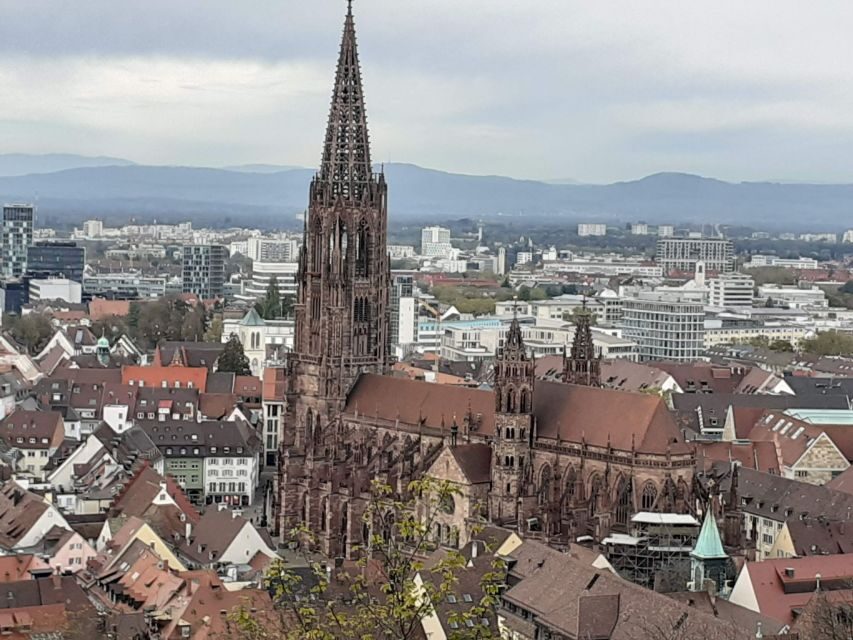
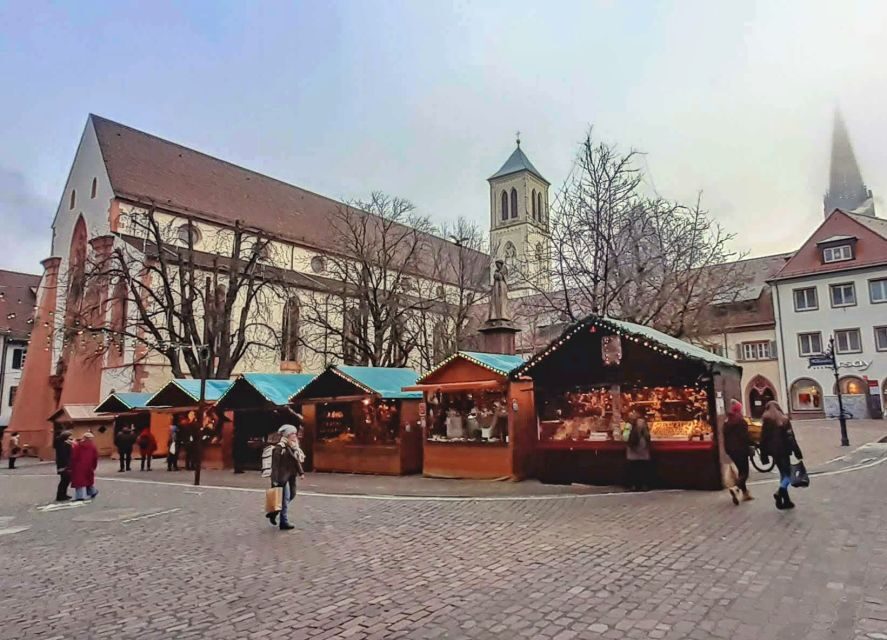
The walk begins at Münsterplatz, the natural hub of central Freiburg. You meet your guide at the entrance of the cathedral on the right, then you settle into the rhythm of the old town: short distances, plenty of viewpoints, and frequent “look closely” moments.
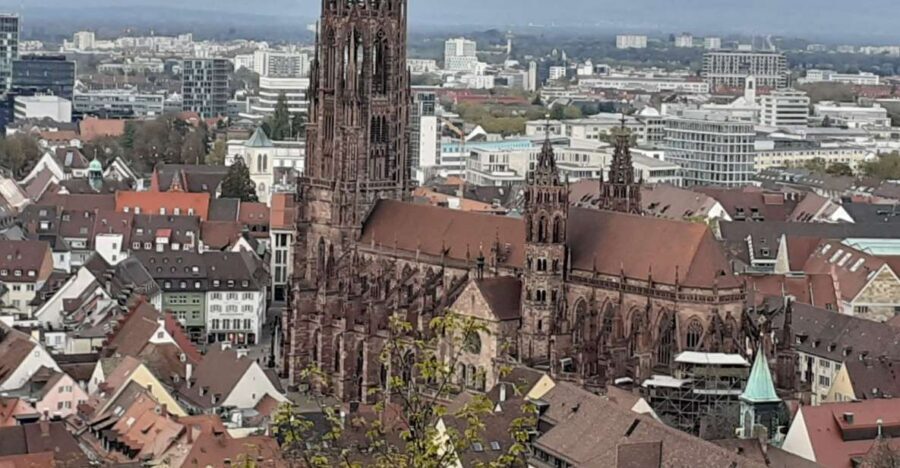
From the start, the tour gives you context you can actually use while walking. You’ll hear why Freiburg is considered the capital of the Black Forest, and why it’s often described as the greenest city in Germany. That matters, because it shapes how you interpret what comes next—especially the water and the way the city has managed resources over time.
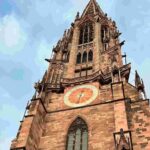
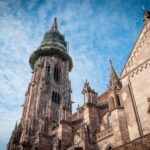
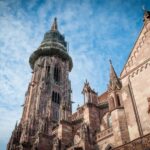
Then you move into the cathedral area (the Freiburg Münster), and the focus turns to the Gothic architecture. You’ll discover the kind of detail people don’t notice at first glance: how the cathedral dominates the skyline, and why its tower is described as one of the most beautiful in Germany. Even if Gothic cathedrals aren’t your favorite style, the guide’s emphasis makes it feel more personal and less “architecture homework.”
What to watch for here
- Keep your eyes up. The cathedral details are meant to be seen while you’re standing in the right spot.
- Don’t rush the pauses. The explanations land better when you’re close enough to see the carvings.
Gargoyles, symbols, and why faces on facades matter
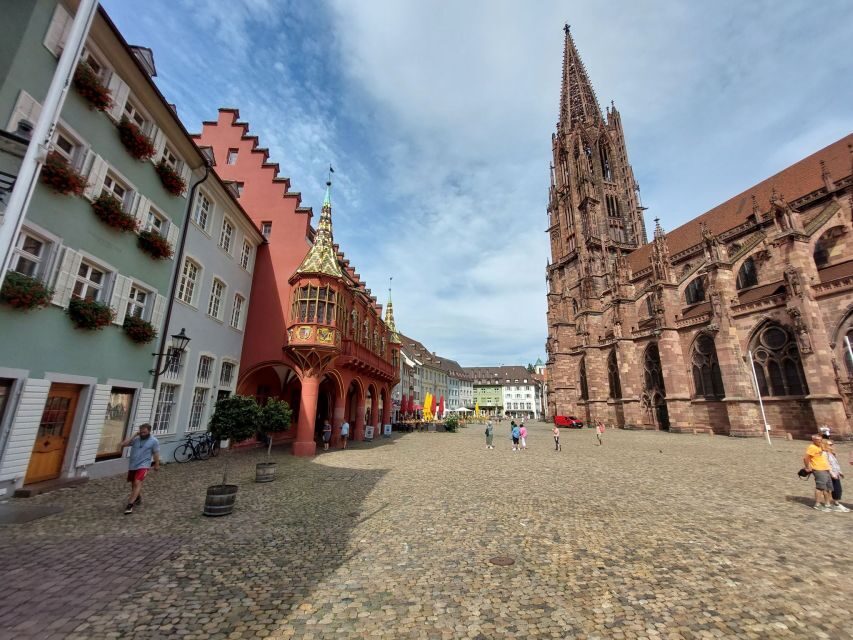
One of the highlights is how the tour uses decoration as storytelling. Around the church, you’ll explore the gargoyle sculptures that feature fantastic figures and creatures. It’s easy to treat these as random monster art. The guide helps you understand how they fit into the larger medieval mindset—part warning, part imagination, part visual language for the public.
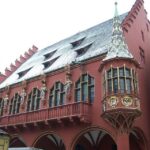
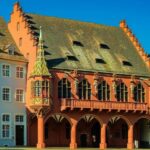
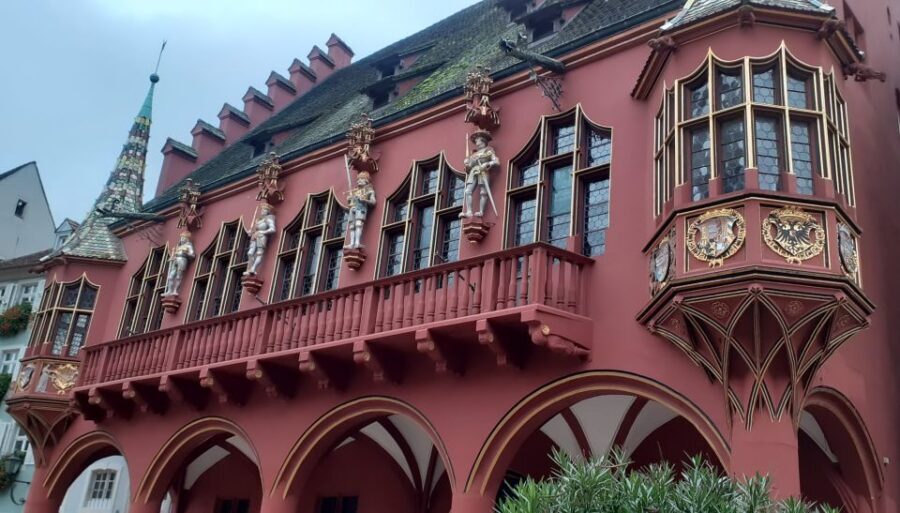
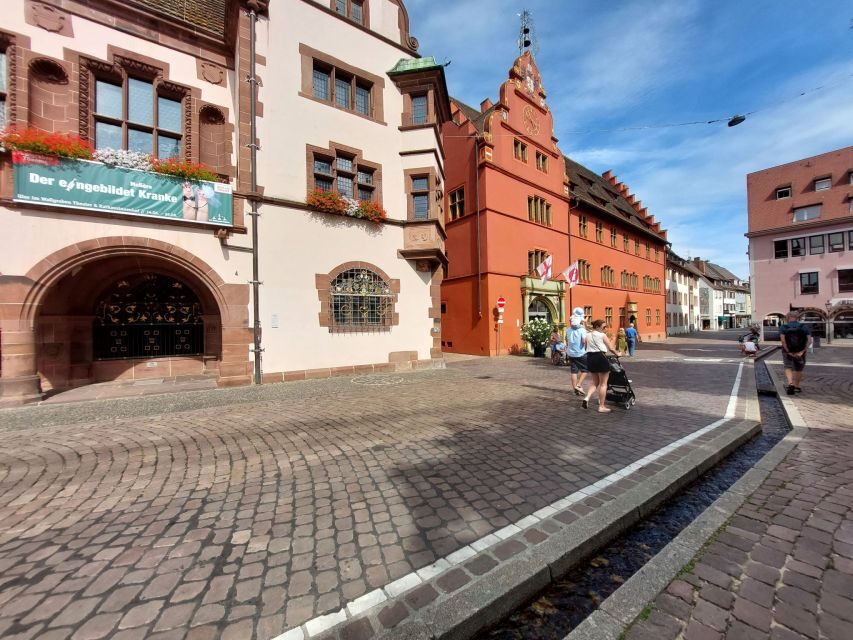
Next, the tour shifts to the facades of nearby buildings and the characters shown on the Historisches Kaufhaus. This is where the “merchant town” theme becomes real. Freiburg’s independence as a trading city isn’t just mentioned—it’s tied to what you see in the streets. You’ll learn who the represented figures are and why they show up where they do.
This approach is valuable because it changes the way you’ll look at old towns in the future. Instead of hunting for the next “big sight,” you start noticing how public buildings signaled power, trade, beliefs, and identity.
A small but smart tip
When you reach a decorative façade, give yourself 60 seconds to scan it like a map. If your guide points out a character or a story link, follow their line of sight right away. You’ll get more out of the moment and carry it in your memory longer.
You can also read our reviews of more historical tours in Freiburg

Konviktstraße and the gate legends: Schwabentor and St. Martin’s Tor
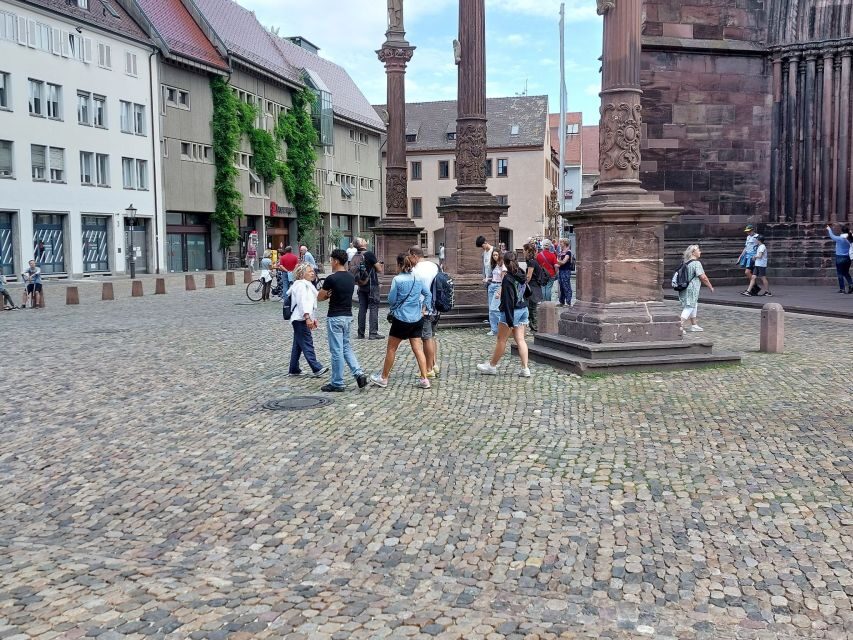
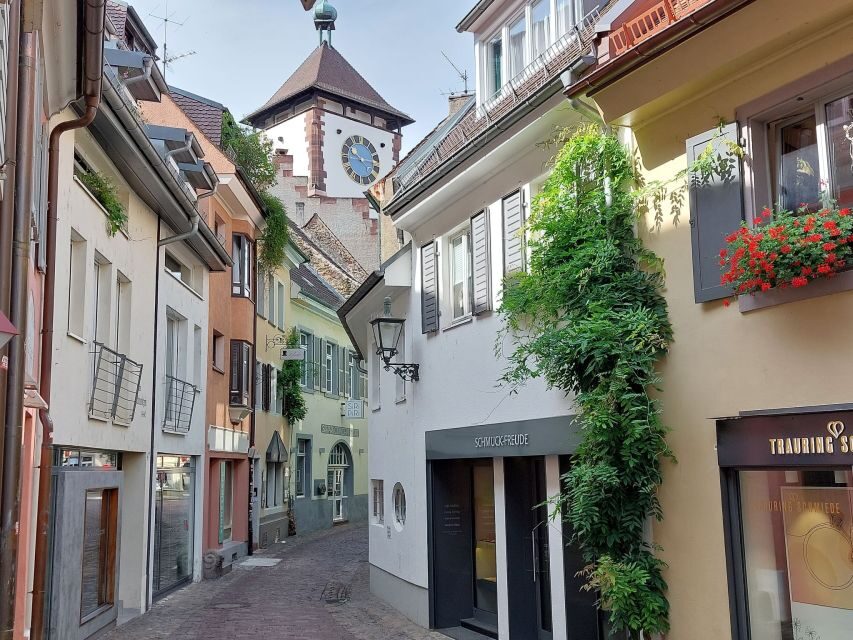
After the cathedral zone, the walk turns into a more atmospheric stroll. Konviktstraße is picturesque, and the tour uses it well: you’ll see distinctive buildings along the way and get a sense of how Freiburg’s historic center flows beyond the main square.
Then comes a key change in scenery and mood—city gates. You’ll admire the Schwabentor and St. Martin’s Tor and learn the legends attached to the paintings. Gates in medieval cities were never just defensive structures. They were symbols of identity, movement, and who belonged inside the walls.
This part is also where the tour’s “culture differences” angle becomes practical. You’ll hear about how local life and cultural thinking differ from other countries, not in a vague way, but through concrete examples tied to what the buildings and stories communicate.
If you’re the kind of traveler who likes learning through scenes rather than dates, this section will feel like the tour is really clicking. You’re not only seeing landmarks; you’re getting a sense of why people in earlier centuries would have understood them instantly.
Small canals, the Gerberau crocodile, and other odd Freiburg details
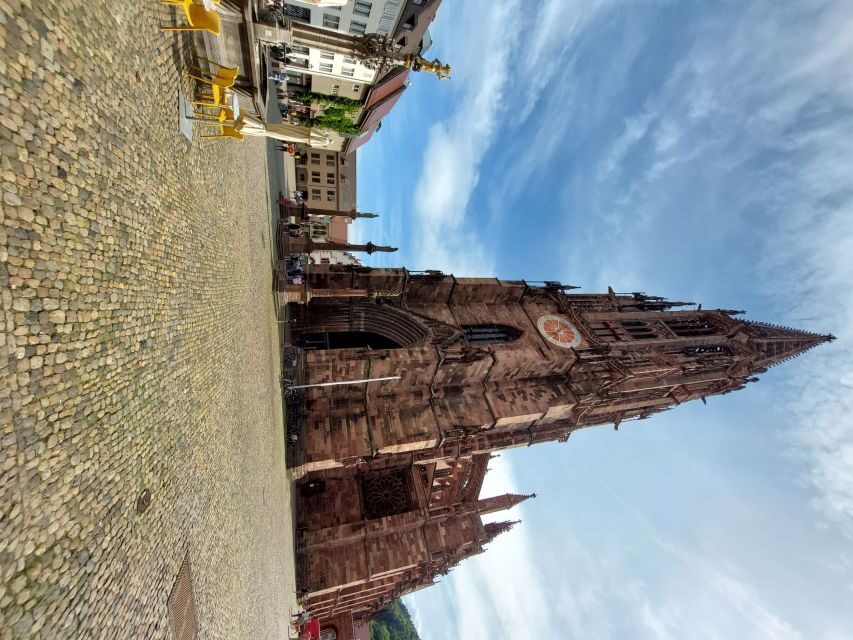
Freiburg’s historic center isn’t only about grand stone. It’s also about water and small street-level surprises.
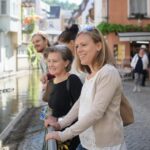
The tour includes a look at water flowing in the small canals. You’ll see how these waterways were used historically and how they’re used now. That’s important because Freiburg’s green reputation isn’t just about parks—it’s about city systems working in real time. The canal detail also gives you a break from tall façades and big landmarks, and it’s often where the photos turn into something more interesting than postcard angles.
From there, you’ll spot or learn about the Crocodile in the Gerberau. It’s the kind of quirky detail that makes a city feel human and memorable. Along the same theme, the tour also mentions places like the Wahle House and wonderful mosaic pavements. These aren’t always the “headline attractions,” which is exactly why they’re worth including. They show you what daily streets can hold when someone bothers to build in personality.
Why I like adding these quirky stops
Because they help you remember the tour later. A cathedral can blur with other cathedrals. A crocodile detail, a canal explanation, or mosaic pavement storytelling tends to stick. It also makes Freiburg feel less like a checklist and more like a place with character.
Culture under Habsburg protection to the 19th century: history you can see
The tour doesn’t treat history as a wall of dates. It frames the city’s evolution in a way that you can connect to physical places.
You’ll learn about Freiburg’s development under the protection of the Habsburg up through the 19th century. Even if you’re not a hardcore history person, this matters because it explains why the town’s medieval character survived—and why you still see signs of earlier influence in the built environment.
This is where the decorated monuments become more than decoration again. The message is: Freiburg didn’t develop in isolation. Power, trade, and protection shaped what got built, what got celebrated, and what got preserved.
And because you’re walking at a steady pace for about two hours, you’re not overloaded. You absorb enough context to make sense of what you pass, without feeling stuck in a museum timeline.
Private guide value: what $212 for up to 10 really buys you
The price is listed as $212 per group (up to 10 people) for a 2-hour private tour. For me, the value comes from the format: you’re paying for a professional guide and a route paced to your questions.
If you’re traveling as a couple or a small family, the per-person cost can become quite reasonable, because the guide stays with your group the whole time. If you have more people (up to 10), the group setup can still work out well compared with multiple separate bookings, since you’re sharing one walking route and one guide voice.
You’re also not paying for food or transport. That keeps the tour focused. The trade-off is simple: you’ll want to plan a meal separately, since food and drinks aren’t included.
Logistics that make or break a walking tour
This is a walking tour around the historic center, so your comfort matters more than you might expect.
Bring comfortable shoes and water. The route is in an old town setting, and even when it’s not long on paper, medieval streets can feel longer underfoot. The tour also runs rain or shine, so pack for the weather rather than hoping for sun.
Your meeting point is straightforward: the guide will be at the entrance of the cathedral on the right. If you arrive a few minutes early, you’ll find the exact spot without stress. The tour is also wheelchair accessible, which is a good sign that the route has been chosen with practical movement in mind.
Languages are Italian and English, and because the guide leads live, you’ll get real-time answers rather than printed explanations.
Who this tour is best for
I think this tour is perfect if you like your sightseeing to have a “why,” not just a “what.” If you enjoy medieval cities, symbolic architecture, and street-level stories, you’ll get a lot out of it.
It’s also a good choice if you want Freiburg culture explained in a way that goes beyond general impressions. The tour is designed to highlight local life and cultural differences through specific historical and architectural references.
If you’re short on time but want the center’s main threads—cathedral area, gateways, canals, and small oddities—this two-hour format is a practical sweet spot. It’s long enough to feel like you learned something, short enough that you can still explore on your own afterward.
Should you book this Freiburg historic-center walk?
If you want a guided walk that turns Freiburg’s monuments into understandable stories, book it. This tour’s main strength is the way it links decorated details—gargoyles, facades, gate legends, and canal water—to the bigger themes of merchant independence and long historical influence.
I’d especially recommend it if:
- you like history that’s tied directly to what you’re standing next to
- you want a private format with room for questions
- you value a guide who uses humor and engaging explanations to keep attention
Skip it only if you’re hunting for a long list of standalone attractions with minimal walking. This is a story-led walk. The payoff is in the connections, not in checking box after box.
FAQ
How long is the Freiburg walking and strolling historic center tour?
It lasts 2 hours.
What is the meeting point?
Meet your guide at the entrance of the cathedral on the right.
Is this a private tour?
Yes. It’s a private group tour.
What languages are available?
The live guide offers Italian and English.
How many people are included per group?
The price is per group up to 10 people.
What should I bring?
Wear comfortable shoes and bring water.
Is the tour canceled if it rains?
No. The tour takes place rain or shine.
Is food or hotel pickup included?
Food and drinks are not included, and hotel pickup and drop-off aren’t included.
Is there free cancellation?
Yes, you can cancel up to 24 hours in advance for a full refund.