Freiburg rewards slow walking. This private 2-hour historic walking tour helps you get your bearings fast, lining up the Old Town sights, the cathedral area, and the medieval gates in one smart route. I love the way it strings together big-picture landmarks with small story details (like the Whale House and the city fountains), and I like that you can choose from multiple tour times to fit your day. One consideration: the pace packs a lot in, so if you want long museum-style stops, you may feel a bit rushed.
You’ll be walking through a lot of outdoors-and-streets scenery, so comfortable shoes matter more than you’d think. Also, a few key buildings may have separate costs if you decide to go inside.
In This Review
- Key highlights to know before you go
- A medieval university city, shaped by war and rebuilding
- Start at Siegesdenkmal: a victory monument with a long shadow
- Haus zum Walfisch: Gothic brick meets cult-film trivia
- Altes Rathaus and the old court house: government in stones and paintings
- The old university opened in 1457—and parts still matter
- Freiburg Cathedral: Romanesque power with long construction lines
- Bertold’s Fountain: a central meeting point and wartime loss
- Martinstor and the medieval city gates you can still walk through
- Adelhauser Kirche: merged convents and Jean La Douze’s 1687 direction
- Schwabentor: finishing at the Swabian gate
- What you’re really paying for: a private route that saves your mental energy
- Duration, tickets, and the two-hour reality check
- Who this tour suits best (and who should pick a different format)
- Should you book this Freiburg historic walking tour?
- FAQ
- How long is the Freiburg historic walking tour?
- Is this a private tour or a group tour?
- How many people are allowed per group?
- What language is the guide?
- What does the ticket method look like?
- Are entrance fees included?
- Where do you start the tour?
- Where does the tour end?
- What are some of the main stops on the route?
- Do they offer different tour times during the day?
- How far in advance is the tour usually booked?
Key highlights to know before you go
- A tight 2-hour route: you see the Cathedral area, town hall, historic courts, university remnants, and both medieval gates.
- Private means flexible: it’s just your group, so you can ask questions and adjust the stop order a bit.
- Real street landmarks, not just postcards: Siegesdenkmal, Bertold’s Fountain, Kaiser-Joseph-Strasse crossing points, and the gates.
- Film fan bonus: Haus zum Walfisch (Whale House) has ties to the 1977 horror film Suspiria.
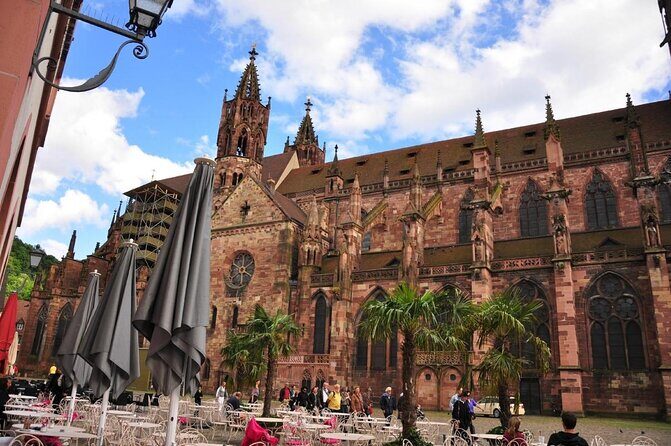
- Cathedral survived 1944 bombings: Romanesque architecture from around 1200 still stands, with altars tied to Hans Baldung and Hans Holbein the Younger.
- Convent history in the city core: Adelhauser Kirche traces back to Dominican convents merged into one new complex in 1687.
A medieval university city, shaped by war and rebuilding
Freiburg sits on the edge of the Black Forest, and this tour is a good way to understand why that matters. The sights aren’t random. They show how a university town grew, how governance formed around buildings like the old town hall and courts, and how the city rebuilt after the devastation of 1944.
This is also the kind of walking route that helps you stop thinking in “attractions” and start thinking in structure. You move from monument to merchant houses, to civic buildings, to the Cathedral zone, then to the gates where the medieval city pushed outward. By the end, you don’t just remember what you saw—you understand how Freiburg’s center is laid out.
You can also read our reviews of more walking tours in Freiburg

Start at Siegesdenkmal: a victory monument with a long shadow
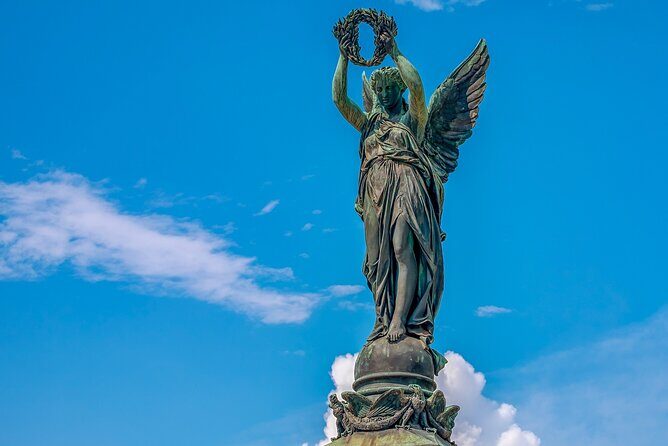
You begin at the Siegesdenkmal (Victory Monument), designed by sculptor Karl Friedrich Moest. It marks Germany’s victory over France in the Franco-Prussian war of 1871, and even the artwork process has a strong story: a public competition was held among 18 sculptors to choose the final design.
Why this start works: you’re not dropped into the “pretty” part of town first. You start with a monument that explains how later history layers onto older streets. It sets the mood for what comes next—Freiburg’s old core, but never frozen in time.
If you’re the type who likes context (even for outdoor landmarks), you’ll enjoy having the guide explain what you’re looking at instead of just taking a photo and moving on.
Haus zum Walfisch: Gothic brick meets cult-film trivia
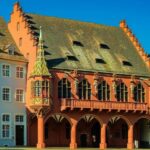
Next, you walk by Haus zum Walfisch, often called the Whale House. It’s a Gothic bourgeois house, but the fun part is that it’s described as a complex made out of 17 buildings. That gives you an immediate sense of how dense and compartmentalized medieval and early-modern city living could be.
And yes, there’s film trivia: it was a central filming location for the 1977 horror film Suspiria.
The practical takeaway: if you like street-level texture—odd angles, building clusters, and facades that look like they grew over time—you’ll pick up on those details much more on a guided route than on a solo wander.
Altes Rathaus and the old court house: government in stones and paintings
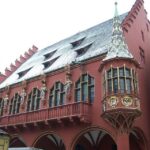
One of the civic anchors of the tour is the Altes Rathaus (Old Town Hall). This is where the government office sits, and it’s connected by a bridge to the new town hall. The building is in a Renaissance style and includes many paintings.
A real-life historical turning point is baked into it: the old town hall was destroyed by bombing in 1944 and later reconstructed, including three new wings. That kind of detail matters because Freiburg’s center still carries scars and repairs. You’re looking at architecture that has lived through upheaval.
Just behind it you see the Gerichtslaube (Old Court House), one of the oldest government buildings in Freiburg. It dates back to around the 13th or 14th century, so it’s the kind of stop where a guide’s explanation helps you appreciate how old “official buildings” really are in an everyday city setting.
The old university opened in 1457—and parts still matter
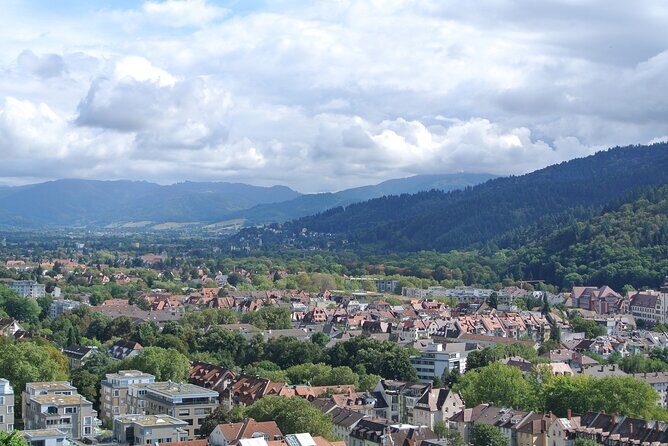
Freiburg’s educational footprint shows up near the middle of the walk. You’ll see the old university, opened in 1457. The explanation here is especially useful: it’s said the university was run from many buildings, not just one campus.
The site’s previous administration building is now known as the new town hall. And even today, a few research departments at the former university site still exist.
Why I like this stop for first-timers: it connects the “tourist center” to how Freiburg functions now. You leave with a sense that the town isn’t only historic—it’s still working.
You can also read our reviews of more historical tours in Freiburg
Freiburg Cathedral: Romanesque power with long construction lines
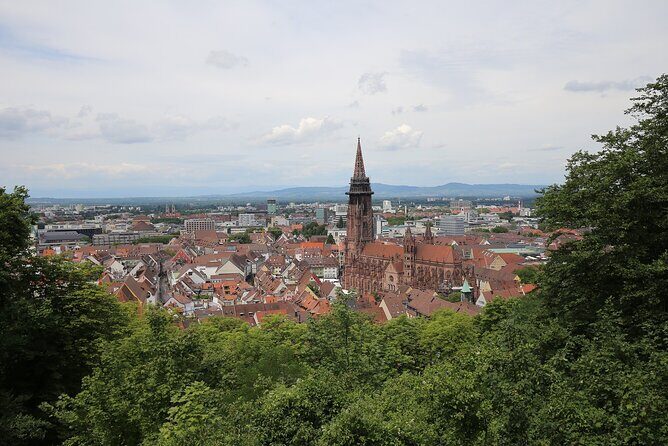
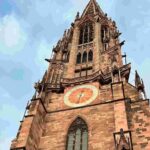
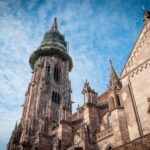
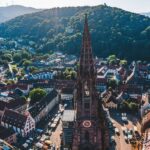
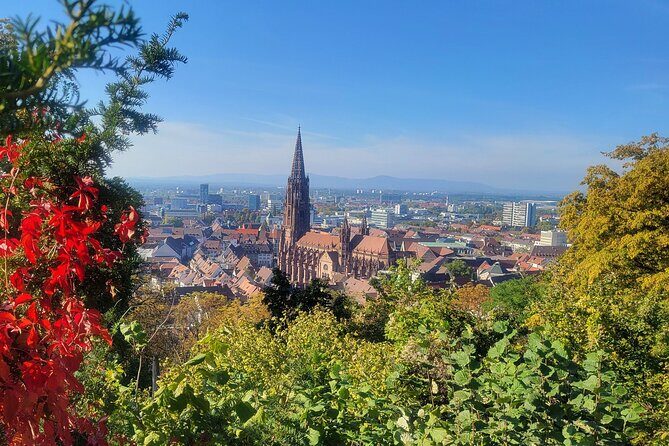
Then you reach the star of the area: Freiburg Cathedral (Romanesque style, built around the year 1200). It was built by the last duke of Zähringen, and one of the most interesting facts is the time scale—construction took nearly 300 years to complete.
Even more striking: it survived the bombing raids of 1944. You’re seeing a building shaped by generations of labor, not one master project.
You’ll also hear about two important altars associated with Hans Baldung and Hans Holbein the Younger. That’s the kind of detail that turns a “big church landmark” into a specific, named place.
A practical note: the time inside isn’t framed as included here. Admission isn’t included, so you’ll want to decide in advance whether you want to pay to go in during your two hours. (The tour also mentions short stops at several buildings, so planning matters.)
Bertold’s Fountain: a central meeting point and wartime loss
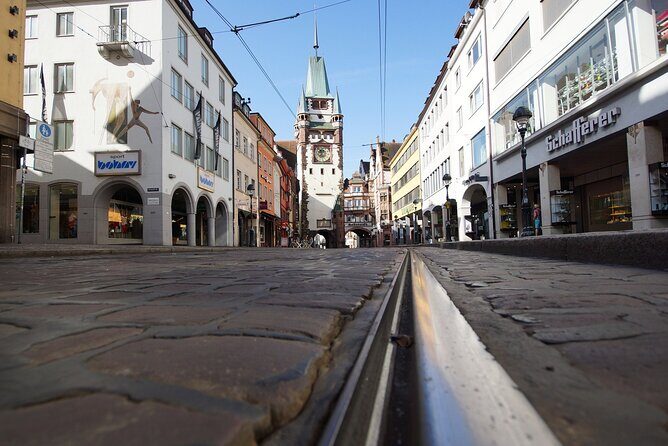
Bertold’s Fountain is another landmark that quickly teaches you Freiburg’s street geometry. It features an equestrian statue, and the original fish fountain was destroyed during World War II.
The guide also points out why you’ll keep seeing it: it’s in a very central spot where trolley car lines intersect with the shopping street known as Kaiser-Joseph-Strasse.
This is more than a photo stop. It’s a practical “orientation” point. After this, the walk makes more sense because you can mentally map where you are relative to shopping streets and transit.
Martinstor and the medieval city gates you can still walk through
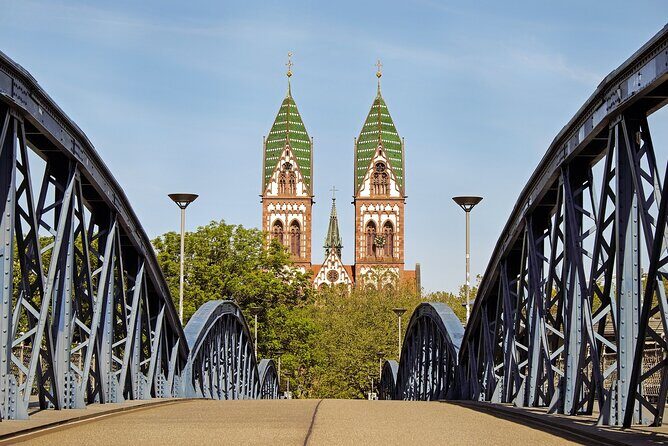
Freiburg’s gates are where the medieval city becomes physical again. You cross the Martinstor (Martin’s Gate), which dates back to the 13th century. It’s one of the two remaining gates out of the five medieval gates.
Then you visit the Saint Martin’s church, with origins said to date back to 1206. The architecture has changed over time—from baroque to neo-gothic—and the church was partially destroyed in the 1944 bombings. Reconstruction started in 1949.
What you get from gate-and-church pairing: a layered view of the city’s timeline. You see the fortification boundary first, then the religious building that served people inside that boundary. Together, they explain how life worked: defend the city, worship, rebuild.
Adelhauser Kirche: merged convents and Jean La Douze’s 1687 direction
Adelhauser Kirche (Adelhauser New Convent) is another stop that feels quietly impressive. The tour explains it was built by merging four medieval Dominican convents. Those convents had been centers of Christian mysticism during the Middle Ages.
The new building was constructed in 1687 under the direction of Jean La Douze.
This is a great mid-tour pause point because it gives you a different kind of medieval story. It’s not only politics and commerce—it’s religious life and intellectual currents that shaped how people lived.
If you like architectural evolution—how multiple institutions become one complex over time—this stop will land well.
Schwabentor: finishing at the Swabian gate
You finish at Schwabentor (Swabian Gate), dating to the mid 13th century. Like Martinstor, it’s one of the two remaining gates out of five medieval gates.
Finishing at a gate is a smart way to close the loop. You start with a monument and civic core, then you move outward toward the edges of medieval Freiburg. Ending at Schwabentor helps you feel like you completed a circuit—Old Town inside, gate boundary outside.
The tour ends at Oberlinden 25, and it’s also associated with the Schwabentor area in the location details. When you book, double-check the exact meeting instructions so you start in the right place.
What you’re really paying for: a private route that saves your mental energy
At $370.06 per group (up to 15 people), the price can look steep at first glance. But here’s the math that makes it feel more reasonable: if your group fills close to the max size, that’s roughly $25 per person. If your group is smaller, it becomes less of a bargain, but you still buy something that matters—someone else handles the storyline.
This tour is built for first-time visitors who want a coherent overview without spending hours planning a route. Instead of hopping between random stops, you walk a sequence that makes Freiburg’s medieval structure legible: governance → university → cathedral → gates.
It’s also private, which changes the experience. You’re not stuck in a rigid group rhythm. If you want the guide to slow down at a building with a big story (like the town hall reconstruction or the cathedral’s long construction timeline), you can ask.
Also worth noting: you can pick multiple daily tour times, so you can choose the one that best fits your energy level—morning, mid-day, or later in the day.
Duration, tickets, and the two-hour reality check
The tour runs about 2 hours. That’s short enough to stay fun, but long enough to feel like you made progress.
The tour uses a mobile ticket, which is helpful when you’re juggling transit, museums, and coffee stops. English speaking guidance is included.
Entrance fees are not included. Some stops are explicitly marked as free time-wise (for example, the Old Town Hall exterior area and several gate/convent stops), but the cathedral’s admission isn’t included. If you think you’ll want inside time, you’ll need to budget for it separately.
One more practical point: several stops are listed as brief (around 10 minutes). So treat each stop like a guided highlight moment, not a long deep museum session.
Who this tour suits best (and who should pick a different format)
This Freiburg walking tour fits best if you’re:
- Visiting for the first time and want a guided introduction to the Old Town layout
- Interested in how medieval institutions (university, court, city hall) shaped daily life
- The kind of person who enjoys architectural details and named landmarks
- Traveling with a group and want private flexibility
It may feel less ideal if you:
- Want long interior visits (the tour is paced for outdoor orientation and quick context)
- Prefer self-guided routes where you can take long detours into cafes and side streets without worrying about timing
Should you book this Freiburg historic walking tour?
Yes—if you want a first-timer framework for Freiburg. This route does a lot in two hours: it connects monuments, governance buildings, university roots, the cathedral area, and the gates you can still see and cross. The private format makes it easier to ask questions and keep the story focused on what you care about.
Book it especially if you’re aiming for value in time. Paying a single guided fee can save you from piecing together a route on your own, and it helps you notice details you’d otherwise miss—like the Whale House’s film connection, the cathedral’s 300-year build story, and the convent merger behind Adelhauser Kirche.
If you’re planning to spend a lot of time inside churches or museums, consider pairing this with a later plan—so the guided walk stays the overview, not the whole day.
FAQ
How long is the Freiburg historic walking tour?
It lasts about 2 hours.
Is this a private tour or a group tour?
It’s a private tour/activity, and only your group participates.
How many people are allowed per group?
The price is per group up to 15 people.
What language is the guide?
An English speaking guide is included.
What does the ticket method look like?
You get a mobile ticket.
Are entrance fees included?
No entrance fees are included.
Where do you start the tour?
The start location is listed as Friedrichring 13, 79104 Freiburg im Breisgau, Germany. Your booking information will confirm the meeting point details.
Where does the tour end?
The tour ends at Oberlinden 25, 79098 Freiburg im Breisgau, Germany.
What are some of the main stops on the route?
You’ll see places including the Siegesdenkmal, Haus zum Walfisch, Altes Rathaus, Freiburg Cathedral area, Bertold’s Fountain, and both Martinstor and Schwabentor gates, plus church stops along the way.
Do they offer different tour times during the day?
Yes, multiple daily tour times are available for your convenience.
How far in advance is the tour usually booked?
On average, it’s booked about 59 days in advance. Confirmation is received at the time of booking.