REVIEW · FRANKFURT
Frankfurt: Private Walking Tour with Relaxing Cruise
Book on GetYourGuide →Operated by Rosotravel Germany · Bookable on GetYourGuide
Frankfurt hits different when you walk and float. This private tour strings together Old Town landmarks with an easy Main River cruise, so you get both the gothic and the skyline without feeling rushed. You’ll move through narrow historic streets, then switch gears on the water for a calmer set of views.
I especially like two things here: the quality of the official licensed guide (people highlight how much useful detail they get), and the way the itinerary connects ideas to places, from German democracy to printing to the city’s modern banking power. If your guide includes Cristina, you’ll likely appreciate how clearly she shares the story, and how fluent commentary can keep the whole route feeling coherent.
One thing to consider: the cruise direction changes with departure time, and the guide won’t stay on board, so you’ll rely on the audio-guide during the boat portion.
In This Review
- Key things you’ll notice on this Frankfurt combo
- A private plan that makes Frankfurt feel like it has a storyline
- Starting at Paulsplatz: St Paul’s Church and the democracy connection
- Goethe’s House and Gutenberg’s Monument: why Frankfurt mattered for ideas
- Banking district on foot: Commerzbank Tower, Eurotower, and Main Tower
- Römerberg and the 15th-century Römer town hall: Frankfurt’s Old Town core
- The Coronation Route to the Imperial Cathedral (Dom)
- Transitioning to the Mainkai: where the city opens up
- Cruise views: upriver vs downriver, and what you’ll see
- If you go upriver
- If you go downriver
- Goethestraße and the Old Opera: finishing with style
- Price and value: what $227 buys in real time
- Who this tour suits best
- Quick tips so your day feels easy
- Should you book this Frankfurt private walking tour with Main River cruise?
- FAQ
- Where is the meeting point for the tour?
- Where does the walking tour start?
- How long is the total tour?
- Does the guide go on the cruise with you?
- What do you see on the cruise?
- What language options are available?
- Is the tour wheelchair accessible?
Key things you’ll notice on this Frankfurt combo
- St Paul’s Church anchors the tour in German democracy right from the first stop
- Goethe House and the Gutenberg Monument tie Frankfurt to ideas that spread across Europe
- Skyscrapers on foot show you banking district scale without needing a separate viewpoint
- Römerberg and the Coronation Route lead you toward the Imperial Cathedral in a logical, photo-friendly path
- Main River cruise views change by direction, including museum and skyline angles
- Old Opera and Goethestraße add a classic Frankfurt cultural-and-shopping finish
A private plan that makes Frankfurt feel like it has a storyline
Frankfurt can look like two different cities at once: historic streets and monumental churches on one side, and skyscrapers and big finance on the other. What makes this tour work is the order. You start in the heart of civic memory, then you build toward the cathedral and classic Old Town scenes, and finally you end with the river, where the skyline makes more sense from a distance.
Because it’s private, you can keep a steady pace. The guide isn’t juggling a large group, so you get more stop-by-stop explanation. And that matters in Frankfurt, where buildings and names often carry a lot of context—German democracy, the printing revolution, imperial power, and the rise of the banking district.
The tour runs about 3 to 4 hours total. In that time, you get a guided walk plus a 50-minute cruise with audio commentary. It’s a smart length: long enough to feel “seen,” short enough that you’re not stuck on your feet all day.
You can also read our reviews of more walking tours in Frankfurt

Starting at Paulsplatz: St Paul’s Church and the democracy connection
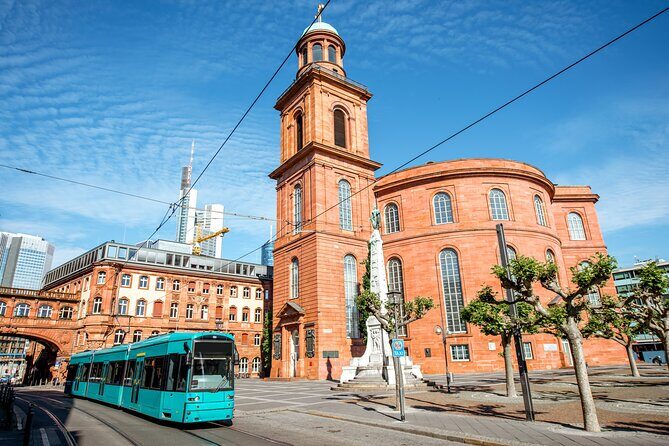
Your meet-up point is in front of the Ratskeller restaurant at Paulsplatz 9. It’s a good landmark to find, right where the action starts. From there, you begin the walking portion at St Paul’s Church, a memorial tied to the start of German democracy.
This stop is more than a pretty interior-to-exterior photo moment. The point is the framing: Frankfurt wasn’t just a trading hub; it became a stage for political ideals. When you understand why this place matters, the rest of the Old Town stops connect better. Streets feel less random, and names feel less like trivia.
If you’re the kind of person who enjoys stories you can picture, this is a strong opening. You’ll also pass major Frankfurt idea-makers along the way, which keeps the walk from becoming a checklist.
Goethe’s House and Gutenberg’s Monument: why Frankfurt mattered for ideas
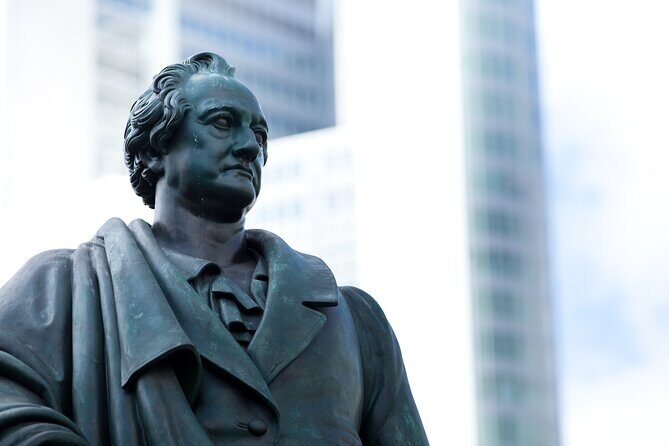
As you head deeper into the route, you’ll see Goethe’s House and the Gutenberg Monument. These aren’t just “famous people” stops. They point to why Frankfurt became a place where knowledge moved.
Goethe represents literature and cultural influence, while Gutenberg connects to the printing revolution in Europe. That link matters because printing changed what people could access, how quickly ideas traveled, and how societies organized knowledge. Frankfurt’s role in that story gives you a different way to look at the city—less about facades, more about influence.
This is where the private guide can make the biggest difference. A good guide can translate “monument meaning” into something you actually notice when you stand in front of it. Expect a steady flow of history and culture as you walk, with plenty of chances to take photos along the way.
Banking district on foot: Commerzbank Tower, Eurotower, and Main Tower
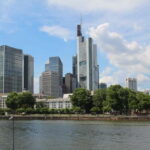
Next you’ll stroll through the Frankfurt banking district. This is a fun section because you see the modern towers without needing to plan a separate trip to a viewpoint. You’ll spot major buildings such as the Commerzbank Tower, Eurotower, and Main Tower, and also the tall Tanustrum.
What you’re really getting here is contrast. Old Town scenes tell one story. Skyscrapers tell a newer one. Standing on the street lets you judge scale in a human way. The towers aren’t just background—they change how the street feels, how light falls, and how wide the city suddenly becomes.
It’s also a photo-friendly area. Even if you’re not a “city skyline” person, looking up at these buildings helps you understand why the river cruise later feels so rewarding. You’ll recognize silhouettes when you see them again from the water.
Römerberg and the 15th-century Römer town hall: Frankfurt’s Old Town core
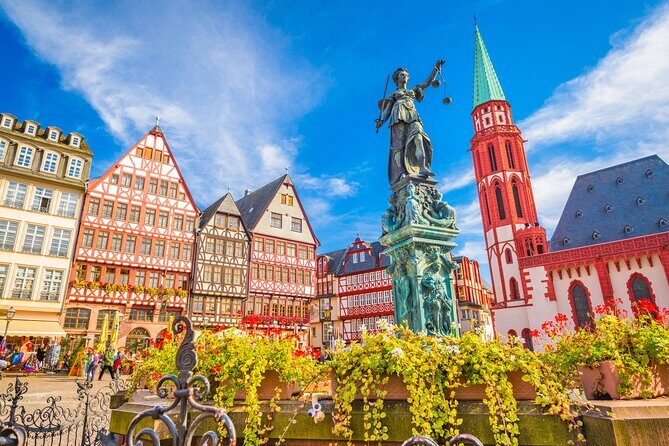
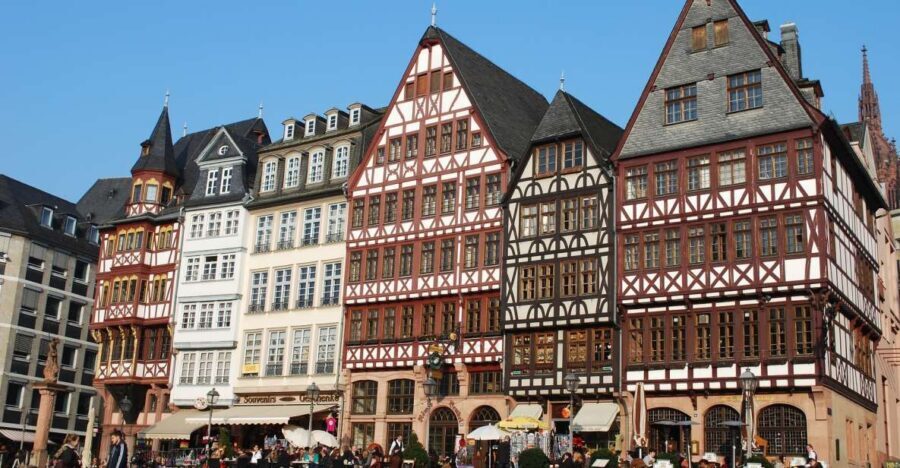
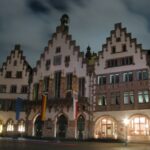
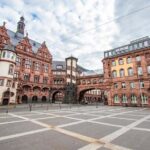
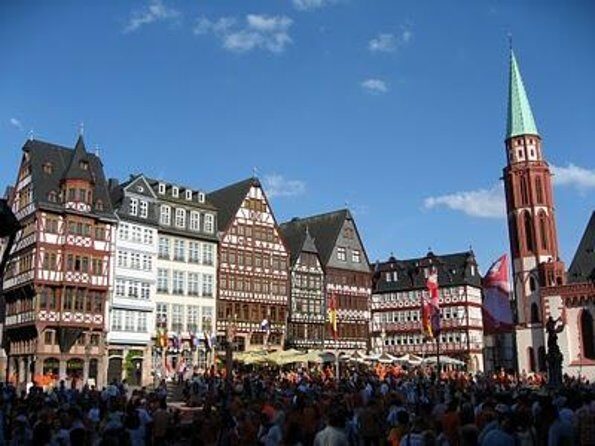
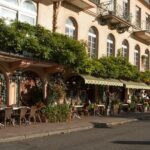
Then you get the Old Town you came for: Römerberg, a historic square known for its characteristic timber houses. This area is iconic for a reason. It looks like the city paused time, but it’s still central—meaning you feel the living energy around historic forms.
You’ll also see the 15th-century Römer town hall. It’s one of those buildings that’s hard to “get” from a brochure. Up close, it helps you grasp Frankfurt’s civic identity—this wasn’t only an empire-with-cathedral story. It was also city governance, festivals, and everyday life.
Two other standouts on this part of the route: Old St Nicholas Church and the Fountain of Justice. The fountain is especially worth slowing down for, because it gives you a visual anchor for the tour’s theme of law and public life.
You can also read our reviews of more boat tours in Frankfurt
The Coronation Route to the Imperial Cathedral (Dom)
One of the most rewarding sequences is the so-called coronation route through New Frankfurt Old Town’s narrow streets toward Frankfurt Cathedral—also known as the Imperial Cathedral. “Narrow streets” is not just an aesthetic detail here; it shapes how the architecture hits you.
As the route tightens and you walk toward the cathedral, the building’s presence grows. The cathedral is a Gothic structure with a major role in Frankfurt’s broader history as the religious counterpart of the royal palace.
If you like churches but hate when tours rush you through them, this is a good balance. The guide’s commentary helps you see why the cathedral matters, not just that it exists. It becomes the payoff of earlier stops about civic memory and political influence.
Transitioning to the Mainkai: where the city opens up
Once the cathedral segment is done, you’ll reach the Mainkai riverfront road. This is the shift point: from street-level walking to river-level sightseeing.
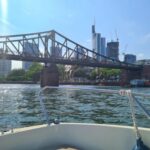
Your guide escorts you to the dock/pier and gives you a quick introduction to what to expect on board. Then you’ll enjoy the cruise with an audio-guide (available in English or German, depending on your selection). The guide does not accompany you on the boat, so think of it like a well-signposted ride rather than a guided lecture while you float.
This setup can actually be a relief. It keeps you from feeling “on tour” the entire time. You can look out at the skyline, take photos, and let the audio fill in the details.
Cruise views: upriver vs downriver, and what you’ll see
Cruises go either upriver or downriver, and the direction depends on your departure time. So before you pick an option, it helps to know what each direction highlights.
If you go upriver
You’ll see landmarks including the Dreikönigskirche, Main Plaza, the Literature House, the industrial memorial site Ruhrorter Werft – Frankfurt-Ost, and the Gerbermühle. This direction tends to feel more connected to Frankfurt’s working waterfront and cultural venues along the river.
If you go downriver
You’ll see Städel Museum, Commerzbank, and the University Hospital. This feels more “institutional” and arts-and-education adjacent, with plenty of recognizable city anchors along the bank.
Either way, the 50-minute length is just right. It’s long enough to steady your posture, enjoy the skyline angles, and spot buildings you walked past, but not so long that you lose track of what you’re seeing.
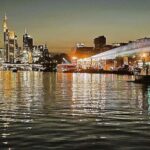
Practical photo tip: if you’re shooting skyline reflections, try adjusting your angle slightly once the boat gets underway. River glass can surprise you.
Goethestraße and the Old Opera: finishing with style
After the cruise, the walk continues with some of Frankfurt’s signature streets and culture stops. You’ll pass the Goethe Statue at Goetheplatz and walk through Goethestraße, a high-end shopping street that’s been open since 1892.
This isn’t only about shopping. It’s about atmosphere. You see how Frankfurt presents itself: polished, confident, and very much a modern European city with deep roots.
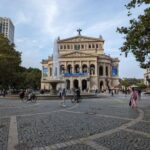
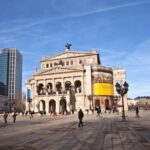
Finally, you’ll reach the Old Opera on Opernplatz. This 19th-century concert hall is known for its Renaissance-style architecture and fine details. It’s a great ending because it gives you a “big building” moment after the cathedral. Two architectural moods in one day.
Price and value: what $227 buys in real time
At $227 per person, you’re paying for more than a route. You’re buying convenience, a private pacing plan, and the benefit of an official Frankfurt license guide who speaks multiple languages (English, French, Italian, Russian, Spanish, German).
You also get a built-in “rest period” via the cruise. The 50-minute boat portion is not a generic sightseeing ride; it comes with audio commentary, so you’re not stuck wondering what you’re looking at.
Is it the cheapest way to see Frankfurt? No. But for what you receive—private guiding, major Old Town highlights, modern banking district views, and a skyline cruise—this price can feel fair, especially if you’re the type who values explanations and you’d otherwise pay for multiple separate experiences.
Also, the tour length (3 to 4 hours) is a value factor. If you’re short on time, paying for a tightly packed, well-sequenced day often beats stretching your sightseeing over multiple half-days.
Who this tour suits best
This is a strong fit if you want a blend of:
- Old Town highlights like Römerberg, the Imperial Cathedral, and major civic landmarks
- A meaningful look at Frankfurt’s role in democracy and the printing revolution (through St Paul’s Church, Goethe, and Gutenberg)
- The modern skyline effect without needing extra tickets or complicated planning, thanks to the walk through the banking district
- A calmer ending on the Main River instead of more museum time
It may be less ideal if you’re only interested in one narrow category (only churches, only museums, or only modern Frankfurt). In that case, a more focused tour might feel more efficient.
Quick tips so your day feels easy
A few things will help you enjoy the route more:
- Wear comfortable shoes. The walk includes narrow streets and multiple photo stops.
- Pick your cruise time intentionally. Upriver and downriver highlight different landmarks.
- Plan to check your email the day before the tour. You’ll get important info that helps the day run smoothly.
- Bring your camera, but also bring patience. The best shots come when you pause and let the story settle.
Should you book this Frankfurt private walking tour with Main River cruise?
Yes, I’d book it if you want the best of Frankfurt in one go—old streets with big historical meaning, modern skyline contrasts, and a relaxing river segment to cap it off. It’s especially worth considering when you like guided context and you’d rather understand what you’re seeing than just collect photos.
Skip it only if you already feel confident navigating Frankfurt on your own and you mainly want a self-guided museum-heavy day. But if you want a guided storyline plus a skyline cruise without extra legwork, this private format makes sense.
FAQ
Where is the meeting point for the tour?
Meet your guide in front of the Ratskeller restaurant at Paulsplatz 9, 60311 Frankfurt am Main, Germany.
Where does the walking tour start?
The walking tour starts at St Paul’s Church.
How long is the total tour?
The total duration is 3 to 4 hours.
Does the guide go on the cruise with you?
No. The guide escorts you to the dock/pier, then you enjoy the cruise with an audio-guide.
What do you see on the cruise?
Depending on departure time, you may cruise either upriver or downriver. Upriver highlights can include Dreikönigskirche, Main Plaza, Literature House, Ruhrorter Werft – Frankfurt-Ost, and Gerbermühle. Downriver highlights can include Städel Museum, Commerzbank, and University Hospital.
What language options are available?
The live tour guide is available in English, French, Italian, Russian, Spanish, and German. Audio commentary on the cruise is available in English or German.
Is the tour wheelchair accessible?
Yes, the tour is wheelchair accessible.