REVIEW · FRANKFURT
Frankfurt : Private Walking Tour With A Guide ( Private Tour )
Book on Viator →Operated by Guydeez · Bookable on Viator
Frankfurt can feel like it’s all business… until you walk it with context. This private guided route gives you a fast, high-impact look at the old core, the Main River, and a real green reset at Palmengarten. You get a route you can shape to your pace, and the guide is there to explain what you’re seeing instead of letting you guess.
I particularly like how the stops are spread across the city’s personality: medieval squares at Römerberg, imperial architecture at the Dom St. Bartholomaus, and then that long riverside culture stretch at Museumsufer. I also like that the tour can start right from your hotel when you’re staying in town, which saves time and keeps the walk feeling easy. One thing to consider: because it’s a walking tour with outdoor time, weather and site access (like possible services at the cathedral) can affect how much you can do at each stop.
In This Review
- Key highlights to look for
- A Private Frankfurt Walk That Feels Like a Local’s Shortcut
- Eiserne Steg Bridge: Old Town Meets Sachsenhausen
- Römerberg Square and the Rathausplatz Center
- Dom St. Bartholomew: Imperial Church Without the Guesswork
- Museumsufer Along the Main River: Culture in a 26-Museum Stretch
- Palmengarten’s Westend Calm: Botanical Reset After the Streets
- How Customization and Pacing Change the Whole Tour
- Price, Value, and What You Get for $56.62
- Small Risks to Know Before You Go
- Should You Book This Private Walking Tour of Frankfurt?
- FAQ
- How long is the private walking tour in Frankfurt?
- Is the tour in English?
- Is pickup included from my hotel?
- What’s included in the price?
- Do I need to pay for museum or attraction tickets during the stops?
- What stops are included on the route?
- Is it really private or is it mixed with other people?
- Can service animals join the tour?
- What if I need to cancel last minute?
Key highlights to look for
- Eiserne Steg history: a bridge with roots going back to 1868, then redesigned and raised in 1912
- Römerberg orientation: Frankfurt’s Rathausplatz heart since the High Middle Ages
- Dom St. Bartholomaus meaning: the election and coronation church of Roman-German emperors
- Museumsufer views: a 26-museum riverfront zone you can pace without museum tickets
- Palmengarten break: Westend botanical calm in a garden spread across 22 hectares
A Private Frankfurt Walk That Feels Like a Local’s Shortcut
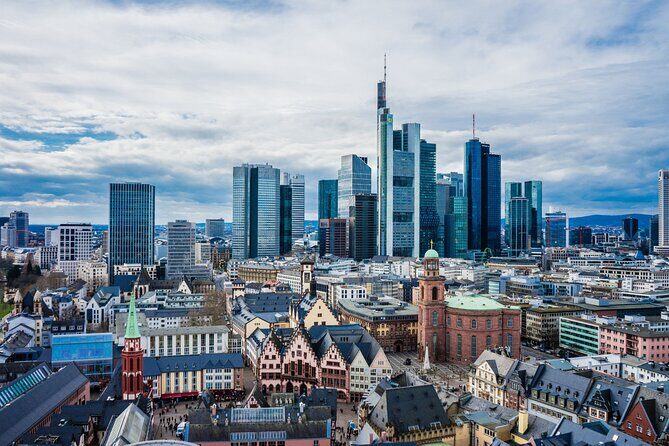
A private walking tour in Frankfurt works best when you want two things at once: high signal sightseeing and less time figuring out what matters. With this format, you’re not stuck with a rigid group schedule. Your guide can adjust the flow, which matters in Frankfurt because the “best” route can change depending on where you’re staying, how much walking you want, and how long you want to linger at key landmarks.
You’ll be moving through a classic Frankfurt mix: old-town spaces, landmark buildings, and river views. The whole vibe is ideal for first-time visitors because it’s built to help you understand the city’s layout quickly—old center, civic power, imperial ties, and the Main River as the city’s long visual spine.
One practical advantage: the tour is English-speaking and private (so it’s only your group). That’s huge if you care about asking follow-ups or steering toward your interests—say, more architecture vs. more day-to-day street life.
You can also read our reviews of more walking tours in Frankfurt



Eiserne Steg Bridge: Old Town Meets Sachsenhausen

The Eiserne Steg (Iron Footbridge) is a simple start that pays off. It’s the pedestrian bridge over the Main River connecting Frankfurt’s old town area with Sachsenhausen, and it has been around since 1868. The version most people see is shaped by a later redesign: a widened and reinforced structure replaced the earlier bridge in 1912, and it was raised higher as part of that work.
What makes this stop smart early in the tour: it gives you an instant “map in your mind.” Standing at the bridge, you can see how the river separates districts but also links them. That helps later when you’re on the riverbank at Museumsufer and walking through the old center.
A small drawback to plan for: this is outdoor time by the water. If it’s windy or cold, you’ll feel it more than you would in a tight city center lane. If you’re traveling in cooler months, wear layers and be ready for quick weather mood swings.
Römerberg Square and the Rathausplatz Center
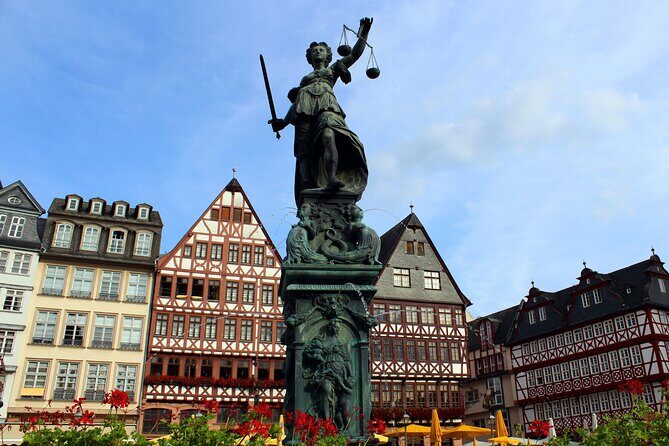
Next comes Römerberg, Frankfurt’s historic core—specifically the Rathausplatz. This square has served as the center of the old town since the High Middle Ages. The name Römerberg comes from the house Zum Römer, and the Frankfurt Rathaus has been linked with that area since the 15th century.
I love starting with Römerberg because it’s the kind of place where you can instantly picture how the city functioned: civic life, power, and everyday gathering all in one scene. Without a guide, you can still enjoy the architecture and atmosphere. With a guide, you get the story behind why the square matters and how the city’s identity formed around these spaces.
Expect about a half hour here. It’s enough time to take in the square, absorb the layout, and still keep momentum. If you want photos, this is a good spot—so if you’re the type who always finds an angle, give yourself a minute to step away from the crowd.
Dom St. Bartholomew: Imperial Church Without the Guesswork
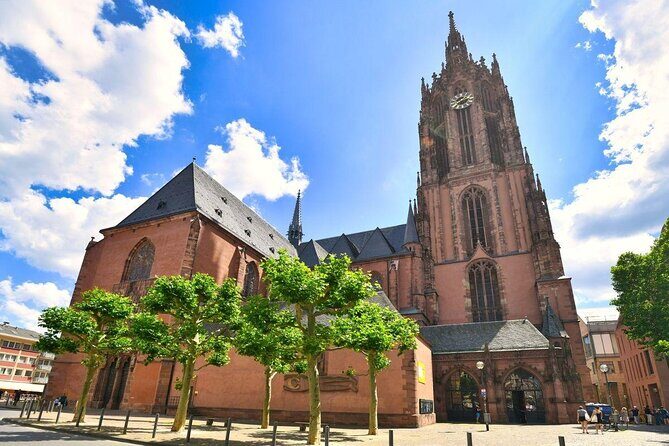
Frankfurt’s Cathedral of St. Bartholomew (Dom St. Bartholomaus) is the big architectural moment. It’s the largest sacred building in the city and carried serious political weight: it was the former election and coronation church of the Roman-German emperors. In the 19th century, it was seen as a symbol of national unity—so it’s not just a religious structure, it’s tied to how Germans thought about themselves as a nation.
This stop is listed with free admission, and in practice it’s often a mix of seeing the exterior, learning the building’s role, and (depending on what’s happening) possibly spending time inside. Here’s the consideration: access can vary. One account from a past guest described a service that meant they couldn’t go in when they arrived, even though the guide was offering historical context.
If the Dom matters to you—maybe you’re into imperial history, German architecture, or sacred buildings—tell your guide upfront. A good guide will adjust pacing and time so you don’t miss the chance you came for.
Museumsufer Along the Main River: Culture in a 26-Museum Stretch
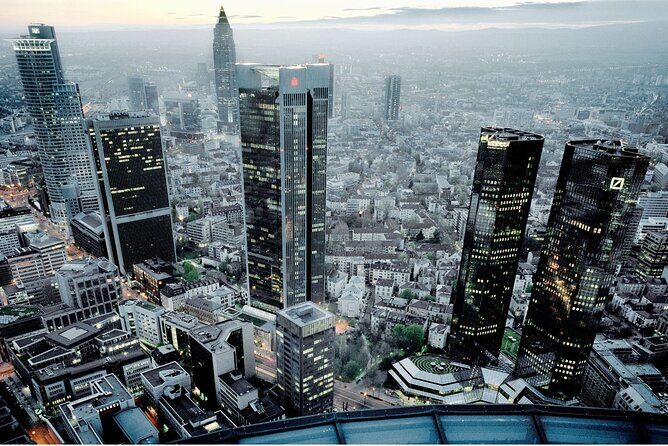
Museumsufer is the name for the riverside museum area along the Main in Frankfurt. It’s basically a corridor of 26 museums, all clustered near the water. You’re not doing museum ticket marathons on this tour; the idea is more about using the riverfront as a visual and cultural overview.
With a guide, this stop becomes more than a scenic stretch. You’ll get the context for why so many museums end up here, how the Main River shaped the city’s movement and development, and how to read the riverfront as a cultural map. That’s valuable because later, when you decide which museum to return to, you’ll understand what you’re choosing.
The downside is also simple: it’s still mostly an outdoor riverside walk. If the weather is rough, plan for less lingering. If you want to go beyond the walk—meaning actual museum entries—you’ll need to add that yourself since food, drink, and personal expenses aren’t included.
You can also read our reviews of more guided tours in Frankfurt





Palmengarten’s Westend Calm: Botanical Reset After the Streets

Palmengarten Frankfurt is the tour’s gentle breath of air. It’s in the Westend district and spans 22 hectares, making it one of Germany’s larger botanical gardens. It’s also one of three botanical gardens in Frankfurt, so it has local depth, not just a big-city “attraction” feel.
I like this stop because it shifts the sensory channel. You’ve spent time in squares and monuments; now you’re dealing with paths, plant collections, and calmer pacing. Even if you’re not a hardcore garden person, you’ll still enjoy the change of pace.
It’s a smart mid-to-late tour stop too because it helps with energy. One guest mentioned having to work around slower movement, and the overall idea—adjusting where possible, keeping the pace right—fits what a garden stop can do for a day.
One consideration: gardens mean walking on grounds that can be uneven. If mobility is an issue, it’s worth telling your guide early so they can steer you toward the easiest routes.
How Customization and Pacing Change the Whole Tour
This tour is private and adjustable, and the best part is that guides can apply that flexibility in real ways. In the feedback you provided, multiple guides were praised for adapting pace and preferences. For example, Ellyn was described as adapting to a schedule that included a birthday cafe stop and later dinner recommendations, while another guide (Eliza) helped with local restaurant lists and a cold-weather friendly approach.
The best-cases also show up in mobility adaptations. One story described a guest recovering from a broken leg, with a wheelchair and extra time to navigate the route while trying to avoid as many cobblestones as possible. That doesn’t mean every route will be cobblestone-free, but it does suggest that when you communicate clearly, your guide can often make choices to help.
My practical advice: send a message before the tour (or tell the guide at pickup) with three things:
- your ideal pace (slow, medium, brisk)
- anything you want to prioritize (history, architecture, photos, riverside views)
- any limits (walking time, stairs, preference to avoid uneven surfaces)
If you do that, you’ll get much more than a route map. You’ll get a plan.
Price, Value, and What You Get for $56.62
The price is listed at $56.62 per person, and the duration range is about 2 to 8 hours. That range matters. A two-hour version can be a quick highlights sweep. A longer version lets you slow down at landmarks and add time for the kind of sightseeing that actually sticks—photo stops, a longer look at the Dom area, extra time by the river, or more garden wandering.
For value, ask yourself a simple question: do I want to spend my short Frankfurt time decoding the city, or do I want to understand it as I walk? This tour leans toward the second option. The sites themselves are listed with free admission at each stop, so your money mostly buys guidance and navigation—who to ask, what to notice, and how to connect the dots between old civic Frankfurt, imperial symbolism, and the Main River’s role.
One caution on value: some guests have mentioned issues like being late, starting with a stop they didn’t expect, or having trouble with English clarity. Those factors can change the feel of the tour even if the itinerary is the same on paper. The fix is straightforward: confirm your must-see list before you start, and give the guide clear input early if you want the day to feel tailored.
Small Risks to Know Before You Go
Nothing ruins a walking day faster than mismatched expectations, so here are the main “watch-outs” reflected in the feedback you shared—and how to plan around them.
1) Weather can change the experience.
One account described a last-minute cancellation due to light rain. You do have free cancellation if you act at least 24 hours before start time, but if you’re traveling with tight timing, build in a bit of buffer. If rain is likely, wear something you can tolerate outdoors for a while.
2) Site access can be limited.
For the Dom, a service prevented one guest from going inside at the time of their visit. If interior access is a priority, tell your guide and be flexible on timing once you’re there.
3) Guide style can vary.
A few comments mentioned English clarity or a lack of planning. That’s not the norm across the feedback, but it’s a real possibility in any private-guide system. Your best defense is to communicate early: ask questions, state your interests, and if you feel the tour is going off track, say so quickly. A good guide can pivot.
4) You may want to avoid surprises.
One underwhelming experience mentioned starting at a mall and not explaining enough at a key stop, plus uncertainty about some information. The takeaway is simple: make your priorities clear from the first 5 minutes so the day stays focused on what you actually want.
Should You Book This Private Walking Tour of Frankfurt?
If you’re visiting Frankfurt for a short time and want a smart, guided introduction—this is a strong match. It covers exactly the kind of “first-day landmarks” that help you navigate the city later: Eiserne Steg for the river connection, Römerberg for the medieval civic heart, the Dom for imperial-era significance, Museumsufer for cultural context, and Palmengarten for a calmer reset.
I’d book it if:
- you want private attention and an English-speaking guide
- you like architecture, historic centers, and river views
- you want help choosing where to eat after seeing the main sights (several guides were praised for restaurant recommendations)
- you appreciate the option to go at a pace that works for your group
I’d think twice if:
- you’re very sensitive to weather changes or dislike outdoor walking in cold/rain
- you need guaranteed cathedral interior access (services can affect timing)
- you expect a highly specialized focus (like deep museum time). This walk is built more for highlights and context than for a long museum day.
If you do book, do one extra thing that pays off: message the guide with your priorities and walking limits right away. This tour can be as simple as a great overview—or it can turn into a well-planned morning or afternoon tailored to your style.
FAQ
How long is the private walking tour in Frankfurt?
The duration is listed as about 2 to 8 hours, depending on how you pace the walk and how you customize the stops.
Is the tour in English?
Yes. The tour is offered in English.
Is pickup included from my hotel?
Yes, pickup is offered if you’re staying in Frankfurt. If your hotel is outside the city center, a convenient meeting point in the center will be selected.
What’s included in the price?
The tour includes a private walking guide, customization of the tour, and meet-up at your accommodation if you’re in the city.
Do I need to pay for museum or attraction tickets during the stops?
Admission is listed as free for each stop in the itinerary. Food and drink are not included.
What stops are included on the route?
The tour includes Eiserne Steg, Römerberg, the Cathedral of St. Bartholomew (Dom St. Bartholomaus), Museumsufer, and Palmengarten Frankfurt.
Is it really private or is it mixed with other people?
It’s private. Only your group participates.
Can service animals join the tour?
Yes. Service animals are allowed.
What if I need to cancel last minute?
You can cancel for a full refund if you cancel at least 24 hours before the experience starts. If you cancel less than 24 hours before, the amount paid won’t be refunded.