REVIEW · MUNICH
Eagle’s Nest, Lake Königssee and ‘Fuehrer Headquarters’ Private Tour from Munich
Book on Viator →Operated by Sightseeing Bavaria Exclusive · Bookable on Viator
Early morning beats the crowds.
This private day trip from Munich strings together two very different sides of the Berchtesgaden region: jaw-dropping alpine scenery and heavy, specific history around Obersalzberg. I like the fact that it’s private (your group only) and built around smart pacing, with a guide who can shift the plan when real-world timing gets messy.
Two things I especially like: the comfort of a new Mercedes or VW minivan with air-conditioning and door-to-door pickup, plus the way you get access to the Königssee boat experience without turning your day into a parking-lot scavenger hunt. You’ll also appreciate the hands-on history context at stops like Obersalzberg and the documentation options.
One consideration: it’s a long day, and a few of the biggest add-ons are listed as on-request. If you pick too many extras, you may have to compress the rest of the highlights.
In This Review
- Key takeaways before you go
- Why this Berchtesgaden day trip feels more human than a bus tour
- The comfort factor: hotel pickup and the air-conditioned minivan
- Mount Irschenberg and Chiemsee: the drive that teaches you how to read the scenery
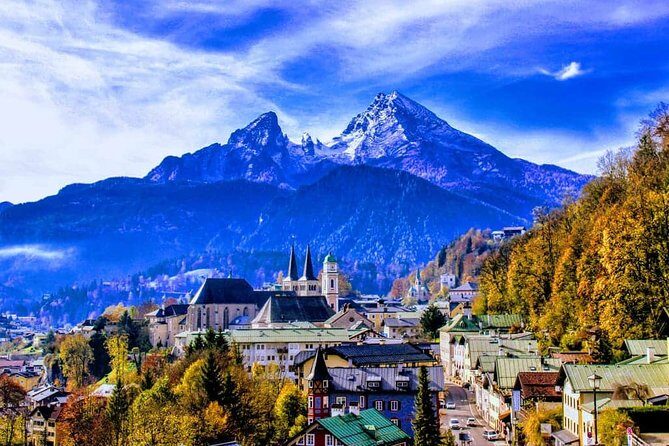
- Königssee by electric boat: echo time and Watzmann East Wall views
- Berchtesgaden old town: painted houses, a big station, and dark corners
- Kehlsteinhaus (Eagle’s Nest): tunnels, a restaurant, and staying power after the bombs
- Obersalzberg: “Hitler’s Alpine Fortress” and what’s left to see
- Dokumentationszentrum Obersalzberg and the bunker option: pick based on your time
- Optional add-ons: Rossfeld, salt mine, and Salzburg without losing your mind
- Rossfeld Panoramastrasse (Sound of Music territory)
- Berchtesgaden Salt Mines (white gold, slides, and a raft)
- Salzburg old town with Mozart and Sound of Music connections
- Choosing the right pace: 9.5 hours vs 11 hours, plus how optional stops affect you
- Price and value: is $921.66 per person worth it?
- Who should book this tour (and who might want a different plan)
- Should you book Eagle’s Nest, Königssee, and Obersalzberg from Munich?
- FAQ
- What time does pickup start in Munich?
- Is this tour private or shared?
- What attractions are included, and what requires extra payment?
- Does the tour include skip-the-line tickets?
- Can I add stops like Salzburg or the salt mine?
- What language is the tour offered in?
Key takeaways before you go
- 7:30 AM hotel pickup from anywhere in Munich gets you out early and helps you beat the worst crowds.
- New minivan comfort with bottled water keeps the day feeling easy even after 9.5 to 11 hours on the road.
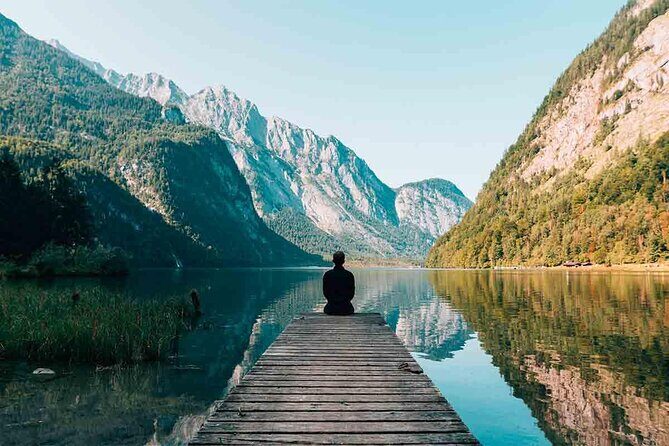
- Königssee by electric boat means quiet water, clear photo time, and that famous echo moment.
- Eagle’s Nest (Kehlsteinhaus) is more than views: you ride up through tunnels and get a short exhibition context.
- Obersalzberg is the history anchor, with photo-supported guidance at the sites that remain.
- Optional add-ons like Salzburg, the salt mine, or Rossfeld Panorama Road let you build your own perfect mix.
Why this Berchtesgaden day trip feels more human than a bus tour
This tour works because you’re not locked into one fixed group schedule. It’s designed as a private experience where your guide picks the main stops, then you adjust timing and priorities on the fly. That matters a lot in this part of Germany, where weather, crowds, and opening times can change how smoothly the day runs.
The route also makes sense. You start with a motorway-style viewpoint stop, then shift into lakes and lakeside villages, then move into Berchtesgaden’s historic core. After that, you go up to the Eagle’s Nest area and finish around Obersalzberg, with optional expansions depending on your energy level. In practice, that order helps you go from easy sightseeing into the heavier history without feeling like you’re bouncing around randomly.
And yes, the scenery is the draw. But the tour’s value is how the guide ties the setting to the story, so you’re not just sightseeing. You’re understanding why these places mattered.
You can also read our reviews of more private tours in Munich
The comfort factor: hotel pickup and the air-conditioned minivan
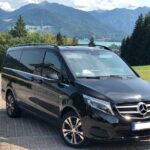
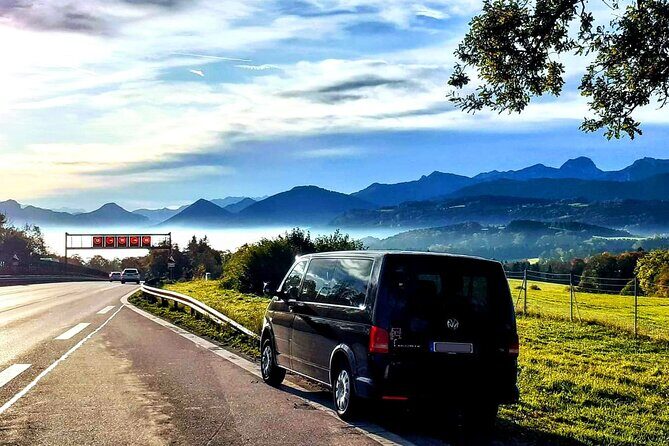
Your day begins with pickup at 7:30 AM at your Munich hotel or address. The vehicle is described as a new, luxurious Mercedes or VW minivan with air-conditioning, and it’s only for your group. That eliminates the two biggest annoyances of day trips: sitting in a cramped bus and playing parking Tetris.
You also get bottled mineral water, which sounds small until you realize you’ll likely be out all day. And because you’re not searching for where to park, you spend less time “figuring it out” and more time looking at what’s in front of you.
A practical note: the tour includes “selected scenic routes.” That usually means better views along the drive and fewer dead miles. You’ll still be traveling by van for a good chunk of the day, but it’s the kind of travel that doesn’t feel like a punishment.
Mount Irschenberg and Chiemsee: the drive that teaches you how to read the scenery
On the way out of Munich, you pass a 14th-century pilgrimage church in the Ramersdorf area before the route heads southeast along the A8. Then you hit the Mount Irschenberg viewpoint. This is one of those rare spots where you get a big panorama without hiking. It also comes with a history lesson: the motorway route was built in the mid-1930s as a panoramic motorway, and the scenic staging was tied to National Socialist propaganda.
I appreciate that you’re not handed a clean, glossy version of the landscape. The guide’s job here isn’t to ruin the view—it’s to help you notice how places were used. Once you see that frame, the next stops land better.
Then comes Chiemsee, Bavaria’s largest lake. You’ll have time near the beach area and a look at Germany’s first motorway rest area from 1937–38. After WWII, that building area was used by the US Army as a recreation center (the AFRC Lake Hotel) until 2003. There’s even an abandoned boat dock left over from that era.
After Chiemsee, the drive shifts onto the German Alpine Road. If you care about the in-between moments—curves, overlooks, and quick “pull over your camera” pauses—this leg can be a highlight even before you reach the famous lakes.
Königssee by electric boat: echo time and Watzmann East Wall views
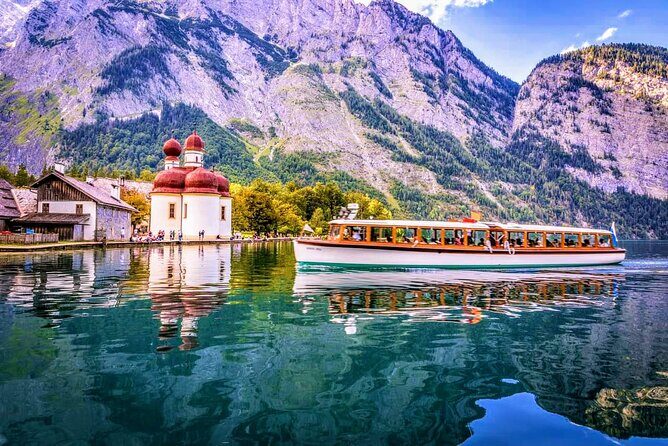
Lake Königssee is the centerpiece for many people, and the method matters. There’s no road around the 8 km long lake, even for hiking routes. So the iconic west bank peninsula—where you’d go for St. Bartholomew’s Church and the pilgrimage chapel—can only be reached by the historic electric boats that glide quietly across the water.
You’ll do the famous 35-minute cruise and experience the lake’s echo. You’ll also see Mount Watzmann’s East Wall and the so-called sleeping witch feature. This is the kind of stop where your photos turn out better because the boat is stable and the soundscape is calmer than you’d expect.
Ticket reality check: the Königssee cruise isn’t included in the base price, but skip-the-line tickets are offered for 2025 (adult: €22.80; children 6–17: €11.40). The boat portion itself runs about 2 hours on the day’s schedule, but the actual cruise is 35 minutes. You’ll want to treat the whole Königssee block as a “half-day feeling,” not just a quick detour.
After the boat, you’ll pass through the village of Königssee. The waterfront area has a pedestrian zone, small shopping, and good photo moments. If you like wandering without a plan, this is where you can do it.
Berchtesgaden old town: painted houses, a big station, and dark corners
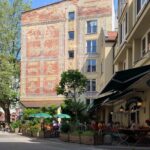
Berchtesgaden is more than a pit stop between lakes and viewpoints. The historic center has painted houses and a traffic-restricted layout, which makes it pleasant to walk. You’ll also have time to pause at places like the Hofbrauhaus Berchtesgaden for a break.
The history here is not subtle. Berchtesgaden’s origins go back to the early 1100s, when the area’s monastery foundation benefited from salt and metal mining. But modern visitors are usually here for the WWII-era remnants.
Your guide points out the surprisingly huge central station opened on February 1, 1940. You’ll also see the tunnel portal for a planned new railway line to Salzburg. And then you get into the Obersalzberg orbit: the so-called Little Reich Chancellery and residences connected with Wilhelm Keitel and Alfred Jodl.
It’s a lot for one stop, but this is exactly why a private guide helps. You can linger if something clicks, or move on quickly if you’ve had enough of the topic for the moment.

Kehlsteinhaus (Eagle’s Nest): tunnels, a restaurant, and staying power after the bombs
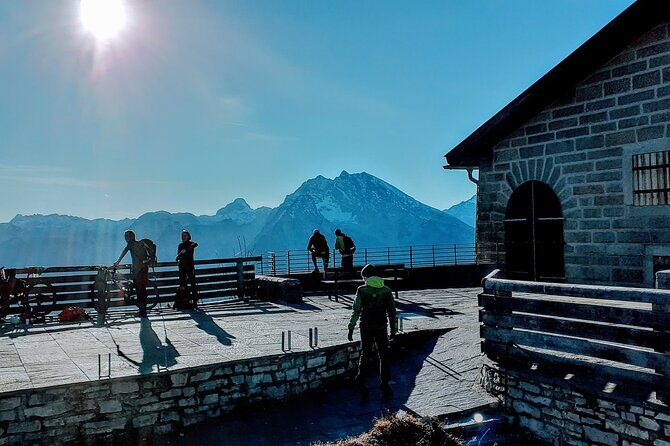
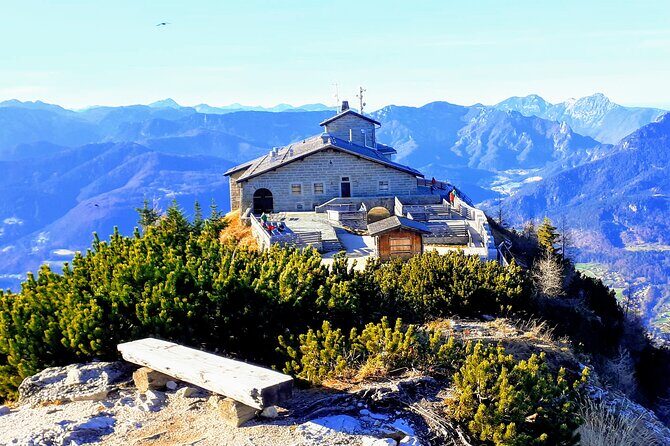
The Eagle’s Nest portion is one of the top reasons people book this tour. Kehlsteinhaus sits high above Berchtesgaden (6,017 ft / 1,834 m) and survived the British air raid on April 25, 1945 unscathed. That survival is part of what makes the site so stark once you learn its purpose.
How you get there matters. From early May to end of October (depending on snow conditions), it’s reachable via special shuttle buses from the Obersalzberg area. Then you reach the elevator through a long tunnel (124 meters), which takes you further up via another tunnel segment (another 124 meters) into the building itself. The Kehlsteinhaus is now operated as a restaurant, and there’s a small exhibition for context.
A tip that can save you time: once you arrive at the bus area, head toward the elevators quickly. Getting in the elevator line early helps you avoid delays.
Ticket reality check: the Eagle’s Nest skip-the-line option for 2025 is offered (adult €31.90; children 6–14 €16.50). The ticket price is not included in the base cost.
Also, plan for a reality check. One group’s experience included an Eagle’s Nest closure due to circumstances. The upside of having a guide is that they can adjust the rest of the schedule when something doesn’t work as planned.
Obersalzberg: “Hitler’s Alpine Fortress” and what’s left to see
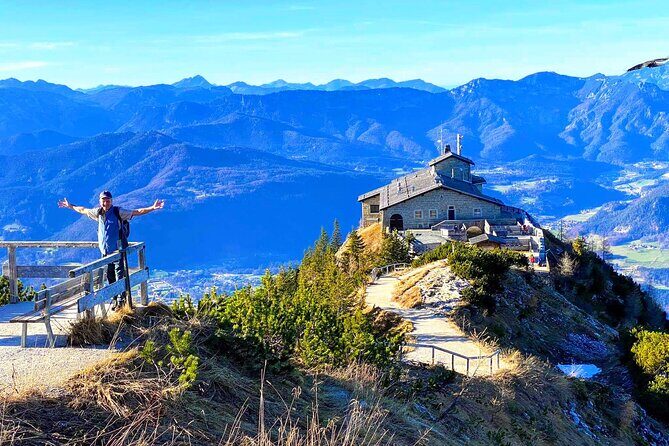
Obersalzberg is where the tour becomes serious. This plateau below Eagle’s Nest at about 1,000 m (3,200 ft) was largely confiscated by Hitler and his entourage and designated as a Führersperrgebiet (leader’s restricted area) from 1933. On April 25, 1945, roughly 1,300 bombs destroyed almost the entire area, and Kehlsteinhaus was spared.
After the war, ruins were largely demolished or blown up in the early 1950s. Some buildings were rebuilt, such as the Hotel Türken. What remains today is mostly tied to location and memory, so your guide’s historical pictures and on-the-ground interpretation are what make it click.
This is also where your time management shows up. A standard stop here is short (around 35 minutes), but you can extend understanding by adding the documentation center on request.
Dokumentationszentrum Obersalzberg and the bunker option: pick based on your time
The documentation center is optional, but it’s one of the most useful ways to turn a few exterior stops into a clearer story. Displays and film excerpts explain the 12-year Nazi reign of terror in Berchtesgaden, with information available in English. You can also visit part of the underground bunkers. The bunker entrance is included in an admission price of €3.00 per adult, with audio guides in several languages.
Time matters here. If you only want the bunkers, plan at least 30 minutes. If you want the bunkers plus the rest of the exhibition, set aside at least 60–90 minutes. The tour text also notes that if you choose this option, you’ll likely have less time for other on-request attractions unless you extend the tour length for a fee.
In other words: if you’re hungry for context, this stop pays off. If your day is already packed with Eagle’s Nest and salt mine, you might choose a shorter version of the documentation stop.
Optional add-ons: Rossfeld, salt mine, and Salzburg without losing your mind
This tour is built to expand. The on-request stops are where you tailor the day to your interests.
Rossfeld Panoramastrasse (Sound of Music territory)
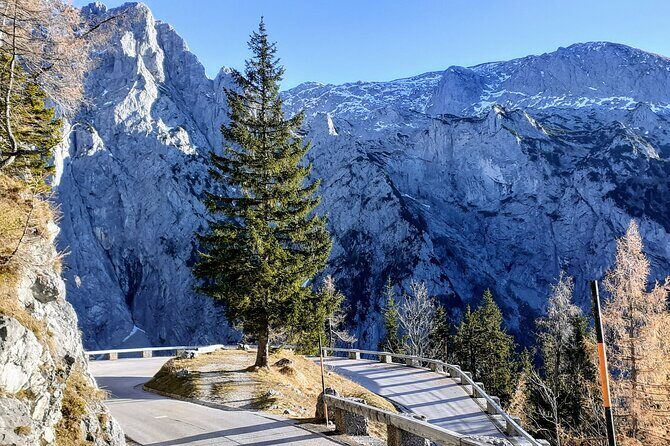
Rossfeld Panorama Road is a panoramic route built starting in 1938 and finished in 1955. At about 1,600 m (5,250 ft), you can cross into Austria on foot, and mountain inns are part of the experience. There’s also a movie connection: the final scene of The Sound of Music was shot here in 1964.
There’s a toll for the vehicle (not included) of €10.00 for 2025, and it’s for the vehicle including all passengers. That makes it easy to plan for if your guide asks your group’s decision in advance.
Berchtesgaden Salt Mines (white gold, slides, and a raft)
If your group likes hands-on experiences, the salt mine is a fun switch from history and scenery. This is the oldest active salt mine in Germany. The tour runs about 1 hour 30 minutes and uses a mine railway into the mountain. You’ll go onto the salt fields, then move deeper on slides, and glide over Mirror Lake on a raft.
A miner guide explains how salt mining has been happening here since 1517. You’ll receive a protective suit at check-in for free. The mine temperature stays constant at 12°C (53.6°F) year-round, so warm layers matter.
Ticket reality check: skip-the-line tickets are offered for 2025 (adult €25.50; children 4–16 €13.00), and they’re not included in the base price.
Salzburg old town with Mozart and Sound of Music connections
Salzburg is the big “add-on city” option. It’s about a half-hour drive from Berchtesgaden, and your guide can run a 50-minute guided walk of the Old Town. The tour is designed for people who want a hit list: major filming locations from The Sound of Music like Mirabell gardens and the palace come up, and you’ll also get the Mozart-city framing.
Depending on your wishes, you can add stops by car such as Hellbrunn Palace and its Trick Fountains (extra admission for about a 45-minute tour) or visit the Sound of Music gazebo. You can also have free time to stroll and shop.
Pricing detail: Salzburg sightseeing is described as package-based, paid in cash on site to your guide, based on the time frame and group. The key practical point is that your Salzburg portion is not just a “quick stop”—it’s a guided component you’ll plan around the length of your booked day.
Choosing the right pace: 9.5 hours vs 11 hours, plus how optional stops affect you
You start at 7:30 AM, and the full day runs either about 9.5 hours or 11 hours. The longer you book, the more room you have to add on Obersalzberg documentation, Rossfeld, the salt mine, or Salzburg.
One detail that matters: the time slots listed for each stop are suggestions, not binding clocks. Travel time between attractions is not included inside those stop estimates. And stops 7 through 10 are explicitly marked on request, meaning they can reduce time for earlier highlights if you pack them in.
If you feel torn, this is how I’d decide. If you want Eagle’s Nest and Königssee as your anchors, take either tour length but treat documentation as optional. If you want Salzburg or the salt mine, lean toward the longer duration so you don’t end up rushing through what you came for.
Price and value: is $921.66 per person worth it?
At $921.66 per person, this is not a budget day trip. You’re paying for private transport, a licensed guide, and the kind of scheduling control that keeps the day from turning into logistics work.
What you get that you can’t easily buy piecemeal:
- A private Mercedes or VW minivan just for your group
- Door-to-door pickup in Munich at 7:30 AM
- A professional guide who builds the plan around your priorities
- Bottled water and selected scenic driving routes
- The ability to adjust timing when something shifts
What you still pay separately:
Eagle’s Nest tickets, the Königssee cruise, Salzburg sightseeing, the salt mine, and Rossfeld toll are all extra. Lunch is also not included.
So here’s the value math that usually makes sense for this kind of tour: if you want multiple major highlights in one day, especially ones that involve parking problems and ticket lines, the private structure saves you stress and time. If your plan is only to see one or two sights and you don’t care about history context, a simpler option might fit better.
Who should book this tour (and who might want a different plan)
This works best for:
- People who want the highlights without driving and without navigating trains or buses
- Small groups or families who want flexible timing
- History-minded travelers who like their views with context, not just scenery
- Anyone who prefers a guide who can add a small food break or adjust on the spot when timing changes
You might think twice if:
- Your group hates long days. This is 9.5 to 11 hours, starting at 7:30 AM.
- You’re set on doing every optional stop. The on-request attractions can compete for time.
- You’re looking for a very light sightseeing day with minimal walking or interpretation.
Should you book Eagle’s Nest, Königssee, and Obersalzberg from Munich?
I’d book it if you want a smooth, private day that covers the big three: Königssee by electric boat, Eagle’s Nest by shuttle and elevator tunnels, and Obersalzberg’s historical core. The minivan comfort and early pickup help a lot, but the real reason to book is the guide-led pacing—especially the ability to shift when weather, lines, or closures change the plan.
If you’re the kind of traveler who likes to understand what you’re seeing, this route has the structure for it. And if you prefer a choose-your-own-adventure day, the on-request add-ons (salt mine, Rossfeld, Salzburg) give you that without requiring you to coordinate anything yourself.
FAQ
What time does pickup start in Munich?
Pickup starts at 7:30 AM. You can be picked up at any hotel or address in Munich, or you can request another pickup time if needed.
Is this tour private or shared?
It’s private. Only your group participates.
What attractions are included, and what requires extra payment?
The tour includes the guided private excursion and transportation in a Mercedes or VW minivan, plus bottled water. Entrance fees and tickets for stops such as Eagle’s Nest, the Königssee cruise, documentation options, Rossfeld Panorama Road, the salt mine, and Salzburg sightseeing are not included.
Does the tour include skip-the-line tickets?
Skip-the-line tickets are offered for the Lake Königssee cruise and Eagle’s Nest (Kehlsteinhaus), but those ticket costs are not included in the base price.
Can I add stops like Salzburg or the salt mine?
Yes. Stops 7–10 are marked on request, so you can add them when booking. If you add more, you’ll generally have less time for the other sights unless you extend the tour length for a fee.
What language is the tour offered in?
The tour is offered in English.