REVIEW · DRESDEN
Dresden with a touch of Xmas: English small group tour
Book on GetYourGuide →Operated by See My Dresden · Bookable on GetYourGuide
Dresden wears Christmas like a crown. This small-group, English walking tour strings together the city’s most striking baroque sights and the seasonal magic of the oldest market in Germany, Striezelmarkt. I like that the stops are varied, from the Zwinger to the Fürstenzug, so you’re not stuck doing the same postcard view for 2 hours.
I also like that the guide doesn’t treat the markets like a separate thing. You get the sweep of Dresden’s story, including what the city went through during World War II, and then you end in the warm, snack-and-stroll energy of Striezelmarkt. One drawback: the route is outdoors on cobbled ground, and in cold weather it can be a bit tricky to hear if the guide turns while speaking.
In This Review
- Key Highlights You’ll Actually Feel on This Walk
- Dresden in December: Why This Tour Works Better Than a Typical Market Crawl
- Start at Schlossplatz by the Elbe: Getting Your Bearings Fast
- Theaterplatz and the Opera House: A Square Made for Stories
- Zwinger: Baroque Splendor with a Side of Real Local Anecdotes
- Royal Palace Courtyard: Sgrafitto and Frescoes If You Hit the Right Timing
- Catholic Cathedral Area and the Fürstenzug: Where Dresden’s Past Becomes Visible
- Neumarkt and the Churches: A Christmas Stop That Feels Connected to the City
- Royal Stables Timing Tip: One Guide’s Smart Route Change
- Striezelmarkt Finale: Dresden’s Oldest Market and the Best Place to Slow Down
- Meet the Guides: Storytelling That Keeps the Pace Moving
- Price and Value: What You’re Paying $25 For (and What You Aren’t)
- Practical Stuff That Keeps This Walk Comfortable (and Not Slippery)
- Who This Tour Suits Best (and Who Should Rethink It)
- Should You Book This Dresden Christmas Market Tour?
- FAQ
- How long is the Dresden with a touch of Xmas walking tour?
- Where do I meet the guide?
- Is the tour in English?
- Are tickets or entry fees included?
- Is the tour only for good weather?
- What Christmas market do we end at?
Key Highlights You’ll Actually Feel on This Walk
- Schlossplatz to Theaterplatz: start at the Elbe side and pass Dresden’s most dramatic square scenery.
- Zwinger baroque walk-through vibes: your guide connects the building’s past parties and public life.
- If the Royal Palace is open: you may see the courtyard decorated with rare Renaissance sgrafitto technique and frescoes.
- Fürstenzug: a 100-meter-long porcelain procession that turns history into something you can read.
- Several market stops, not just one: Neumarkt, a quick peek at the Royal Stables market, then the finale at Striezelmarkt.
- Your ending has a built-in after-party: you finish at Striezelmarkt and can keep exploring on your own pace.
Dresden in December: Why This Tour Works Better Than a Typical Market Crawl
Dresden is stunning year-round, but in Advent it feels like the city turns its lights up a notch. The charm here isn’t just the stalls. It’s the way the Christmas atmosphere sits next to monumental architecture and the memory of rebuilding after destruction.
This tour is a smart way to do both. In about two hours, you see the historic center’s key public spaces and you also get market time at the end. It’s also a good value format: you’re paying mainly for an English guide and a guided route, while the market experience unfolds mostly on your own terms at the finish.
A few more Dresden tours and experiences worth a look

Start at Schlossplatz by the Elbe: Getting Your Bearings Fast
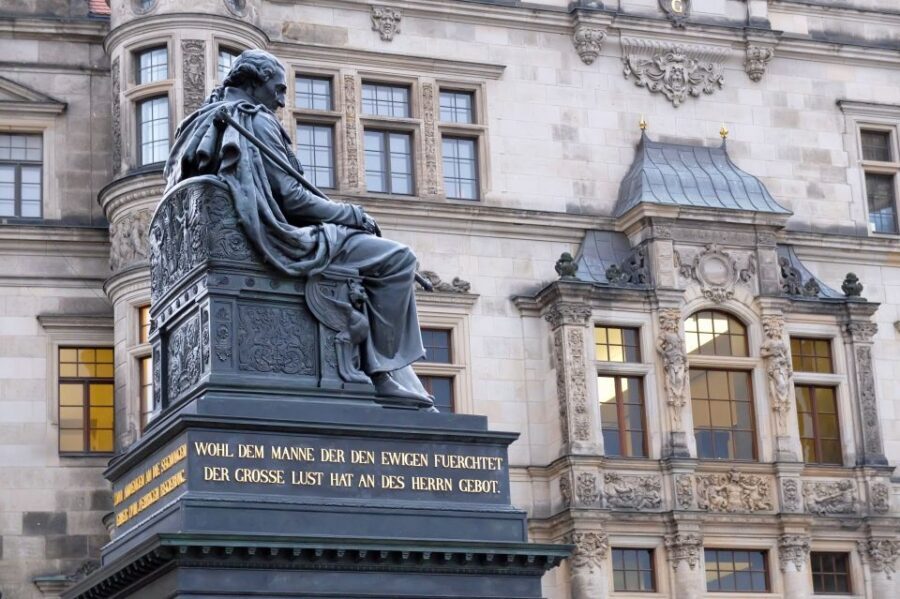
You begin at Schlossplatz on the River Elbe, at the base of the Friedrich August I statue seated on his throne (near the Augustus Bridge). This is a helpful starting point because the river setting frames how Dresden “reads” as a city—pretty from the outside, but layered in meaning underneath.
Arrive 10 minutes early. The meeting spot is specific, and you won’t want to be hunting for it while everyone else is already moving. If you want an easy start, dress warmly, keep your phone handy for directions, and plan to stand where the guide can spot you quickly.
Theaterplatz and the Opera House: A Square Made for Stories

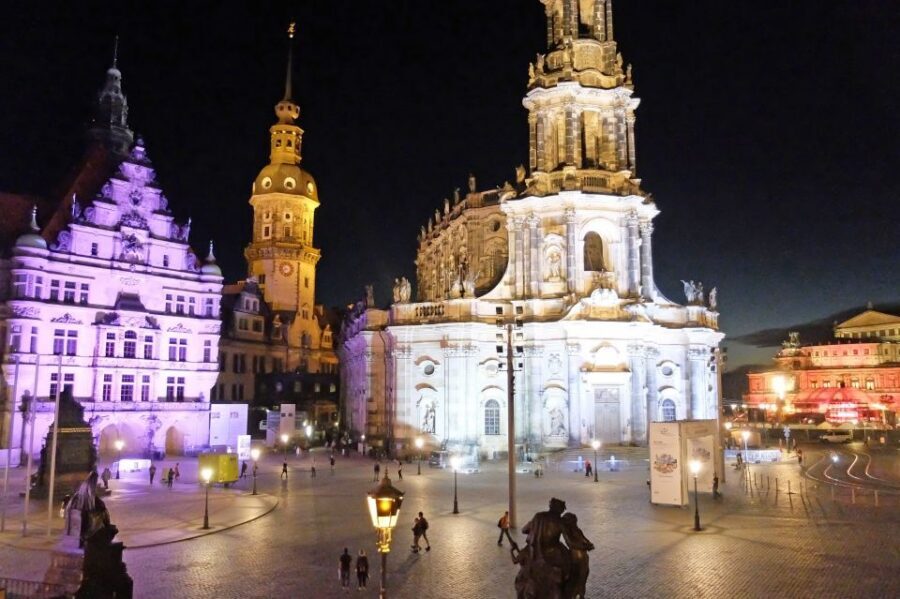
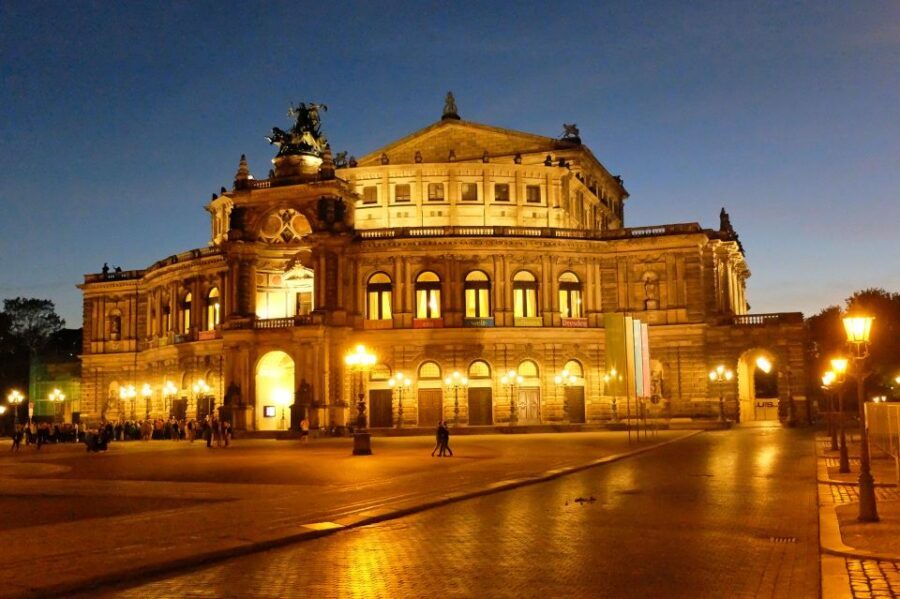
From Schlossplatz, the walk heads toward Theaterplatz, where you’ll pass one of Europe’s most beautiful opera settings. This square is all about scale and drama—exactly the kind of place where a good guide makes the architecture feel alive instead of just impressive.
Expect your guide to connect the buildings around the square to the city’s long development—from earlier medieval foundations through Renaissance and Baroque power. Even if you’re not a history person, the story matters here because Dresden’s look didn’t happen by accident. It was built, changed, damaged, and rebuilt.
Zwinger: Baroque Splendor with a Side of Real Local Anecdotes

Next comes the Zwinger, one of Dresden’s signature Baroque experiences. On this part of the walk, you’re not looking at a single interior attraction. You’re getting the “public face” of the complex—how it functions as a landmark you can enjoy from outside while your guide fills in context.
You can ask about events held here. That’s the difference between reading about a building and actually hearing how people used it. Your guide’s goal is to show how Dresden’s grandeur wasn’t only for formal ceremonies. It was tied to everyday culture and public life.
Royal Palace Courtyard: Sgrafitto and Frescoes If You Hit the Right Timing
The tour continues toward the area where the Royal Palace courtyard is decorated with sgrafitto and frescoes. There’s a practical catch: the tour notes that if the palace is open, your guide will take you through the large courtyard to see those details.
If access is available, this is one of the more visually rewarding moments of the walk because sgrafitto is not the kind of decoration you normally spot just by glancing up. If it’s closed, don’t panic. You’ll still cover the palace area and move on through the story of how the city changed over centuries.




Catholic Cathedral Area and the Fürstenzug: Where Dresden’s Past Becomes Visible
After the palace area, you’ll head around the Catholic Cathedral, which reflects Dresden’s complicated religious history. This stop works because it shifts the tone: the tour becomes less “pretty buildings” and more “this city has fought with itself and survived.”
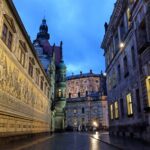
Then comes one of the most distinctive sights on the route: the Fürstenzug. This is a 100-meter-long porcelain processional artwork. The scale alone is impressive, but what makes it special for a guided walk is that you’re likely to hear how it’s tied to Dresden’s rulers and identity over time.
It’s also a great break from market-watching. You get to stand and actually look, and not just pass by at walking speed.
Neumarkt and the Churches: A Christmas Stop That Feels Connected to the City
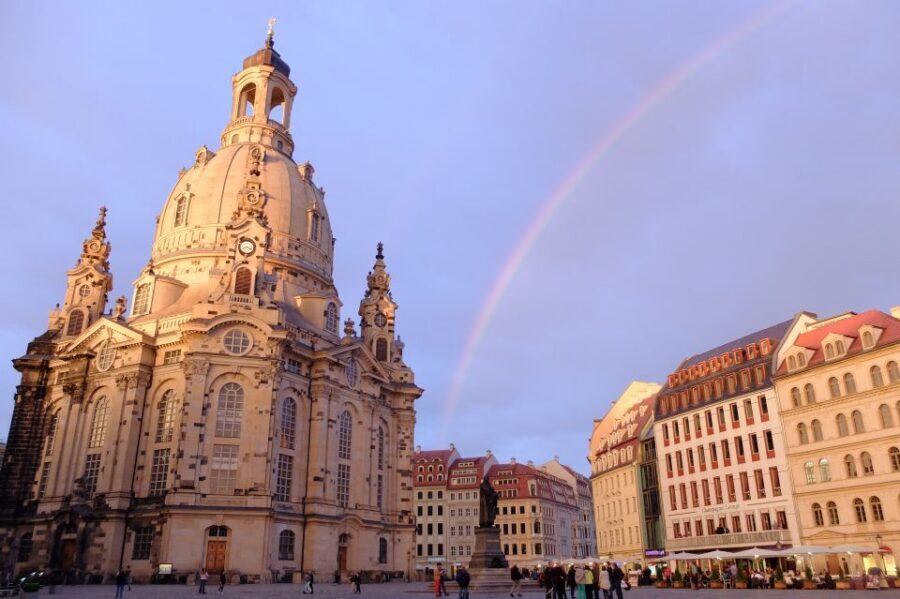
From there, the walk reaches Neumarkt. You’ll see the inspiring Church of Our Lady, and then you’ll encounter a smaller Christmas market right in the area.
This is a useful strategy. Starting early in the Christmas scene lets you ease into it. It also means when you reach the finale market later, you’re not mentally exhausted by the sheer volume of stalls.
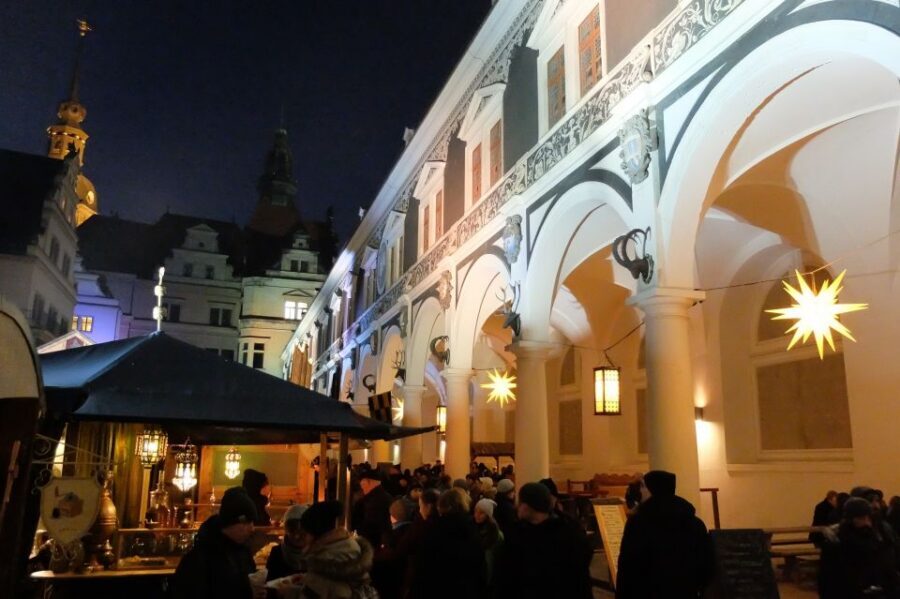
You’ll also get a quick peek at a medieval themed Christmas market in the Royal Stables along the way. That gives the route variety—think different themes and vibes in a short walking window.
Royal Stables Timing Tip: One Guide’s Smart Route Change
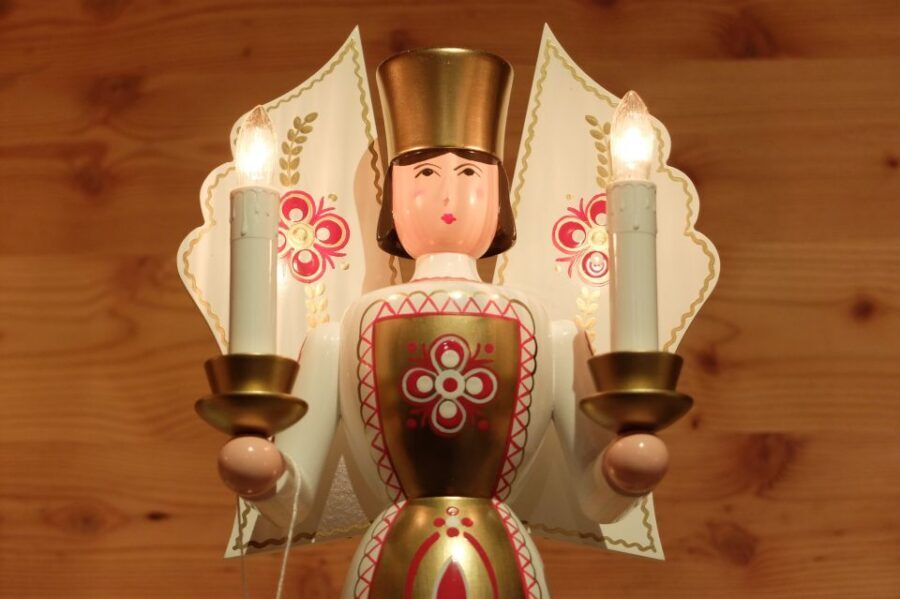
A real practical detail: one of the guides, Laura Park, adjusted the order to start with the medieval themed market in the Royal Stables area first. Her reasoning was simple: it could be free to enter before 3pm, then cost 5€ later.
You can’t control the exact day’s operations, but it’s a good reminder to pay attention to timing if any market section requires entry. When your guide asks the group to shift slightly, it often has a purpose beyond convenience—like saving you money or giving you first look at something.
Striezelmarkt Finale: Dresden’s Oldest Market and the Best Place to Slow Down
The tour ends at Striezelmarkt, known as one of the oldest Christmas markets in Germany and often considered one of the most charming. This is where the tour’s structure pays off: you get your history first, then you land in the biggest seasonal atmosphere.
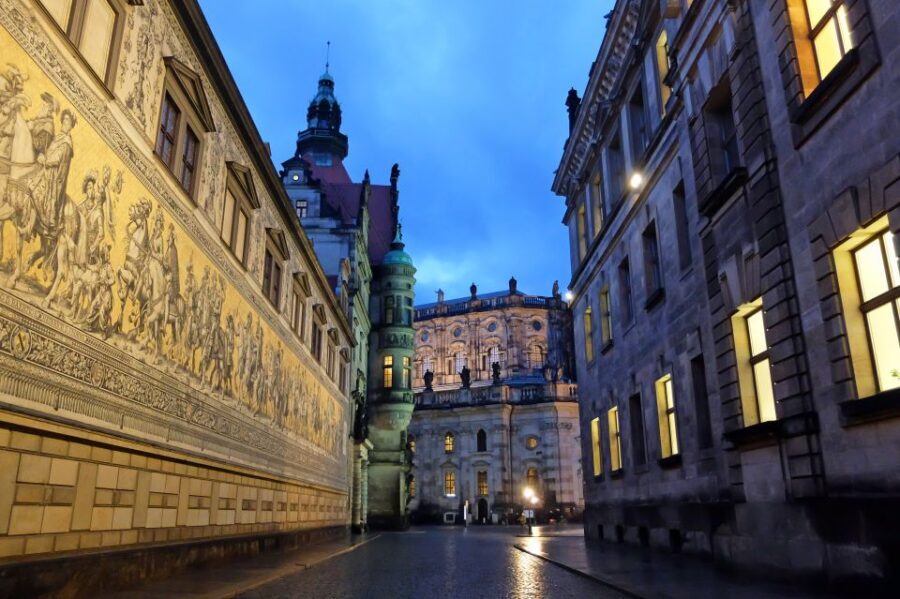
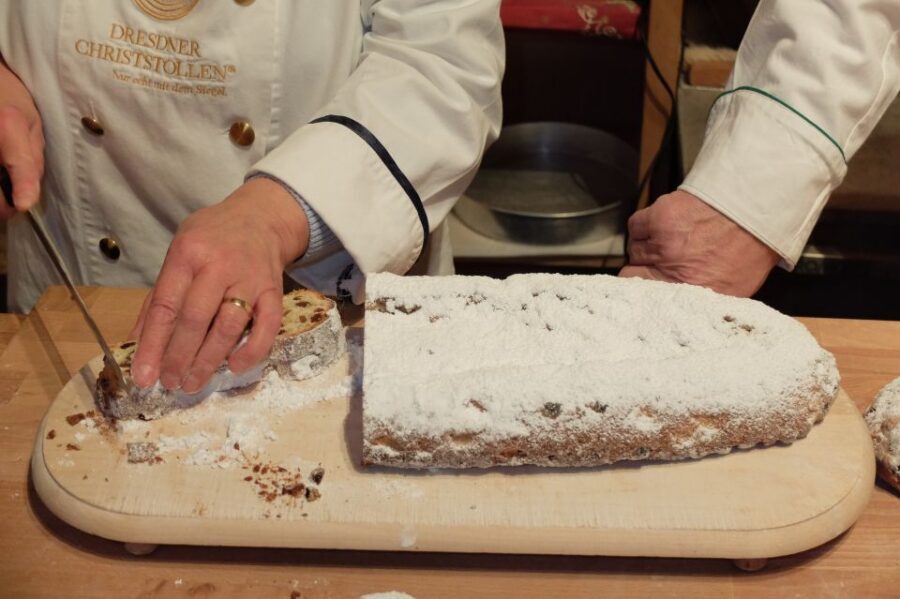
Striezelmarkt is also where you’ll want to linger. Your guide will point you toward local favorites, including guidance on Glühwein and Christmas delicacies. Food and drinks aren’t included, so you choose what you want—this is one of the best ways to keep the group tour flexible.
And since the tour ends back at the meeting point, it’s also easy to regroup with companions or continue your own evening plans. If you still have energy (and your gloves survive), you can keep exploring on your own pace.
Meet the Guides: Storytelling That Keeps the Pace Moving
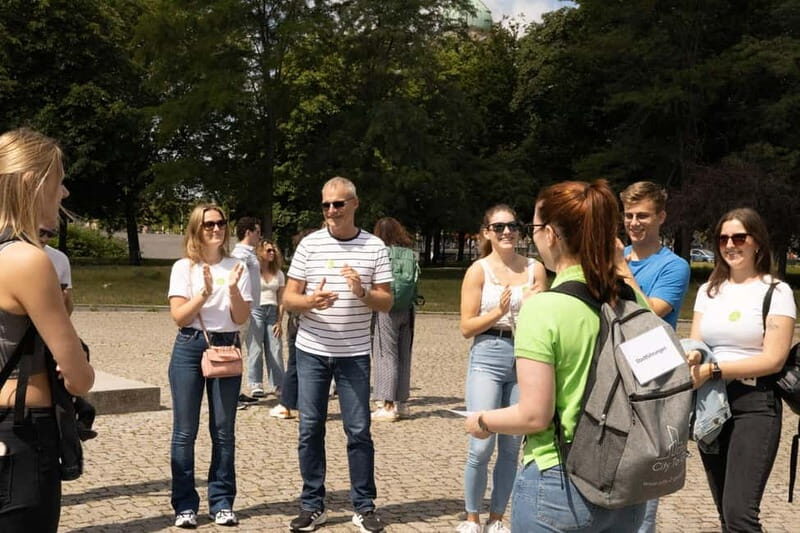
This is guided by local, licensed English-speaking guides from See My Dresden, and the format seems built around serious preparation. The company describes their team meetings as discussions packed with historical facts, guiding best practices, and lots of reading and research.
That effort shows up in how the tour feels. One guide named Doris is described as extremely knowledgeable and humorous, with great English and answers that go beyond a quick “because that’s how it is.” Another guide, Laura Park, is praised for personalization and a fun storytelling style, plus smart routing decisions like the Royal Stables timing.
Even with excellent guides, sound can be an issue at street level. One key consideration: sometimes the guide may turn to face a sightline or speak toward part of the group, so keep your position attentive and don’t hang back if you want to catch every detail.
Price and Value: What You’re Paying $25 For (and What You Aren’t)
The price is listed at $25 per person for a 2-hour small-group English walking tour. For that money, you’re getting guided storytelling around major exterior sights and a visit to a Christmas market at the end.
What’s not included matters:
- Entry tickets (so don’t expect museum interiors to be covered)
- Food and drinks (so no mulled wine is thrown into the price)
- Transportation (you’re walking and handling transit on your own)
Is it good value? Yes, if you want the guide portion. You’re paying for route planning, interpretation, and time spent at multiple landmarks plus market time. If you just want to wander markets on your own, you might feel it’s too guided. If you want context and an efficient route, it’s a clean deal.
Also, the tour is outside most of the time, so you’re essentially buying access to what it’s like to “read” Dresden while you walk it.
Practical Stuff That Keeps This Walk Comfortable (and Not Slippery)
This tour runs under all weather conditions as long as bookings are accepted. Dresden’s streets can be cobbled, and if snow or ice shows up, that cobble can turn slippery fast. Wear shoes with good grip, not just warm boots that look great in photos.
Bring:
- Comfortable shoes
- Warm clothing
One more practical move: arrive early and stay on time. The tour notes that the guide can’t wait if you’re late, and guides usually arrive shortly before the start.
If you’re sensitive to cold or noise, plan for short pauses while you warm up between landmarks, especially before the finale market where you may want to stop and browse.
Who This Tour Suits Best (and Who Should Rethink It)
This works especially well if you:
- Want a focused, English route through Dresden’s historic center
- Like seeing how markets connect to the city around them
- Enjoy stories that cover major eras, including WW2 and post-war rebuilding
- Prefer a guided plan when there are a lot of sights in a small area
It may be less ideal if you:
- Have trouble walking on cobbled streets
- Prefer mostly indoor stops (this tour is outdoors)
- Need quiet, front-facing audio the whole time (the guide may shift orientation depending on the stop)
Should You Book This Dresden Christmas Market Tour?
I’d book it if your goal is to do Dresden efficiently and understand what you’re looking at. The mix of baroque landmarks, the porcelain procession at Fürstenzug, and then the payoff at Striezelmarkt makes this more than a simple market stroll.
You should also book if you like ending with options. The tour finishes at the main market, and you can keep browsing at your own pace, grabbing Glühwein and local treats on your schedule.
If you’re visiting Dresden with only a short window, this is a strong “two-hour advantage” because it pairs city storytelling with Christmas atmosphere in the same walking loop. Just come prepared for cold weather and slippery cobbles, and you’ll enjoy the day.
FAQ
How long is the Dresden with a touch of Xmas walking tour?
It lasts about 2 hours.
Where do I meet the guide?
Meet at the base of the Friedrich August I seated statue on Schlossplatz Dresden, near the Augustus Bridge (Google shows it as Denkmal Friedrich August dem Gerechten).
Is the tour in English?
Yes, the tour is guided in English.
Are tickets or entry fees included?
No. Entry tickets are not included, and sights are viewed from the outside.
Is the tour only for good weather?
It takes place under all weather conditions if bookings are accepted, so dress for cold and possibly slippery cobblestones.
What Christmas market do we end at?
The tour ends at Striezelmarkt, one of the oldest Christmas markets in Germany.