REVIEW · DUSSELDORF
Düsseldorf: Old Town Historical Walking Tour with GEO EPOCHE
Book on GetYourGuide →Operated by Eat the World GmbH · Bookable on GetYourGuide
Rhine power shapes Düsseldorf at street level. This 2-hour walk ties the Rhine to what the city became—serious politics, big art names, and the old-and-new cityscape you can still see today. The route links classic sights like the castle tower area and Düsseldorf’s famous shopping boulevard, Königsallee, with stories an expert guide turns into something you’ll remember.
What I like most is the mix of people and places: you’ll hear about rulers and Prussian kings, plus cultural figures such as Heinrich Heine and Joseph Beuys. I also like the format—an accompanying brochure with illustrative pictures helps you connect what you’re seeing right now with how the area looked in the past.
One consideration: this walking tour isn’t suitable for people with mobility impairments, so plan around the route and walking pace before you book.
In This Review
- Key takeaways before you go
- Why the Rhine Matters in Düsseldorf’s Story
- Old Town Walk Basics: 2 Hours, German Guide, and a Simple Route
- From Burgplatz to the Castle Tower Area: Where Power Becomes Visible
- Königsallee and the City’s Art-and-Culture Metropole Moment
- The 1976 Rhine Bridge Move: A Hard-Work Story You’ll Actually Remember
- How the Guide Connects Rulers, Prussian Kings, and Cultural Big Names
- What You Should Notice While Walking (So the Tour Sticks)
- Price and Value: Is $29 Worth It?
- Who This Tour Fits Best
- Should You Book This Düsseldorfer Old Town GEO EPOCHE Walk?
- FAQ
- Where does the tour start?
- How long is the Düsseldorf Old Town Historical Walking Tour?
- What’s the price per person?
- What language is the tour conducted in?
- Is the tour affected by weather?
- What’s included in the tour?
- What is not included?
- Is the tour suitable for people with mobility impairments?
- Are pets allowed on the tour?
- What should I bring?
Key takeaways before you go
- Rhine-driven history: the river’s influence shows up in politics, engineering, and daily city life
- Art and culture angle: you’ll connect Düsseldorf’s rise as a cultural metropole to real names
- Old Town to Königsallee: classic landmarks plus modern city rhythm, without long transfers
- A standout engineering story: learn how a huge Rhine bridge was moved by almost 50 meters in 1976
- A guide who adds the missing facts: expect hidden details, not just surface explanations
Why the Rhine Matters in Düsseldorf’s Story
The tour’s center of gravity is the Rhine, and that’s a smart choice. Düsseldorf grew in a way that makes sense only when you treat the river as a historical engine—trade routes, shifting power, and even major infrastructure decisions all tie back to the water.
One of the most memorable themes is how practical problem-solving shaped the city. You’ll hear about a huge Rhine bridge that was moved by almost 50 meters in 1976. That’s the kind of story that changes how you look at modern places: instead of seeing a fixed skyline, you start noticing how cities get redesigned when needs change.
And because the walk returns to the Rhine area, the story doesn’t feel like random sightseeing. It loops back to the source—so you leave with a clearer “why” behind what you see.
You can also read our reviews of more walking tours in Dusseldorf


Old Town Walk Basics: 2 Hours, German Guide, and a Simple Route
This is a compact, 2-hour experience. That matters because it keeps the day efficient: you can fit it into a tight itinerary without feeling like you spent half your vacation in transit.
Here’s what you should plan for:
- The tour is in German and runs rain or shine.
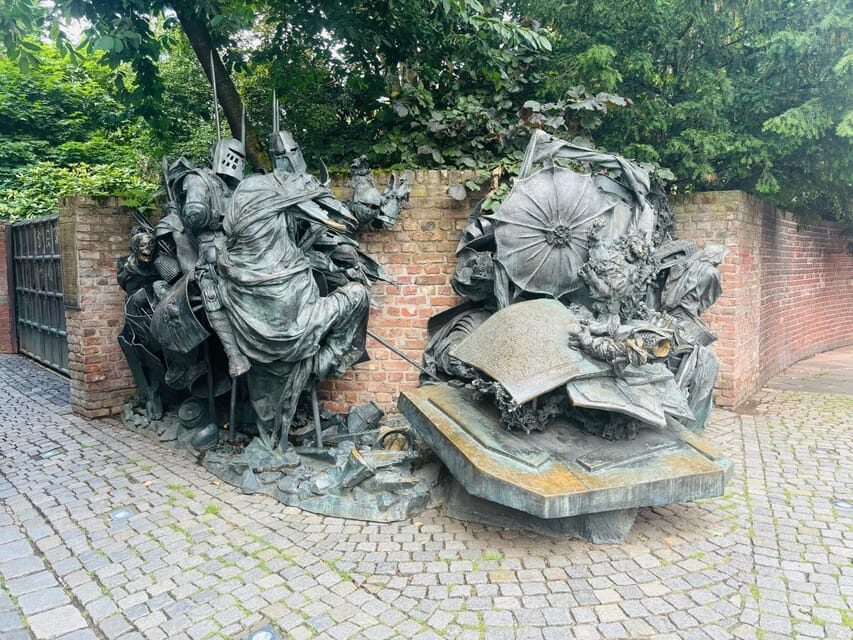
- You’ll start at Stadterhebungsmonument, Burgplatz (the corner of Josef- Wimmer-Gasse and Müller-Schlösser-Gasse).
- You’ll want comfortable shoes and weather-appropriate clothing, plus a reusable water bottle.
Also note what isn’t included. There’s no food or drinks, and there are no entrance fees listed. So if you’re the kind of traveler who needs a snack break, build it into your schedule before or after the tour rather than expecting stops along the way.
The guide approach is also worth mentioning. You’re traveling with an in-depth historical expert, and the tone tends to feel relaxed while still delivering genuinely interesting facts. It’s the best kind of teaching: you’re not being lectured, you’re being walked through a story.
From Burgplatz to the Castle Tower Area: Where Power Becomes Visible
You begin in the Burgplatz area, right at the Stadterhebungsmonument. From there, you head toward the historical hotspots around the castle tower. Even if you’re not a “towers and walls” person, this stop helps you understand Düsseldorf’s priorities in earlier eras.
Think of this section as the city’s political opening chapter. You’re not just looking at a building and moving on. You’re learning why rulers cared about this part of town and how that power shaped the city’s later identity.
The castle tower area is also a good visual anchor for the walking rhythm. As you move, you’ll likely notice how the old core sets the stage for what comes next—especially the transition toward Düsseldorf’s more modern public-life landmarks.
Königsallee and the City’s Art-and-Culture Metropole Moment
One of the headline highlights is Königsallee, Düsseldorf’s best-known street. The point of bringing you here isn’t only that it’s famous—it’s that it represents what Düsseldorf turned into over time.
The tour connects the dots between city prestige and cultural output. You’ll learn how Düsseldorf became a metropole of art and culture, and you’ll hear names that help you place that story in real people, not vague eras.
Two cultural figures specifically mentioned are Heinrich Heine and Joseph Beuys. Getting their names in the same walking context as the city’s major streets makes the experience feel more grounded. You start to see that culture isn’t a museum-only topic; it’s tied to where people lived, worked, debated, and built influence.
Königsallee also gives you a satisfying contrast: you’re coming from historically heavier ground (castle tower, old town focus) into a street that feels more outward-facing and present-day. The mix of old and new is one of the tour’s selling points, and Königsallee is where that contrast becomes obvious.
The 1976 Rhine Bridge Move: A Hard-Work Story You’ll Actually Remember
Here’s the kind of detail that turns a standard city walk into a real story. The tour includes the episode of a huge Rhine bridge being moved by almost 50 meters in 1976.
Even if you’re not a history buff, engineering stories like this are valuable because they show how cities adapt. A bridge move isn’t a small footnote. It suggests changing needs—traffic patterns, river use, or broader planning—and it reminds you that today’s city shape is the result of decisions made by people under pressure.
This is also a great moment for you to switch into observation mode. Look around and think: if something as big as a Rhine bridge had to be physically relocated, what else in a city might have been reshaped over time? That question tends to sharpen your entire experience, and it’s exactly what you want from a walking tour.
You can also read our reviews of more historical tours in Dusseldorf

How the Guide Connects Rulers, Prussian Kings, and Cultural Big Names
A walking tour can easily become a list of dates. This one seems built to avoid that trap by using people as the threads.
You’ll hear about great rulers and Prussian kings, but you’ll also get cultural greats like Heinrich Heine and Joseph Beuys. That mix is useful because it covers two kinds of city power:
- Political power, which influences institutions, borders, and official identity.
- Cultural power, which influences reputation, ideas, and creative legacy.
When those two are explained together, Düsseldorf stops looking like a single-theme city. It becomes a place that alternated between periods of splendor and harder times—and that rhythm helps you interpret what you’re seeing as you walk.
If you’re the kind of visitor who likes to understand how a city became itself, this is where the tour earns its place. Instead of only describing landmarks, it frames them as outcomes of human choices.
What You Should Notice While Walking (So the Tour Sticks)
Even though you’ll have expert guidance, you’ll get the most value if you use the tour as a set of lenses. Here are the best things to look for as you go, based on what the tour emphasizes.
- Rhine influence in the planning: watch for signs that the river shapes movement and city structure.
- Old-and-new contrasts: don’t just admire buildings; compare what feels historic versus what feels more modern and why that might be.
- Street meaning: Königsallee isn’t only architecture or shopping. On this tour, it’s presented as part of Düsseldorf’s cultural reputation.
- Personalities in the streets: when names like Heinrich Heine or Joseph Beuys appear, try to connect them to what kind of environment a cultural figure needs.
This is also where the brochure helps. Illustrated pictures from the past give you something to mentally overlay onto what you see outdoors. That makes the walk feel less like trivia and more like visual history.
Price and Value: Is $29 Worth It?
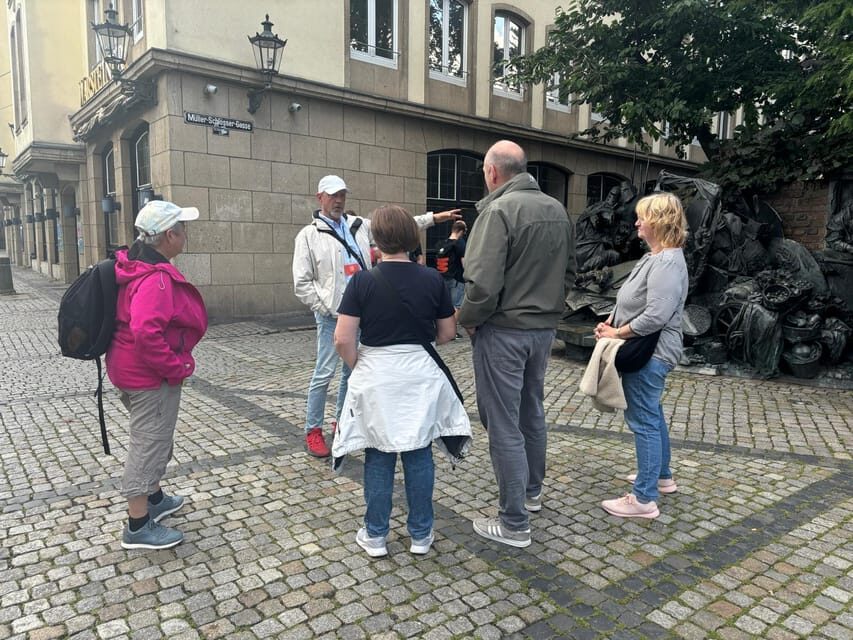
At $29 per person for a 2-hour historical walking tour, this is positioned as good value—especially because you’re getting more than a generic route.
You’re paying for three things:
- A personal tour guide with in-depth historical knowledge.
- A tour brochure with illustrative pictures from the past.
- A focused route that connects the Rhine, the old town, and Königsallee into one story arc.
There are no entrance fees included, and food and drinks aren’t part of the deal. That’s fine, because it keeps the price cleaner and predictable. Just plan to cover your own snack needs and any later attractions separately.
The balance matters here. Many city walks cost more and deliver less structure. This one is priced like an accessible history experience, and the content you’re told—bridge engineering, Prussian influence, and major cultural names—suggests you’re not just paying for walking time.
Who This Tour Fits Best
This experience is a great fit if you:
- Like history that’s explained through real people and real places.
- Want a short walking plan that still feels meaningful.
- Enjoy a city mix—old town landmarks paired with Königsallee’s modern public presence.
- Speak or understand German comfortably, since the tour is German only.
It’s not a fit if you need step-free or minimal-walking arrangements, since it’s not suitable for people with mobility impairments. Also, pets aren’t allowed, so keep that in mind if you’re traveling with an animal.
Should You Book This Düsseldorfer Old Town GEO EPOCHE Walk?
I’d book it if you’re aiming for a 2-hour experience that gives you a coherent story: Düsseldorf shaped by the Rhine, defined by old power and Prussian rule, and remembered through cultural figures like Heinrich Heine and Joseph Beuys. The bridge relocation detail from 1976 alone is the kind of standout you’ll talk about later.
Skip it if you want an English-language tour, need mobility-friendly routing, or you prefer self-guided wandering with no guide-driven narrative. Also, if you hate being outside when it rains, remember it runs rain or shine.
If you’re traveling in the German language and want a practical, story-led walk that connects the city’s past to what you see on the streets, this one makes good sense for your schedule.
FAQ
Where does the tour start?
The meeting point is Stadterhebungsmonument, Burgplatz, 40213 Düsseldorf, at the crossing of Josef- Wimmer-Gasse and Müller-Schlösser-Gasse.
How long is the Düsseldorf Old Town Historical Walking Tour?
It lasts 2 hours.
What’s the price per person?
The price is $29 per person.
What language is the tour conducted in?
The live tour guide speaks German, and the event takes place in German.
Is the tour affected by weather?
The tour takes place rain or shine.
What’s included in the tour?
You get an accompanying tour brochure with illustrative pictures from the past, plus a personal tour guide with in-depth historical knowledge.
What is not included?
Food and drinks are not included, and there are no entrance fees included.
Is the tour suitable for people with mobility impairments?
No, it is not suitable for people with mobility impairments.
Are pets allowed on the tour?
No, pets are not allowed.
What should I bring?
Bring comfortable shoes, weather-appropriate clothing, and a reusable water bottle.