REVIEW · DUSSELDORF
Explore Dusseldorf’s Art and Culture with a Local
Book on Viator →Operated by LocalBini - The go-to platform for Experiences by Locals in Europe · Bookable on Viator
Ninety minutes in Düsseldorf, and you’ll see art everywhere. This small-group walk strings together major culture stops so you get the city’s creative logic fast. You start at Tonhalle Düsseldorf and end at the Kunstsammlung, with parks, public art, and exhibition spaces along the way.
I especially like how the route mixes different art formats: a concert hall, then museums, then streets and plazas with artwork you can spot without a ticket gate. I also love the small size—max 8 travelers—which makes it easier for a guide to tailor explanations and keep questions moving. In the guide style, I noticed names like Anne (who was extra thoughtful with a senior mother) and Beatriz (who helped newcomers understand where to go next).
One consideration: at about 1 hour 30 minutes, this is a strong introduction, not a slow, in-depth visit where you’ll fully read every label inside every stop.
In This Review
- Key Things to Know Before You Go
- Walking Tour Value: Fast Orientation With Real Art Stops
- Price and What’s Included (and What Isn’t)
- Start at Tonhalle Düsseldorf: Wilhelm Kreis Sets the Tone
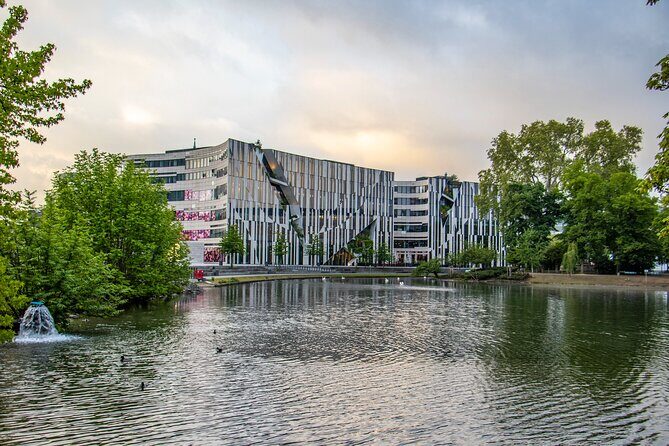
- Hofgarten and Kö-Bogen: Seeing Old Park Lines Up With New Design
- Kunsthalle Stop: A Wall Mural and the Story of 20th-Century Movements
- The Museum Moment: Changing Exhibitions From Innovative Artists
- The Heart of Düsseldorf: The Pedestrian Core as a Cultural Connector
- Burgplatz and Rivertime: Post-WWII Beauty Plus a Specific Artwork Detail
- Following the Rhine: Düsseldorf’s Lifeline on Foot
- Finale at Kunstsammlung: Neo-Renaissance Space With Cutting-Edge Exhibitions
- What the Tiny Group Really Changes for You
- Who Should Book This Tour
- Should You Book? My Decision Guide
- FAQ
- FAQ
- How long is the tour?
- Is the tour offered in English?
- What’s the group size?
- Where does the tour start?
- Where does the tour end?
- Which major places are included on the walk?
- Does the tour use a mobile ticket?
- Is it near public transportation?
- What’s the cancellation window?
- Are service animals allowed?
Key Things to Know Before You Go
- Small group format (max 8): You’re not lost in a crowd, and the guide can pace for your questions.
- English tour with a local: The focus is on how Düsseldorf’s arts scene actually connects across places.
- Mix of venues: You’ll move between concert architecture, parks, museums, and public art.
- A practical ending point: The tour finishes at the Kunstsammlung so you can keep exploring on your own.
- Mobile ticket: You get a paper-light experience that’s easier to manage while walking.
- Classic city landmarks: Wilhelm Kreis at Tonhalle, Daniel Libeskind at Kö-Bogen, and the Burgplatz staircase artwork are part of the story.
Walking Tour Value: Fast Orientation With Real Art Stops
Paying $117.16 per person for a 90-minute walking tour is only worth it if you’ll actually use the information. This one earns that money by doing something simple but smart: it connects art and culture landmarks in a way that helps you plan your next day in Düsseldorf.
The value isn’t just that you see impressive buildings and museums. It’s that a passionate local guide helps you understand what each place is for—performance, exhibitions, public art, and the city’s everyday public space. If you’re new to Düsseldorf, that “how to read the city” skill is exactly what makes the price feel fair.
Also, group discounts are mentioned, so if you’re traveling with friends, it can get even better per person. And since the tour runs in English and is capped at a small max group size, it’s built for conversation, not a lecture.
You can also read our reviews of more tours and experiences in Dusseldorf.

Price and What’s Included (and What Isn’t)
Here’s the practical breakdown: the experience includes a local guide and uses a mobile ticket. It also lists personal expenses and food/drinks as not included, which is standard for many walking tours.
What’s not spelled out is museum admission. The stops mention concert and museum spaces, but the details you receive don’t promise entry tickets inside every location. My advice: treat the tour as a guided route and explanation first. Plan to follow any on-site rules for viewing and entry, and budget extra time (and possibly tickets) if you decide to go deeper where you finish.
With that mindset, you won’t feel like you paid for a “checklist.” You paid for context—and context is what helps you enjoy the longer visits you do on your own.
Start at Tonhalle Düsseldorf: Wilhelm Kreis Sets the Tone
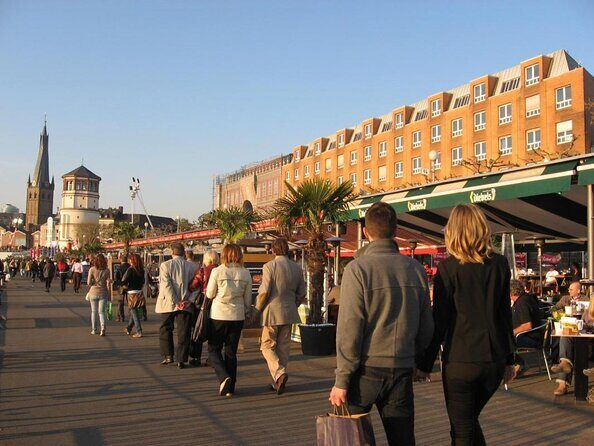
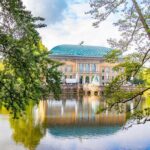
You begin at Tonhalle Düsseldorf, at Ehrenhof 1. Starting here is a smart move because it frames the whole walk with one of the city’s major cultural anchors: a concert hall designed by architect Wilhelm Kreis.
Why I like this first stop: a concert hall isn’t only about music. The building itself signals that Düsseldorf treats arts as part of civic life. It also gives you an easy reference point for photos and orientation before you start moving into parks and museum districts.
And because Tonhalle is an obvious landmark near public transportation, it’s straightforward to reach and easy to find later if you want to return.
Hofgarten and Kö-Bogen: Seeing Old Park Lines Up With New Design
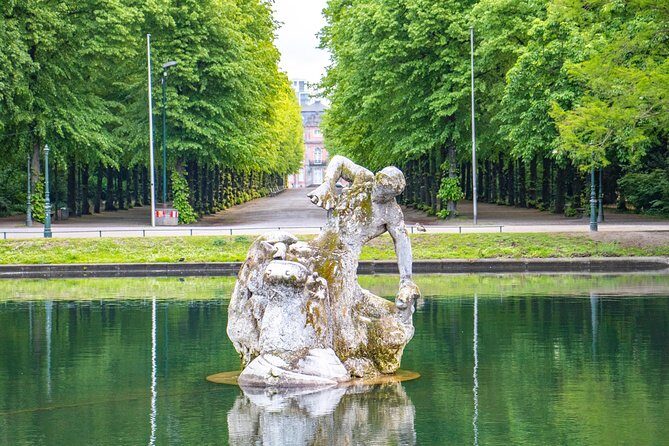
Next, you walk through a central park that dates back to the 1600s. This is where the tour shifts from “big building moment” to “how the city breathes.”
The payoff is the view toward the modern creation by Daniel Libeskind, specifically the Kö-Bogen area. You get the contrast right in front of you: older green space and a more contemporary, sharply designed urban presence.
This stop is useful for you even if you’re not a design nerd. It teaches you how Düsseldorf blends planning eras in the same walking loop. If your goal is to understand where to spend your time later—shopping streets, museum blocks, or riverside walks—this kind of visual connection matters.
Kunsthalle Stop: A Wall Mural and the Story of 20th-Century Movements
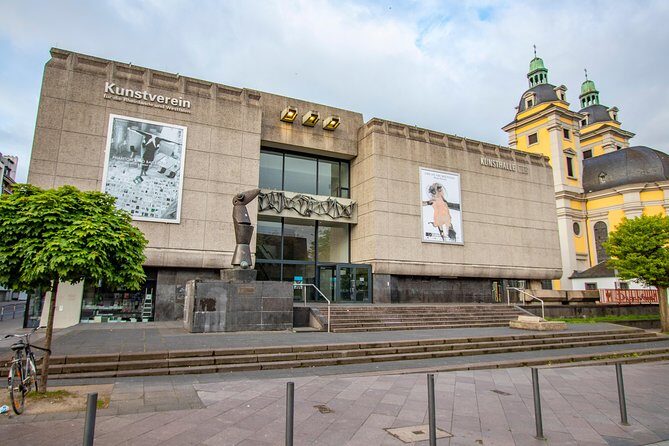
Then you get what the tour describes as a highlight: an area that works like a compendium of artistic movements from the last century, including a famous mural on the wall.
This is the kind of stop that can feel hit-or-miss on your own because you might not know what to look for. With a local guide, you get a quick way to decode what you’re seeing: which movements matter here, what the mural is doing visually, and why it’s a recognizable part of the city’s art identity.
Possible drawback: if you love slow gallery time, you may want more than what a walking tour can offer. But that’s also why it works as an introduction. You’ll leave knowing what to track down again later if this era of art grabs you.


The Museum Moment: Changing Exhibitions From Innovative Artists
From there you move to an excellent museum space with an ever-changing collection featuring work from some of the country’s most innovative artists.
This stop is valuable because it nudges you toward repeat visits. Museums with changing exhibitions reward attention even when you’re only in town briefly. Instead of seeing only one permanent collection, you get a sense of what Düsseldorf’s art scene is actively doing now.
One practical tip: keep your curiosity in “choose-one” mode. If you try to absorb every object on a quick guided route, it’s easy to feel overloaded. After this tour, you’ll be better at picking one area to return to when you explore on your own.
The Heart of Düsseldorf: The Pedestrian Core as a Cultural Connector
The walk then goes through what’s described as the heart of Düsseldorf—an area spanning about half a square kilometer.
This part matters because it links the more formal art spaces to everyday life. Düsseldorf’s culture isn’t only inside buildings. It shows up in how people move through the central streets and squares, where public space turns into social space.
If you’re planning your trip, this stop helps you identify where you can comfortably spend time between museums. It’s also where you can picture a day that’s less “tour schedule” and more “city rhythm.”
Burgplatz and Rivertime: Post-WWII Beauty Plus a Specific Artwork Detail
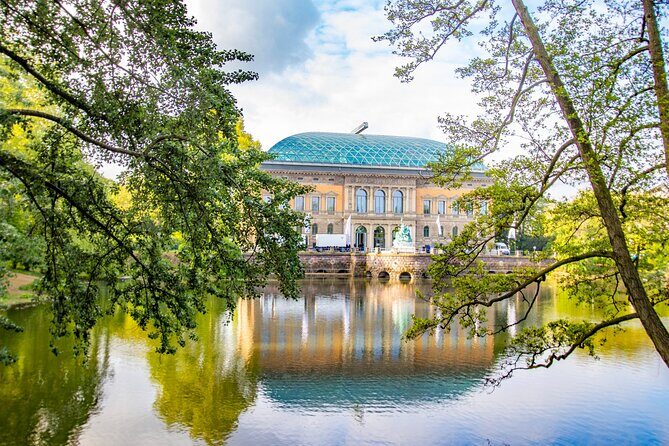
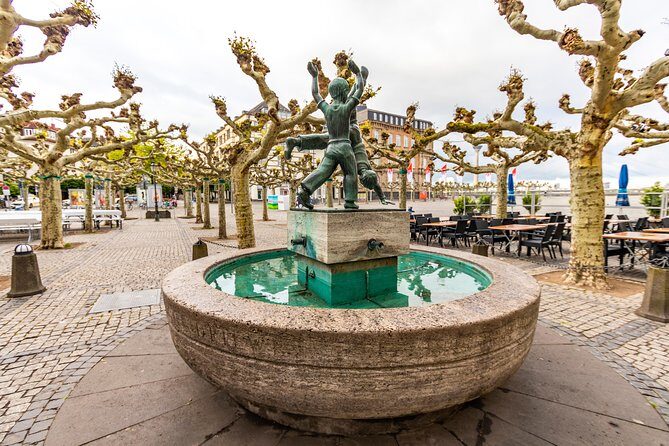
You then reach Burgplatz, described as being awarded for being one of the most beautiful post-WWII places in Germany. The key detail you’re asked not to miss is a work called Rivertime on the side walls of the staircase.
I like this kind of guided spotting because it turns a place you might otherwise treat as just a square into an art conversation. You’re not only looking at architecture. You’re looking for one specific artwork detail that a local guide knows matters.
Why it’s worth your attention: public art like this gives you a way to connect to Düsseldorf even if you’re tired of museums. It’s also a great “anchor point” if you want to meet friends later or orient yourself after the tour ends.
Following the Rhine: Düsseldorf’s Lifeline on Foot
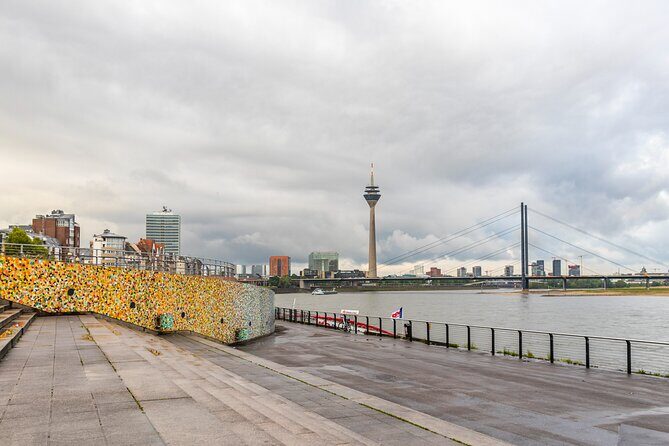
The next theme is the lifeline of Düsseldorf: the Rhine. The tour describes it as a connection between the city and the river, with a cheerful spirit that belongs to Düsseldorf’s identity.
This part is useful because it changes your pace and your mood. After you’ve spent time with performance spaces, parks, and exhibition venues, the river walk gives you perspective. You start to see how the arts scene and the city’s public life feed each other.
Also, for planning: you can use the Rhine direction as a navigation tool. When you’re deciding whether to spend more time in museum blocks or shift toward promenades, the guide’s mental map helps.
Finale at Kunstsammlung: Neo-Renaissance Space With Cutting-Edge Exhibitions
The tour ends at the Kunstsammlung on Ständehausstraße 1. You also visit a grand neo-Renaissance building that used to be the seat of the Parliament of North Rhine–Westphalia, known for cutting-edge art exhibitions.
Ending here is smart because it gives you an immediate next step. You’re not just “done.” You’re in the right place to keep going, especially since the tour finishes here and you can explore the museum on your own.
I also like that this finale ties politics-and-civic architecture to modern art. It reinforces a theme you’ve seen all along: Düsseldorf treats arts as public-facing, not sealed off behind a quiet door.
What the Tiny Group Really Changes for You
The tour is built for small groups—highlighted as just six people, with a maximum of 8. That scale matters more than you might think.
In a big group, your questions get swallowed. In a small group, you can ask things like what to see next, what to skip, or which part of an exhibition connects to the mural or the park view you just encountered. The guide’s ability to tailor is part of why this tour earns strong marks—Anne’s considerate approach for a senior mother is a good example, and Beatriz’s knack for helping newcomers orient is another.
So if you’re the type who likes to ask why something matters, this tour format is a good match.
Who Should Book This Tour
This is a great choice if:
- You’re in Düsseldorf for a short stay and want a fast, organized art overview.
- You prefer walking tours that teach you how to look, not just where to stand.
- You want an easy plan for what to explore after you finish—especially at the Kunstsammlung.
It’s also a smart pick for couples or solo travelers who like getting oriented without committing to an all-day museum schedule.
If you’re a serious art collector who wants hours inside galleries, you might find the pacing brief. But as a first taste—and a roadmap for your own follow-up—it does the job.
Should You Book? My Decision Guide
Book it if you want a guided art-and-culture route that helps you understand Düsseldorf’s connections across buildings, parks, public art, and museums. The small group size and English-language delivery make it more interactive than many “big city highlights” walks.
Skip it if you’re only interested in one museum experience and plan to spend the entire day indoors anyway. This isn’t that kind of tour. It’s about getting your bearings quickly, with specific art details you’ll remember (like Rivertime) and a finishing point that invites you to keep exploring.
FAQ
FAQ
How long is the tour?
It’s approximately 1 hour 30 minutes.
Is the tour offered in English?
Yes, it is offered in English.
What’s the group size?
It’s a small group experience, with a maximum of 8 travelers.
Where does the tour start?
The tour starts at Tonhalle Düsseldorf, Ehrenhof 1, 40479 Düsseldorf, Germany.
Where does the tour end?
It ends at Kunstsammlung, Ständehausstraße 1, 40217 Düsseldorf, Germany. You can explore the museum on your own after finishing.
Which major places are included on the walk?
The route includes Tonhalle Concert Hall, Hofgarten, Kunsthalle, and a series of other key culture stops including Burgplatz (with the Rivertime artwork) and the former Parliament building used for cutting-edge art exhibitions.
Does the tour use a mobile ticket?
Yes, it includes a mobile ticket.
Is it near public transportation?
Yes, it’s near public transportation.
What’s the cancellation window?
You can cancel for a full refund up to 24 hours before the experience starts.
Are service animals allowed?
Yes, service animals are allowed.