REVIEW · DUSSELDORF
Discover Dusseldorf’s most Photogenic Spots with a Local
Book on Viator →Bookable on Viator
Düsseldorf turns into a photo set fast. This 90-minute, small-group walking tour is built for how you actually take pictures: you stop at photogenic landmarks and learn what to frame and why, from the Tonhalle down to the Rhine. I especially like the way the guide ties each spot to real city context, and how the photo focus keeps the walk from feeling like a history lecture.
The main thing to consider is simple: with only about 1 hour 30 minutes, you’ll see highlights, not every corner of Düsseldorf. If you want a slow, do-it-all day, treat this as a great starter run (or a best-of add-on).
I also like the small-group format (up to 8 people), which makes it easier to ask questions and adjust your shooting pace. And with a mobile ticket, you’re not wasting time on paper tickets before you even start.
In This Review
- Quick hits: what makes this Düsseldorf photo walk work
- Why a photo-focused walk beats a casual Düsseldorf stroll
- Starting at Tonhalle Düsseldorf: Wilhelm Kreis and strong architectural lines
- The Art Academy stop: turning creativity into what you actually notice
- Old Town’s “square kilometer” feeling: framing the heart of Düsseldorf
- A green area with a canal: when architecture meets an easy foreground
- Landtag NRW exterior energy: neo-Renaissance form and modern art exhibitions
- Rheinuferpromenade finale: the Rhine as Düsseldorf’s photo finish line
- Small group pacing: why up to 8 people makes a real difference
- Price and value check: what $115.19 gets you in 90 minutes
- Practical tips to get better photos on this exact route
- Who this Düsseldorf photo tour is best for
- Should you book this Düsseldorf photogenic spots tour?
- FAQ
- How long is the Düsseldorf photogenic spots walking tour?
- Where does the tour start and end?
- How many people are in the group?
- What is included in the price?
- Are museum or monument entry tickets included?
- Can I use a mobile ticket?
- Is free cancellation available?
- Are service animals allowed?
Quick hits: what makes this Düsseldorf photo walk work
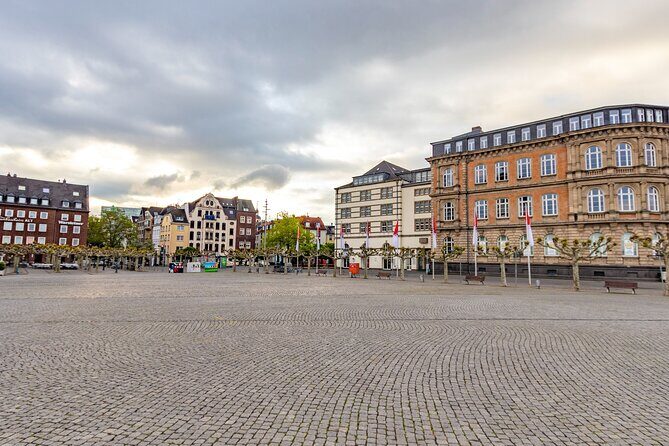
- Tonhalle first: start with a major concert hall designed by Wilhelm Kreis, ready for architectural shots
- Art Academy inspiration: a stop that connects Düsseldorf’s creative scene to what you see on the street
- Old Town photo rhythm: you get a square-focused stop that’s made for quick framing changes
- Green space + canal views: grand buildings plus a canal create easy foreground-and-background compositions
- Landtag NRW exterior art energy: you’ll photograph a neo-Renaissance building tied to modern exhibitions
- Finish on the Rhine: the walk ends at the Rheinuferpromenade, where you can keep shooting long after the tour ends
Why a photo-focused walk beats a casual Düsseldorf stroll
Düsseldorf is the kind of city where a normal walk can feel good—but a photo-focused walk helps you notice. You’re not just moving from point A to point B. You’re pausing on purpose, learning how angle, perspective, and light change the look of a building or a street.
I like that the route is short enough to stay lively, but structured enough that you don’t wonder what to photograph next. If you’ve ever wandered with your camera and thought I’m doing all this work and my shots still look random, this format is a fix.
Also, the itinerary adapts to your interests and walking pace, and stops may shift with weather. That matters in Düsseldorf, where clouds and rain can flip a scene from soft and dreamy to boring gray fast. You’ll get a chance to keep the trip usable, even if the sky misbehaves.
You can also read our reviews of more tours and experiences in Dusseldorf.

Starting at Tonhalle Düsseldorf: Wilhelm Kreis and strong architectural lines
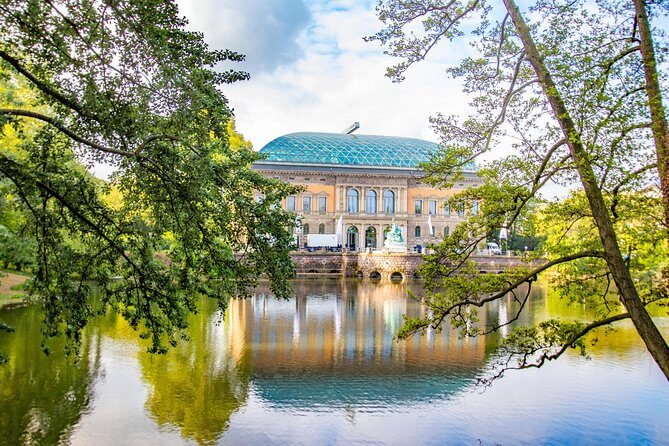
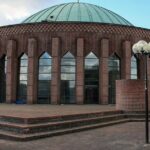
You begin at Tonhalle Düsseldorf (Ehrenhof 1, 40479). This matters because it gives you an immediate “big shape” to practice on. The Tonhalle is a concert hall built by architect Wilhelm Kreis, and that kind of design is tailor-made for clean geometry shots.
For photography, think in layers. The façade gives you strong lines for symmetry, while the surrounding area helps you capture scale—proof that your subject isn’t just a flat wall photo. Even if you’re using your phone, this is a good place to test your camera’s framing and steadiness.
A useful way to shoot here is to play with height. Step back for full-building shots, then come in closer for detail. That quick change of distance is exactly the sort of “switch” that makes your gallery look intentional.
One more practical point: starting at a major landmark helps you orient fast. Before long, you’ll understand how the rest of the walk connects in a smooth visual story.
The Art Academy stop: turning creativity into what you actually notice
After Tonhalle, the tour heads to an internationally known Art Academy. It’s known for a wide variety of ideas and experiments created by graduates, so this isn’t just a building stop—it’s a mindset stop.
When you arrive, look for things that show process. Even without going deep into any specific interior (entry tickets aren’t included), you can photograph architectural rhythm, student-life energy in the area, and the way creative institutions sit inside the city.
This is also where a good guide helps. The point isn’t to memorize facts; it’s to learn how to see. If you tend to photograph only the obvious landmarks, this stop pushes you toward more interesting visual cues—textures, perspectives, and the small contrasts between official-looking architecture and everyday motion.
If you enjoy street photography but want it to feel guided rather than random, this is one of the stops that can make your photos feel more personal.
Old Town’s “square kilometer” feeling: framing the heart of Düsseldorf
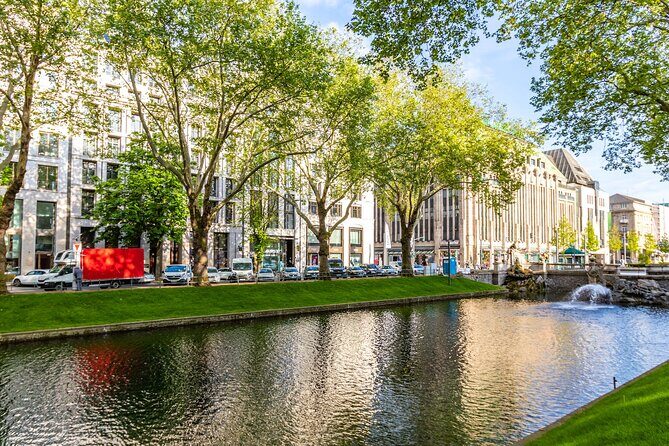
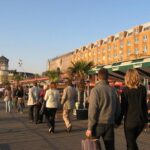
Next comes the heart of Düsseldorf, described as spanning about half a square kilometer. That size is big enough to feel like a real center, but compact enough that a guided walk can keep your attention on photo opportunities.
This stop is where you’ll benefit from a structured pause. Old town areas are full of visual clutter—signs, façades, street furniture, people. Without a plan, your pictures can end up looking busy.
With a guide focusing on photography, you’ll learn how to simplify. Instead of photographing everything, you pick one strong subject—then use your position to reduce distractions. You can also try a quick sequence: one wider establishing shot, then one tighter detail shot. You’ll come away with variety, not duplicates.
If you’re traveling with friends, this is also a nice place for matching styles. You can take similar compositions but with different perspectives, so your group photos won’t all look identical.
A green area with a canal: when architecture meets an easy foreground
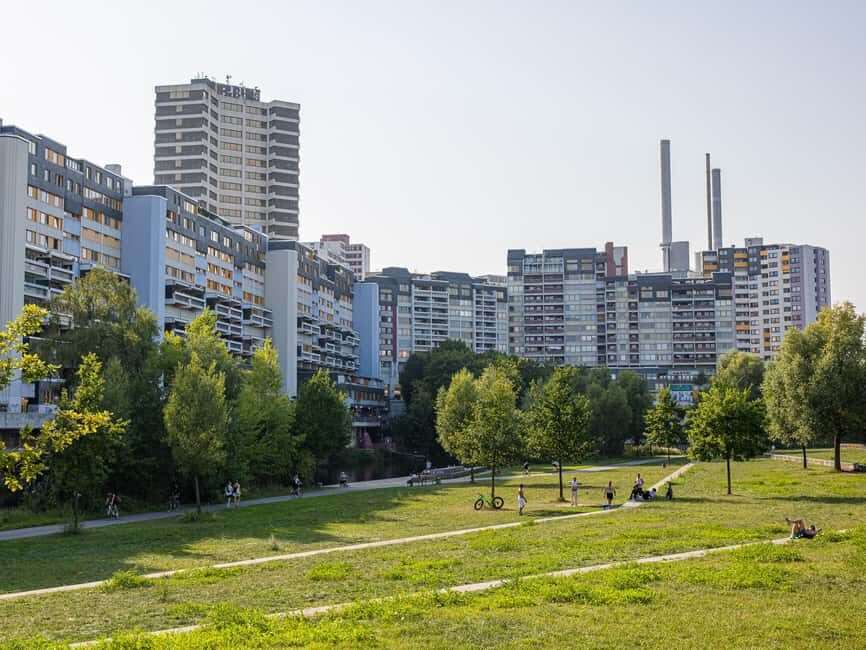
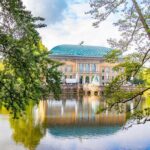
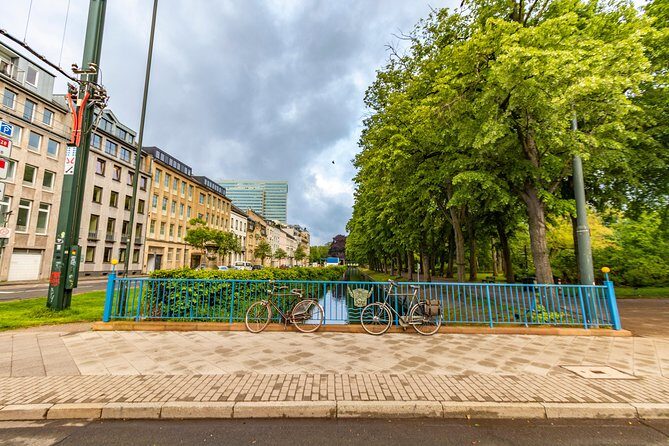
Then the route brings you to a beautiful green area with a canal running down the middle, surrounded by grand architecture. This is the kind of setup that makes photography easier because it naturally gives you depth.
Water acts like a visual connector. It leads your eye through the scene, and it often adds reflections or a gentle contrast between sky and buildings. Even if the light isn’t perfect, the canal still gives you a clean line to work with.
The green area also helps your pacing. After denser city blocks, this kind of space lets you breathe, stop, and reset your camera settings. It’s a good moment to experiment: wider shots for context, then lower angles for the canal edge.
A practical tip: if the canal is calm, you’ll have more reflective opportunities. If it’s windy or cloudy, shift your focus to angles and structural lines instead. The place still photographs well; you just change what you emphasize.


Landtag NRW exterior energy: neo-Renaissance form and modern art exhibitions
One of the more visually “serious” stops is the former seat of the Parliament of North Rhine–Westphalia, a grand neo-Renaissance building known for cutting-edge art exhibitions. Even if you don’t enter, the exterior is worth the time.
Neo-Renaissance architecture tends to reward patience. Look for repeating patterns, symmetry, and the way the building’s scale shows up in the surrounding streets. This is a good place to slow down, because your photos will improve when you wait for a clean moment—clear lines, fewer random distractions in the frame.
The modern exhibitions connection gives the stop a nice contrast. You’re photographing a traditional form linked to contemporary art activity. That mix can inspire your composition too: classic architecture as the structure, modern energy as the story.
This is also a stop where I think you’ll appreciate a local’s angle. A guide can point out what to notice around the building—where the light hits best, how the view changes as you walk a few steps, and what background elements might steal attention from your subject.
Rheinuferpromenade finale: the Rhine as Düsseldorf’s photo finish line
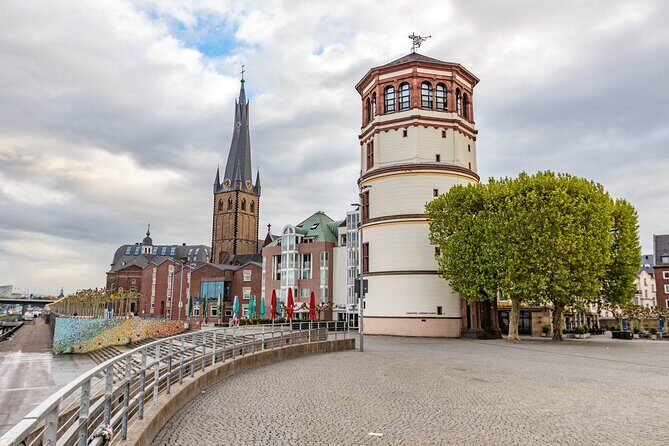
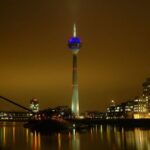
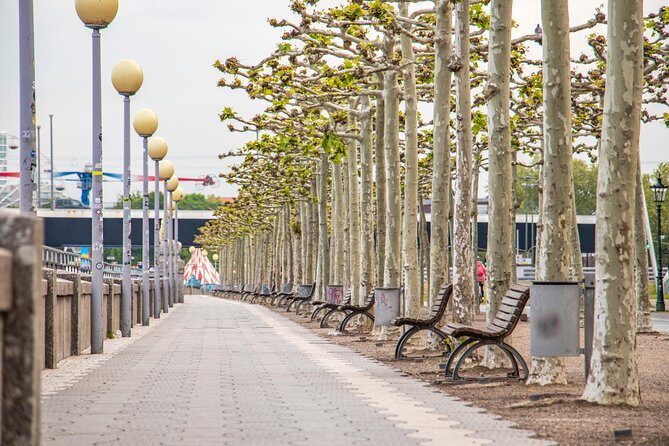
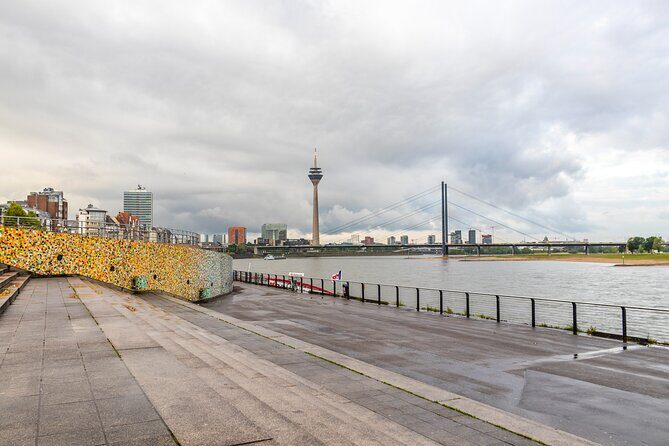
Your tour ends at the Rheinuferpromenade Düsseldorf (Untere, Rheinwerft, 40213). Calling the Rhine a lifeline is fitting here: the promenade is where the city’s posture turns outward, and your photos can open up into wider views.
This is the photo-writer’s dream zone. You can frame the water, the promenade lines, and the feeling of motion that comes with a river city. Depending on the light, the Rhine can look dramatic or calm, but either way it offers a strong sense of place.
I also like that the tour ends here because it gives you time flexibility. Your walk might be over, but you’re standing in a place where it’s easy to keep shooting. If the sky cooperates, you can linger for a few extra frames without feeling rushed.
If your camera battery is low, plan ahead here. The promenade is where you’ll want your last shots to be good, not forced.
Small group pacing: why up to 8 people makes a real difference
The tour runs as a small group—up to 8 travelers. That’s the sweet spot where you can still feel social, but not stuck in a slow-moving pack.
It also means your guide can react to what you’re actually trying to photograph. The itinerary adapts to your interests and walking pace, so if you’re slower or you want a second attempt at a composition, you’re not stuck waiting behind a crowd.
From the review highlights, the guide quality is the real standout. The experiences described focus on a guide who is friendly and knowledgeable, and that matters in a photography tour. When the guide is comfortable answering questions, you learn faster—and your photos improve faster, too.
Price and value check: what $115.19 gets you in 90 minutes
At $115.19 per person for about 1 hour 30 minutes, this isn’t a “grab a map and wander” deal. You’re paying for the guide’s time and for the photo-specific structure that helps you get better results in less time.
Here’s what makes it feel like value:
- A local guide (with personalized recommendations)
- Small-group attention
- A route that’s designed around recognizable photo stops
- A mobile ticket option, so logistics stay simple
What’s not included is also part of the value equation. Entry tickets for museums and monuments aren’t covered, so you’re not overpaying for things you might not need. You’re spending your money on the walking, the guidance, and the best exterior/photo moments.
One more detail worth knowing: this type of tour gets booked ahead (on average about 26 days). If you want a specific day and time, don’t wait until the last minute.
Practical tips to get better photos on this exact route
To make this tour work for your camera, go in with a couple of habits. First, wear comfortable walking shoes. You’ll be moving between landmarks, and you’ll want to stop, step, and reposition.
Second, bring a charged phone or camera and a simple way to clean the lens. River-adjacent areas and outdoor stops can be dusty or misty, and a quick wipe keeps images crisp.
Third, think in sequences, not single shots. Take one wider frame, then one detail, then one “context” shot. Old town and promenade stops especially reward that pattern.
Fourth, be flexible with weather. Stops may vary depending on conditions, so you might get a slightly different view of the city than someone else. That’s not a problem; it’s the guide adjusting the photo plan so you still leave with usable pictures.
Finally, use questions. In a small group, you can ask what settings or angles to try. The friendly, knowledgeable guide format is there for a reason.
Who this Düsseldorf photo tour is best for
This tour is ideal if you fit one of these groups:
- You want better photos without spending hours figuring out what to shoot
- You like architecture and city-center walking routes
- You’re visiting Düsseldorf for a short time and want a best-of visual circuit
- You enjoy art-related stops and creative-city context
If you’re a hardcore long-exposure photographer who needs specialized locations, you might want extra time on your own after the tour. But for most people—casual photographers, phone shooters, and travelers who want a guided route—this is a smart way to get results fast.
Should you book this Düsseldorf photogenic spots tour?
I’d book it if your goal is a guided “photo-first” route with expert help and a small-group feel. The strongest reasons are the guide’s friendliness and knowledge, plus the way the tour focuses your eyes on what matters for photography—big architecture at the Tonhalle, creative context at the Art Academy, and a strong finale by the Rhine.
Skip it only if you already have a full day planned and you hate short, structured tours. With just about 90 minutes, you’ll leave wanting more time in Düsseldorf—but you’ll likely also leave with photos that make you want to return.
FAQ
How long is the Düsseldorf photogenic spots walking tour?
It lasts about 1 hour 30 minutes.
Where does the tour start and end?
It starts at Tonhalle Düsseldorf, Ehrenhof 1, 40479 Düsseldorf, and ends at Rheinuferpromenade Düsseldorf, Untere Rheinwerft, 40213 Düsseldorf.
How many people are in the group?
The tour has a maximum of 8 travelers.
What is included in the price?
A knowledgeable local guide, a small group experience, and personalized recommendations.
Are museum or monument entry tickets included?
No. Entry tickets for public transportation, museums, and monuments are not included.
Can I use a mobile ticket?
Yes, the tour uses a mobile ticket.
Is free cancellation available?
Yes. You can cancel up to 24 hours in advance for a full refund. If you cancel less than 24 hours before the start time, you won’t receive a refund.
Are service animals allowed?
Yes, service animals are allowed.