REVIEW · DUSSELDORF
Kö-Bogen I & II: Düsseldorf’s New Landmarks
Book on GetYourGuide →Operated by Visit Düsseldorf · Bookable on GetYourGuide
Modern architecture, plus real plants.
I love how this walk pulls together Kö-Bogen I’s elegant curves and Kö-Bogen II’s climate-friendly greenery, all inside Düsseldorf’s New Center between Königsallee and Hofgarten. You also get an insider’s view of what changed the area, including the underground traffic ban that helped make the space feel more like a people-first district. My other favorite part is the way the tour treats photo stops as small “see-this-now” moments, from sculptures to viewpoints you can actually use right away.
The only real drawback: this tour is not barrier-free. You’ll be moving on sidewalks with stairs involved, so it’s not suitable if walking up and down is difficult or if you use a wheelchair.
In This Review
- Quick hits: what makes Kö-Bogen I & II worth your time
- Düsseldorf’s New Center: why this walk feels different
- Meeting at the German Opera: get your bearings in minutes
- Kö-Bogen I by Daniel Libeskind: the curved icon you’ll remember
- Kö-Bogen II, also called Ingenhoven Valley: 30,000 hornbeams doing the heavy lifting
- The triangular market hall and the walkable grass roof views
- Sculptures and photo spots between Königsallee and Hofgarten
- Adding the citymuseum entry: a smart link to the bigger story
- Price and value: is $15 for 1 hour actually fair?
- Who should book Kö-Bogen I & II, and who should skip
- Should you book this one-hour Kö-Bogen tour?
- FAQ
- How long is the Kö-Bogen I & II tour?
- How much does it cost per person?
- Where do we meet for the tour?
- Is the tour in English?
- What main attractions are included on the walk?
- Is the ticket usable right away?
- Is citymuseum entry included?
- Is this tour wheelchair accessible?
Quick hits: what makes Kö-Bogen I & II worth your time
- Kö-Bogen I (Daniel Libeskind): the curved landmark that gives the shopping district its new visual rhythm
- Kö-Bogen II / Ingenhoven Valley: a climate-friendly project with 30,000 hornbeams forming a green facade
- Grass-roof angles: a triangular market hall roof you can walk and use for skyline-style views
- Old-meets-new views: look across toward the historic Hofgarten plus post-war icons like the Schauspielhaus and Dreischeibenhaus
- Fast photo route: sculptures and viewpoints between Königsallee and Hofgarten designed for picture timing
- Free citymuseum entry: a simple add-on that helps you connect modern design to the city as a whole
Düsseldorf’s New Center: why this walk feels different
Düsseldorf didn’t just add shiny buildings. It reshaped how the street level works. The underground traffic ban is a key reason the area between Königsallee and Hofgarten feels calmer and more walkable. That matters, because Kö-Bogen isn’t meant to be viewed from behind glass on a faraway bus stop. It’s meant for feet-on-the-ground strolling.
What I like about the planning here is the mix of city energy and green space. You get urban shopping street vibes, then suddenly the design shifts to greenery and open sightlines. The tour keeps that theme front and center: an impressive symbiosis of architecture and nature that makes the district feel current, not just decorated.
If you enjoy modern design, you’ll feel right at home. If you don’t, you’ll still appreciate how practical it is. The buildings are visually striking, but the experience is also about how people move through space.
You can also read our reviews of more tours and experiences in Dusseldorf.


Meeting at the German Opera: get your bearings in minutes
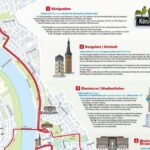
You start at the main entry of the German Opera by the Rhine. That’s a handy starting point because you’re already in the central action of the city. The meeting location gives you a “now we’re in the new center” feeling without needing a long commute.
From there, the route focuses on a compact area, so you’re not spending your one hour mostly traveling between distant points. You’ll be walking through the urban core where the architecture actually lives, not just where it can be photographed from afar.
Tip: wear shoes you’re comfortable in. The tour is straightforward city walking, but it’s not designed for slow mobility or step-free routes. If you’re the type who likes to stop often, do it—but keep an eye on your timing so you don’t get left behind.
Kö-Bogen I by Daniel Libeskind: the curved icon you’ll remember
Kö-Bogen I is the headline for anyone who loves bold shapes and sharp design thinking. It was designed by New Yorker Daniel Libeskind, and the building’s signature is the elegant, curved form that visually softens the shopping-district corridor.
What makes it special on this tour is not just that it looks impressive. It’s that the curve changes how you perceive the street. As you walk, the lines guide your eye. You’re not standing still hoping the building looks cool from one angle; you’re moving through a corridor that keeps offering new views.
This is also where the guide’s background adds value. The story helps you understand why the curve feels intentional rather than random. You start to notice how the street-level experience is part of the design. That’s the difference between seeing a landmark and understanding why it was made this way.
And yes, it’s built for photo moments. Between the curves of Kö-Bogen I and the open sightlines toward the green areas ahead, you’ll get those “quick snap, then keep walking” opportunities.
Kö-Bogen II, also called Ingenhoven Valley: 30,000 hornbeams doing the heavy lifting
If Kö-Bogen I grabs your attention, Kö-Bogen II earns your respect. It’s the climate-friendly project by Christoph Ingenhoven, completed in 2021. The local nickname Ingenhoven Valley isn’t just branding. It describes the idea: a valley-like green wall integrated into the city.
The most dramatic fact you’ll hear on the tour is this: 30,000 hornbeams create what’s described as Europe’s largest green facade. That number gives you something concrete to picture. It’s not a small planting project. It’s a full-on vertical green system that changes how the district feels throughout the seasons.
Why this matters for you as a visitor: you’ll feel the difference. Green facades don’t just look pretty. They soften hard edges, add texture, and make the urban space feel less like concrete-only city design. In a short one-hour tour, Kö-Bogen II is one of those moments where you can physically sense the planning behind the architecture.
The guide also connects it to the broader vision of Düsseldorf’s New Center. The point isn’t to treat the buildings like isolated sculptures. The point is how the new district uses nature to make daily life nicer.
The triangular market hall and the walkable grass roof views
Next up is a sight that blends function with fun: a triangular market hall with a walkable grass roof. Even if you’re not planning to shop, that roof is worth prioritizing because it changes your perspective.
You’re not just looking at buildings. You’re stepping into a space that feels like a bridge between urban and outdoor life. The walkable grass roof also makes it easier to see relationships between structures—how the new buildings frame older landmarks nearby.
From this area, you get views toward the historic Hofgarten, plus two post-war architecture icons: the Düsseldorf Schauspielhaus and the Dreischeibenhaus. Seeing these from a modern vantage point is the key. The district’s future-forward design doesn’t exist in a vacuum. It’s positioned alongside what Düsseldorf already built and became known for.
What to do for the best experience: pause, look around, then take your photos. Don’t rush through the viewpoint. This stop is one of the few that genuinely rewards spending an extra minute.


Sculptures and photo spots between Königsallee and Hofgarten
The tour isn’t only about big named buildings. It also includes sculptures and photo spots between Königsallee and Hofgarten. This is where you learn how the New Center is meant to be experienced at walking speed.
You’ll notice that the route is set up so you’re always moving through the “right” zone for pictures. That includes small turn-of-the-head moments: a sculpture angle, a framed building view, or a line of sight that pops when you stand at the right spot.
The guide will also point out unusual perspectives on old and new urban structures. That’s useful because it changes your eyes. You start seeing the district like a designed system rather than random architecture pasted together.
If you like taking photos while walking, this part will feel efficient. If you prefer slow travel, you still can—just keep the pace in mind. The tour is only one hour, so you’ll want to spend time on what hits your interests first.
Adding the citymuseum entry: a smart link to the bigger story
One practical perk: you get free entry to the citymuseum as part of the experience. In a one-hour architecture-focused tour, that museum stop (or entry value) helps balance your brain.
Architecture can feel like “look and move on.” A museum gives you a chance to connect design choices to the city itself. You don’t need to turn the tour into a whole day project. Think of the museum entry as a way to keep the experience from feeling like only modern sightseeing.
It’s also a nice fallback. If weather turns or your feet start complaining, you can switch gears to indoor time connected to what you just saw outside.
Price and value: is $15 for 1 hour actually fair?
At $15 per person for a 1-hour guided walk, the value is tied to three things:
First, you’re getting more than “here’s a building.” You’re getting background on both Kö-Bogen I and II, including design details and what made the New Center possible at street level.
Second, the route is compact but packed. You cover the key landmarks between Königsallee and Hofgarten and include photo-worthy viewpoints and sculptures—so you’re not paying for transit time.
Third, the free citymuseum entry is a bonus. Even if you’re only skimming, it stretches the value beyond the walk itself.
If your goal is a quick hit of modern Düsseldorf design without spending your whole day on planning, this price makes sense. If you want a slow, deep, long-form architecture class, you might feel one hour is short. But that’s not a flaw here. It’s the format.
Who should book Kö-Bogen I & II, and who should skip
This tour fits best if you:
- Love modern architecture and urban planning
- Want a guided route with meaningful context, not just photo spots
- Prefer a short outing that fits easily into a day in Düsseldorf
- Enjoy walking in city centers and stopping for pictures
It’s not suitable if you:
- Have mobility impairments
- Use a wheelchair
- Struggle with stairs or difficulty walking up and down
That accessibility note isn’t a “maybe.” It’s a clear limitation. If your needs require step-free routes, you should look for a different option.
Should you book this one-hour Kö-Bogen tour?
I’d book it if you’re curious about how cities update themselves without forgetting where people actually live and shop. The combination of Kö-Bogen I’s curve, Kö-Bogen II’s hornbeam green facade, and the viewpoints toward Hofgarten and major landmarks makes it a strong, efficient architecture walk.
Skip it if steps are a deal-breaker for you. Also skip if you only want traditional sightseeing. This is about the modern center, its design logic, and the way green is integrated into city life.
If you’re short on time but want something more interesting than a generic walking tour, this one is a solid choice.
FAQ
How long is the Kö-Bogen I & II tour?
The tour lasts 1 hour.
How much does it cost per person?
It costs $15 per person.
Where do we meet for the tour?
The meeting point is the main entry of the German Opera by the Rhine.
Is the tour in English?
The live tour guide language listed is German.
What main attractions are included on the walk?
You’ll see the new shopping district area between Königsallee and Hofgarten, including Kö-Bogen I and Kö-Bogen II, plus sculptures/photo spots and viewpoints toward Hofgarten, the Düsseldorf Schauspielhaus, and Dreischeibenhaus.
Is the ticket usable right away?
Yes. The tour mentions a Print@Home Ticket, which you can use immediately.
Is citymuseum entry included?
Yes. Free entry to the citymuseum is included.
Is this tour wheelchair accessible?
No. It is not barrier-free and is not suitable for people with difficulty walking up and down stairs, including wheelchair users.