REVIEW · HAMBURG
Private 2-Hour Hamburg Highlights Walking Tour
Book on Viator →Operated by Experience Hamburg Tours · Bookable on Viator
Hamburg works best when you get your bearings fast, and this private 2-hour highlights walk does that job. You’ll hit the city’s key landmarks with full attention from your own guide, and you’ll leave knowing how the old city, wartime memory, and the harbor boom connect. I especially like that it’s built for limited time while still packing in variety, from churches and bridges to UNESCO warehouses.
The main thing to consider is the pace: it’s a short tour with quick stops, so you won’t get long time inside buildings. Also, if your group is on the larger side, you’ll want the guide to speak clearly since one past group noted some hearing issues during the Town Hall segment.
In This Review
- Quick reasons this walk is worth your time
- How to use this tour in your Hamburg plans
- Private guide energy: what you get beyond the sights
- Price and value for a group of up to 15
- Start at Schl enbrücke: Town Hall and the old-city power core
- Stop 1: Hamburg Town Hall (Rathaus), finished in 1897
- From Lutheran roots to medieval street memory
- Stop 2: St. Petri Kirche
- Stop 3: Trostbrücke, the old-vs-new divide
- Stop 4: Mahnmal St. Nikolai, the burnt-out church memorial
- A walk through time: streets and the harbor’s “old heart”
- Stop 5: Deichstrasse, back to 17th-century Hamburg
- Stop 6: Speicherstadt, 1888 warehouses and UNESCO status
- Stop 7: Elbphilharmonie, the harbor landmark many people want to see
- Landungsbrücke views and finishing near Hafenbasar/Elbphilharmonie
- Stop 8: Landungsbrücke, the harbor’s old heart
- Who this tour fits best (and who should consider something else)
- The one drawback to plan for: hearing and stop speed
- Should you book this private Hamburg highlights walking tour?
- FAQ
- How long is the private Hamburg highlights walking tour?
- What are the meeting point and end point?
- Is this tour private, and how large can the group be?
- What language is the tour offered in?
- How much does the tour cost?
- Are there admission tickets required at the stops?
- What is the cancellation policy?
Quick reasons this walk is worth your time
- Private, up to 15 people means your guide can tailor the pace to your group
- Fast-hit overview for first-timers: Town Hall, churches, harbor icons, and memory sites
- Elbphilharmonie + Landungsbrücken area puts you where Hamburg’s skyline and waterfront meet
- Most stops list free admission tickets, so you’re not nickel-and-dimed for entry
- English-language guidance with multiple guides praised for clear, easy-to-follow explanations
How to use this tour in your Hamburg plans
This is a classic “first-day orientation” tour, the kind that helps you stop seeing Hamburg as a map full of names and start seeing it as a city with a story. The route moves from the old-town center toward the harbor, so you get a natural sense of how the city’s power shifted over time.
Because it’s only about two hours, you’re not signing up for a slow museum crawl. Think of it as a high-quality walking briefing: where to look, what to notice, and what each landmark meant when it was built or damaged or rebuilt. If you’re the type who likes to understand why a place looks the way it does, you’ll get a lot out of the guided context.
If you’re traveling with a mixed group (some “big sights” fans, some history/architecture fans), the stops are well-balanced. You get government-era grandeur at the Town Hall, sacred buildings in the old core, a stark WW2 memorial, then the harbor’s 19th-century brick backbone and the modern Elbphilharmonie.
You can also read our reviews of more walking tours in Hamburg



Private guide energy: what you get beyond the sights
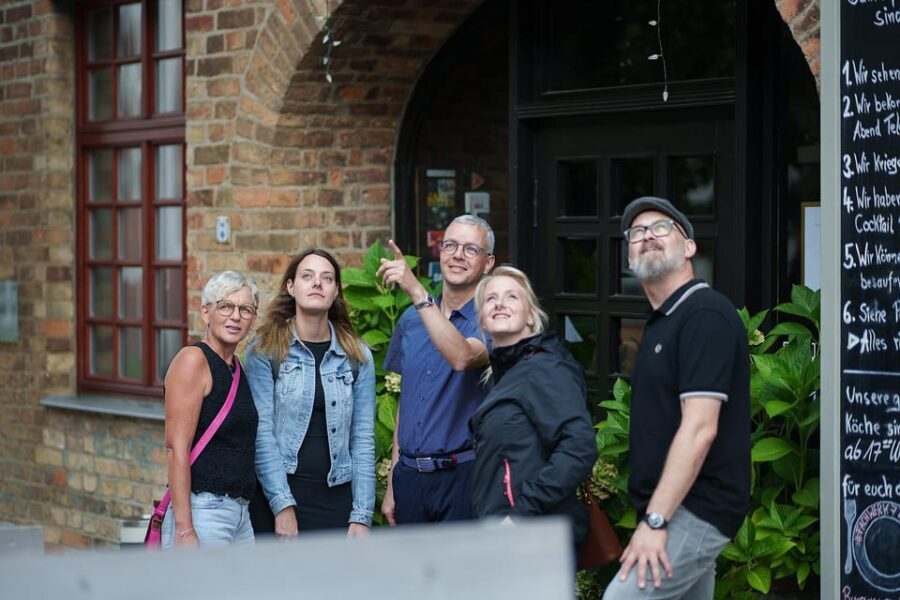
The biggest value here is the private format. This isn’t a big bus tour where you’re competing with a crowd for soundbites. It’s built for a single group, up to 15 people, and the guide can keep the flow moving at walking pace while answering questions along the way.
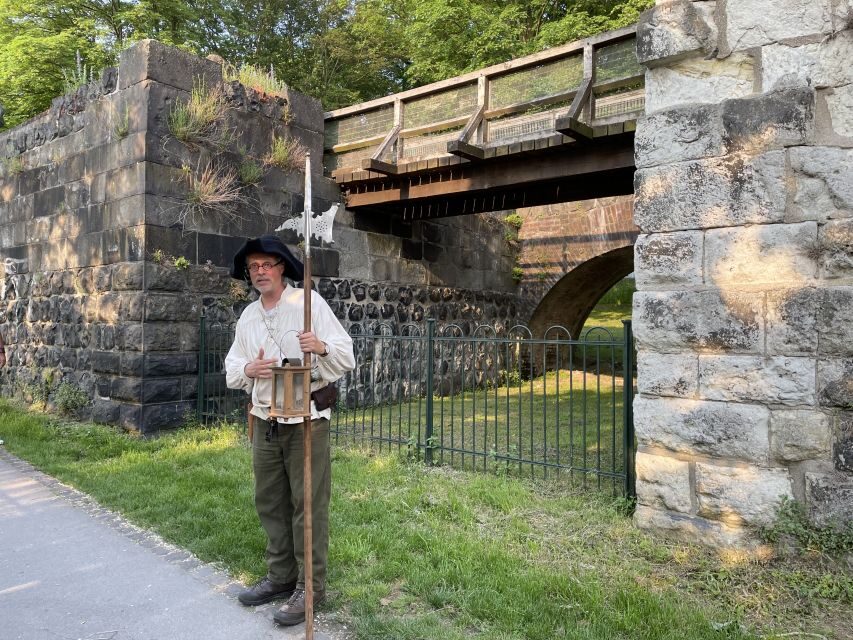
From guide names that have led groups on this tour—Evan, Ilika/Ilke, Angela, Isabel, Kristina, and Stephanie—you can also see a theme: the experience is driven by story-telling and explanations, not just reading plaques. Many groups praised guides for being friendly, patient, and able to connect Hamburg’s past to what you can still see today.
One practical note: since the walking time at each stop is short, come ready to look up and look around. If you want to linger for photos, I’d do it when the group pauses, not when you’re moving—your guide will likely keep the group on schedule.
Price and value for a group of up to 15
The price is $302.34 per group (up to 15). That’s a meaningful difference versus paying per person, especially if you’re traveling with friends, family, or a small team.
Here’s a simple way to think about it:
- If you’re a group of 4, it’s about $75 per person
- If you’re 8, it’s about $38 per person
- If you’re 10 to 12, it can drop to roughly the $25–$30 range
Is it “cheap”? No. But it can be good value if you:
- want a curated route instead of a self-guided hour-and-a-half scramble
- care about context (history, culture, why the city developed like it did)
- are okay paying a premium to avoid wasting time
Also, the tour lists free admission tickets for the stops in the route, which helps keep the total trip cost smoother.
Start at Schl enbrücke: Town Hall and the old-city power core
Stop 1: Hamburg Town Hall (Rathaus), finished in 1897
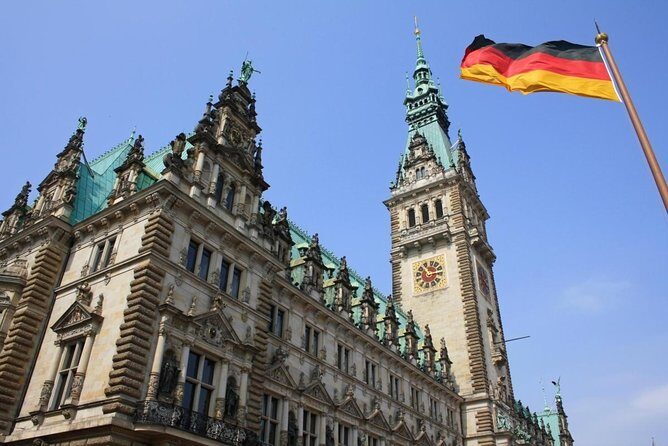
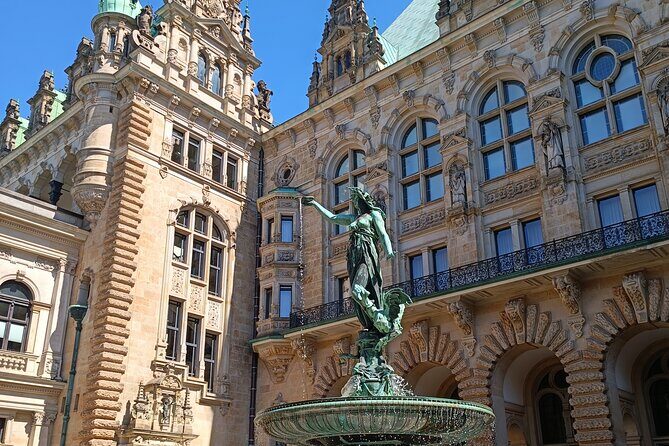
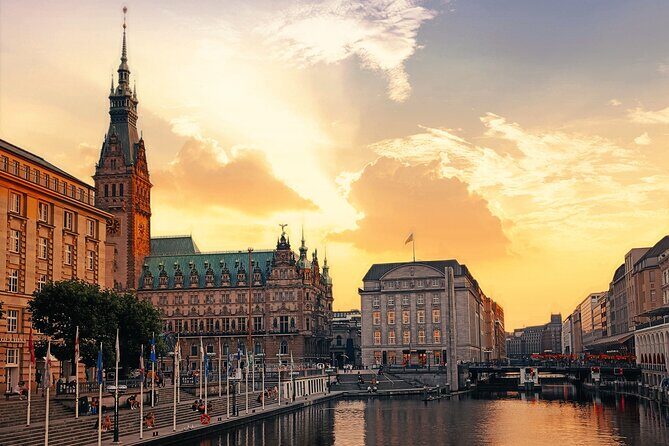
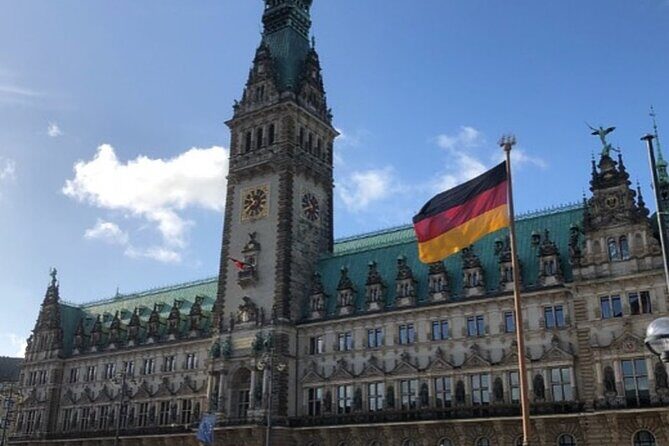
Your walk begins near a war memorial on the Schl enbrücke side, then quickly lands in the old-town center with the Hamburg Town Hall, completed in 1897. This is the kind of building that instantly signals civic pride. Even if you know nothing about German politics, the guide can help you read the building as an expression of city identity.
What makes this stop especially useful is that it’s not only about architecture. You’ll get explanations that connect the building to local political life and Hamburg’s role as a city-state shaped by trade and autonomy.
Potential drawback: If your group has hearing sensitivity, this is one of the moments you’ll notice it, because the Town Hall segment may involve quieter listening while everyone positions for viewing. If you need extra clarity, it’s fair to ask the guide to speak a bit louder so everyone can catch the details.
You can also read our reviews of more private tours in Hamburg






From Lutheran roots to medieval street memory
Stop 2: St. Petri Kirche
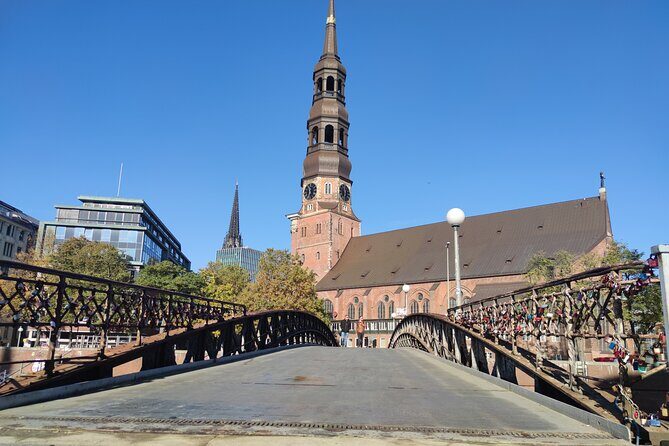
Next comes St. Petri Kirche, a church built on the historical core area. Churches like this are often the best “time markers” in European cities because they anchor older neighborhoods. From the outside, you can look for how the setting and street plan reflect the long timeline of the city.
What you’ll likely enjoy here is the way your guide frames the church inside the wider story of Hamburg’s development—religion, community life, and the old-city layout.
Stop 3: Trostbrücke, the old-vs-new divide
At Trostbrücke, you’ll get one of those quietly important lessons: bridges can represent more than crossings. This one is described as a former divide between the old and the new town, so your guide can explain how the city changed and what “development” looked like on the ground.
This is a strong stop for photo lovers because it gives you a view of the city’s seams—what came first, what arrived later, and how people moved between the two.
Stop 4: Mahnmal St. Nikolai, the burnt-out church memorial
Then the tone shifts at Mahnmal St. Nikolai, the burnt-out church memorial. It’s a reminder of WW2 devastation, and the emotional weight is real even if you’ve never studied Hamburg’s wartime story.
This stop is valuable because it prevents the tour from becoming only pretty buildings and postcards. Hamburg remembers, and the guide helps you understand why this kind of site matters as part of city identity, not just a historical footnote.
A walk through time: streets and the harbor’s “old heart”
Stop 5: Deichstrasse, back to 17th-century Hamburg
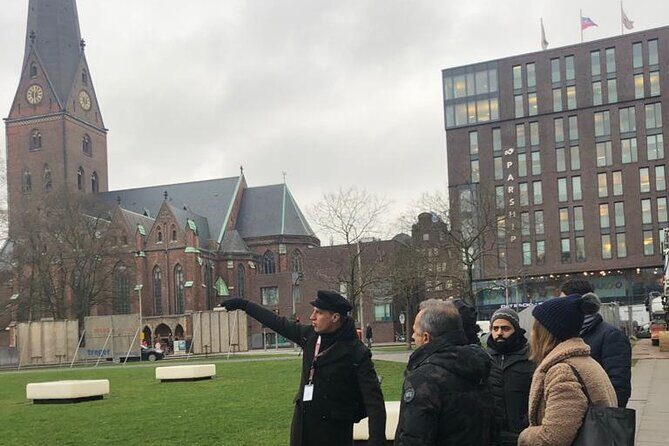
Deichstrasse is where you slow down mentally. The route frames it as a journey back to 17th-century Hamburg, and that’s the point: you’re moving from landmark monuments into the feel of older streets and how people lived and worked.
If you like “urban reading”—figuring out what a street suggests about daily life—this is a great stop. Your guide can point out what to notice in the street character even if you aren’t scanning for a single specific detail.
Stop 6: Speicherstadt, 1888 warehouses and UNESCO status
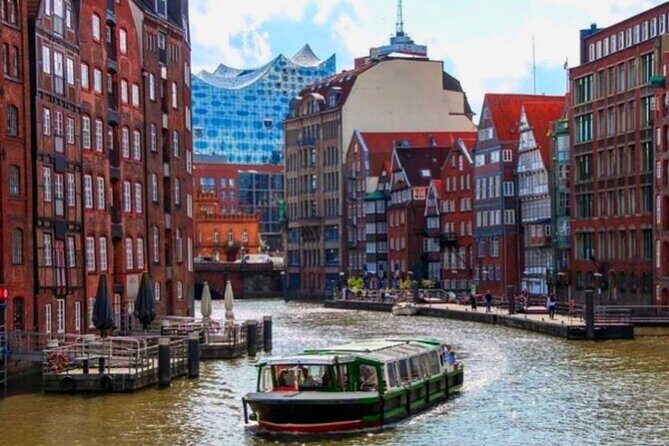
Now you hit the iconic Speicherstadt, built in 1888 and listed as a UNESCO world heritage site. This is Hamburg at its most visually distinctive: brick warehouse architecture, canal-adjacent layouts, and a sense of the trade engine that once drove the city.
Even with limited time, you’ll get the main idea: Speicherstadt wasn’t just storage—it was a system for commerce. Your guide helps translate the brick and canals into the logic of shipping, goods, and wealth.
Tip for you: Bring your camera mindset for this section. The best shots often come from angles along the edges rather than straight-on from the middle of a street.
Stop 7: Elbphilharmonie, the harbor landmark many people want to see
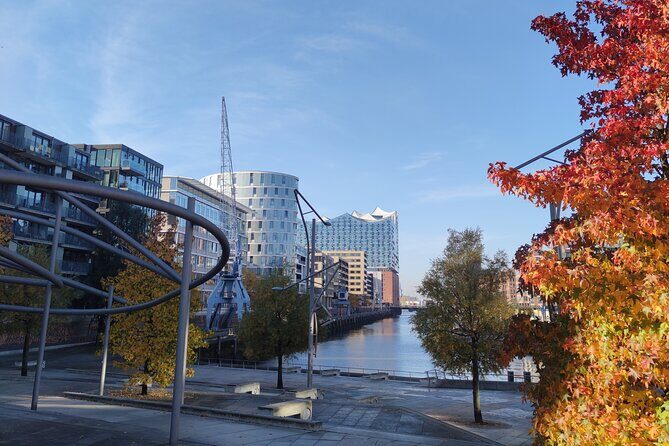
Next is Elbphilharmonie, described as the harbor’s crowning jewel—the beloved Elbphi. Even if you don’t attend a concert, the building is a must for orientation because it anchors modern Hamburg visually.
Your guide can connect the “new” symbol back to the city’s old trade roots, so it doesn’t feel like a random modern icon dropped into the harbor.
Landungsbrücke views and finishing near Hafenbasar/Elbphilharmonie
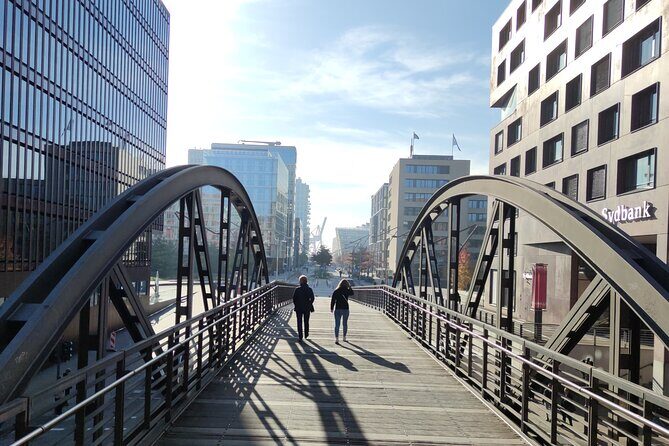
Stop 8: Landungsbrücke, the harbor’s old heart
Finally, you move to Landungsbrücke, a classic harbor area and an excellent spot to see the city’s waterfront story. This is where you can look outward and get a sense of how Hamburg’s geography supports its role as a major port city.
The tour ends in the Elbphilharmonie/Harry’s Hamburger Hafenbasar area, which lines up with the idea of finishing where the views and landmarks are most concentrated.
Practical consideration: If you plan to eat right after, this end point is convenient. You’ll already be in the most scenic zone, with plenty of options nearby to keep your evening easy.
Who this tour fits best (and who should consider something else)
This tour fits you well if:
- You’re visiting Hamburg for the first time and want the essentials in about two hours
- You like walking tours that explain more than they photograph
- You’re traveling in a small group that benefits from a per-group private price
You might want to choose something longer or add extra time if:
- You want extended time inside major buildings or museums
- You prefer slow pacing and long stops for photos and reading
- You’re coming purely for one attraction and don’t care about the city context
The one drawback to plan for: hearing and stop speed
One past group noted that they had issues hearing during the Town Hall stop. That’s not an automatic deal-breaker, but it tells you what to watch for. If you’re booking for a group with members who struggle with sound pickup, pick a starting position where you can face the guide, and don’t be shy about asking for louder speaking when you arrive.
Also, because each listed stop is short, you’ll need to accept the “overview” nature of the tour. It’s designed to show you where things are and what they mean, not to turn the entire two hours into a long deep study of one building.
Should you book this private Hamburg highlights walking tour?
Yes, I’d book it if you want the fastest way to understand Hamburg’s core story—old-town power, wartime memory, and the harbor’s commercial backbone—while still getting the benefit of a private guide.
It’s especially smart if you’re traveling with others and can split the group cost. If you’re a solo traveler, it can still be worth it, but the best value comes when you have a small group to spread the per-group price.
If your group prefers slow pacing or very long indoor time, you may feel slightly rushed. But if you want a clean, well-structured route with strong guidance and a strong end at the waterfront, this is a solid choice.
FAQ
How long is the private Hamburg highlights walking tour?
The tour lasts about 2 hours.
What are the meeting point and end point?
You start at Denkmal für die Gefallenen beider Weltkriege Schl enbrücke 1, 20354 Hamburg. You finish beside the Elbphilharmonie concert hall, at Harry’s Hamburger Hafenbasar Sandtorhafen, Ponton Nr. 2, 20457 Hamburg.
Is this tour private, and how large can the group be?
Yes. It is a private tour/activity where only your group participates, with up to 15 people.
What language is the tour offered in?
The tour is offered in English.
How much does the tour cost?
The price is $302.34 per group (up to 15).
Are there admission tickets required at the stops?
The tour information lists admission ticket Free for the stops included in the route.
What is the cancellation policy?
Cancellation is free up to 24 hours in advance for a full refund. If you cancel less than 24 hours before the start time, you will not be refunded.