REVIEW · HAMBURG
Discover Hamburg Walking Tour
Book on Viator →Operated by Original Berlin Walks · Bookable on Viator
Hamburg tells its story one street at a time. I love how this route ties together Old Town rebuilding and the harbor area, and I love the guided backstories that make each landmark click. One thing to plan for: the Elbphilharmonie stop is included as a sight/photo stop, but entry tickets there are not included.
You’ll start at Barkhof 3 at 10:30 am and finish near Elbphilharmonie, Plaza d. Deutschen Einheit, in about 2 hours 30 minutes. It runs in all weather with a small group size of up to 30, and you’ll get a mobile ticket in English (sometimes multi-lingual guides are used), so you can focus on the walking and photos without extra hassle.
In This Review
- Key highlights to look for
- From Barkhof to the Elbphilharmonie: the tour’s pacing makes it easy
- Old Town intro: the 19th-century Town Hall and why it matters
- Deichstrasse and the Great Fire: red-brick Kontor houses in context
- St. Nikolai Memorial: neo-Gothic architecture turned into a WWII reminder
- Speicherstadt: walking through Hamburg’s UNESCO warehouse story
- Elbe River and harbor vibes: why the route feels different after Old Town
- Elbphilharmonie at the end: great photos, separate tickets if you want inside
- Price and value: what you’re paying for at $24.14
- Guides and the small-group feel: listening beats speed
- Timing, weather, and how to get the most from the 10-minute stops
- Who this tour suits best
- FAQ
- FAQ
- What’s the duration of the Discover Hamburg Walking Tour?
- Where does the tour start and where does it end?
- What time does the tour begin?
- How much does the tour cost?
- Is the tour in English?
- Do I need tickets for the stops?
- Does the tour run in bad weather?
- How big are the groups?
- Is there a mobile ticket?
- Is public transportation nearby?
- Can I bring a service animal?
- Should you book Discover Hamburg Walking Tour?
Key highlights to look for
- A tightly planned Old Town to harbor route that keeps you moving while still giving time for photos
- Speicherstadt UNESCO Warehouse District and the tea-and-spices warehouse story
- St. Nikolai Memorial inside a tower that still carries the WWII air-raid memory
- Elbphilharmonie as an end-point landmark (great for pictures, not as an included visit)
- Small-group feel with stories you can actually hear while walking
From Barkhof to the Elbphilharmonie: the tour’s pacing makes it easy
This is a classic, no-stress “get your bearings fast” walking tour. The big win is that it’s long enough to matter (about 2.5 hours), but not so long that you’re drained before you even start sightseeing on your own. You’ll be guided through a sequence of neighborhoods that build on each other: Old Town roots, wartime scars, then the harbor/warehouse story, ending at one of Hamburg’s most photogenic modern landmarks.
I also like that the schedule is structured around short, specific stops. That means you’re not stuck listening at one location for ages. Instead, you walk, you pause, you learn why a building matters, then you move on to the next view.
The end point is especially useful. You finish in the Elbphilharmonie area, right where many people want to go after a harbor walk anyway. That reduces decision fatigue later in the day.
You can also read our reviews of more walking tours in Hamburg


Old Town intro: the 19th-century Town Hall and why it matters

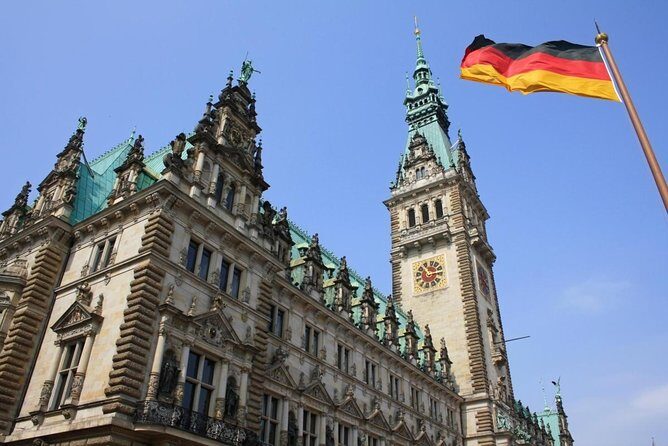
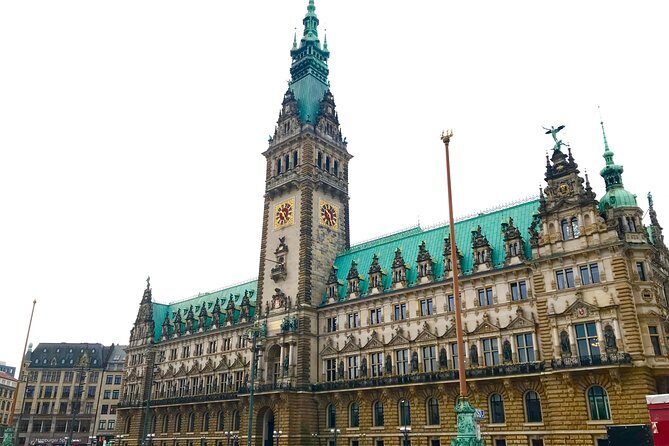
Early on, you pass Hamburg’s impressive 19th-century neo-Renaissance Town Hall. Even if you don’t go inside, it’s a powerful visual lesson. It reflects the city’s rise at a time when Hamburg was getting rich from trade, shipping, and global connections.
Why this works for you: it sets the tone for what comes next. Hamburg wasn’t just some quiet port town. It became wealthy, lost a lot to disaster, rebuilt again, and built differently each time. Once you see the Town Hall’s confidence, the later reminders of tragedy feel more real, not just historical.
If you care about architecture, this is your “anchor” stop. You start with a building that signals prosperity, then the tour shifts toward stories of devastation and reconstruction.
Deichstrasse and the Great Fire: red-brick Kontor houses in context
Next up is Deichstrasse, a charming stretch with medieval buildings. This stop has two jobs: give you a feel for the street-level Old Town look, and explain how that look changed after one of the city’s defining disasters.
You’ll hear how the Great Fire ravaged the old town. That detail matters because Hamburg’s architecture isn’t random. The city rebuilt with different materials and new styles. You’ll also look at red-brick Kontor House buildings—those trading and office structures that became era-defining for Hamburg.
Here’s what you can do with this information: when you later wander on your own, you’ll be able to “read” the city. Instead of seeing pretty brick and thinking it’s just pretty, you’ll understand why those buildings exist and what they were meant to do.
One practical note: the stop is brief (around 10 minutes), so if you want to take extra photos of doorways and facades, plan to angle your body quickly. The guide’s pacing is part of the experience, and the best strategy is to keep your camera ready as you approach each cluster of buildings.
St. Nikolai Memorial: neo-Gothic architecture turned into a WWII reminder
St. Nikolai Memorial is a heavy stop, but it’s also one of the most meaningful ones. You’ll see the tower that once was part of one of Europe’s notable neo-gothic church examples. Now it functions as a memorial for tens of thousands of victims of the allied air raids of World War Two.
This is where the tour’s tone gets real. Hamburg’s history isn’t just “look at old buildings.” It includes loss, and the city keeps that memory in public space.
If you’re the kind of person who likes to understand what you’re seeing, this stop will give you language for it. You’ll also be able to connect dots when you spot other memorials or rebuilt sites later in your trip.
The memorial stop is also free, so there’s no extra ticket step here. That’s a small thing, but it makes the tour feel smoother and more affordable, especially when other sightseeing costs add up.
Speicherstadt: walking through Hamburg’s UNESCO warehouse story

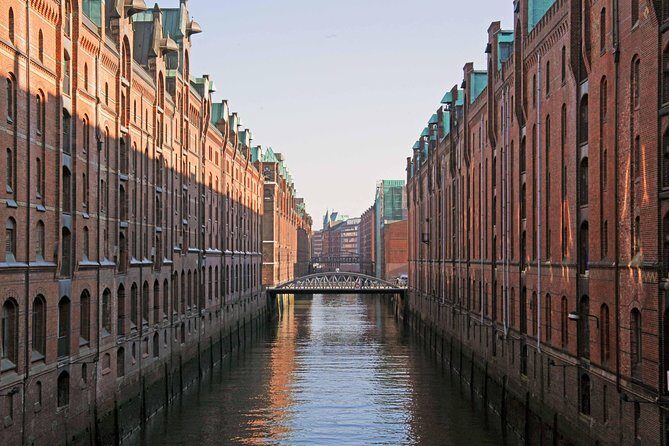
Then you move into Speicherstadt, commonly called the Warehouse District. This is where the tour turns scenic in a big way. The area is Hamburg’s first UNESCO World Heritage site, and it’s easy to see why: elegant warehouse forms, canal-side views, and that unmistakable “this was built for trade” atmosphere.
You’ll learn what those warehouses stored—tea, coffee, sugar, spices, and much more. That’s a practical kind of history. It turns the district from pretty buildings into a working system. You start to picture how goods moved through the city, where profits came from, and why Hamburg cared so much about storing cargo safely.
Also, Speicherstadt pairs well with photos. Even if you’re not a serious photographer, you’ll want to pause here. The buildings and water views give you natural framing, and the guide’s storytelling helps you aim your shots with purpose.
One consideration: your time here is short (about 10 minutes). If you want to linger and photograph slowly, treat that stop as your “taste.” Use it to decide which streets you want to explore further after the tour ends.





Elbe River and harbor vibes: why the route feels different after Old Town
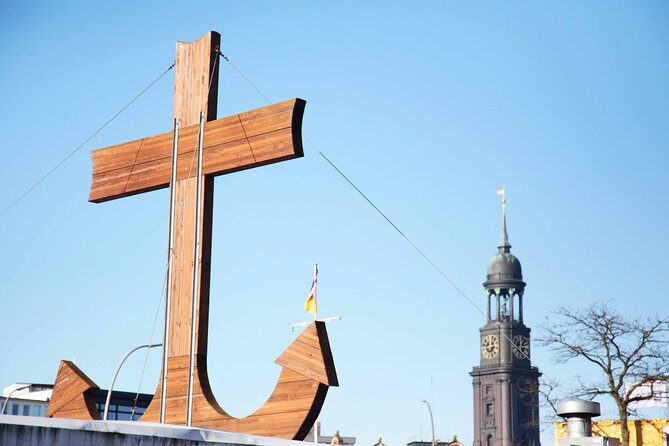
The tour highlights include the Elbe River and the harbor-related areas, and the shift is noticeable. After medieval lanes and post-fire architecture, you start to feel the city’s maritime identity. That change helps you understand Hamburg as a port city, not just a historical city center.
This is also where the modern-and-historical contrast works. Hamburg can feel surprisingly layered: old trade wealth, then wartime scars, then global commerce again—now with sleek contemporary landmarks nearby.
If you’re planning the rest of your day, I’d keep your schedule flexible after this tour. The harbor zone is the part of Hamburg where you’ll likely want to add time, just to wander without pressure.
Elbphilharmonie at the end: great photos, separate tickets if you want inside
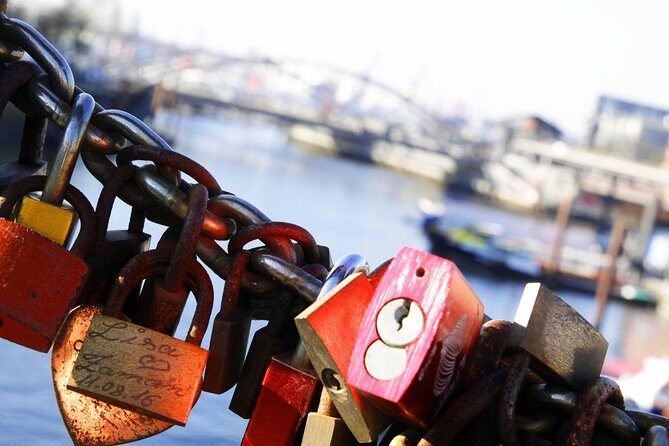
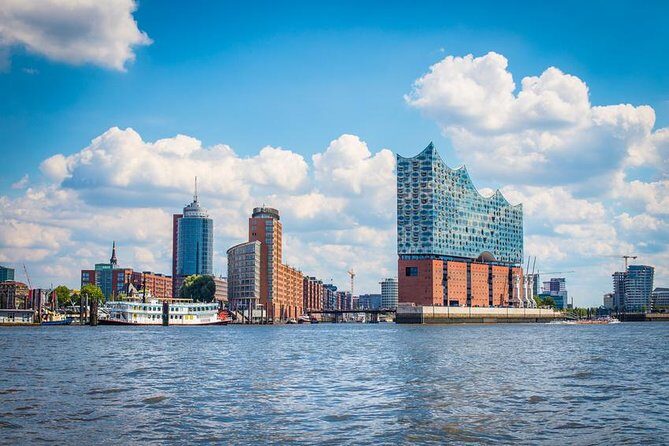
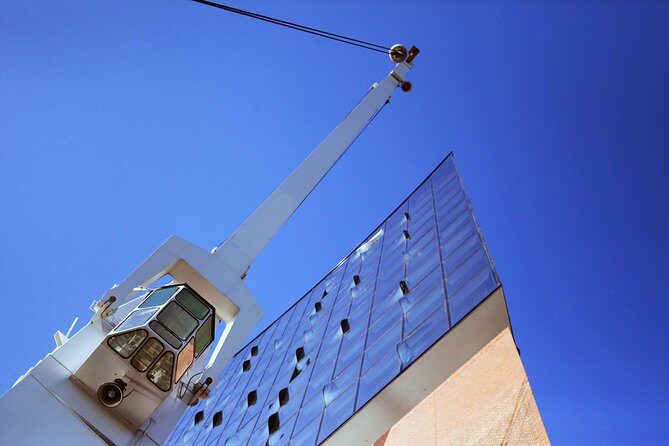
The tour ends at the Elbphilharmonie area. The name recognition is real for a reason. Even as a photo stop, it gives you a strong closing image.
Just know the key detail: the Elbphilharmonie admission ticket is not included. That means you can enjoy the view and the exterior/photo moment, but if you want to go inside or attend a performance, you’ll need to handle that separately.
Why ending here is still smart value: you finish at a landmark people often build their plans around. Instead of transporting yourself again right after your tour, you’re already in position to continue exploring, whether that means walking the waterfront or grabbing a coffee nearby.
Price and value: what you’re paying for at $24.14
At about $24.14 per person for roughly 2 hours 30 minutes, you’re paying for a guided walking format plus professional narration. The big value point is that several of the main stops are free to enter, so your “tour cost” doesn’t turn into surprise add-ons.
You also get the benefit of someone connecting the dots—architecture to disaster, trade to building style, and memorial sites to the city’s modern identity. That kind of context is hard to recreate quickly on your own unless you’re spending time reading guidebooks or watching videos beforehand.
And the group size limit (up to 30) helps keep the experience feeling personal rather than mass-produced.
If you’re on a budget, this is a smart way to see a lot without buying multiple attraction tickets. If you’re traveling with limited time, it’s also a clean way to prioritize the places that give the best “why Hamburg is Hamburg” payoff.
Guides and the small-group feel: listening beats speed
One of the best parts of this tour style is how the guide leads the group. You’re walking together and hearing stories directly rather than hearing content through headsets. That makes the explanations feel more conversational, which matters when topics get emotional at places like St. Nikolai.
You might also get different guides, and some names show up often. Guides such as Bob, Axel, and Jason are examples of how strongly the narration can land. The common thread in the way they’re described is clear communication and strong storytelling that helps you understand what you’re seeing rather than just naming it.
Cold weather happens in Hamburg. In at least one case, a guide adjusted the experience to help the group warm up at a traditional café mid-tour, while still making sure everything important got covered. That kind of flexibility is worth its weight in comfort when your day is otherwise a straight walking route.
Timing, weather, and how to get the most from the 10-minute stops
This tour operates in all weather, so dress like Hamburg means business. Bring layers. If rain shows up, you’ll still walk.
Because some stops are around 10 minutes, your best move is to arrive ready to move fast on foot and spend your time wisely at each pause. Use the guide’s cues: when the guide points something out, that’s the moment to frame your photo. If you linger too long at one doorway, you’ll feel rushed later.
Also, consider what you want most from the day. If you want history plus photos, this tour is a good balance. If you want long museum time, pair this with quieter standalone time afterward. The tour sets context; it doesn’t replace deeper exploration.
If you’re someone who loves architecture, focus on reading the building materials and styles. Deichstrasse and Kontor Houses are a great place to start training your eye.
If you’re more into WWII remembrance, St. Nikolai gives you a specific anchor. The rest of the tour then helps you see how memory sits inside the city’s ongoing life.
Who this tour suits best
I think this tour fits best if you want:
- A structured way to see key neighborhoods without planning every turn
- The story behind Hamburg’s rebuilding and trade identity
- A morning start that sets you up for later wandering in the harbor area
It’s also a good fit if you’re traveling with mixed interests, because it covers architecture, memorials, UNESCO-level sites, and one modern icon.
If you dislike walking or want long stops at a single place, you might find the pacing a bit brisk. The upside is you’ll still get the main landmarks and a strong orientation for the rest of your trip.
FAQ
FAQ
What’s the duration of the Discover Hamburg Walking Tour?
It’s about 2 hours 30 minutes.
Where does the tour start and where does it end?
It starts at Barkhof 3, 20095 Hamburg, Germany and ends at Elbphilharmonie, Platz d. Deutschen Einheit, 20457 Hamburg, Germany.
What time does the tour begin?
The start time is 10:30 am.
How much does the tour cost?
The price is $24.14 per person.
Is the tour in English?
Yes, it’s offered in English.
Do I need tickets for the stops?
Some stops have free admission (like Deichstrasse, St. Nikolai Memorial, and Speicherstadt). The Elbphilharmonie end stop does not include an admission ticket.
Does the tour run in bad weather?
Yes, it operates in all weather conditions, so dress appropriately.
How big are the groups?
The tour has a maximum of 30 travelers.
Is there a mobile ticket?
Yes, it includes a mobile ticket.
Is public transportation nearby?
Yes, it’s near public transportation.
Can I bring a service animal?
Service animals are allowed.
Should you book Discover Hamburg Walking Tour?
Yes, if you want an efficient, guided “greatest hits” walk that connects Hamburg’s Old Town scars and trade power to the harbor view, then lands you at the Elbphilharmonie area for your next step. The value is strong because you get a professional guide, a focused route, and multiple free-entry stops.
Skip it (or at least adjust expectations) if you’re looking for long, slow time inside one attraction—this is a walking tour built for orientation and stories at several key points.