REVIEW · MUNICH
Dachau Memorial Public Tour
Book on Viator →Operated by Global Guide Services · Bookable on Viator
Dachau demands attention, not quick tourism. This Dachau Memorial public tour turns a difficult site into a clear, organized walk through what the camp was built to do, from the Main Gate to the places where prisoners were counted and processed. I love how the route doesn’t just list dates—it points you to specific areas so you can follow the logic of the system.
I also like the small-group size (max 15), which helps the mood stay respectful and questions feel manageable. Guides such as Charlotte and Michael are praised for strong WW2 context and for marking moments of respect, including a minute of silence outside the crematorium. One drawback: this is emotionally heavy material, so you’ll want to mentally budget for it and plan your day accordingly.
In This Review
- Key highlights worth knowing before you go
- Why this Dachau Memorial tour works in Munich (about 5 hours)
- Meeting at Marienplatz: simple logistics, then you’re on the clock
- From the Main Gate to the Jourhaus: how the camp functioned
- The museum in the Former Maintenance Building: facts without getting lost
- The Bunker and reconstructed barracks: seeing control and daily life
- Religious memorials and security installations: what the grounds still show
- Crematorium respect moment: why the minute of silence lands
- Price and value: what $118.74 buys you (and what it doesn’t)
- Who this tour is best for (and who should think twice)
- Should you book the Dachau Memorial Public Tour?
- FAQ
- How long is the Dachau Memorial public tour?
- What is the price per person?
- Where does the tour start in Munich?
- What time does the tour begin?
- Does it end back at the meeting point?
- Is a local guide included?
- Is admission included?
- Is food or drinks included?
- How large is the group?
- Do I need a printed ticket?
- What is the cancellation policy?
Key highlights worth knowing before you go
- Small group, max 15 so you get more human pacing and room for questions
- Built around key camp locations like the Main Gate, Jourhaus, Roll Call area, and the museum
- Bunker plus reconstructed barracks helps you connect administration to daily life
- Religious memorials acknowledge the people who were forced to endure, in different faiths
- Guides lead respect moments (including a minute of silence outside the crematorium)
- Admission ticket is shown as free, while the guide-led structure is what you pay for
Why this Dachau Memorial tour works in Munich (about 5 hours)
If you’re visiting Munich and you want more than a drive-by, this 5-hour format is a practical sweet spot. Long enough to cover major sections of the memorial—Main Gate, administration buildings, the museum area, and prisoner-focused spaces—without pretending you can process everything at warp speed.
You also get a structured experience with a local professional guide on a public tour. That matters at Dachau. The site is big, the subject is complex, and it’s easy to miss what a particular building or outdoor area is telling you. A guide gives you signposts that help you understand what you’re seeing and why it was built that way.
One more value point: this tour runs with a limited group size (up to 15). In a place like this, that usually leads to quieter listening and fewer delays at the most sensitive spots.
You can also read our reviews of more tours and experiences in Munich.

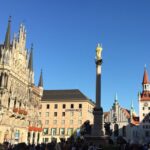
Meeting at Marienplatz: simple logistics, then you’re on the clock
The tour starts at Fischbrunnen, Marienplatz 8, 80331 München at 10:00 am. It ends back at the meeting point, which is a nice way to avoid awkward end-of-tour navigation when your emotions and attention are already stretched.
It’s also described as near public transportation, so you don’t have to fight Munich traffic or build in extra buffering time. And you’ll receive confirmation at booking time, plus a mobile ticket. In other words: less paper, fewer surprises, and more time for calm arrival.
If you’re coming from another part of town, I’d still give yourself margin. At Dachau, you want to arrive ready to listen, not rushing with a phone at full brightness.
From the Main Gate to the Jourhaus: how the camp functioned
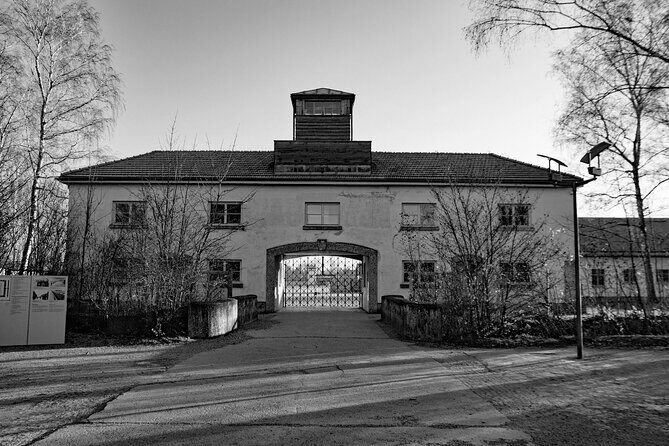
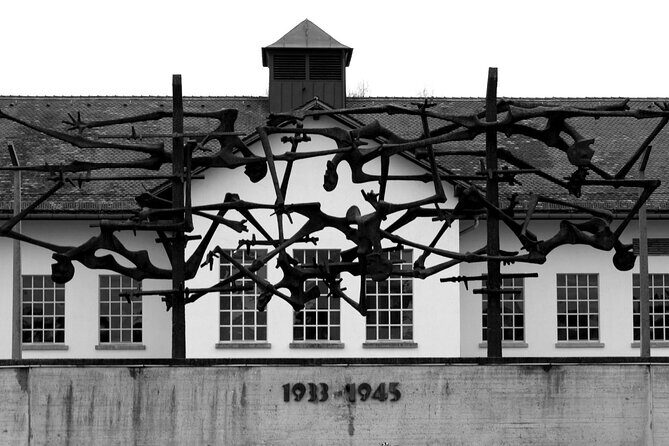
The tour begins at the Main Gate, then moves into the Jourhaus, a building tied to camp administration. This is a smart first move because it frames Dachau as a system, not just a location. You’re not only looking at ruins; you’re learning the structure—who controlled what, and how the camp ran.
Next you’ll reach the Roll Call area, marked by an International Monument. Roll call is one of those concepts that sounds familiar from history classes, but watching it mapped into real space hits different. It’s a reminder that cruelty often works through routine—counting bodies, enforcing order, and turning people into numbers.
Even if you know the broad story, I like how this portion of the route makes the logic visible. You’ll come away understanding that the camp didn’t just imprison; it organized people into a controlled process.
Practical tip: take your time at each marked section. Don’t try to photograph your way through. This part is about absorbing what the place was used for.
The museum in the Former Maintenance Building: facts without getting lost
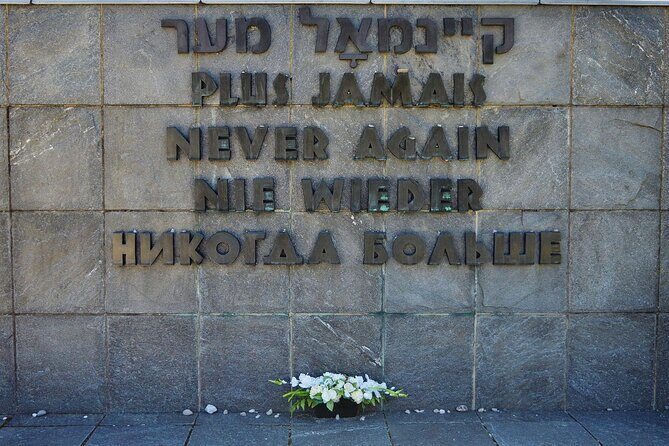
From the administrative core, the tour brings you to the Former Maintenance Building, which houses a museum. Here, you’re guided through the camp’s history using exhibits and documentaries, with the intent of building a clearer timeline and clearer context for what you just walked past.
This is where the tour can become genuinely useful for you as a visitor. Seeing buildings is powerful, but you also need the surrounding explanation: when the camp operated, how it changed over time, and how the numbers connect to real human lives.
A key idea to keep in mind as you go: Dachau was the first camp the Nazis opened in Germany in 1933, and it later evolved into forced labor with over 200,000 inmates during its roughly 12 years. Around 40,000 people from 34 nations were killed before liberation in 1945 by the American army. Those figures can feel abstract until your guide connects them to what you’re seeing.
If you tend to skim museums, don’t do that here. This stop is where your visit becomes more than a memorial walk.
The Bunker and reconstructed barracks: seeing control and daily life
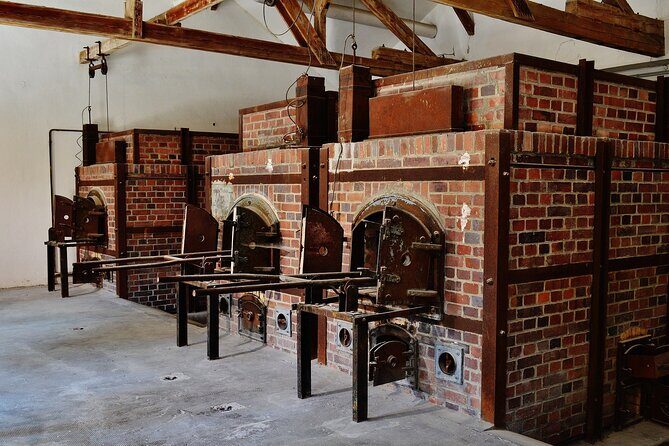
After the museum, the route turns sharper with the Bunker, described as a former prison. This space is meant to show you how confinement worked in practice. Even without graphic detail, it’s the architecture and purpose that tell the story—how punishment was housed and how the camp enforced obedience through fear.
Then you’ll move to two reconstructed barracks, which offer glimpses into prisoners’ daily lives. Reconstructed spaces can be tricky: they’re not the original rooms, so you don’t want to treat them as a perfect time machine. But in a guided context, reconstructions help you understand scale and routine—what daily existence might have looked like within the camp’s tight control.
For me, the pairing works: museum context first, then the hard reminder of detention (the Bunker), then the lived day-to-day picture (the barracks). You end up with a more complete mental model.
Practical tip: if you’re sensitive to enclosed spaces or bleak atmospheres, pace yourself at the Bunker area. You can step back, breathe, and rejoin when you feel steadier.


Religious memorials and security installations: what the grounds still show
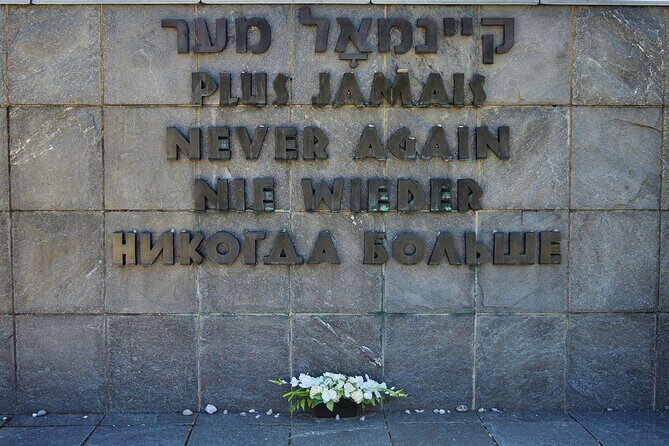
One of the standout components of the route is the set of diverse religious memorials. These help you see that the camp held people of different faiths and backgrounds. It also gives the tour an emotional anchor that isn’t only about structures and dates.
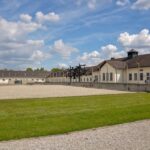
The walk also includes security installations, including guard towers and partially reconstructed outer walls. This portion matters because it shows the camp as a guarded boundary—built to keep people in, keep watch on them, and enforce the separation the Nazis intended.
As you stand in these areas, you’ll likely find your brain doing the connecting work automatically: how administration and roll call led into detention, forced labor, and the broader machinery of control. That’s the power of the tour design: it guides you from function to experience.
Crematorium respect moment: why the minute of silence lands
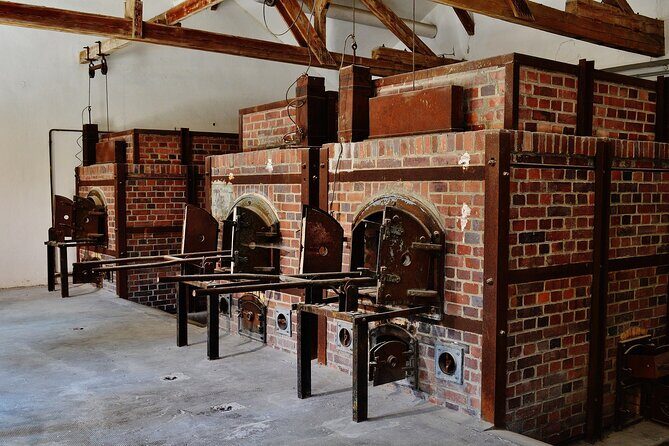
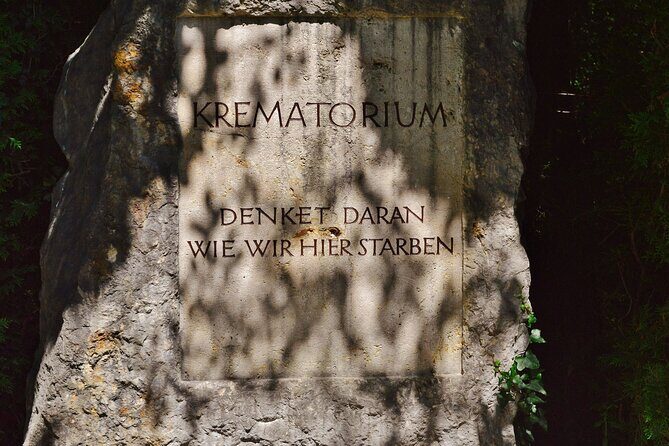
One detail from the guide experience that I think is especially meaningful is the minutes silence outside the crematorium. Even if you already know the historical role of Dachau, a guided silence is different from reading history on a screen. It changes the tempo of your visit.
The fact that this is included in the experience is a strong signal that the operator and guides understand the site requires careful handling. In a place this difficult, I’m grateful when respect is built into the schedule rather than left to individual choice.
If you’re someone who worries about getting emotional in public, that’s normal. Quiet doesn’t mean you’re doing it wrong. It means you’re treating the moment with the seriousness it deserves.
Price and value: what $118.74 buys you (and what it doesn’t)
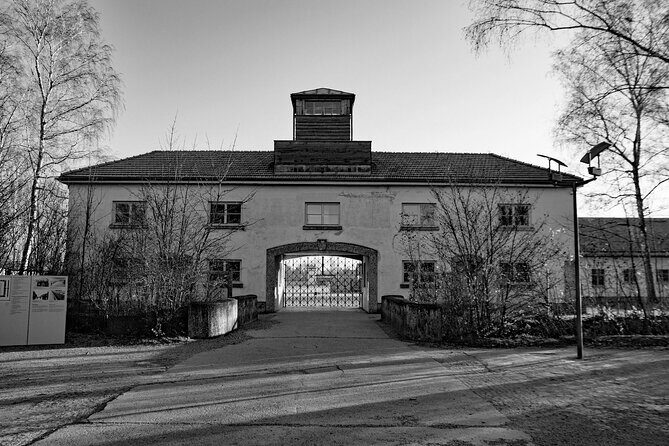
At $118.74 per person, you’re paying for a guided, structured walk with a local professional guide. You’re not just buying entry. You’re buying interpretation—someone who can connect what you see (Main Gate, Jourhaus, Roll Call, museum, Bunker, barracks, memorial areas) to what it meant.
A second value factor: group discounts are mentioned, and the tour is limited to 15 travelers max. Smaller groups usually cost more per person than mass tours, but at Dachau that tradeoff can be worth it because it helps keep the visit steady and respectful.
Admission is shown as free in the stop description. Food and beverage are not included, so you’ll want to plan your Munich day around that. I’d also avoid booking a tight schedule right after, because processing a visit like this can take longer than you expect.
Booking trend: it’s on average booked 36 days in advance. If you’re traveling in peak season or on a busy week, book earlier so you can secure the time that fits your Munich plan.
Who this tour is best for (and who should think twice)
This is a solid match if you want a guided, respectful overview rather than a self-guided checklist. Most travelers can participate, but you should consider your own emotional comfort level first. The subject matter is severe, and the physical layout is still a real site of suffering.
It’s also ideal if you like having a guide who can answer the bigger questions, not just point at plaques. The experience highlights how guides like Charlotte and Michael are praised for history command and for setting a respectful tone.
If you’re traveling with teens or students, a guided approach can help you stay oriented and reduce the chance that you’ll miss key context. If you prefer quiet alone time, you might find a group tour less to your liking. But for many people, the small group size is a middle ground.
Should you book the Dachau Memorial Public Tour?
Yes, if you want a structured visit that helps you understand what you’re seeing—without turning Dachau into a quick photo stop. The 5-hour length, small group cap, and guide-led route through the Main Gate, Jourhaus, Roll Call area, museum, Bunker, barracks, religious memorials, and security installations make it a practical way to get meaning from the site.
Skip it or reconsider if you know you struggle with heavy historical material or you’re hoping for a relaxing sightseeing block. This tour is for reflection, not diversion.
FAQ
How long is the Dachau Memorial public tour?
The tour duration is about 5 hours.
What is the price per person?
The price is $118.74 per person.
Where does the tour start in Munich?
It starts at Fischbrunnen, Marienplatz 8, 80331 München, Germany.
What time does the tour begin?
The start time is 10:00 am.
Does it end back at the meeting point?
Yes, the activity ends back at the meeting point.
Is a local guide included?
Yes. The tour includes a local professional guide on the public guided tour.
Is admission included?
Admission is listed as free for the stop at Dachau Concentration Camp Memorial Site.
Is food or drinks included?
No. Food and beverage are not included.
How large is the group?
The tour has a maximum of 15 travelers.
Do I need a printed ticket?
No. The tour offers a mobile ticket.
What is the cancellation policy?
You can cancel for free up to 24 hours in advance for a full refund, based on the experience’s local time.