REVIEW · HAMBURG
Hamburg St. Pauli – guided walk for school groups
Book on GetYourGuide →Operated by Stattreisen Hamburg e.V. · Bookable on GetYourGuide
Hamburg’s St. Pauli has stories you can’t ignore. This 90-minute guided walk takes you through Reeperbahn and Große Freiheit, where nightlife, pop-culture, and real social history sit side by side. It’s built for school groups, with explanations shaped for younger listeners.
I like how the route gives you both orientation and context, starting at the port area around Landungsbrücken and then shifting into the streets people actually associate with after-dark entertainment. I also like that the guide focuses on specific themes for discussion—religious minorities, the former Chinatown, prostitution/red-light business, and the Beatles in Hamburg.
One thing to consider: this walk is not suitable for children under 15, so it may not work for younger classes. And if your group has a tight timetable, double-check your confirmed start time since one past booking reported trouble getting the tour to run as scheduled.
In This Review
- Key Things You’ll Notice on This St. Pauli School Walk
- Why St. Pauli Works So Well for a Guided Walk
- The 90-Minute Route: Landungsbrücken to Spielbudenplatz
- Landungsbrücken: Starting With the Port Side of St. Pauli
- Davidstraße and Reeperbahn: Nightlife Streets With Explanations
- Hans-Albers-Platz: A Natural Break in the Middle of the Action
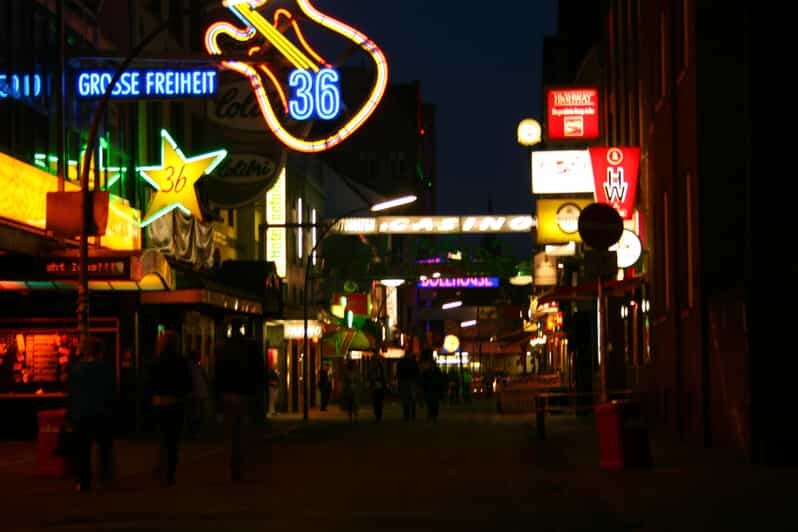
- Große Freiheit and Side Streets: When Pop Culture Meets Real Neighborhood Life
- Spielbudenplatz: Finishing Where the District Shows Itself
- Price and Value: $188 Per Group (Up to 20)
- Language, Group Style, and Who This Tour Fits Best
- Should You Book This St. Pauli School Group Walk?
- FAQ
- How long is the Hamburg St. Pauli guided walk for school groups?
- Where do we meet for the guided walk?
- What does the tour cost?
- What languages are available?
- Is this a private group experience?
- Is the tour wheelchair accessible?
- Is the tour suitable for young children?
- Can I cancel for free?
- Can we reserve and pay later?
Key Things You’ll Notice on This St. Pauli School Walk
_1. A school-focused guide approach_ designed to keep students engaged while covering sensitive topics.
_2. Port-to-nightlife pacing_ starting near ships and sailors at Landungsbrücken, then moving into Reeperbahn’s main streets.
_3. The “beyond the signs” explanation_ topics include religious minorities, the former Chinatown, and prostitution/red-light business.
_4. Beatles stops in the middle of daily street life_ tying pop history to real neighborhoods like St. Pauli.
_5. A clear, teacher-friendly finish point_ the walk ends at Spielbudenplatz, making wrap-up logistics easier.
Why St. Pauli Works So Well for a Guided Walk
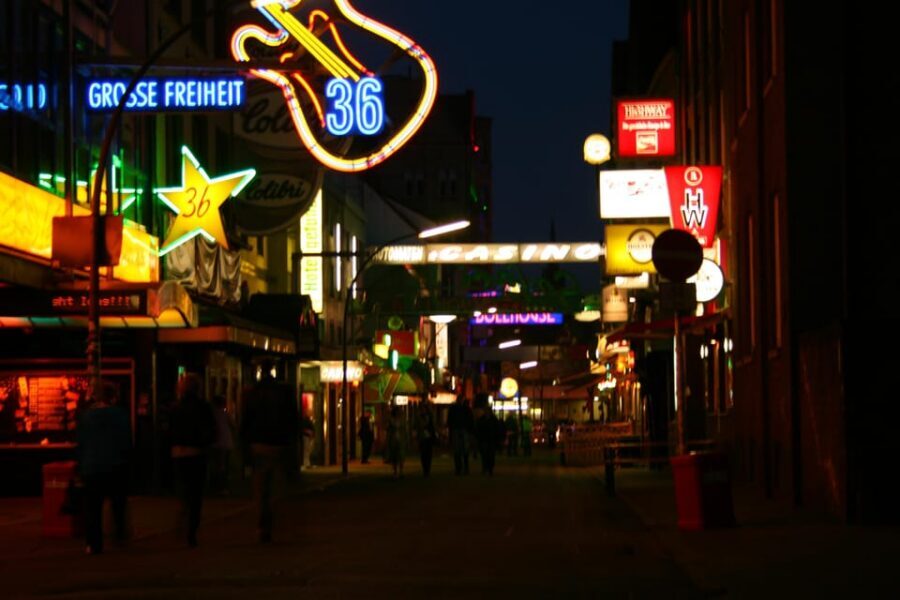
St. Pauli is one of those Hamburg neighborhoods where you can’t really separate the postcard image from what’s happening on the street. You’ll see the Reeperbahn and surrounding lanes that people connect with clubs and pubs, but you’ll also hear the meaning behind the scenes. That’s the value of a guided walk here: you’re not just walking past sights—you’re getting language and context for what you’re looking at.
This tour is specifically set up for school groups, which matters. The guide isn’t just reciting facts. The goal is to give students something they can discuss: why a neighborhood develops a reputation, how different communities fit into the story, and how pop culture like the Beatles shows up in a working urban district.
The format is also practical. You get 90 minutes, a defined route, and a clear meeting point near Landungsbrücken. For teachers, that’s easier than trying to improvise a lesson across multiple stops on your own.
You can also read our reviews of more walking tours in Hamburg



The 90-Minute Route: Landungsbrücken to Spielbudenplatz
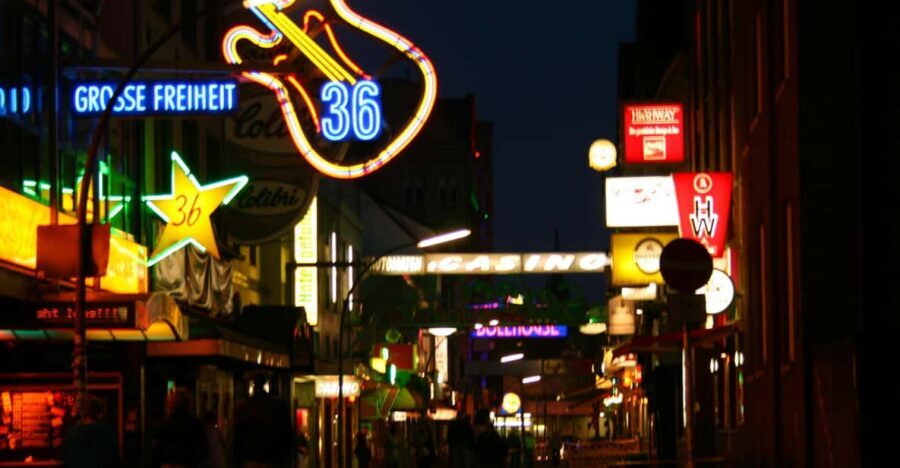
The walk is designed as a straight line through central St. Pauli—from the port side into the nightlife grid, then back to a final square.
It starts at Pegelturm St. Pauli / the clock-tower area at St. Pauli Landungsbrücken. From there, the route shifts your perspective: instead of thinking only about entertainment streets, you begin with St. Pauli as a quarter tied to the port—ships, sailors, and workers. Even early in the walk, you’re building a mental map that makes the later streets make more sense.
Then you move toward Davidstraße and onward to Reeperbahn and Hans-Albers-Platz, before reaching Große Freiheit and looping through busy side streets back to Spielbudenplatz. The timing works well for a school group because you’re not trying to do too much in one go. You also get repeated reference points, so students can follow the story even if they drift for a minute.
A drawback to keep in mind: because it’s focused on recognizable entertainment streets, parts of the route may feel intense or awkward depending on your class. If you’re bringing a mixed-age group within the allowed range, plan a brief pre-walk chat with your students about respectful listening and how you’ll handle sensitive subjects.
Landungsbrücken: Starting With the Port Side of St. Pauli
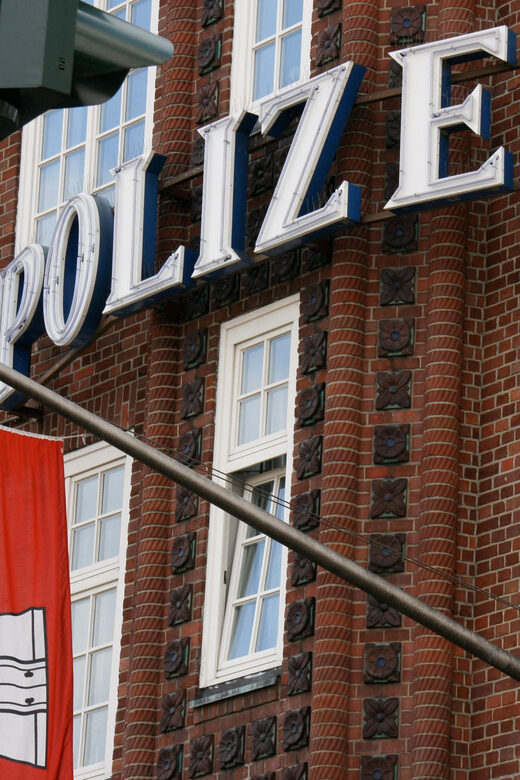
The meeting area around Landungsbrücken sets a smart tone. St. Pauli didn’t become St. Pauli in a vacuum; it’s close to Hamburg’s port, and the district grew alongside the movement of people and jobs connected to ships and seafaring work. Starting here gives students a foundation before the tour shifts into nightlife streets.
In other words, you’re not dropped straight into the red-light-adjacent parts of town without context. You begin by seeing the quarter as a place linked to everyday port life, and then the guide layers in how the area changed over time and why it became known for specific forms of nightlife.
This starting point is also practical. Landungsbrücken is a clear, central landmark zone for getting everyone to the same spot. The tour also clearly states an accessible starting meeting point area at the Pegelturm/Uhrturm level, which helps if you’re managing a group with mobility needs.
Davidstraße and Reeperbahn: Nightlife Streets With Explanations
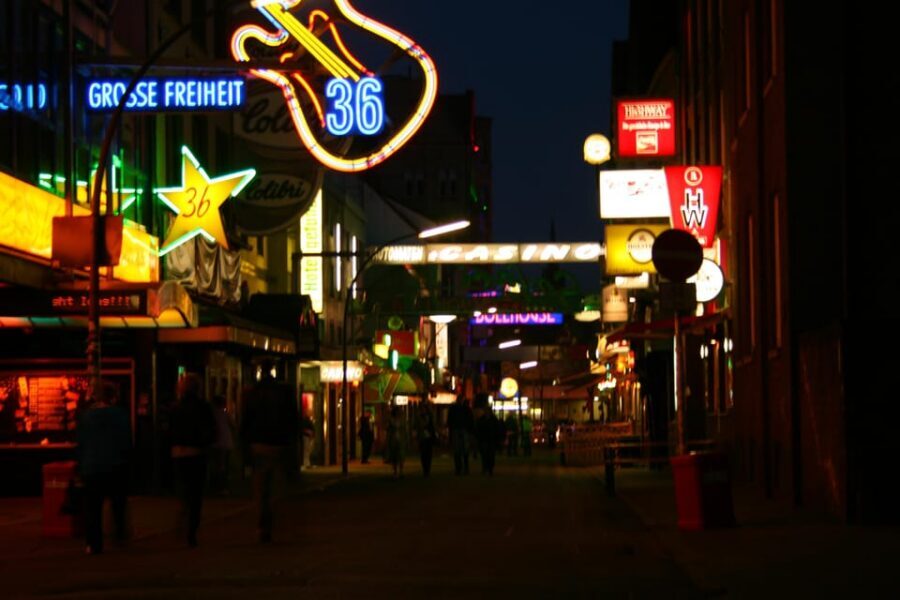
Once you head into Davidstraße and Reeperbahn, the tour leans into the district’s reputation. These are described as hotspots for nightlife, and they’re also closely associated with red-light business. The key difference on this walk is that you’re not left to guess what that means or why it matters.
You’ll walk through the area where clubs and pubs are part of daily street life, but your guide frames the scene with themes that go beyond entertainment. That includes the topic of prostitution and the reality of how businesses, regulations, and community perceptions can shape a neighborhood.
For students, this kind of structured conversation is usually more useful than just seeing signs. You get a guided path for questions like: Who lives here? Why do certain areas develop certain reputations? How do different social groups coexist in the same streets?
One consideration: Reeperbahn is famous, which means it can feel crowded depending on the time of day. The tour’s 90-minute structure helps keep it organized, but you’ll still want to keep your class together in busier side streets.
Hans-Albers-Platz: A Natural Break in the Middle of the Action
Hans-Albers-Platz sits in the middle of the route, and that’s part of its usefulness. Even when you’re walking through nightlife zones, a square-like stop helps your group regroup mentally and physically.
Think of it as a punctuation mark. You’ve moved from Davidstraße into the Reeperbahn area; then you’re given a place to reset before continuing to Große Freiheit. For school groups, this matters because students often absorb best in short segments. A mid-walk stop also helps you spot any students who may have fallen behind.
What you’ll get here depends on your guide’s flow, but the intention stays consistent: connect the big landmarks with the tour’s key themes—religious minorities, the neighborhood’s changing identity, and the way pop culture shows up in real places.
You can also read our reviews of more guided tours in Hamburg





Große Freiheit and Side Streets: When Pop Culture Meets Real Neighborhood Life
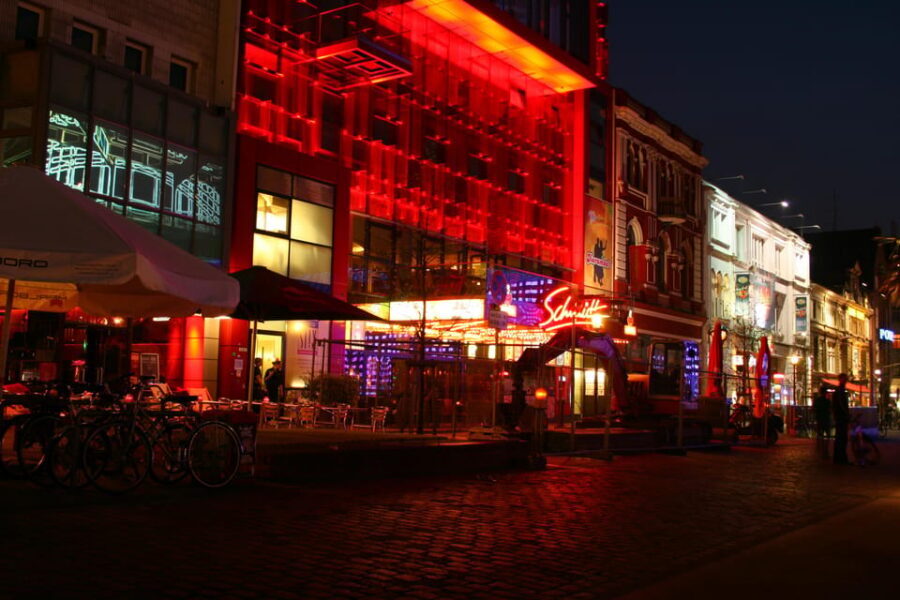
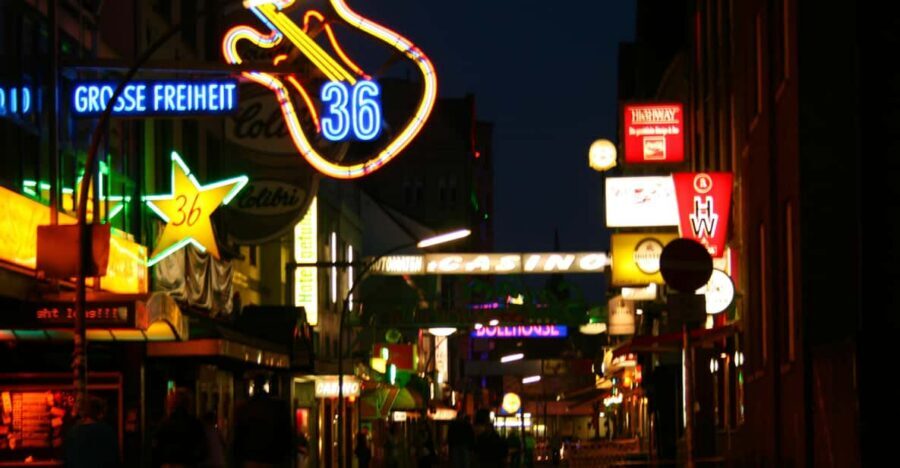
Große Freiheit is where the walk becomes especially memorable. The area is described as closely associated with red-light business, and the tour continues through many bustling side streets. This is where the district’s reputation becomes physical: narrow lanes, turn after turn, and the sense that the neighborhood runs on human movement and late-night energy.
This is also where the Beatles angle fits into the neighborhood story. The guide’s job is to show how Hamburg pop culture isn’t just an abstract legend—it links to actual streets and places that students may have heard about in other contexts.
The way it’s framed can make a difference. Instead of treating the Beatles as a “separate topic,” you tie them to the lived environment of St. Pauli—where international visitors, local communities, and different forms of nightlife history overlap. That’s a more grounded way to learn pop-history than memorizing names out of context.
If you’re teaching, this section is a great chance to ask students to compare expectations vs. what they observe. But keep it respectful: the tour covers sensitive subjects, so you’ll want to set a tone that’s about learning and discussion, not sensationalism.
Spielbudenplatz: Finishing Where the District Shows Itself
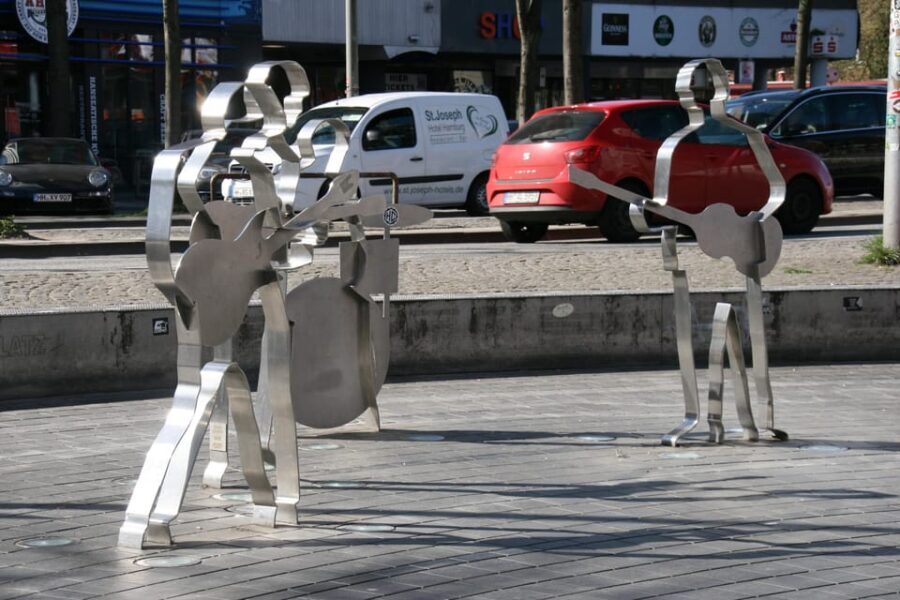
The tour ends at Spielbudenplatz, which is a helpful finish for a school group. Ending at a recognizable square means you can wrap up without chasing your group across multiple street segments.
By the time you reach Spielbudenplatz, you’ve looped through the key St. Pauli zones: the port-start context at Landungsbrücken, the nightlife core around Reeperbahn and Davidstraße, the mid-route reset at Hans-Albers-Platz, and the Grande Freedom area leading through side streets. That arc gives students a coherent story rather than a list of stops.
This final stretch also helps you process the themes the guide brings up—religious minorities, the former Chinatown, prostitution/red-light business, and the Beatles—because you’re back near a central place to mentally organize what you just walked through.
Price and Value: $188 Per Group (Up to 20)
The price is $188 per group up to 20 for a 90-minute guided walk. For many school group leaders, the key value isn’t the total cost—it’s the “cost per student” when you’re filling a group roster.
A guided walk like this becomes cheaper than you might expect when you consider you’re getting:
- a live guide for the full group,
- a route designed to cover multiple major St. Pauli highlights,
- and explanations tailored to school audiences, including sensitive topics.
In plain terms: you’re paying for guidance and structure. You’re not paying for museum tickets or transport legs. That’s why this tour can feel like good value—especially if you’d otherwise need multiple helpers or would struggle to create a coherent lesson on your own in a neighborhood as layered as St. Pauli.
If your group is smaller than 20, the per-person cost is still fairly straightforward compared with hiring separate services. Just make sure you plan your group headcount accurately so you’re not paying for empty seats.
Language, Group Style, and Who This Tour Fits Best
This is a private group experience for school groups, with the guide available in German or English. That means you can choose the language that works for your class without dealing with a mixed-language crowd.
It’s also wheelchair accessible, which is a major plus for school programs that need inclusive logistics. And it’s clearly stated as not suitable for children under 15, so it’s aimed at older students who can handle open discussion in a respectful way.
So who should book?
- Secondary schools and youth groups (15+).
- Classes that want neighborhood learning connected to music and social topics.
- Teachers who prefer a guided route with built-in structure instead of self-guided wandering.
Who should think twice?
- If you’re working with students under 15.
- If your group needs a low-sensitivity environment where any mention of prostitution or red-light business would be a problem. This walk is built to talk about those themes directly.
Should You Book This St. Pauli School Group Walk?
If your goal is to teach St. Pauli as a real neighborhood—port-linked in the morning, nightlife-focused in the evening, and tied to topics like religious minorities, the former Chinatown, prostitution/red-light business, and the Beatles—then this tour is a strong match. The biggest upside is how the guide is set up for school groups, keeping the talk organized and discussion-friendly.
I’d book it if:
- you have students 15+,
- you want a live guide in German or English,
- and you want a clear route that hits the major St. Pauli highlights in 90 minutes.
I’d be a bit careful if:
- you’re depending on a very specific time and you need zero risk. In one past experience, the tour didn’t run as expected for a booking, so confirm your start details and have a plan B for your lesson block.
FAQ
How long is the Hamburg St. Pauli guided walk for school groups?
The tour lasts 90 minutes.
Where do we meet for the guided walk?
Meet at Treffpunkt beim Uhrturm, St. Pauli Landungsbrücken (also listed as Pegelturm St. Pauli).
What does the tour cost?
The price is $188 per group up to 20.
What languages are available?
The live guide offers the tour in German and English.
Is this a private group experience?
Yes. It’s listed as a private group.
Is the tour wheelchair accessible?
Yes, the tour is wheelchair accessible.
Is the tour suitable for young children?
No. It is not suitable for children under 15.
Can I cancel for free?
Yes. Free cancellation is available up to 24 hours in advance for a full refund.
Can we reserve and pay later?
Yes. You can reserve now & pay later, with payment due later.
If you want, tell me your group size and preferred language, and I’ll help you map the tour time into a simple school-day plan.