REVIEW · BREMEN
Bremen: Underground Guided Tour
Book on GetYourGuide →Operated by StattReisen Bremen e. V. · Bookable on GetYourGuide
Bremen has a second city underground. I like that this tour gets you into places normally closed—from the bunker under the central station forecourt to underground spaces beneath key landmarks. I also love the mix of eras: Cold War fears show up beside a cathedral crypt with medieval connections.
One watch-out: this is a walking-and-stairs kind of experience. A recent note flagged it as only suitable for people with good walking ability, so don’t assume it’s stroller-friendly or fully easy on the body.
In This Review
- Key points to know before you go
- Two Underwelten routes: picking your Bremen underworld
- Unterwelten 1: the elephant statue start and crypt-level atmosphere
- Central Station bunker: ABC shelter under the forecourt
- Church of Our Lady: multiple bunkers and a medieval crypt tomb
- Bremen’s cathedral vaulted cellar: eerie stone under a major landmark
- Unterwelten 2: the first underground street and why it stayed secret
- Freight yard stop: the banana ripening halls before WWI
- The ABC Hochbunker on Admiralstraße: finishing with a 20th-century timeline
- Price, value, and what $18 buys you in real access
- What makes the guide-led storytelling work (Thomas and Peter notes)
- Practical tips for a smoother 2 hours underground
- Who should book this tour—and who should ask questions first
- Should you book this Bremen Underground Guided Tour?
- FAQ
- How long is the Bremen Underground Guided Tour?
- What’s the price for the tour?
- Are there different tour options?
- What language is the tour guide?
- Where do we meet?
- Is pickup and drop-off included?
- What’s included in the ticket?
- If something is closed, will the tour be changed?
- What is the cancellation policy?
- Can I reserve without paying right away?
Key points to know before you go
- Two routes (Unterwelten 1 vs 2): choose the underworld vibe you prefer
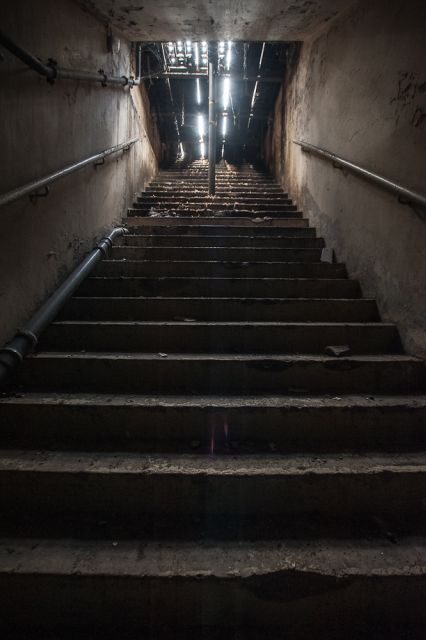
- Central Station’s ABC shelter: a 1940s air-raid shelter later adapted into an ABC bunker during the Cold War
- Bremen Cathedral’s vaulted cellar: an eerie stop that pairs well with WWII stories
- Church of Our Lady bunkers: multiple bunkers in one church complex, explained with historical photos
- Banana ripening halls: former fruit-yard infrastructure you’d never guess existed underground
- Guides like Thomas and Peter: strong praise for clear, engaging storytelling in German
Two Underwelten routes: picking your Bremen underworld
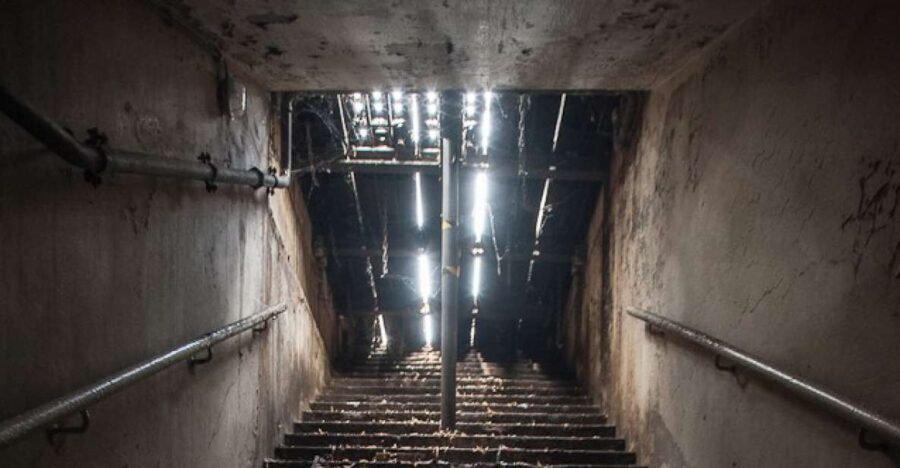
This tour is built around two different itineraries, both focused on Bremen beneath the surface. You’ll spend about 2 hours underground and around the city’s infrastructure, guided by a live guide in German. The operator for the experience is StattReisen Bremen e. V., and the overall rating sits at 4.1 from 1,408 reviews, which is a good sign for an activity this specific.
If you like WWII shelter history and older stone spaces, Unterwelten 1 is the natural match. It mixes air-raid and ABC bunker material with crypts and church bunkers. If you’re more into unusual urban leftovers—supply tunnels, hidden passages, and oddball infrastructure—Unterwelten 2 leans that way, with stops like Bremen’s first underground street and the freight-yard banana ripening halls.
You don’t have to overthink it, but you should choose the option that matches your curiosity. Both are compact enough that you’ll feel like you’ve covered a lot, not just watched your way through a single tunnel.
You can also read our reviews of more guided tours in Bremen

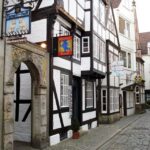

Unterwelten 1: the elephant statue start and crypt-level atmosphere
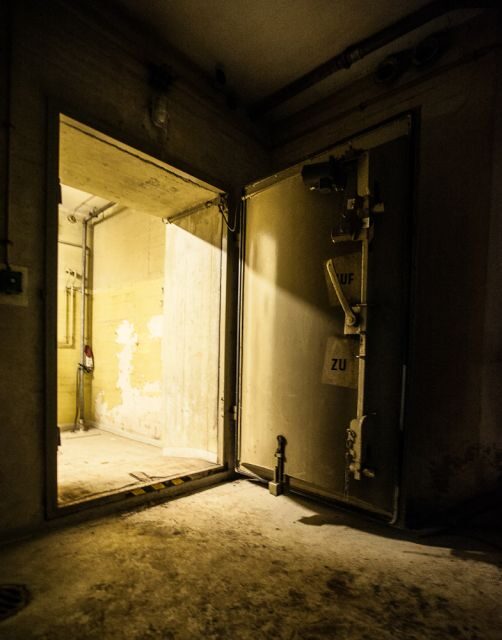
Unterwelten 1 begins at the elephant statue, which is a fun way to launch a tour that’s basically about what most people never see. From there, you descend into a crypt and get historical context about the site and its present-day use—the kind of detail that makes old spaces feel less like museum set dressing and more like something with a life beyond the past.
This route then connects the crypt feeling to the large-scale practicality of air defenses. The tour doesn’t treat underground Bremen as one big scary theme. It keeps flipping between personal-feeling spaces (crypts, cellar vaults) and massive engineered structures.
What I like about starting at an image landmark like the elephant is that it helps you orient fast. In a tour like this, that matters, because once you’re underground, your brain needs a few clean reference points.
Central Station bunker: ABC shelter under the forecourt
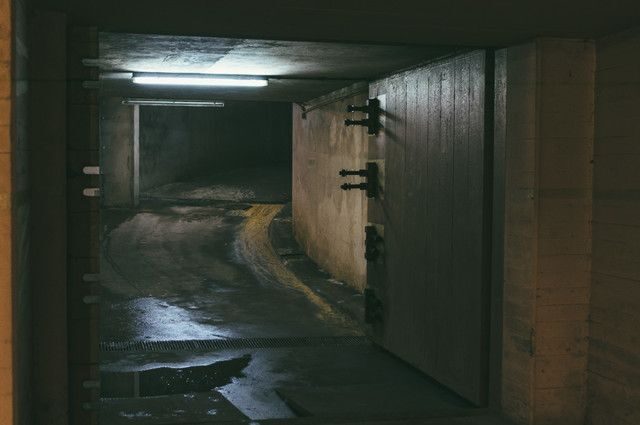
No matter which route you choose, Central Station is part of the story. In Unterwelten 1, the standout is the huge ground-level air-raid shelter at the station—built in the 1940s. Later, during the height of the Cold War, it was changed into an ABC bunker. That upgrade is a big deal: it’s one thing to build protection. It’s another to retrofit it for a different kind of threat logic.
From there, you also hear how the bunker fits into Bremen’s bigger layout. As you move through the route, you’ll cross the ramparts on the way to the Church of Our Lady, and historical photos help show what multiple bunkers looked like and how they relate to the church complex.
A practical note: this stop is the heart of the WWII-era theme. If your goal is to understand how a normal-looking city facility became part of defense planning, this is the best payoff on Unterwelten 1.
Church of Our Lady: multiple bunkers and a medieval crypt tomb
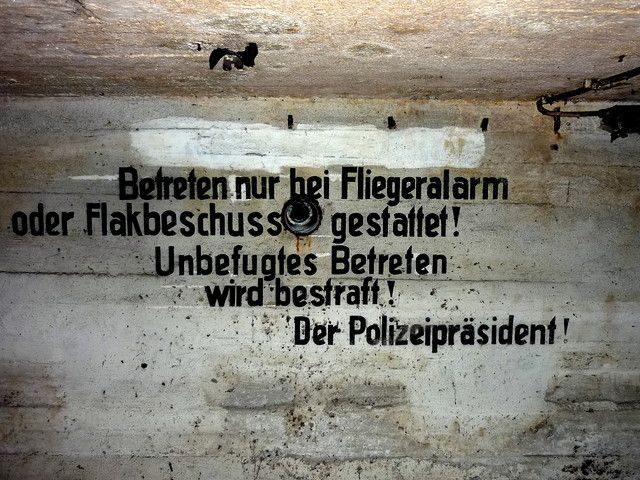
The Church of Our Lady stop is where Unterwelten 1 gets truly specific. You’ll be guided through the area where at least 8 bunkers are located. That number alone changes how you see a church building: it’s not just a spiritual landmark. In Bremen’s 20th-century history, it’s also a container for shelter infrastructure.
Historical photos are part of the explanation, which helps you visualize bunker layouts that you can’t easily infer just by looking at stone and doors today. After that, you visit the crypt used as a tomb in the Middle Ages.
That combination is powerful because it keeps one foot in the medieval world while the other foot is firmly in the 1900s defense world. Even if you’re not a history fanatic, you’ll feel the shift in function and mood between eras.
Bremen’s cathedral vaulted cellar: eerie stone under a major landmark
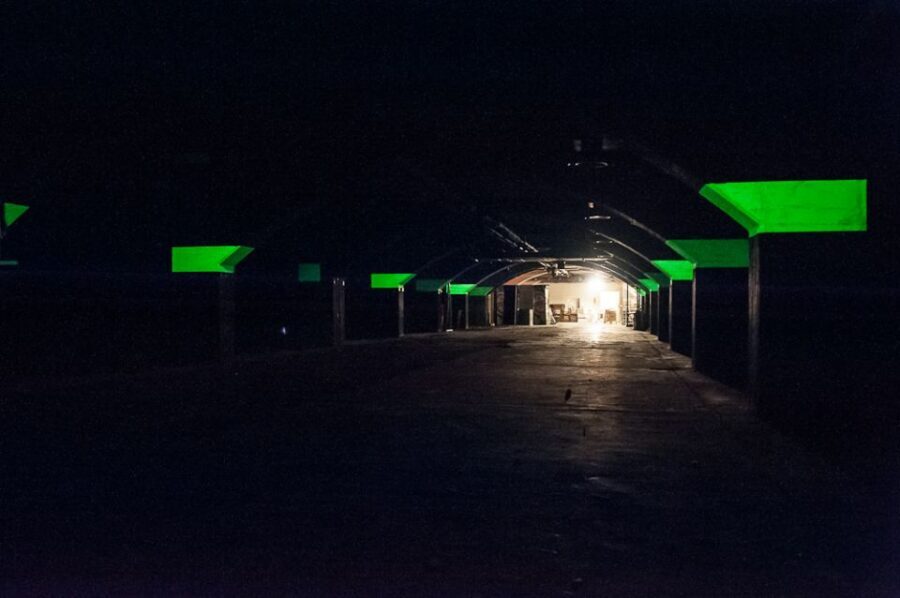
One of the tour highlights is the eerie vaulted cellar of Bremen Cathedral. This is the kind of stop that’s hard to recreate later with photos. A vaulted cellar doesn’t just look old—it changes how sound carries and how space feels. Even without extra frills, it makes the underground Bremen theme feel real.
This is also a strong contrast to the more utilitarian bunker stops. Cathedral spaces tend to be read as solemn and cultural; vaulted cellars remind you that big buildings also had practical storage and connected underground areas.
If you like atmosphere with facts, this is where your tour probably lands hardest emotionally.




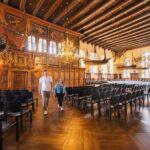
Unterwelten 2: the first underground street and why it stayed secret
Unterwelten 2 starts in a place that sounds like an urban legend, but it has a straightforward purpose. You begin at Bremen’s first and only underground street, which was used for the underground supply of shops nearby.
The striking part is the timeline: it was unknown to Bremen police for a long time. That detail helps you understand why underground infrastructure can stay invisible for years. It’s not always about engineering. Sometimes it’s about who was looking—and who wasn’t.
From there, the tour shifts to Central Station again, using historical photos as the bridge. You’ll see what was once under the green court of the Overseas Museum, and you’ll learn why the Central Station was not destroyed during the Second World War. You’re not just hearing a plot point—you’re being guided through the logic of how city facilities survived, and what the city’s underground spaces may have had to do with that survival.
Freight yard stop: the banana ripening halls before WWI
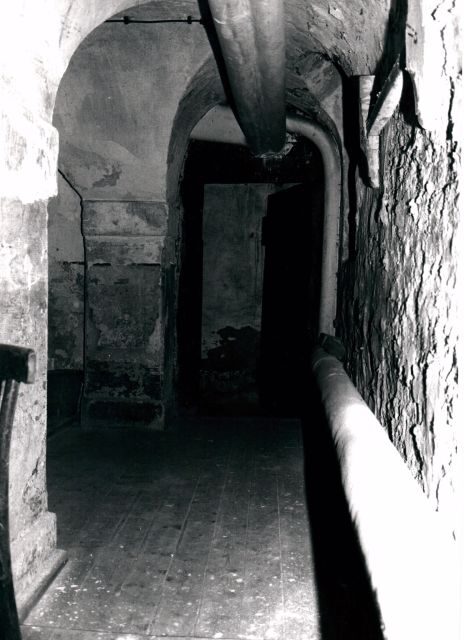
Then comes a stop that feels funny at first—until you realize it’s exactly what makes Unterwelten 2 memorable. You head to Bremen’s freight yard, and at the depot you find the former banana ripening halls of the fruit yard.
The tour explains that before WWI, residents of Bremen could satisfy cravings for exotic fruits through this infrastructure. In other words, the underground wasn’t only for defense and concealment. It was also for everyday supply and comfort.
I like this stop because it stops the tour from becoming one-note. When you mix a supply-story like fruit ripening with the ABC bunker story, you start to see underground Bremen as an entire system—not just a wartime footnote.
The ABC Hochbunker on Admiralstraße: finishing with a 20th-century timeline
Unterwelten 2 ends at the huge ABC Hochbunker on Admiralstraße. The key moment is that you descend into the Hochbunker and learn about WWII air-raid shelters and how the bunker developed over the 20th century.
This endpoint works well because you’re finishing with the most clearly defined defense structure on the route. The tour framing makes the story feel like a timeline rather than disconnected stops: underground street, station connections, fruit yard infrastructure, then a major ABC shelter facility.
It’s also the kind of ending that sticks with people. Even if the rest of the tour was strange or surprising, the final bunker stop gives the underworld theme a solid, physical anchor.
Price, value, and what $18 buys you in real access
At about $18 per person for a 2-hour guided experience, the value is in the access. This tour isn’t just a walk past monuments. It includes guide-led entry to the underground places—depending on which option you book.
That matters because underground access usually costs more than normal sightseeing. Here, the price feels built around giving you the guide’s local knowledge and the practical permission to enter spaces most people won’t be able to. You’re also not sitting through a long schedule. Two hours is enough to make an impression without turning the day into a half-marathon.
One more value point: the tour is in German, so if you speak it (or at least understand enough), you’ll get the best version of the experience. If not, you might still enjoy the architecture and atmosphere, but the factual storytelling part will be harder to absorb.
For pacing and payoff, this is a strong pick for a short time window in Bremen—especially if you like seeing how cities actually worked, not just how they look.
What makes the guide-led storytelling work (Thomas and Peter notes)
A key reason tours like this succeed is clarity. Underground spaces can feel confusing fast, especially when you’re moving between crypts, cellars, and bunker structures. Some bookings specifically praised guides Thomas and Peter for being excellent speakers and for making the tour informative.
That kind of feedback matters. When the guide ties each space to the next one—elephant statue to crypt, station shelter to church bunkers, underground street to freight yard—it turns the underworld from a list of stops into a coherent mental map.
Even if your German is basic, you’ll often be able to follow the structure of the story: why the place existed, what changed over time, and what it’s like to stand inside it.
Practical tips for a smoother 2 hours underground
This experience focuses on access and atmosphere, which usually means you’ll spend more time moving through indoor/outdoor transitions and potentially tight spaces than on a normal city walk.
- Wear shoes made for uneven surfaces and stairs
- Plan on good walking ability—this isn’t described as easy for everyone
- Bring a curious mindset. The tour is full of “wait, this was here?” moments
- Expect the meeting point to vary by option, so confirm details before you go
Program changes can happen for organizational reasons. If a specific place is unavailable, the operator says you’ll get a good alternative—so don’t panic if something is closed on the day you pick.
Who should book this tour—and who should ask questions first
Book it if you want a Bremen experience that feels real and physical: underground infrastructure, defense spaces, crypts, and supply networks. This is for people who like history that has walls you can touch, and who enjoy learning how one city built layers for different needs.
You should ask extra questions if:
- You have mobility concerns and aren’t sure how much walking/stairs are involved
- You want the story in English (the guide language is German)
It’s also ideal if you’re visiting Bremen and want something different from the usual main-street sightseeing. This tour adds a second layer to the city’s identity.
Should you book this Bremen Underground Guided Tour?
If you like your history practical—bunkers, crypts, and infrastructure that shaped daily life—then yes, book it. The $18 price feels fair because you’re paying for access plus a guide who can connect the dots across several unusual underground spaces.
Choose Unterwelten 1 if you’re most interested in WWII/Cold War shelter structures and church/cathedral underground spaces. Choose Unterwelten 2 if you want the strangest, most surprising side of Bremen underground: an underground supply street, the station-survival story framed by photos, and those banana ripening halls.
Either way, you’ll come away with Bremen feeling larger than you expected—because you’ll have literally seen its hidden planning.
FAQ
How long is the Bremen Underground Guided Tour?
The tour lasts 2 hours.
What’s the price for the tour?
The price is $18 per person.
Are there different tour options?
Yes. There are two options: Unterwelten 1 and Unterwelten 2.
What language is the tour guide?
The live tour guide speaks German.
Where do we meet?
The meeting point may vary depending on the option booked.
Is pickup and drop-off included?
No, pick-up and drop-off are not included.
What’s included in the ticket?
You get a tour guide and access to all places visited on your booked option.
If something is closed, will the tour be changed?
There may be program changes due to organizational constraints, but the operator says there will always be a good alternative available.
What is the cancellation policy?
You can cancel up to 24 hours in advance for a full refund.
Can I reserve without paying right away?
Yes, you can reserve now & pay later.