REVIEW · BREMEN
Bremen: Underworld Tour with the Cellar of the Theatre
Book on GetYourGuide →Operated by StattReisen Bremen e. V. · Bookable on GetYourGuide
Bremen has rooms under the city that feel like another era. This Underworld Tour takes you below the streets to places most people never find: the cellar memorial of a synagogue destroyed in 1938, secret theater basements, and the old prison Ostertorwache with its cells for impure women.
I like two things a lot here. First, the tour stitches together very different underground spaces—religious persecution, theater mechanics, and prison discipline—so the city becomes more than postcards. Second, the visit to Theater Bremen’s Kulissenkeller (the big basement for sets and stage equipment) is often the highlight, with opportunities to see areas around stage activity when scheduling lines up. The one drawback to consider: the first underground stops can feel more like quiet vaults and corridors than big action scenes, especially if you already know your way around Jewish history or former prisons.
In This Review
- Key things to know before you step underground
- Starting at Passage Bischofsnadel, then heading underground fast
- The former synagogue cellar: memorial space where details matter
- The bunker-turned art venue: where reuse becomes part of the lesson
- Bremen Theater’s Kulissenkeller: the underground machine room tour
- Ostertorwache: the Cells for Impure Women and the heavy atmosphere
- Price and value: what $18 gets you in Bremen
- Practical tips so you enjoy every stop
- Who should book this tour (and who might not)
- Should you book the Bremen Underworld tour?
- FAQ
- How long is the Bremen Underworld tour?
- What language is the guide?
- Where do I meet the guide?
- Is the $18 price the full cost?
- Does the tour include pick-up and drop-off?
- What if plans change or a location is closed?
Key things to know before you step underground
- Meeting point clarity: meet at the waterside of Passage Bischofsnadel, between the tunnel and the sculpture Das Ende; your guide has a red/white StattReisen-Bremen footprints bag.
- Time and cost: about 2 hours for $18 per person, with access to all visited places depending on the option booked.
- Synagogue cellar memorial: you’ll visit the cellar of a former synagogue burned down by the Nazis in 1938, today used as a memorial site.
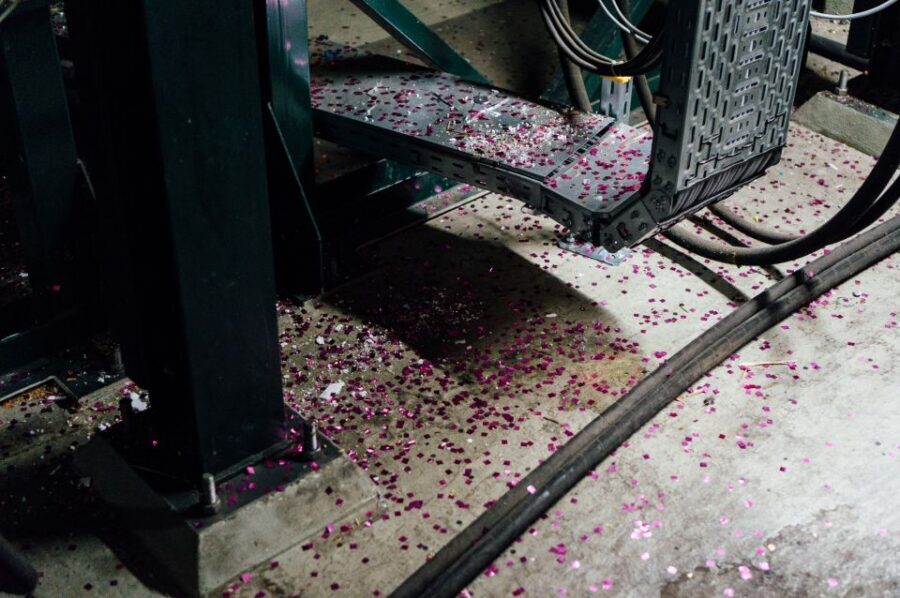
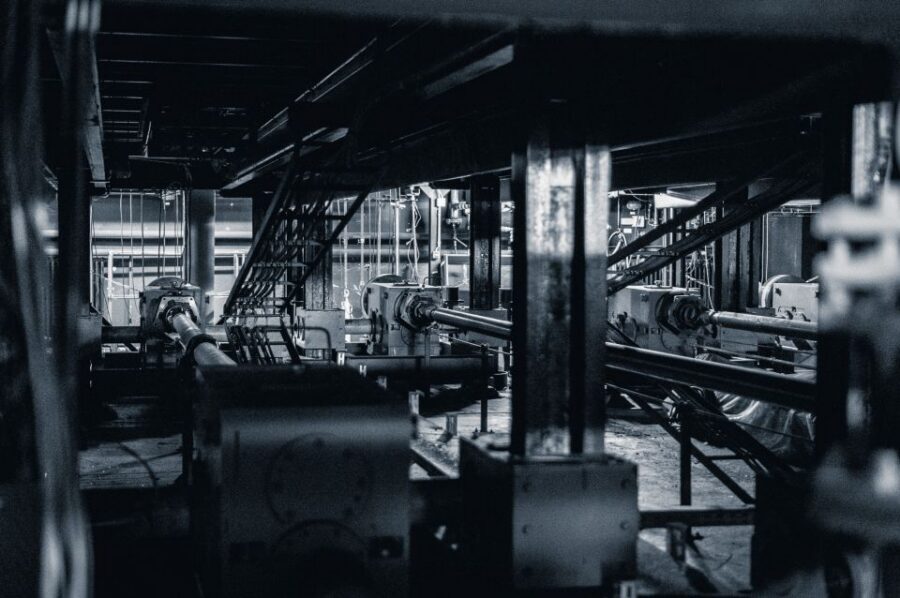
- Theater Bremen basement reality: the Kulissenkeller includes labyrinthine corridors and theatrical machine rooms—this is the underground guts of the theater.
- Ostertorwache prison rooms: the tour ends with the old prison Ostertorwache, including the Cells for Impure Women.
- Language is German: the live guide speaks German only, so plan around that.
Starting at Passage Bischofsnadel, then heading underground fast
The tour begins right by the water at Passage Bischofsnadel, between a tunnel and the sculpture Das Ende. It’s easy to spot the guide: they wear a bag with the red/white StattReisen-Bremen footprints, so you don’t waste time hunting people in black coats.
From there, the pace shifts quickly from street-level Bremen to subterranean spaces. In practical terms, you should expect a walking-and-stairs kind of tour. Wear shoes you’d feel comfortable with on uneven stone and in tight corridors, and don’t plan on having a lot of room for photos once you’re inside basements and cellars.
You can also read our reviews of more tours and experiences in Bremen.


The former synagogue cellar: memorial space where details matter
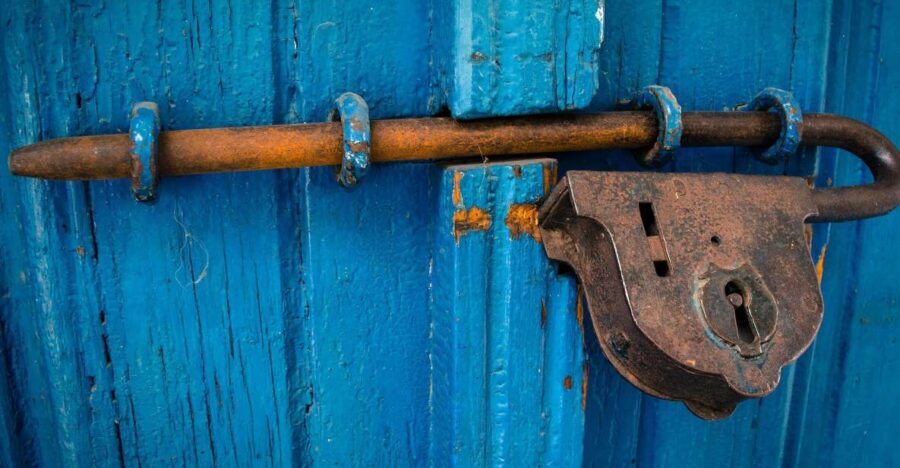
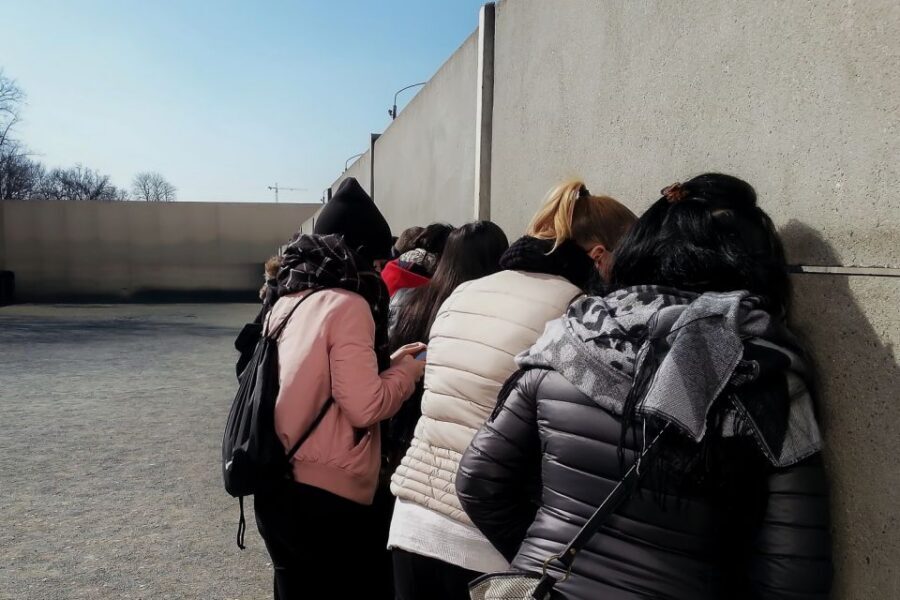
One of the most serious stops is the cellar of a former synagogue that was destroyed in 1938—burned down by the Nazis. Today, that basement functions as a memorial site, and the emotional weight is different from a museum room with glass cases and neat labels.
What I like about this stop is how the tour makes the setting part of the story. Cellars and basements are where ordinary people might never think to look. By bringing you into that space, the guide helps you understand that persecution wasn’t only something that happened in speeches and newspapers—it affected real buildings, everyday neighborhoods, and the lives of people who lived under the same roofs as everyone else.
A good heads-up: this is not a stop designed for thrill-seekers. If you’re hoping for spooky special effects, you might feel slightly let down. But if you appreciate places that force you to slow down and pay attention, this is the kind of stop you’ll remember.
The bunker-turned art venue: where reuse becomes part of the lesson
The tour also includes a bunker that later became an art venue. This matters because it shows how Bremen, like many cities, didn’t just preserve the past—it also repurposed parts of it.
Underground spaces often carry a “no one should be here” feeling. When that same structure becomes a creative venue, you see a different side of survival: not denial, just re-use. The tour’s strength here is the contrast. You’re not asked to pretend the place was always harmless. Instead, the guide frames the changes as something humans choose, piece by piece, long after the worst chapters.
If you’re sensitive to history-heavy environments, you can treat this stop like a mental reset: you’ll still be underground, but the mood shifts toward what people do after damage—how they breathe new purpose into old walls.
Bremen Theater’s Kulissenkeller: the underground machine room tour
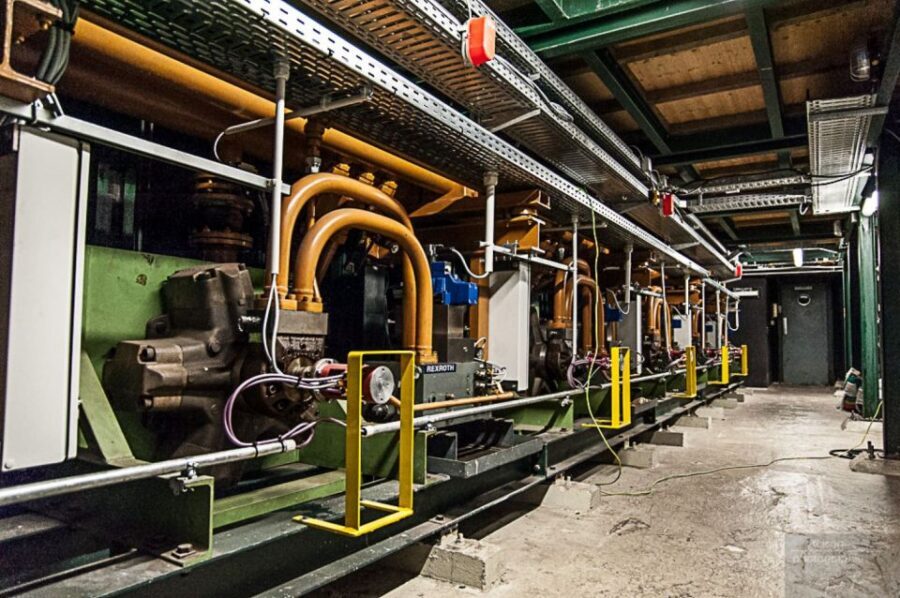
Now for the stop that many people end up talking about most: the Kulissenkeller of Theater Bremen. This is the enormous basement where sets and stage equipment live, and you get to see the theatrical machine rooms and labyrinthine corridors that sit under the show you see above.
This is where the tour earns its keep. The theater portion doesn’t just show you old rooms; it shows you how a modern performance system functions behind the scenes. Even if you’re not a theater nerd, you can still grasp the logic quickly: the stage depends on a whole network of underground storage, movement, and staging infrastructure.
One detail I really like is how the tour can line up with what’s happening for an evening performance. In at least some cases, when there’s stage preparation for a premiere, you may be able to go on and under the stage during setup, then continue into the Kulissenkeller. That turns the visit from a static look into something more alive—you see the theater while it’s in motion, not just after it’s done.
And yes, you may hear the guide connect it to the broader theme of the tour: hidden spaces have hidden functions. A synagogue cellar has one purpose. A prison has another. A theater basement runs the show you think you understand.
Ostertorwache: the Cells for Impure Women and the heavy atmosphere
The final major stop is the old prison Ostertorwache, including the Cells for Impure Women. This is the point where the tour’s tone becomes unmistakably heavy.
What makes this visit valuable is that it’s not treated as generic “prison history.” You’re guided through the reality of confined spaces—rooms that were designed to control movement, not encourage comfort. It’s oppressive in a way you can’t fully calculate from photos or text. You have to stand there, look at the layout, and let the constraints sink in.
A practical consideration: if you dislike intense, emotionally focused sites, this is the part where you may want to mentally prepare ahead of time. It’s not a long stop by sheer time (the whole tour is about 2 hours), but the subject matter is weighty.
That said, I also think this is the reason the tour works. Pairing the prison cells with the theater basement and the synagogue memorial makes the city feel whole. You see how different institutions—religious, cultural, and punitive—can all shape what’s underground, and how the past stays built into the ground.




Price and value: what $18 gets you in Bremen
At $18 per person for a 2-hour guided tour, you’re paying for three things: a knowledgeable local guide, access to spaces you likely couldn’t arrange on your own quickly, and a tight route that moves you through multiple underground contexts.
Do you get “big-ticket” entertainment? Not really. This isn’t a show with a ticketed seat and a comedian at the front. Instead, the value is in the access and interpretation: going into the synagogue cellar memorial, entering the theater’s working basement world in the Kulissenkeller, and seeing the Ostertorwache cells.
If you like walking tours that feel specific and grounded—where you’re standing in the real footprint of history and not just looking at plaques—this price is fair. If you’re only interested in one of the stops (say, the theater), you might still find it worthwhile, but you’ll want to know you’re buying the full arc, including the harder material.
Practical tips so you enjoy every stop
Here’s what helps most on tours like this, where you move between basements, memorial spaces, and prison cells:
- Go in ready to learn. The guide is the main engine of the tour, and the history is threaded through the spaces, not just tacked on at the end.
- Dress for underground movement. Comfortable shoes matter. You’ll be walking and transitioning through areas that are not street-level.
- Bring patience for the quiet parts. Some segments are vaults, corridors, and cell-room layouts—not dramatic set pieces. If you’re expecting constant shock value, you might feel bored for a stretch.
- Expect German only. This tour runs with a live German guide, so if you only speak basic German, you may still follow more than you think, but you’ll benefit from going in with curiosity.
One more helpful note: the program can change due to organizational constraints. If a specific location isn’t available on your date, there should be a good alternative. If you care about a particular stop, it’s smart to ask the operator shortly before the tour.
Who should book this tour (and who might not)

I’d book this if you:
- like serious urban stories grounded in real places under the city
- want a tour that connects Bremen’s layers—religion, punishment, and theater—without turning any of them into trivia
- enjoy guided explanations that make you look at architecture differently
I’d think twice if you:
- want a tour that’s mostly entertainment and doesn’t like solemn history
- already know a lot of prison interiors and synagogue history and hate “yet another cellar” feeling
- need the tour to be in English (the guide is German)
Also, it’s worth noting that the tour can work well for families; at least one booking specifically mentioned that children enjoyed it. That doesn’t mean it’s a kids-only adventure—more that the pacing and the theater segment can keep younger minds interested.
Should you book the Bremen Underworld tour?
Yes, if you want something more interesting than a standard city walk. The combination of a synagogue cellar memorial, the theater’s Kulissenkeller (with its behind-the-scenes world), and the Ostertorwache cells gives you a Bremen that feels real and three-dimensional. The best part is how the tour makes underground spaces matter, not just as curiosities, but as places with purpose and consequences.
Book it with realistic expectations: the first stops may feel quieter and more reflective than you expect, and the prison cells are not light material. If you can handle that, you’ll leave with a strong sense of how Bremen’s past lives under your feet.
FAQ
How long is the Bremen Underworld tour?
The tour duration is about 2 hours.
What language is the guide?
The live guide speaks German.
Where do I meet the guide?
Meet at the waterside of Passage Bischofsnadel, between the tunnel and the sculpture Das Ende. The guide wears a bag with the red/white StattReisen-Bremen footprints.
Is the $18 price the full cost?
The tour price is $18 per person. It includes a tour guide and access to all places visited on the tour depending on the booked option.
Does the tour include pick-up and drop-off?
No. Pick-up and drop-off are not included.
What if plans change or a location is closed?
The program may change due to organizational constraints. If you want to be sure a specific location is available, ask the tour operator shortly before your tour date. There should always be a good alternative if something is unavailable.